Artwork
Thames Fishermen
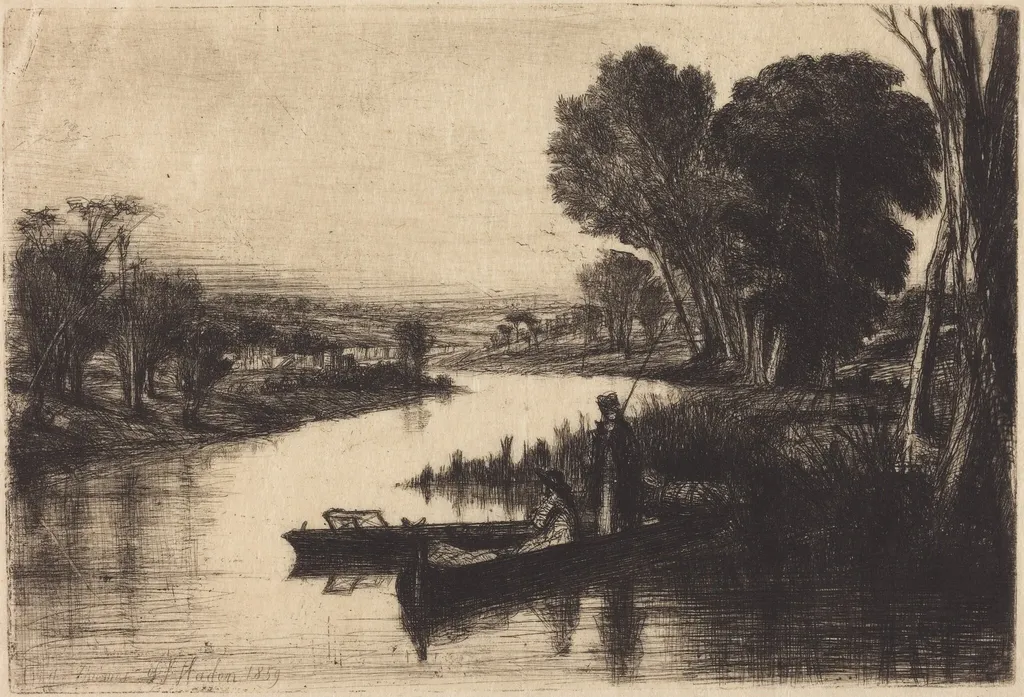
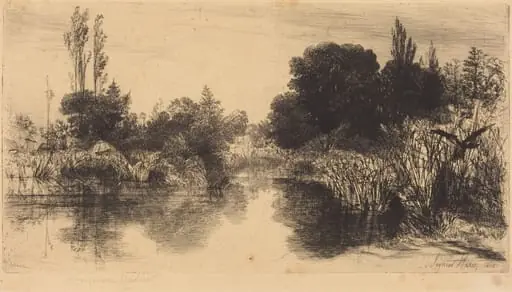
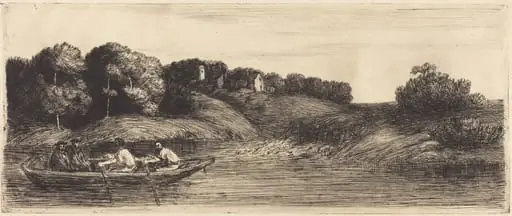
Thames Fishermen is an ink print by the Impressionist artist Francis Seymour Haden. It dates from 1859 and is held in the collection of the National Gallery of Art.
About this work
Overview
Francis Seymour Haden’s 1859 print, titled Thames Fishermen, depicts a tranquil stretch of the River Thames. Two figures occupy the riverbank: one holds a long pole suggestive of fishing, while the other rests against a tree. A modest boat is moored nearby, and a village can be seen across the water, framed by trees that line the shore.
Subject & Meaning
The composition captures a moment of everyday river life, emphasizing the quiet relationship between the fishermen and their environment. The relaxed posture of the figures and the still water convey a sense of patience and contemplation, reflecting the routine of Thames fishing communities in the mid‑nineteenth century.
Technique & Style
Haden employed a combination of drypoint and etching, working directly on a metal plate. The resulting lines are ragged and textured, producing a sketch‑like quality that suggests immediacy. The varied line weight creates depth, while the tactile surface conveys the movement of water and foliage despite the overall calm scene.
History & Provenance
Created in 1859, the print belongs to Haden’s early period of printmaking, when he was establishing his reputation as a leading British etcher. It was likely produced in limited numbers, as was customary for his drypoint works, and has since entered collections that focus on Victorian printmaking.
Context
During the 1850s, the Thames was a frequent subject for artists interested in the interplay of industry, leisure, and landscape. Haden’s focus on ordinary riverbank activity aligns with contemporary interests in realism and the documentation of everyday British life.
Own this work as a print
Artist & collection


 Landscape with Boat, 1st plate (Le paysage au bateau)
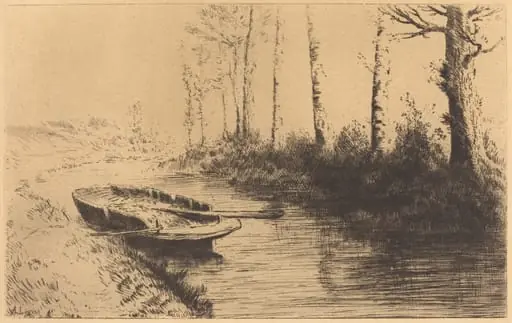 Canal Seen by Morning Light (Le canal: Effet du matin)
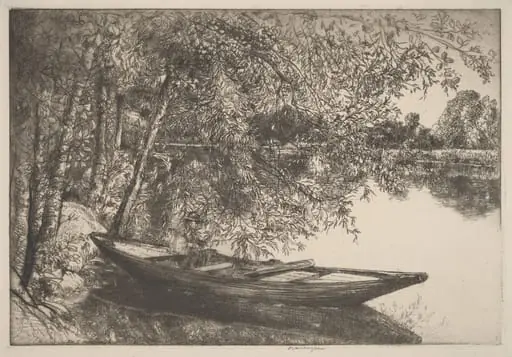 River Song, No. 8
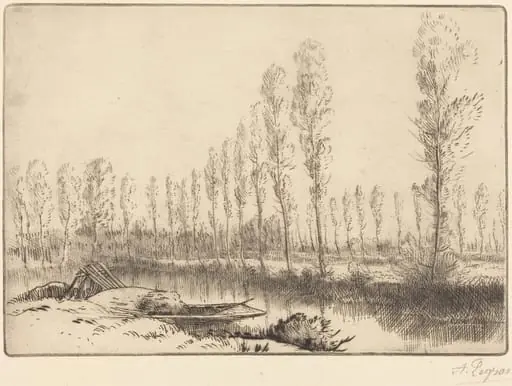 Poplars near Amiens (Pres d'Amiens, les tourbieres)
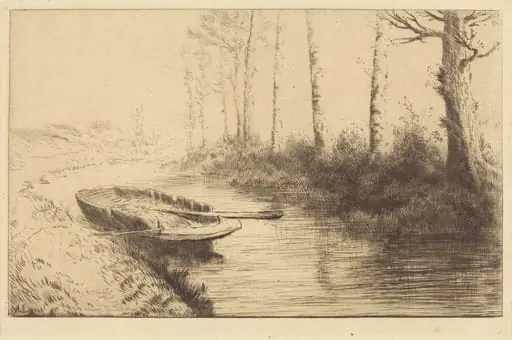 Canal Seen by Morning Light (Le canal: Effet du matin)
 Le Canal: Effet du matin
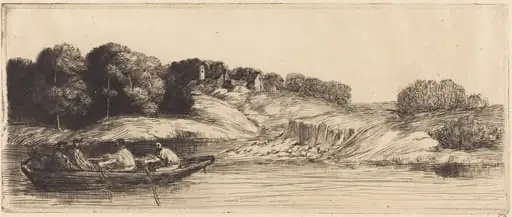 Landscape with Boat, 1st plate (Le paysage au bateau)