Artwork
Akbar Mounting his Horse; page from the Chester Beatty Akbar Nama (History of Akbar)
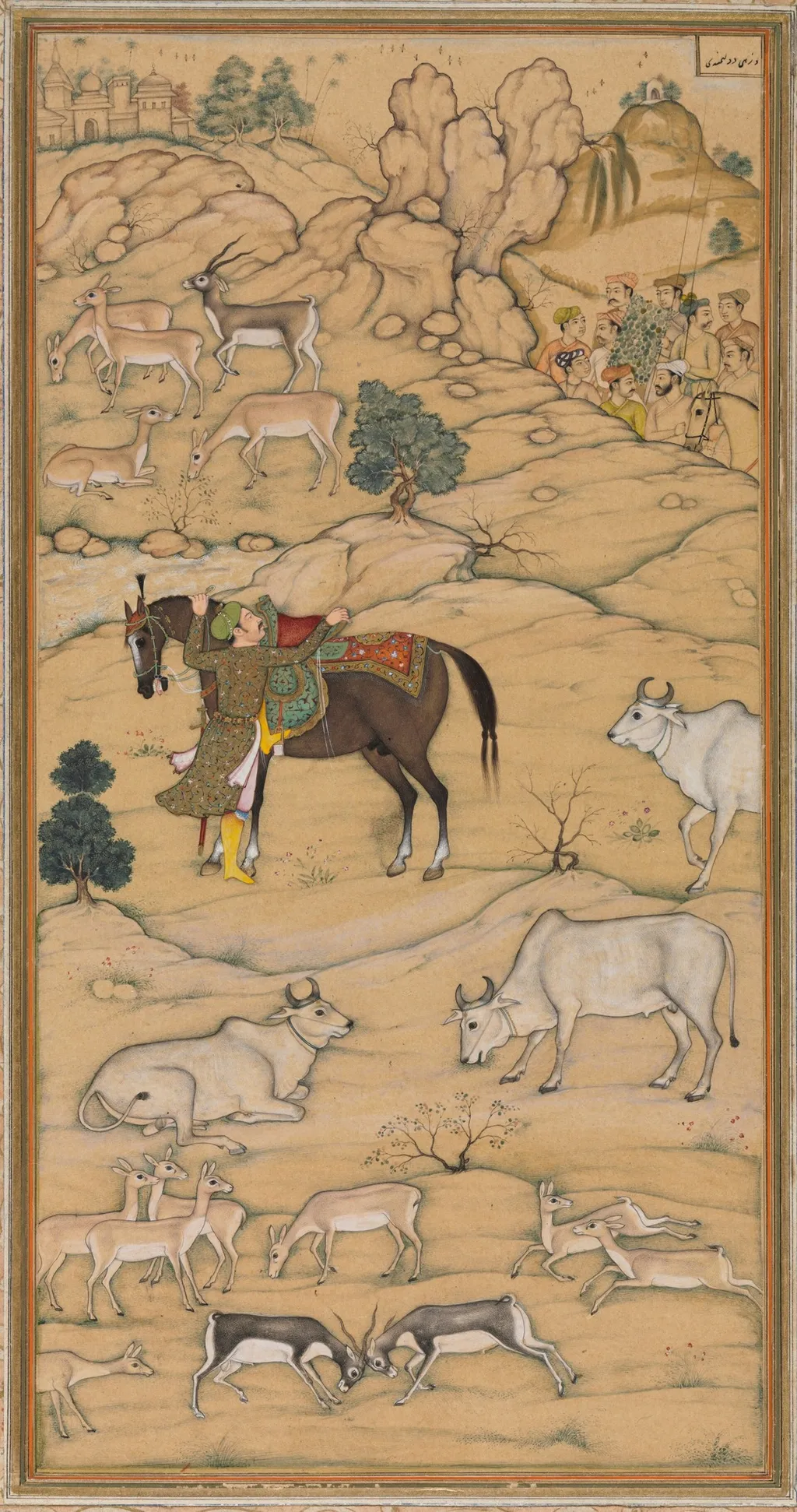
Akbar Mounting his Horse; page from the Chester Beatty Akbar Nama (History of Akbar) is an unspecified painting by the Mughal Painting artist Sur Das Gujarati. It dates from 1606 and is held in the collection of the Cleveland Museum of Art.
About this work
Overview
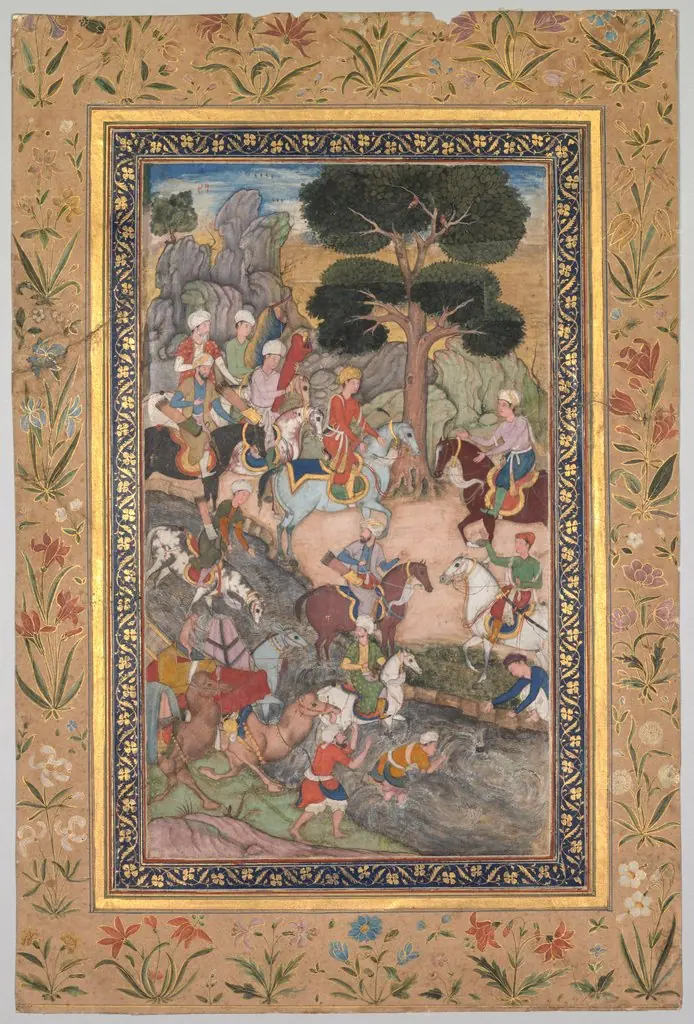
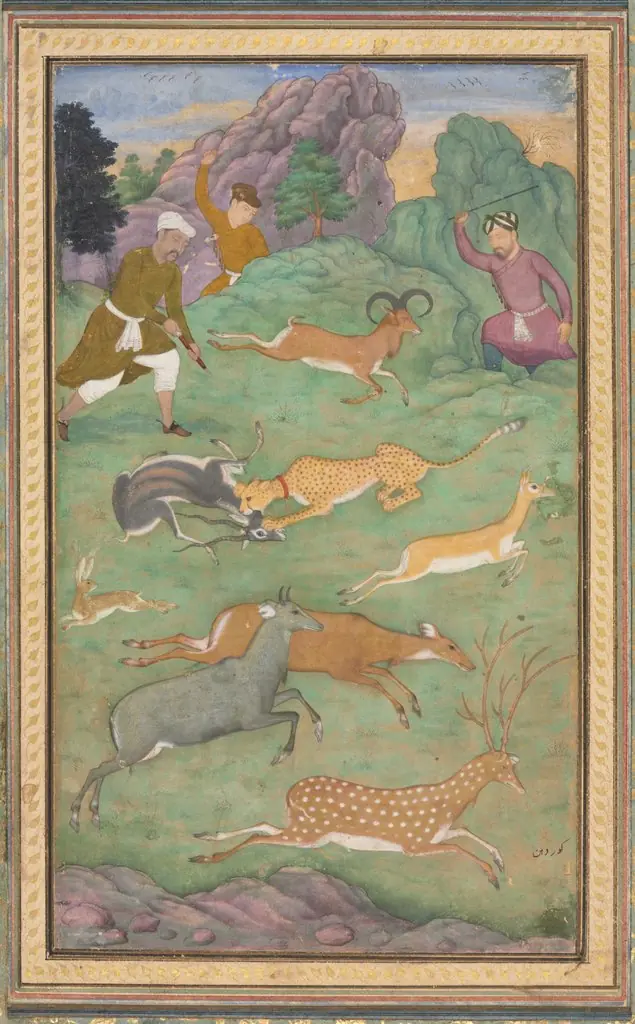
The work depicts a figure in brightly patterned attire astride a dark horse, set against a barren, rocky terrain that stretches toward distant hills. Around the rider, deer and cattle roam, while a small structure and a group of seated figures appear in the far background, suggesting a narrative scene of movement and observation.
Subject & Meaning
The central figure is identified as the Mughal emperor Akbar, portrayed preparing to mount his horse. The surrounding fauna and pastoral elements evoke the emperor's association with hunting and royal procession, situating the scene within a broader depiction of courtly life and the natural world.
Technique & Style
Lines are rendered with economy, outlining animals and landscape forms with minimal strokes while preserving recognizable shapes. The palette relies on muted, earthy hues, allowing the patterned clothing of the rider to stand out. The overall execution reflects a manuscript illustration tradition, emphasizing clarity over elaborate shading.
History & Provenance
This image originates from a page of the Chester Beatty Akbar Nama, a historical manuscript chronicling the reign of Akbar. The manuscript is part of the Chester Beatty Library collection, which acquired it in the early twentieth century; the painting has been reproduced in scholarly publications on Mughal art.
Context
Created within the Mughal tradition of illustrated histories, the scene aligns with other courtly narratives that combine portraiture, landscape, and animal motifs. Such illustrations served both documentary and decorative purposes, reinforcing imperial authority through visual storytelling.
Artist & collection
Artist
Sur Das Gujarati painted scenes from Mughal life and epic tales at the court of Akbar.