Artwork
Bijan killing the wild boars of Irman, from a Shah-nama (Book of Kings) of Firdausi (Persian, about 934–1020)
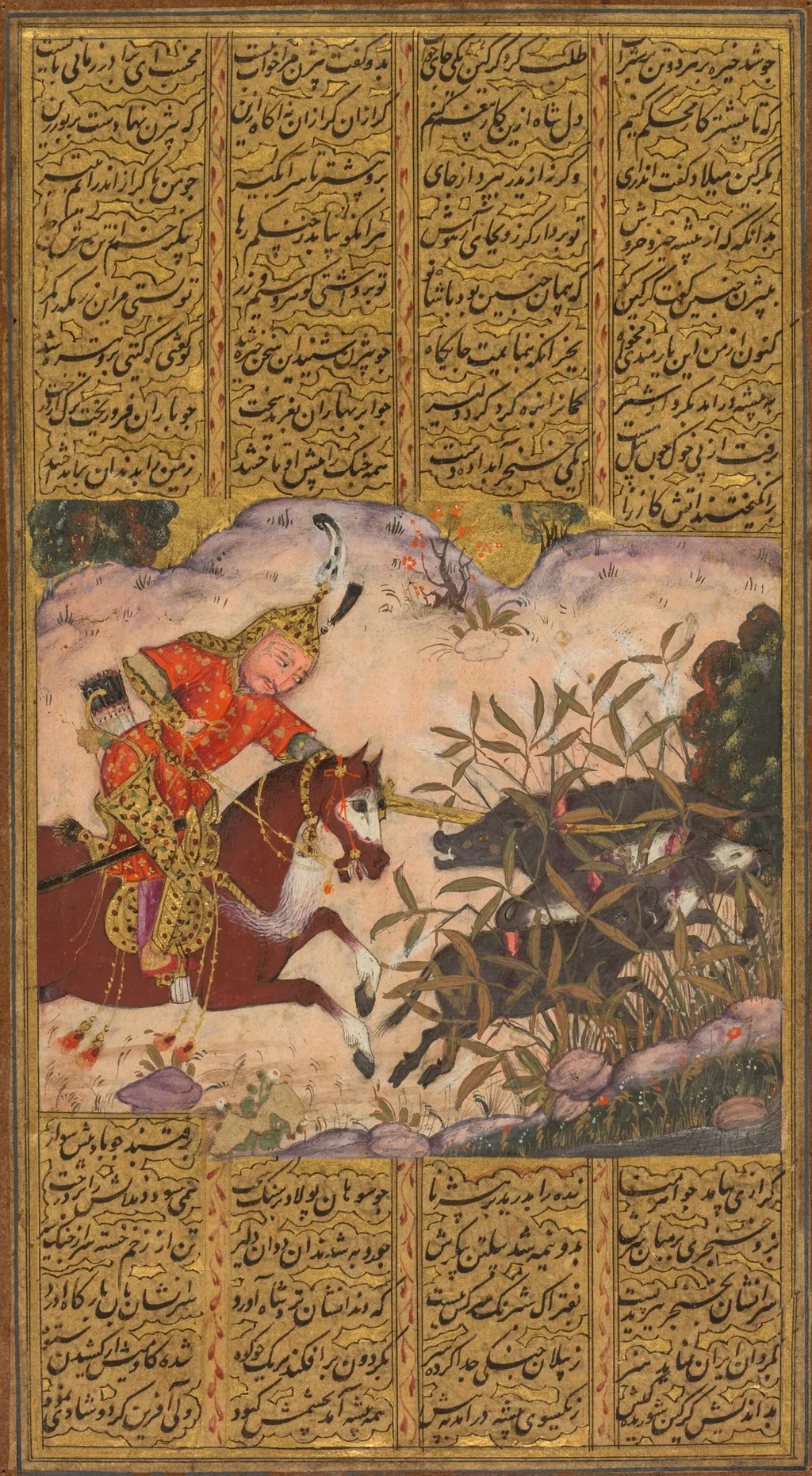
Bijan killing the wild boars of Irman, from a Shah-nama (Book of Kings) of Firdausi (Persian, about 934–1020) is an unspecified painting. It dates from 1610 and is held in the collection of the Cleveland Museum of Art. The work depicts a scene from the Persian epic Shah‑namé, illustrating the hero Bijan confronting two ferocious boars.
About this work
Overview
The work depicts a scene from the Persian epic Shah‑namé, illustrating the hero Bijan confronting two ferocious boars. Rendered in vivid colors, the composition centers on a rider in scarlet armor on a white horse, set against a gently rolling landscape with trees, a river and distant birds. Gold‑inscribed Persian script borders the image, framing the narrative tableau.
Subject & Meaning
The narrative captures Bijan’s legendary feat of slaying the wild boars of Irman, a test of bravery and martial skill celebrated in the Shah‑namé. The boars, rendered with exaggerated tusks and fierce gazes, function as symbolic adversaries, emphasizing the hero’s valor and the triumph of order over chaos.
Technique & Style
The stylized rendering of the boars, reminiscent of dragon motifs, reflects a synthesis of Persian narrative illustration and courtly aesthetic conventions.
Executed in miniature painting tradition, the piece employs fine brushwork to detail the armor’s intricate patterns and the horse’s flowing mane. The palette combines bright reds, whites and earthy greens, while gold leaf enhances the decorative border. The stylized rendering of the boars, reminiscent of dragon motifs, reflects a synthesis of Persian narrative illustration and courtly aesthetic conventions.
History & Provenance
Created during the flourishing period of Persian manuscript illumination between the 10th and 11th centuries, the painting originates from a Shah‑namé manuscript commissioned for a royal patron. Its survival within a bound codex suggests it was intended for elite audiences familiar with the epic’s verses.
Context
The image belongs to a broader tradition of illustrating the Shah‑namé, a monumental poetic chronicle of Iran’s mythic and historical kings. Such visualizations served both didactic and decorative purposes, reinforcing cultural identity and the moral exemplars embodied by heroes like Bijan.
Legacy
Miniature depictions of Shah‑namé episodes have informed subsequent Persian art, influencing later manuscript illumination and modern reinterpretations of the epic. The motif of the heroic rider confronting monstrous beasts continues to appear in contemporary Iranian visual culture, underscoring the enduring resonance of the narrative.
Artist & collection

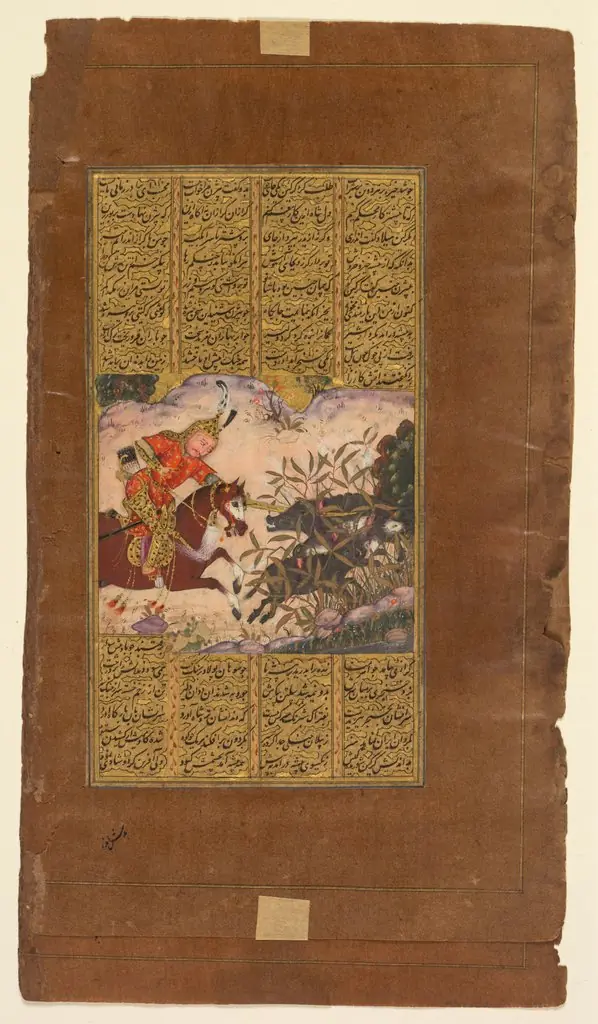 Bijan killing the wild boars of Irman, from a Shah-nama (Book of Kings) of Firdausi (Persian, about 934–1020) (verso)
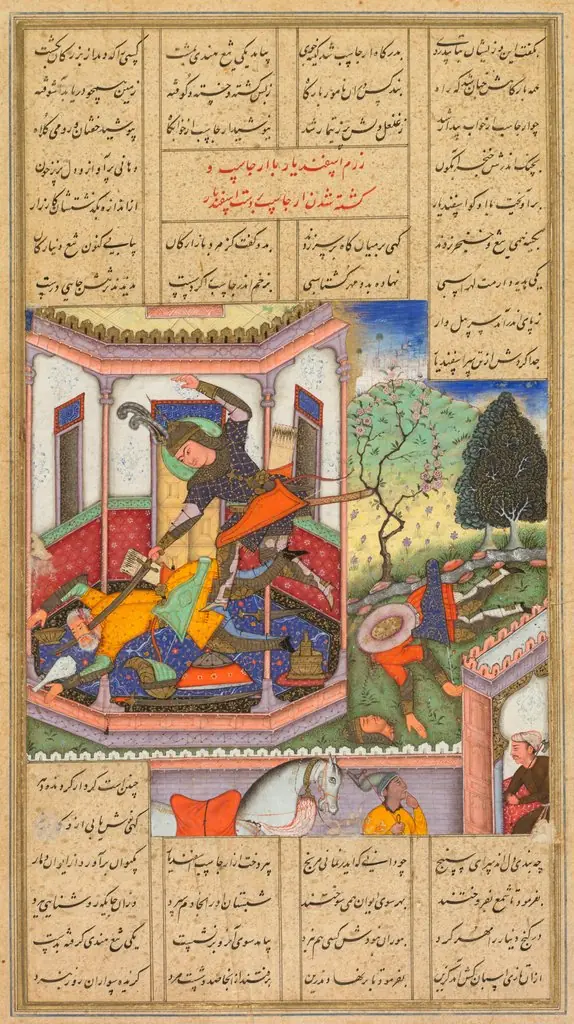 Isfandiyar slays Arjasp, the king of Turan, from a Shah-nama (Book of Kings) of Firdausi (Persian, about 934–1020)
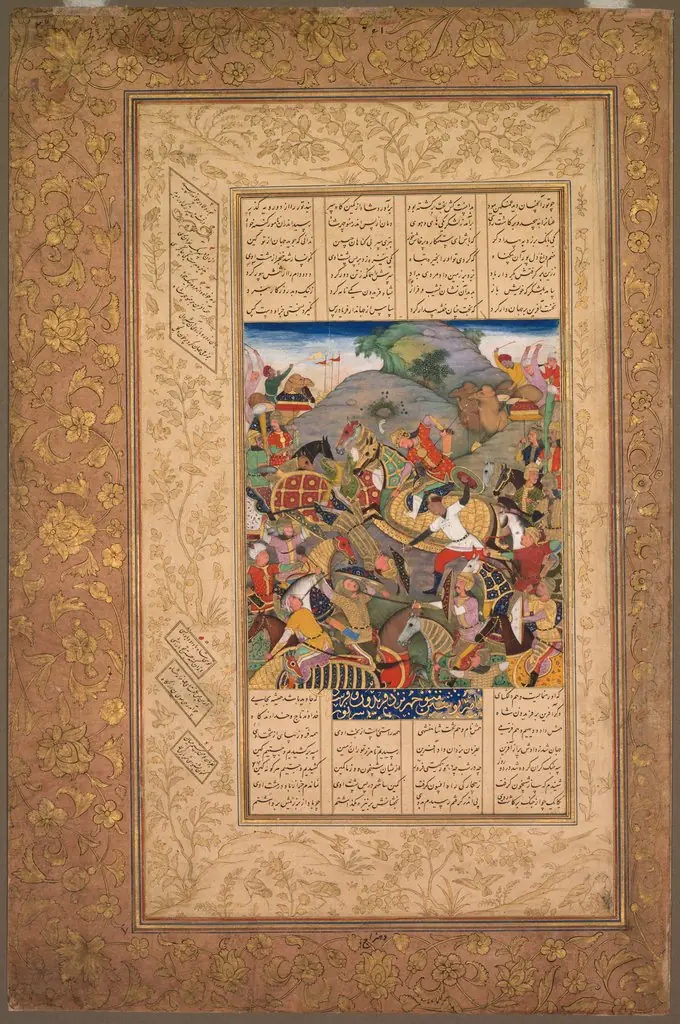 Battle between Manuchihr and Tur, from a Shah-nama (Book of Kings) of Firdausi (Persian, c. 934–1020)
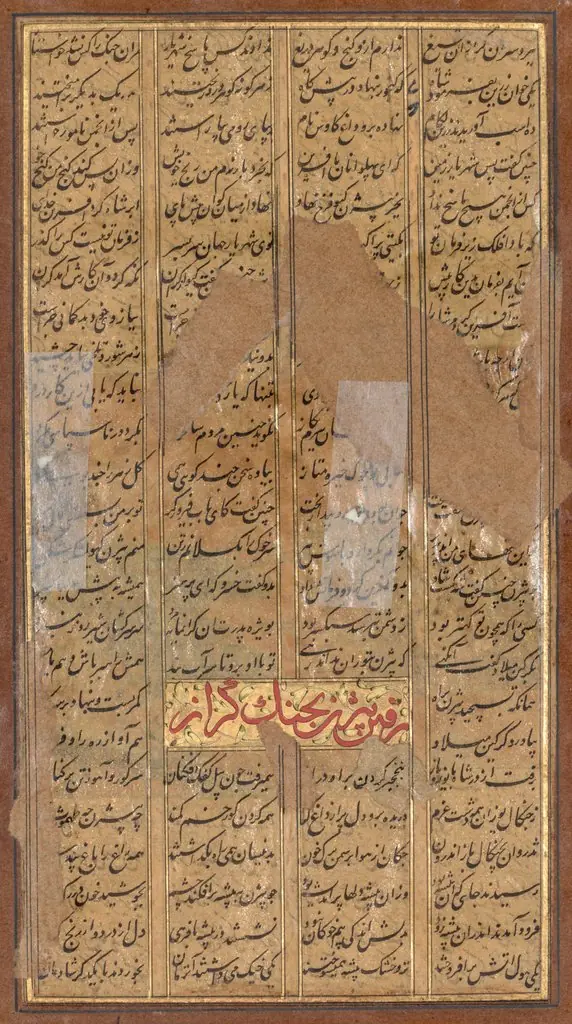 Bijan killing the wild boars of Irman, from a Shah-nama (Book of Kings) of Firdausi (Persian, about 934–1020), (recto)
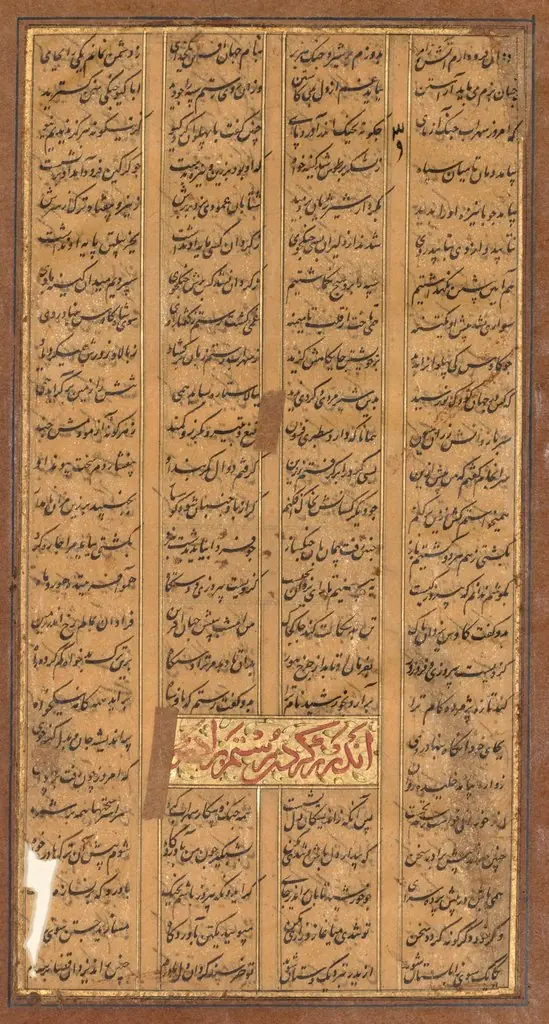 Text of Rustam and Suhrab, from the Shah-nama of Firdausi (Persian, c. 934–1020) (recto)
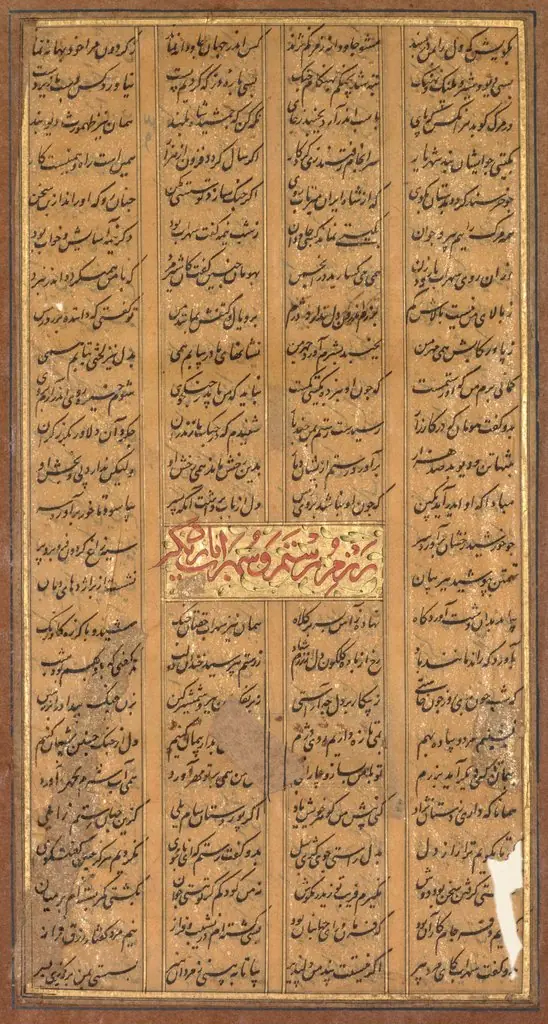 Text of Rustam and Suhrab, from the Shah-nama of Firdausi (Persian, c. 934–1020) (verso)