Artwork
遊女と新造|Courtesan and Shinzō
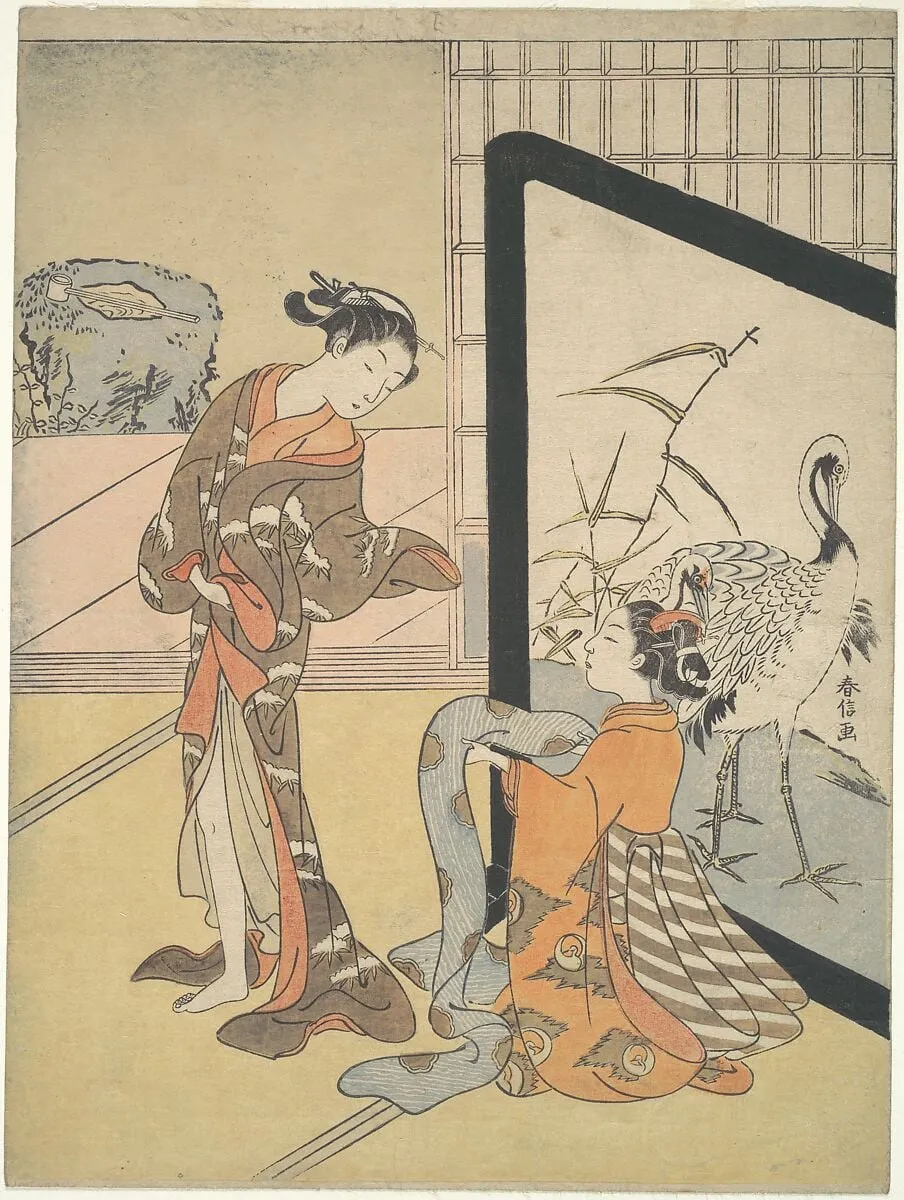
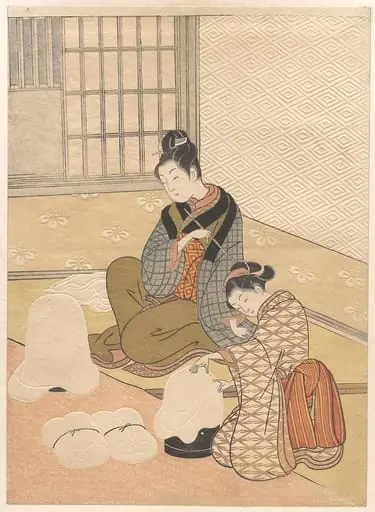
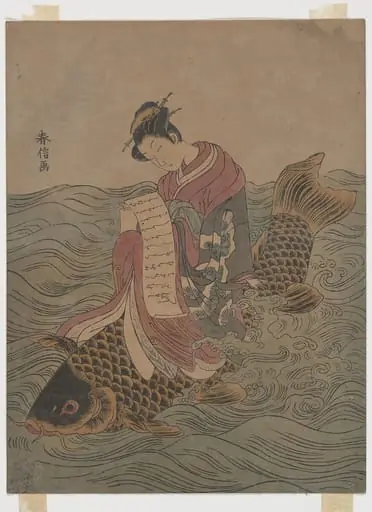
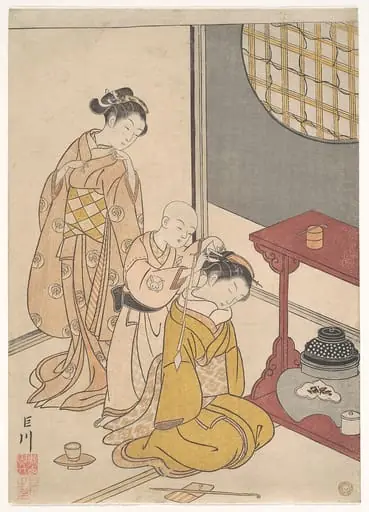
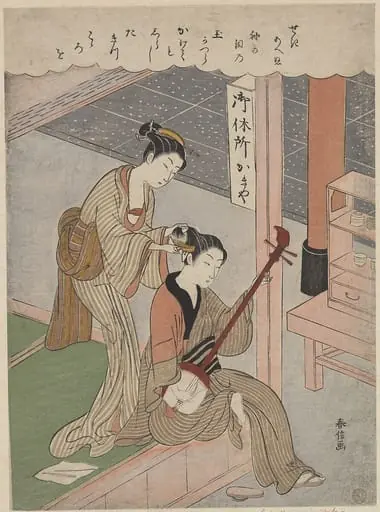
遊女と新造|Courtesan and Shinzō is an ink print by the Baroque artist Suzuki Harunobu. It dates from 1750 and is held in the collection of the Metropolitan Museum of Art.
About this work
Overview
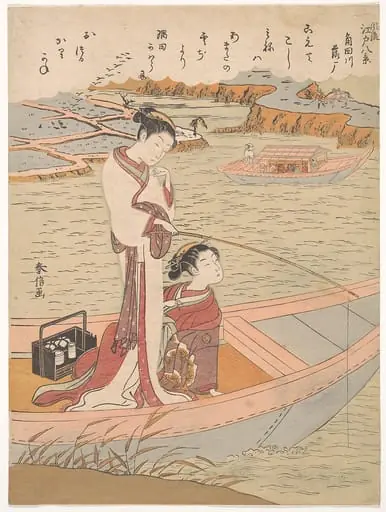
Suzuki Harunobu’s woodblock print, dated around 1750, portrays a courtesan in a vivid kimono leaning against a shoji screen, accompanied by a younger girl in modest attire kneeling nearby. The scene is set against an open view where cranes glide across the sky, creating a tranquil domestic moment.
Subject & Meaning
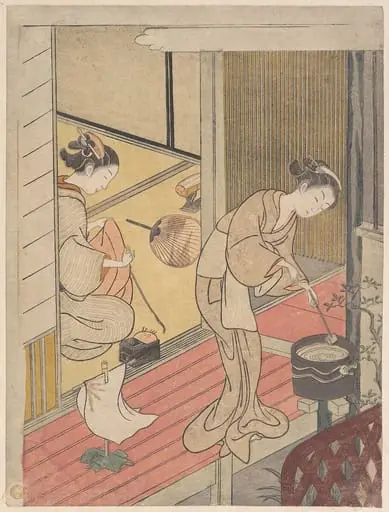
The composition juxtaposes the elegance of the courtesan with the simplicity of the attendant, highlighting social hierarchies within Edo‑period pleasure quarters. The presence of the cassotte and chōzubachi—objects associated with ritual cleansing—suggests themes of purity and refinement in everyday life.
Technique & Style
Harunobu employed the nascent nishiki-e process, aligning separate carved blocks for each hue to achieve a full‑color image. This multi‑block method replaced earlier monochrome or hand‑tinted prints, allowing for delicate pastel tones and a soft, almost photographic quality that captures a fleeting instant.
History & Provenance
Created in the mid‑18th century, the print belongs to Harunobu’s early experiments with polychrome woodcuts, marking a pivotal shift in Japanese printmaking. It circulated among the urban merchant class, who prized such images for their aesthetic novelty and depiction of contemporary urban life.
Context
The work reflects the burgeoning popularity of ukiyo‑e subjects that focused on the pleasure districts, known as yūjo imagery. Harobun’s approach influenced a generation of artists who adopted full‑color techniques to depict similar scenes of courtesans and daily rituals.
Artist & collection