Artwork
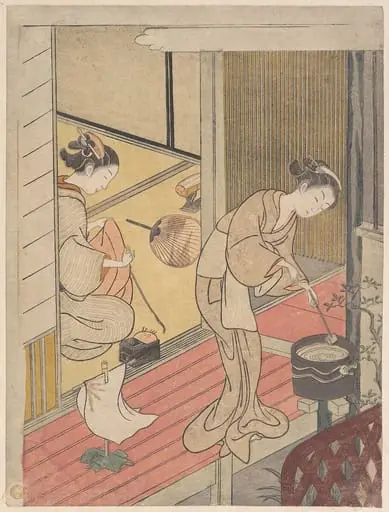
鈴木春信画 若水を汲む男女|Drawing the First Water of the New Year
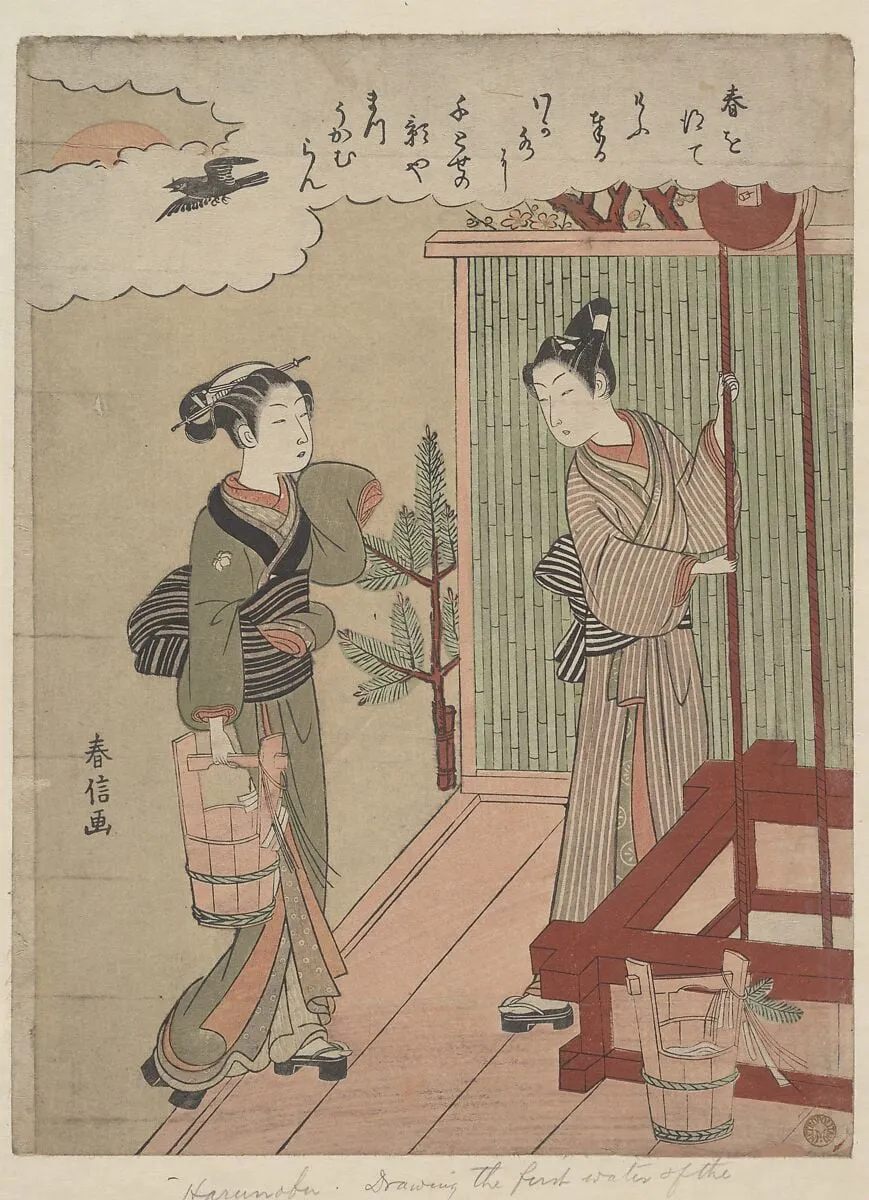
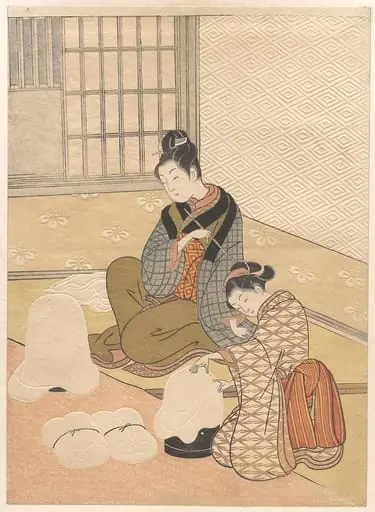
鈴木春信画 若水を汲む男女|Drawing the First Water of the New Year is an ink print by the Romanticist artist Suzuki Harunobu. It dates from 1770 and is held in the collection of the Metropolitan Museum of Art.
About this work
Overview
Their sleeves gently brush against the bucket's rope, emphasizing a quiet intimacy and the stillness of the early morning.
Suzuki Harunobu's woodblock print, 'Drawing the First Water of the New Year' (1770), depicts a man and a woman collecting the first water of the new year from a wooden well at dawn. This ritual, known as shojaku, was believed to bring good fortune and health for the coming year. The composition centers on the two figures, whose layered kimonos in soft pinks and blues create a harmonious color palette characteristic of Harunobu's mature style. Their sleeves gently brush against the bucket's rope, emphasizing a quiet intimacy and the stillness of the early morning. Executed in the nishiki-e (full-color) technique, the work showcases the artist's mastery of subtle gradations and delicate line work, moving away from the bolder outlines of earlier ukiyo-e. Created in 1770, the year of Harunobu's death, this print exemplifies his contribution to the development of the bijin-ga (pictures of beautiful women) genre and the broader ukiyo-e movement. It captures a fleeting moment of domestic ritual with a poetic sensitivity that elevated everyday scenes to high art, influencing subsequent generations of printmakers.
Subject & Meaning
The scene illustrates the traditional Japanese custom of collecting the first water of the year, a gesture believed to bring auspicious fortune. By focusing on an ordinary couple engaged in this act, the print conveys a sense of everyday hope and the subtle reverence attached to seasonal rites, reflecting the cultural importance of ritualized domestic life.
Technique & Style
Executed in the ukiyo‑e woodblock technique, the image combines ink outlines with delicate color washes on paper. Harunobu’s characteristic soft palette and fine line work render the fabrics’ textures and the water’s surface with subtle gradations, while the composition’s balanced framing creates a calm, almost frozen tableau.
History & Provenance
Created in the late Edo period, the print is part of Harunobu’s prolific output of small, multicolored works that helped define the early ukiyo‑e style. Though many of his prints were produced for popular consumption, this particular piece is noted for its restrained warmth and has been preserved in several museum collections specializing in Japanese prints.
Artist & collection