Artwork
A Girl Dressing in Pink
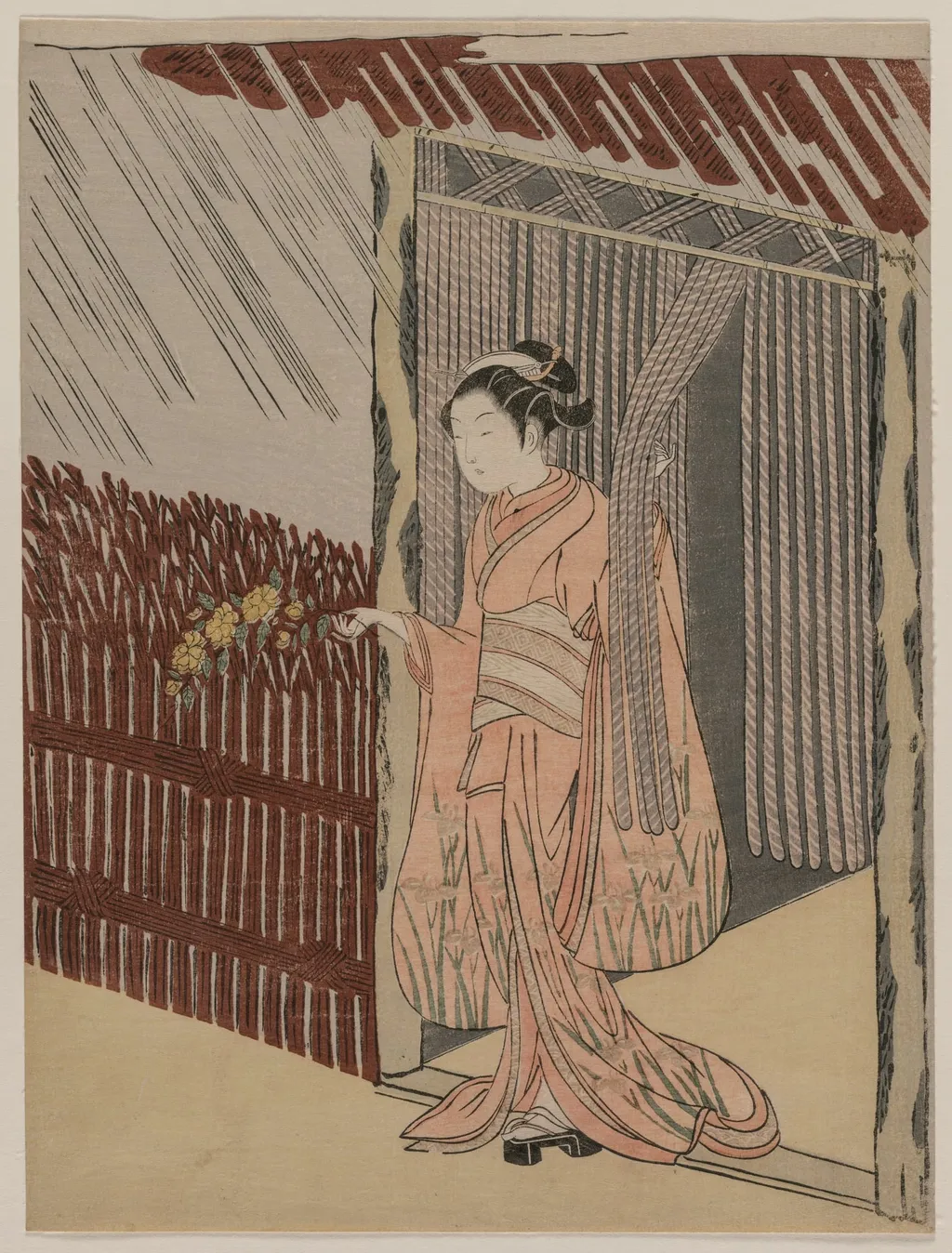
A Girl Dressing in Pink is a print by the Romanticist artist Suzuki Harunobu. It dates from 1766 and is held in the collection of the Cleveland Museum of Art.
About this work
To learn more about the Romanticism movement, which this painting is a part of, you can explore further.
This painting shows a young girl in a pink kimono, standing in front of a fence. She is holding yellow flowers and looking down at them. The girl's kimono has a grass pattern on it. The background is a gray wall with a roof above it. The girl is standing on a light-colored floor.
The girl's hair is styled in an updo, and she is wearing a white headband. Her kimono is wrapped around her body, and she is holding the flowers in her right hand. The fence behind her is made of wood and has a decorative pattern on it.
The painting is a beautiful example of Japanese art from the 18th century. To learn more about the Romanticism movement, which this painting is a part of, you can explore further.
Overview
A Girl Dressing in Pink is a 1766 print by Suzuki Harunobu, housed at The Cleveland Museum of Art. The work depicts a young girl in a pink kimono, adorned with a grass pattern, standing before a wooden fence with a decorative design. She holds yellow flowers in her right hand, gazing downward, set against a gray wall and roof, on a light-tinted floor. Her hair is styled in an updo, secured by a white headband.
Subject & Meaning
The subject, a contemplative young girl, embodies a serene, intimate moment. The pink kimono with grass pattern and the yellow flowers may symbolize the fleeting nature of youth and the arrival of spring, though specific interpretations of these elements are not explicitly documented in available sources.
Technique & Style
Executed in 1766, the print showcases Harunobu's mastery of ukiyo-e, a Japanese woodblock printing technique. The composition's balance, the interplay of colors (notably the dominant pink), and the attention to detail in textures (e.g., the wooden fence) exemplify the aesthetic of mid-18th-century Japanese printmaking.
History & Provenance
Created in 1766 by Suzuki Harunobu, the print's history prior to its acquisition by The Cleveland Museum of Art is not detailed in the provided sources. It is known to be part of the museum's collection.
Context
While the source mentions a connection to Romanticism, this classification may be misleading as the work is fundamentally rooted in Japanese ukiyo-e traditions of the Edo period, focusing on everyday life and nature, rather than the emotional intensity characteristic of Western Romanticism.
Legacy
As a work by Suzuki Harunobu, 'A Girl Dressing in Pink' contributes to the legacy of ukiyo-e in showcasing daily life and beauty in 18th-century Japan. Its impact on broader art historical narratives, especially beyond Japanese art, is not explicitly outlined in the provided information.
Artist & collection

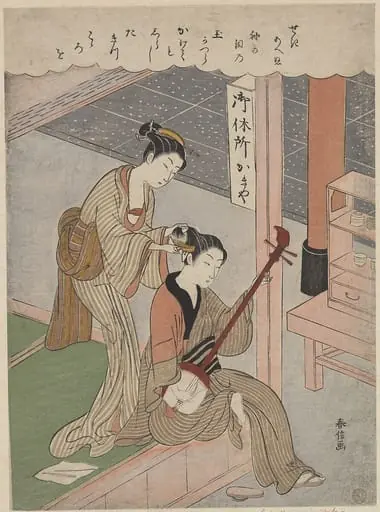
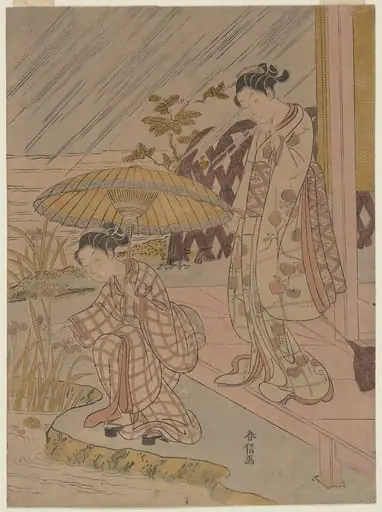 Untitled
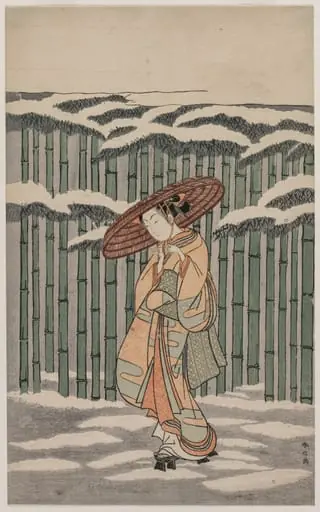 Passing the Bamboo Grove
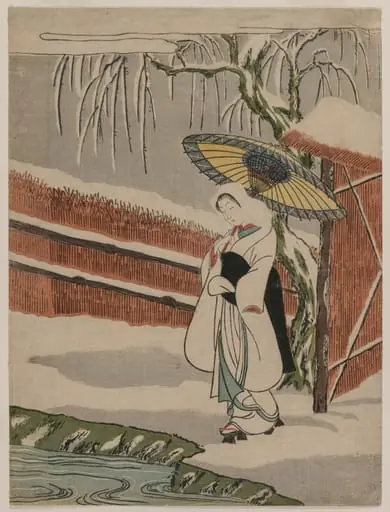 The Heron Maiden Standing Beneath a Willow Tree
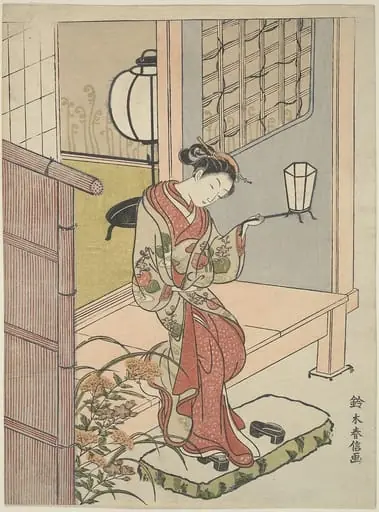 Untitled
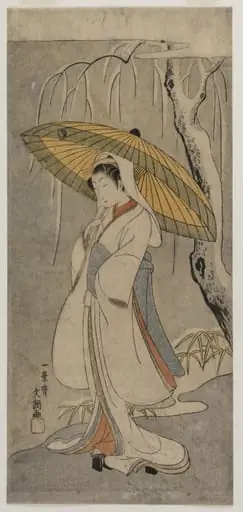 Segawa Kikunojo II as the Heron Maiden (from the series Ichimura Theater)
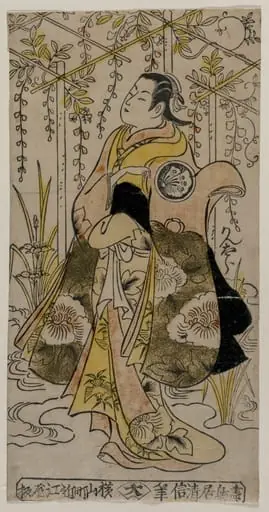 Sanjo Kantaro as a Young Woman Standing in a Wisteria Arbor
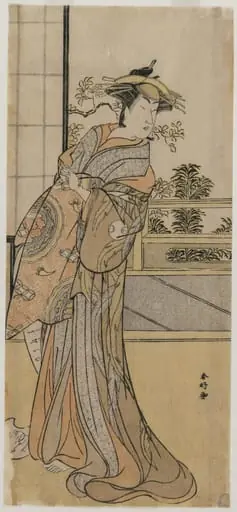 Arashi Murajiro as a Courtesan Holding a Letter
 Untitled
 Untitled
 Woman Dropping a Lantern by a Porch
 Untitled
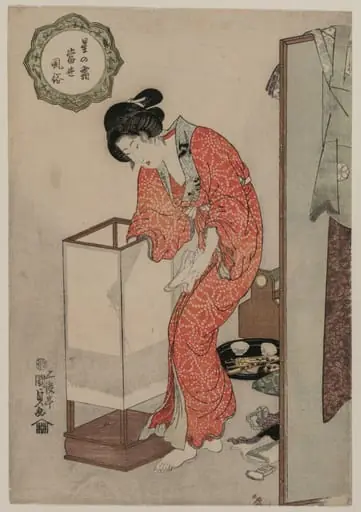 Woman Putting Out a Light (from the series Modern Customs: Frost Beneath the Stars)