Artwork
Passing the Bamboo Grove
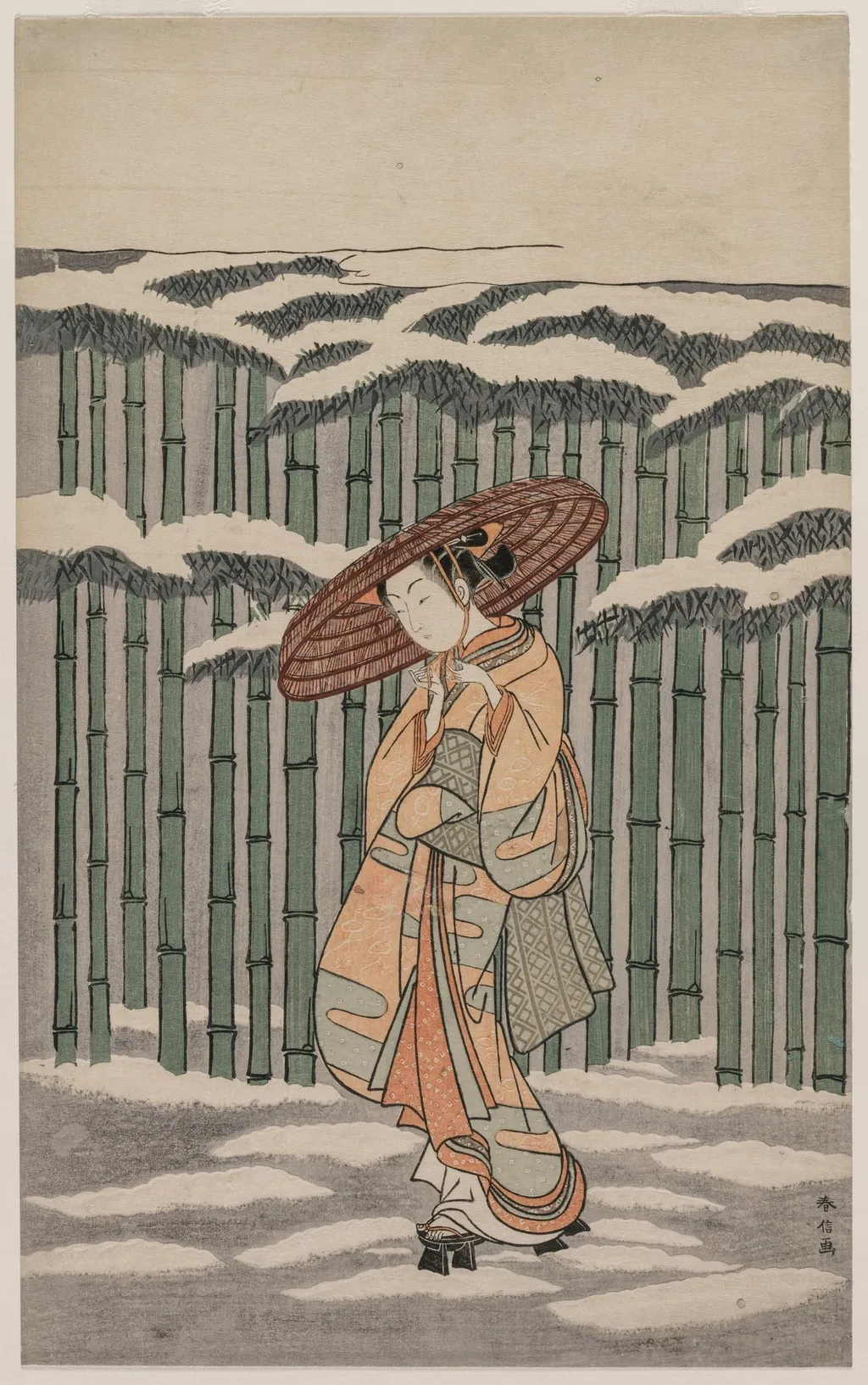
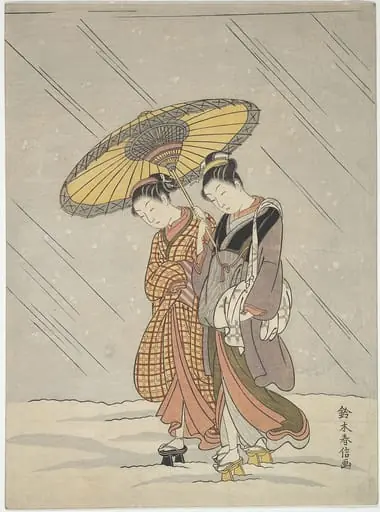
Passing the Bamboo Grove is a print by the Impressionist artist Suzuki Harunobu. It is held in the collection of the Cleveland Museum of Art. This woodblock print depicts a young woman moving through a bamboo forest, her kimono and sash rendered in vivid hues.
About this work
Overview
This woodblock print depicts a young woman moving through a bamboo forest, her kimono and sash rendered in vivid hues. The scene alludes to a Chinese moral tale of filial devotion, portraying the figure as a stand‑in for Meng Zong, one of the celebrated Twenty‑Four Paragons of Filial Piety, who braved winter to harvest bamboo shoots for his elderly parents.
Subject & Meaning
The narrative reference underscores the virtue of caring for one’s elders, a theme that resonated across East Asian cultures. By presenting the heroine in the act of gathering bamboo, the image conveys both the physical hardship of winter labor and the moral reward of selfless service to family.
Technique & Style
Executed in the ukiyo‑e tradition, the print employs bold, saturated pigments and fine line work characteristic of mid‑eighteenth‑century Japanese woodcuts. The composition balances delicate patterning on the woman’s sash with the dense, stylized bamboo stalks, creating a rhythmic visual flow that guides the eye through the scene.
History & Provenance
The surviving example is slightly taller than the initial edition and displays brighter coloration, indicating it is a later reproduction.
Originally produced as a private calendar for the year 1766, the work featured the months inscribed on the woman’s sash. Because selling calendars required official permission, a second version replaced the calendar text with a checked background, allowing broader commercial distribution. The surviving example is slightly taller than the initial edition and displays brighter coloration, indicating it is a later reproduction.
Context
The print belongs to a series by Suzuki Harunobu that linked seasonal imagery with moral exempla, a popular approach in Edo‑period publishing. By adapting a Chinese legend, the artist tapped into transnational stories that reinforced Confucian values while appealing to Japanese audiences.
Legacy
Harunobu’s treatment of the filial‑piety theme influenced subsequent ukiyo‑e artists, who continued to blend narrative content with decorative design. The work remains a reference point for scholars examining the intersection of moral didacticism and commercial print culture in eighteenth‑century Japan.
Own this work as a print
Artist & collection

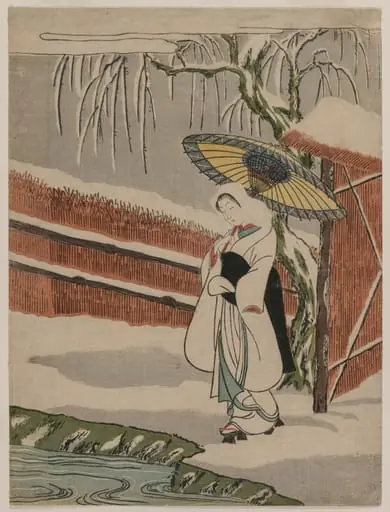 The Heron Maiden Standing Beneath a Willow Tree
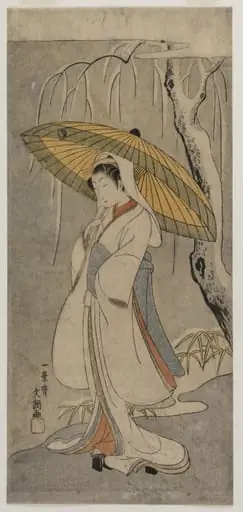 Segawa Kikunojo II as the Heron Maiden (from the series Ichimura Theater)
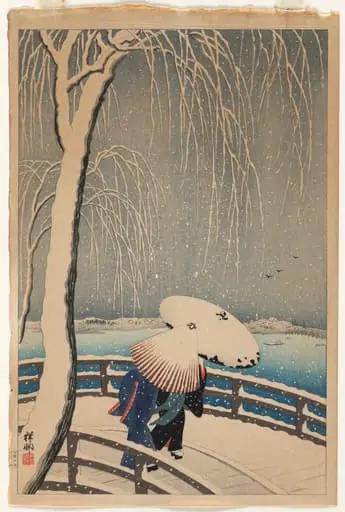 Umbrellas in Snow
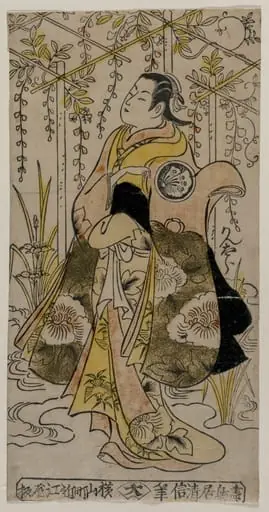 Sanjo Kantaro as a Young Woman Standing in a Wisteria Arbor
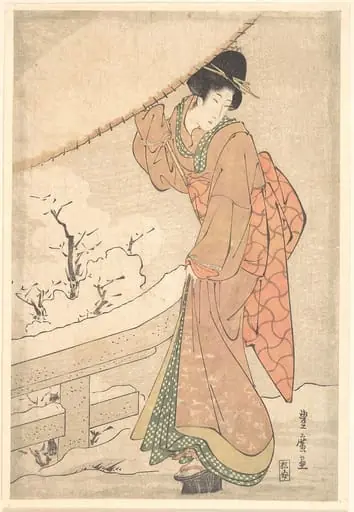 Untitled
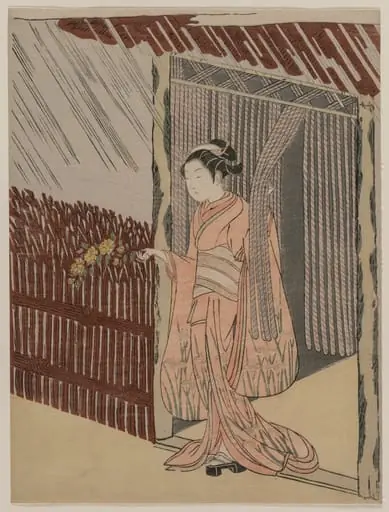 A Girl Dressing in Pink
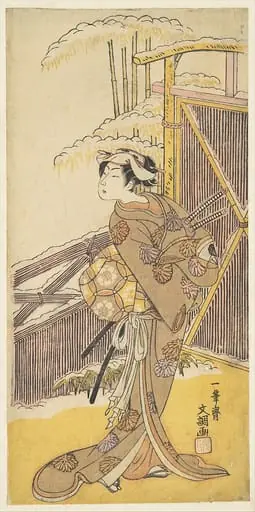 初世尾上菊五郎の戸無瀬|Onoe Kikugorō as Tonase, from Kanadehon Chūshingura (Kanadehon Chūshingura, Shosei Onoe Kikugorō no Tonase)
 Untitled
 Dancer as Kuzunoha, Fox Spirit Disguised as a Woman
 On the Road, A Lady of the Genkō Era (1313-34), from the series Thirty-Six Elegant Selections