Artwork
Hatsuito of the Yamashiroya Likened to Bush Clover, from Beauties of the Floating World Compared to Flowers
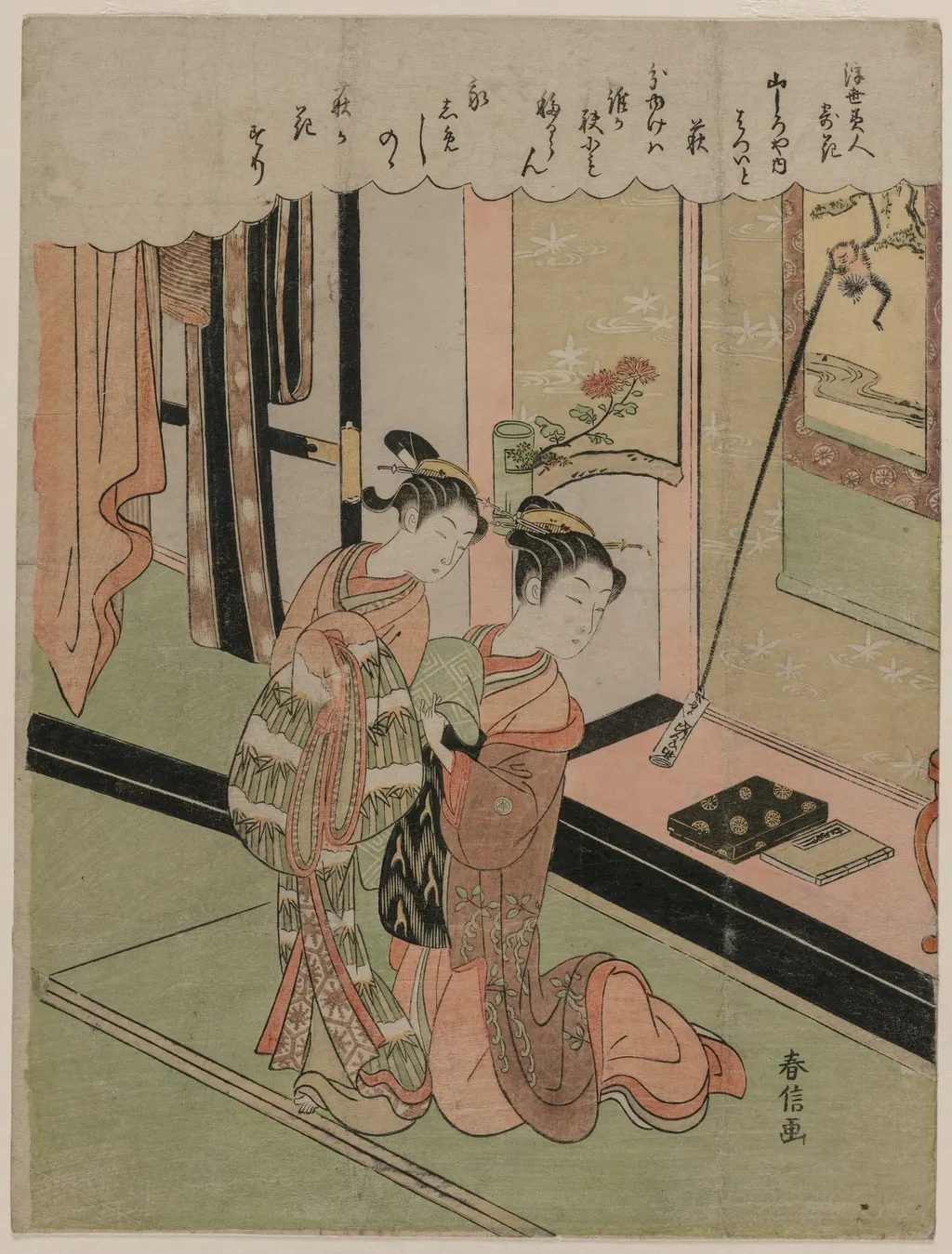
Hatsuito of the Yamashiroya Likened to Bush Clover, from Beauties of the Floating World Compared to Flowers is a print by the Romanticist artist Suzuki Harunobu. It dates from 1770 and is held in the collection of the Cleveland Museum of Art. The print depicts the courtesan Hatsuito of the Yamashira‑ya establishment as she assists a servant by fastening his obi.
About this work
Hatsuito is a courtesan in a brothel, and the scene is full of symbols: a gibbon offers her a love letter, and there's a painting in the room with a moon motif.
This painting shows a woman, Hatsuito, tying her servant's obi sash.
She's likened to autumnal bush clover.
Hatsuito is a courtesan in a brothel, and the scene is full of symbols: a gibbon offers her a love letter, and there's a painting in the room with a moon motif.
The gibbon and moon motifs are interesting. They represent the deluded mind and a popular seasonal theme.
This mix of ideas is unique.
Check out the work of artist Suzuki Harunobu (Japanese, 1724–1770) for more like this.
Overview
The print depicts the courtesan Hatsuito of the Yamashira‑ya establishment as she assists a servant by fastening his obi. She is presented alongside a painted scene in which a gibbon appears, holding a love letter that bears her name. The composition intertwines domestic activity with symbolic elements drawn from seasonal and literary motifs.
Subject & Meaning
Hatsuito is compared to the autumn bush clover, a flower traditionally associated with the moonlit season. The gibbon, a recurrent emblem of the misguided or deluded mind, reaches toward the moon’s reflection, suggesting an unattainable desire. By presenting the animal as a messenger of affection, the image links the courtesan’s beauty with an elusive, idealized love.
Technique & Style
Executed in the ukiyo‑e woodblock technique, the work employs delicate line work and subtle colour washes to render the figures and interior setting. The contrast between the crisp rendering of Hatsuito’s attire and the softer, atmospheric treatment of the painted scene within the room highlights the layered narrative.
Context
The print belongs to a series that likens courtesans to various flowers, a common practice in Edo‑period visual culture that reinforced seasonal associations and poetic symbolism. The inclusion of the gibbon and moon motif reflects popular literary allusions of the time, where such imagery conveyed moral or emotional commentary.
Legacy
By merging portraiture of a known pleasure‑quarter figure with allegorical symbolism, the image exemplifies the nuanced storytelling characteristic of mid‑18th‑century ukiyo‑e. It continues to inform studies of gender, commerce, and visual metaphor in Edo Japan.
Artist & collection

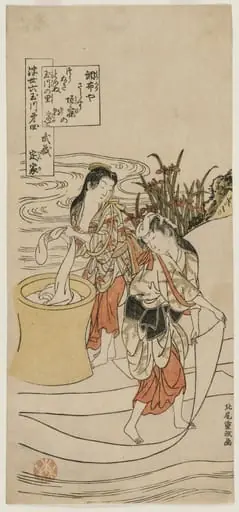 The Chofu Tama River in Musashi Province (from the series The Six Tama Rivers of the Floating World)
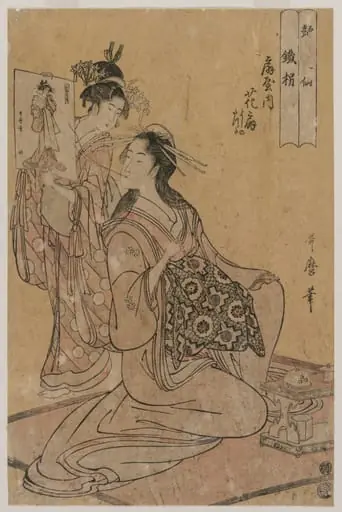 The Courtesan Hana-ogi of Ogiya as the Sennin Tekkai (from the series Eight Immortals of Sensuality)
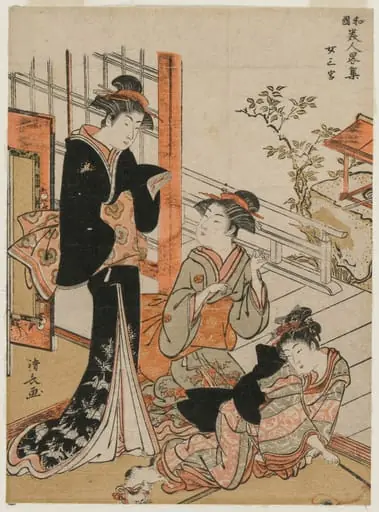 Three Women (from the series A Brief Collection of Japanese Beauties)
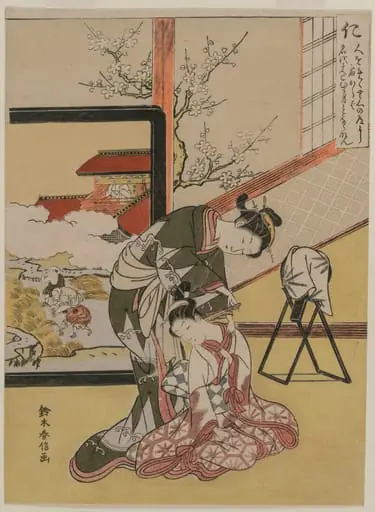 Benevolence, from The Five Virtues
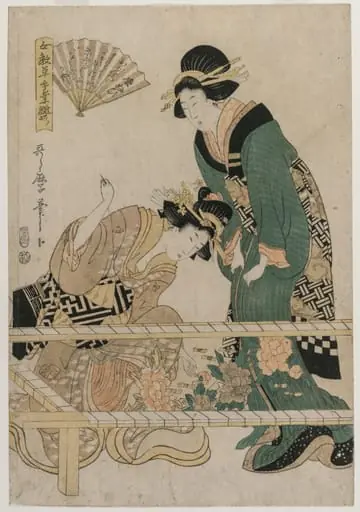 Chinese Embroidery (from the series Instructive Patterns for Women's Handicraft)
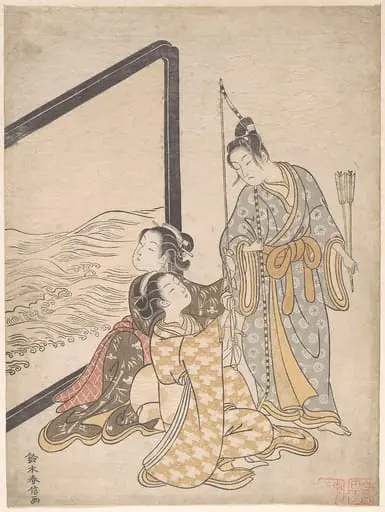 Untitled
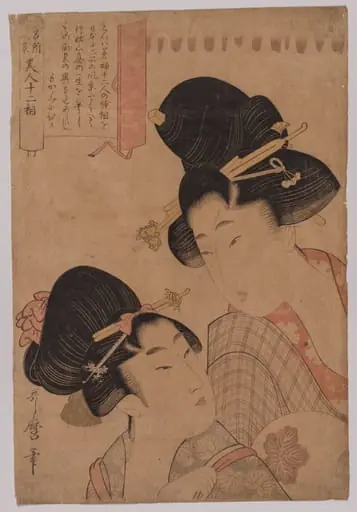 Two Courtesans
 Courtesans at Leisure from the series The Six Immortal Poets
 鈴木春信画 あやとり|Young Women Playing Cat’s Cradle (Ayatori)
 Untitled