Artwork
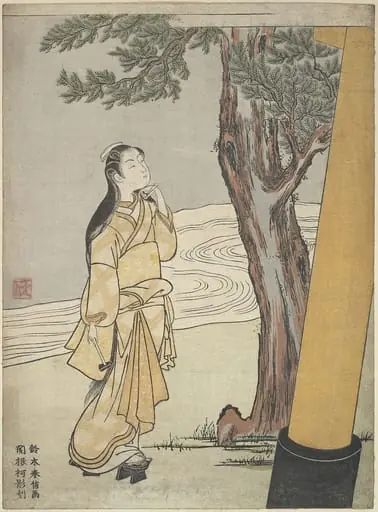
六玉川 「千鳥の玉川 陸奥名所」|“The Jewel River of Plovers, a Famous Place in Mutsu Province,” from the series Six Jewel Rivers (Mu Tamagawa: Chidori no Tamagawa, Mutsu meisho)
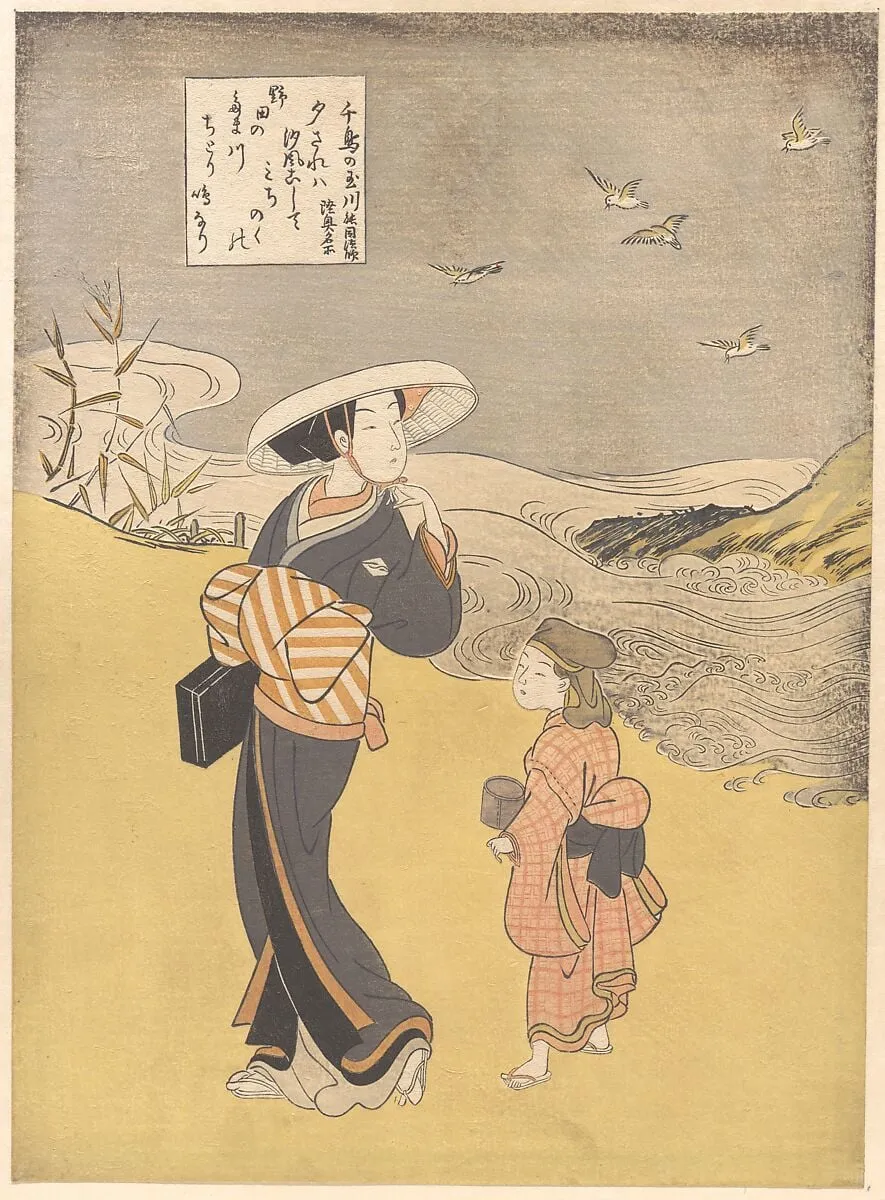
六玉川 「千鳥の玉川 陸奥名所」|“The Jewel River of Plovers, a Famous Place in Mutsu Province,” from the series Six Jewel Rivers (Mu Tamagawa: Chidori no Tamagawa, Mutsu meisho) is an ink print by the Romanticist artist Suzuki Harunobu. It dates from 1766 and is held in the collection of the Metropolitan Museum of Art.
About this work
Overview
This woodblock print, created around 1766 by Suzuki Harunobu, is part of the series Six Jewel Rivers, which depicts celebrated rivers across Japan.
This woodblock print, created around 1766 by Suzuki Harunobu, is part of the series Six Jewel Rivers, which depicts celebrated rivers across Japan. It portrays a quiet riverside scene in the former Mutsu Province, now part of northern Honshu. Rendered in ink and color on paper, the composition captures a fleeting, tranquil moment between two women, framed by natural elements that suggest both locality and serenity.
Subject & Meaning
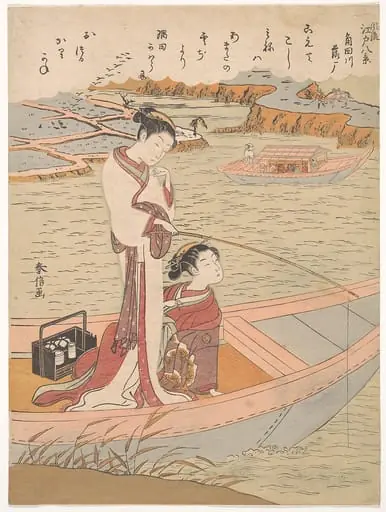
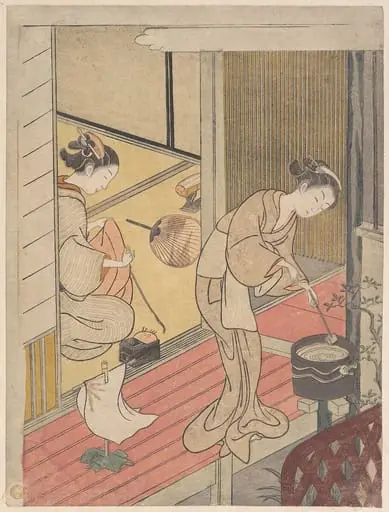
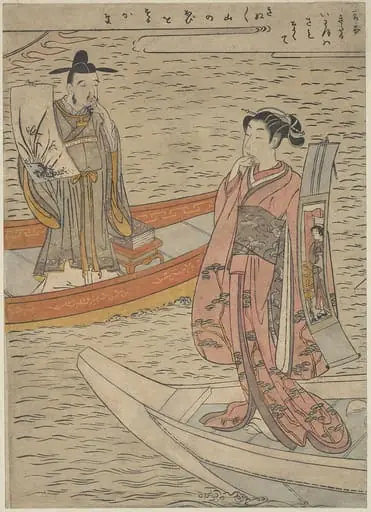
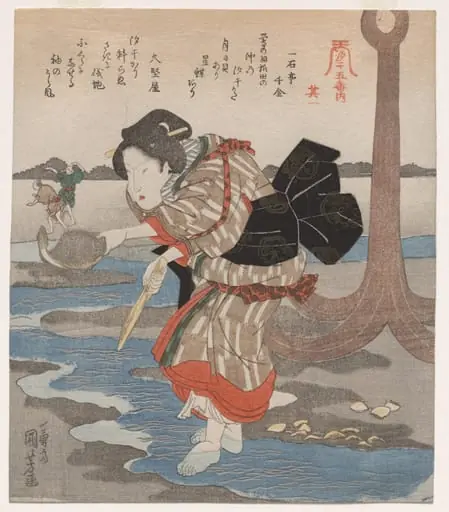
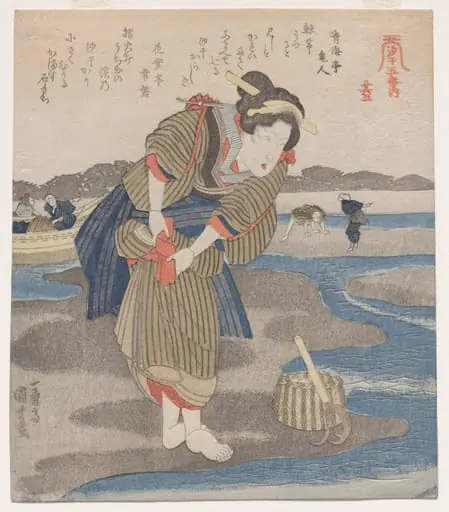
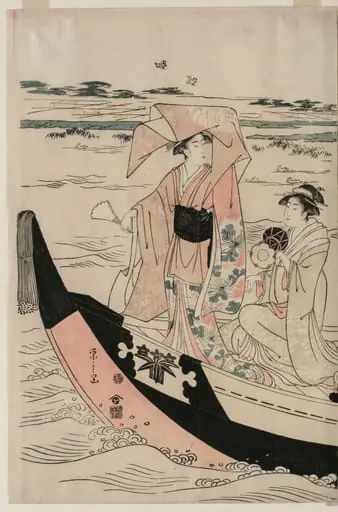
Two women stroll along a sandy riverbank—one wearing a broad hat and carrying a box, the other holding a bucket and fan. Their modest attire and unposed posture reflect everyday life rather than ceremonial ritual. The presence of plovers in flight and the crashing waves allude to the river’s name, 'Jewel River of Plovers,' linking the scene to local folklore and seasonal change. The inscription identifies it as a 'famous place,' anchoring the image in a tradition of travel literature and regional pride.
Technique & Style
Harunobu employs delicate lines and subtle gradations of color, characteristic of his nishiki-e prints. Soft washes of pigment define clothing and landscape without heavy outlines, while minimal cross-hatching suggests texture in the reeds and water. The composition uses spatial recession—tall reeds in the foreground, a distant hill—to create depth without perspective distortion. The palette remains restrained, favoring muted tones that enhance the quiet mood of the scene.
History & Provenance
Produced during the height of Edo-period ukiyo-e popularity, this print was likely distributed as a single-sheet image for domestic display. It entered the collection of The Metropolitan Museum of Art through documented acquisitions of Japanese prints in the early 20th century. Its survival in good condition reflects its careful preservation, typical of works collected by Western institutions interested in Edo-era aesthetics.
Context
The Six Jewel Rivers series emerged during a cultural moment when travel and regional identity were increasingly popular themes in printmaking. As road networks expanded and literacy rose, depictions of famous places became commodities for urban audiences seeking vicarious experiences of the countryside. Harunobu’s focus on ordinary figures in natural settings aligns with a broader shift toward intimate, lyrical scenes over dramatic narratives.
Legacy
Harunobu’s gentle realism influenced later ukiyo-e artists who prioritized mood over spectacle. This print exemplifies the transition from bold, theatrical imagery to nuanced depictions of daily life, helping to define the aesthetic of mid-Edo period prints. Its quiet dignity continues to be studied for its compositional restraint and its role in elevating commonplace moments into enduring visual records.
Artist & collection