Artwork
Untitled
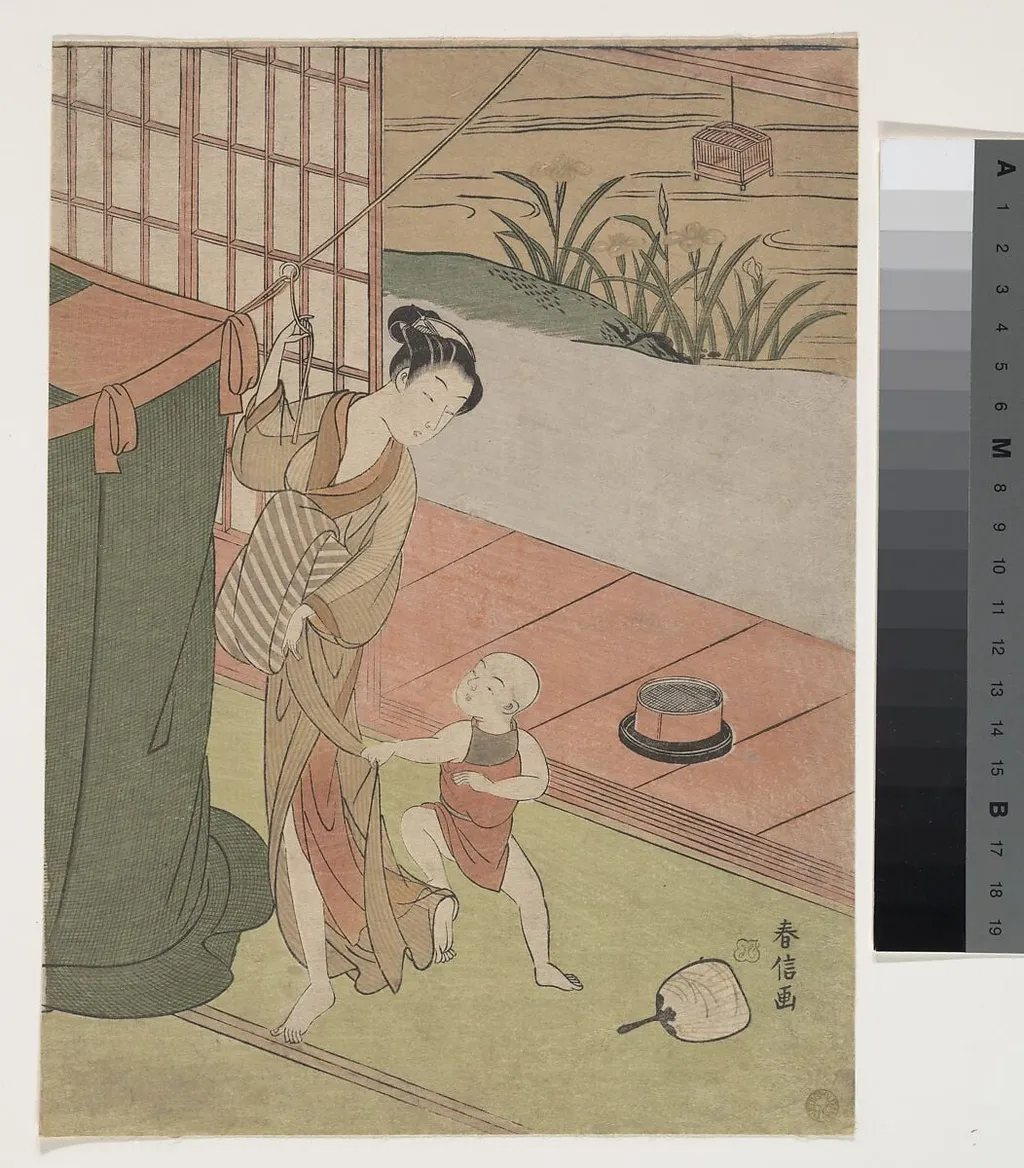
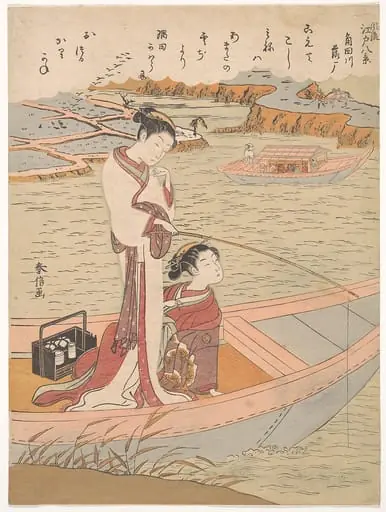
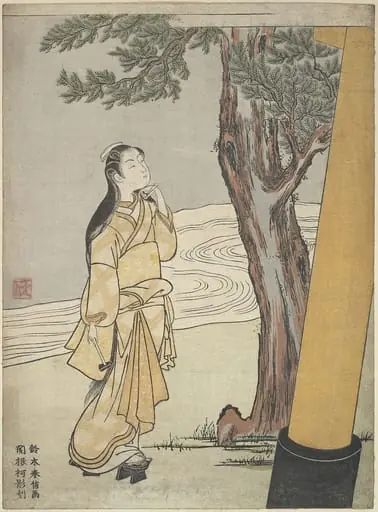
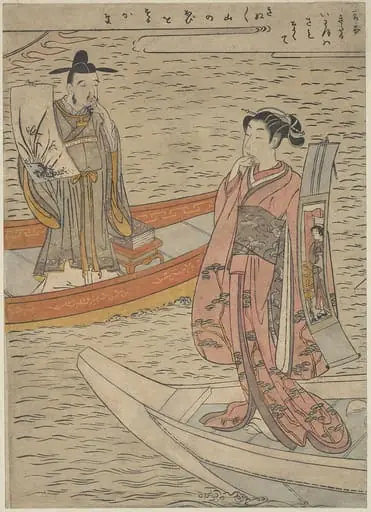
Untitled is an ink print by the Romanticist artist Suzuki Harunobu. It dates from 1769 and is held in the collection of the Metropolitan Museum of Art.
About this work
Overview
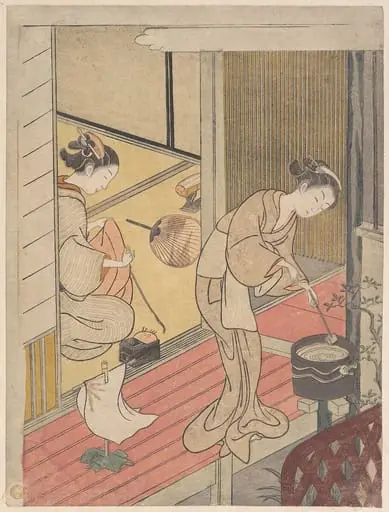
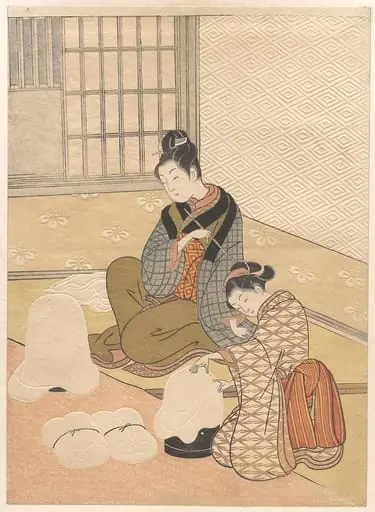
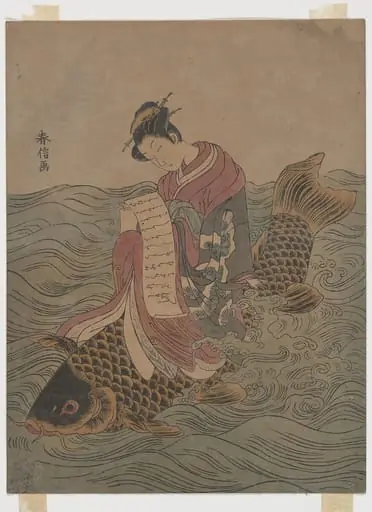
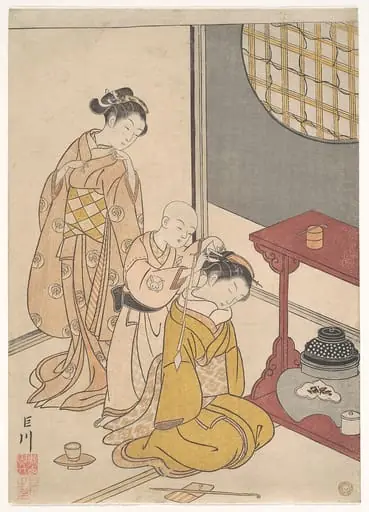
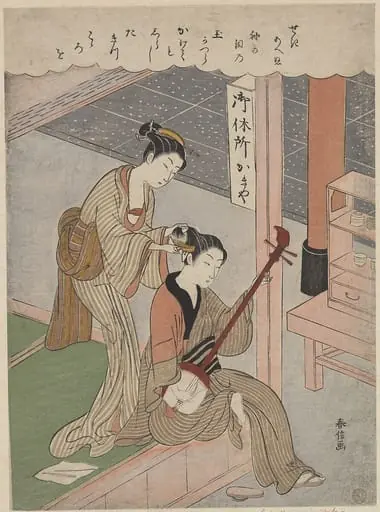
Created in 1769, this untitled woodblock print by Suzuki Harunobu exemplifies the nishiki-e (brocade print) technique, marking a pivotal moment in ukiyo-e history as one of the first works to utilize full-color printing. The composition depicts a quiet domestic scene featuring a woman kneeling on a wooden porch, holding a small cage containing a glowing firefly, while a child reaches toward it. Harunobu's mastery is evident in the delicate rendering of the figures and the subtle interplay of light and shadow, which conveys a sense of intimacy and transience. The work reflects the artist's innovative approach to color registration and his ability to capture fleeting moments of everyday life, distinguishing his style from the monochromatic or limited-color prints that preceded it. This piece underscores Harunobu's role in transforming ukiyo-e into a vibrant medium capable of expressing nuanced emotional and atmospheric qualities, influencing subsequent generations of printmakers.
Subject & Meaning
The composition captures an everyday scene of maternal care and curiosity, emphasizing the gentle interaction between mother and child. The illuminated firefly adds a subtle element of wonder, suggesting themes of fleeting light and the transient nature of ordinary life.
Technique & Style
Harunobu was among the pioneers of full‑color woodblock printing, moving beyond the earlier practice of monochrome or hand‑tinted prints. The work’s delicate palette and soft edges give it a watercolor‑like quality, highlighting the artist’s refined handling of ink and color.
Context
The print belongs to the late‑eighteenth‑century Edo period, a time when ukiyo‑e artists increasingly depicted scenes of daily life. Harunobu’s focus on intimate family moments reflects broader cultural interest in the pleasures and routines of ordinary citizens.
Legacy
Harunobu’s innovations in color printing helped establish the vibrant aesthetic that later ukiyo‑e masters would expand. Works such as this one provide valuable visual insight into the domestic environments and social customs of Edo‑era Japan.
Artist & collection