Artwork
Untitled
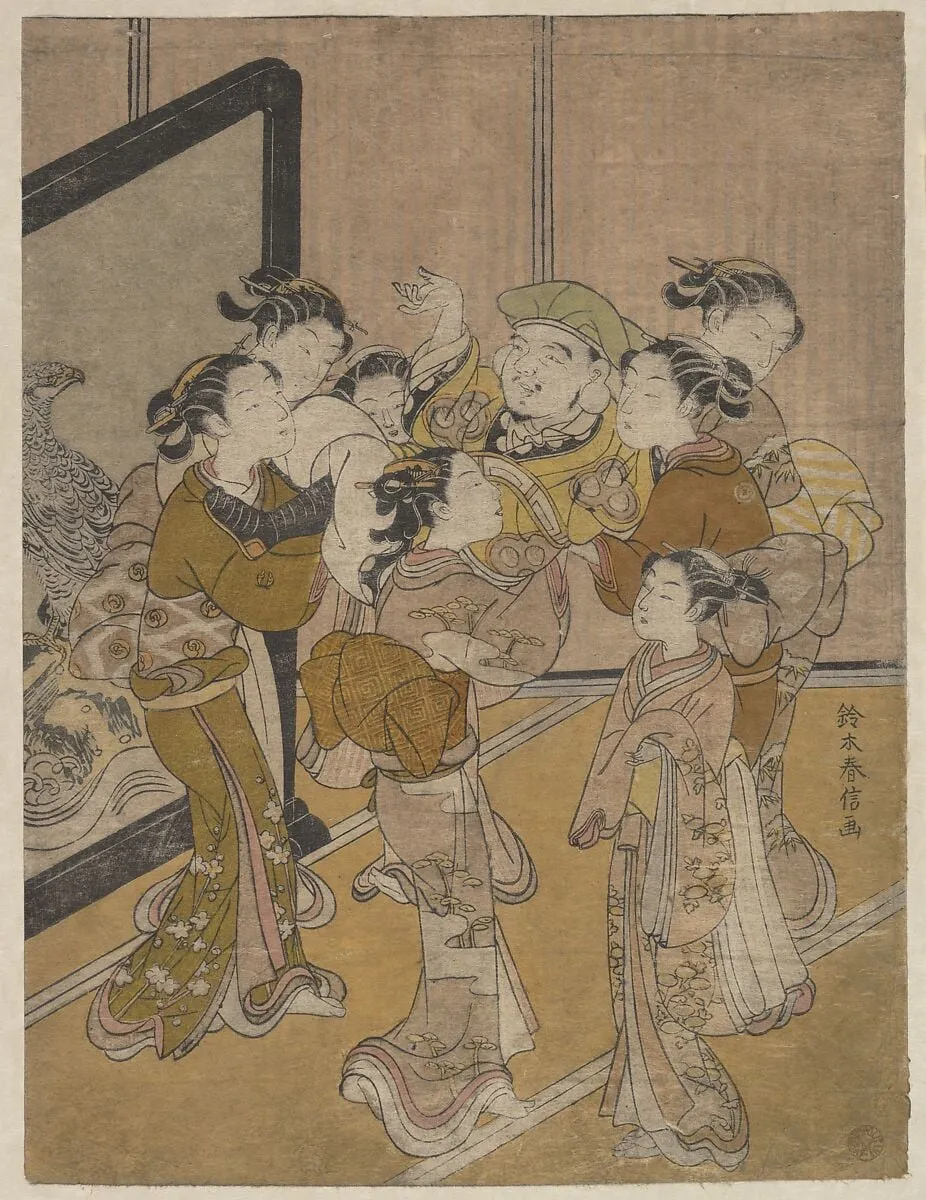
Untitled is an ink print by the Romanticist artist Suzuki Harunobu. It dates from 1766 and is held in the collection of the Metropolitan Museum of Art.
About this work
Overview
This composition exemplifies the shift from earlier, monochromatic or hand-colored prints to fully integrated, multi-block color printing.
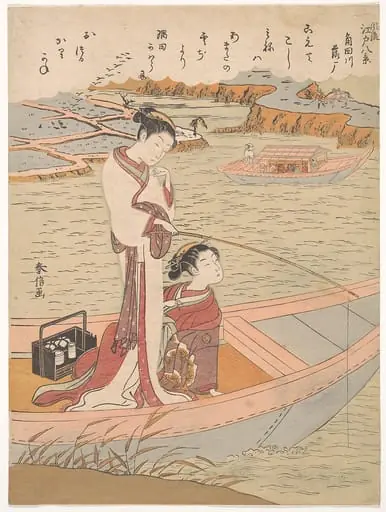
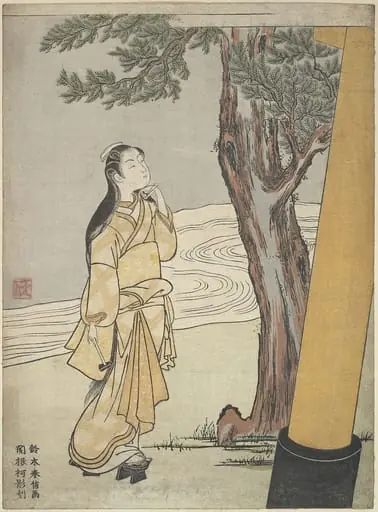
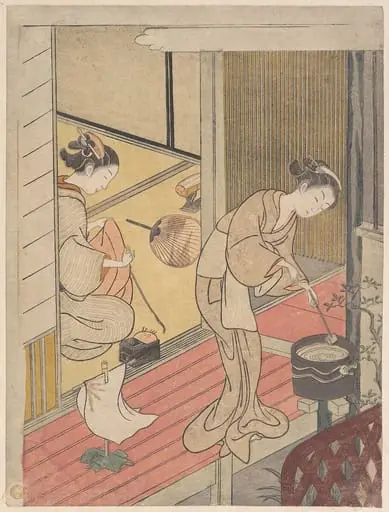
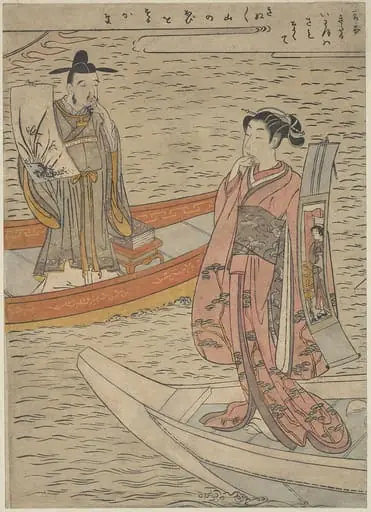
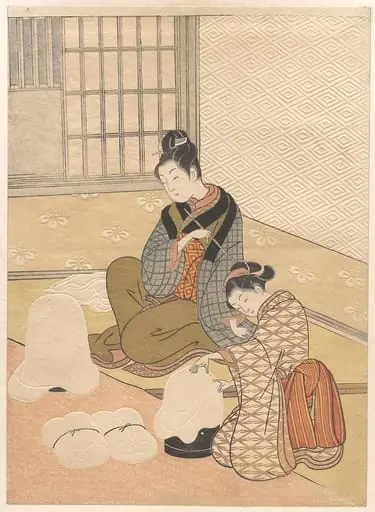
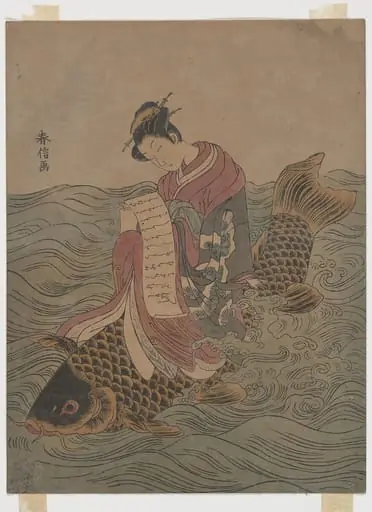
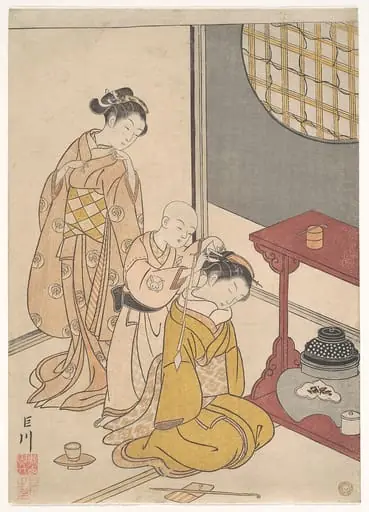
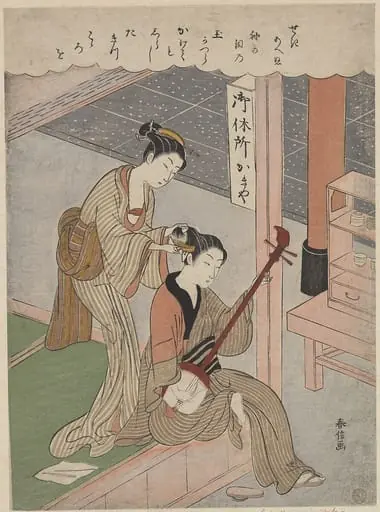
Created in 1766, this untitled woodblock print by Suzuki Harunobu stands as a seminal example of the nishiki-e (brocade picture) technique, marking a pivotal moment in the history of Japanese ukiyo-e. The work depicts a woman in a vibrant kimono leaning against a man in a patterned robe, both figures standing upon a stylized cloud. This composition exemplifies the shift from earlier, monochromatic or hand-colored prints to fully integrated, multi-block color printing. Harunobu's approach flattens the pictorial space, eliminating shadows to create a delicate, paper-cut-out aesthetic defined by soft, harmonious hues and elegant outlines. The inclusion of the cloud motif suggests a romantic or poetic narrative, a common theme in Harunobu's output that often drew from classical literature or contemporary sentiment. Produced during the artist's mature period, this print demonstrates his mastery in coordinating complex color registration and his ability to infuse everyday scenes with a refined, lyrical quality. It represents a significant advancement in the technical and artistic capabilities of Edo-period printmaking, establishing a new standard for color and composition that influenced subsequent generations of ukiyo-e artists.
Subject & Meaning
The figures reference two of the Seven Lucky Gods—Daikokuten, the deity of wealth, and Dōage, the god of longevity—linking the composition to New Year celebrations that invoke prosperity and long life. The pairing of the elegantly dressed couple on a celestial platform underscores auspicious wishes for the coming year.
Technique & Style
Harunobu employed the nishiki-e method, an early full‑color woodblock technique that allowed multiple blocks to apply separate hues. The print’s composition relies on broad, unmodulated color fields and a flattened perspective, resembling a paper cut‑out, which was innovative for its time.
History & Provenance
As one of the first Japanese prints to use the full‑color nishiki-e process, this work marks a turning point in ukiyo‑e production. Prior to Harunobu’s experiments, most prints were monochrome or limited to a few added colors. The piece contributed to the rapid spread of polychrome prints in the late eighteenth century.
Context
The mid‑1760s saw a growing demand for decorative prints that could be displayed in homes during festive occasions. Harunobu’s depiction of popular deities and New Year symbolism catered to this market, reflecting both religious iconography and contemporary fashion trends.
Artist & collection