Artwork
White-Robed Willow Kannon
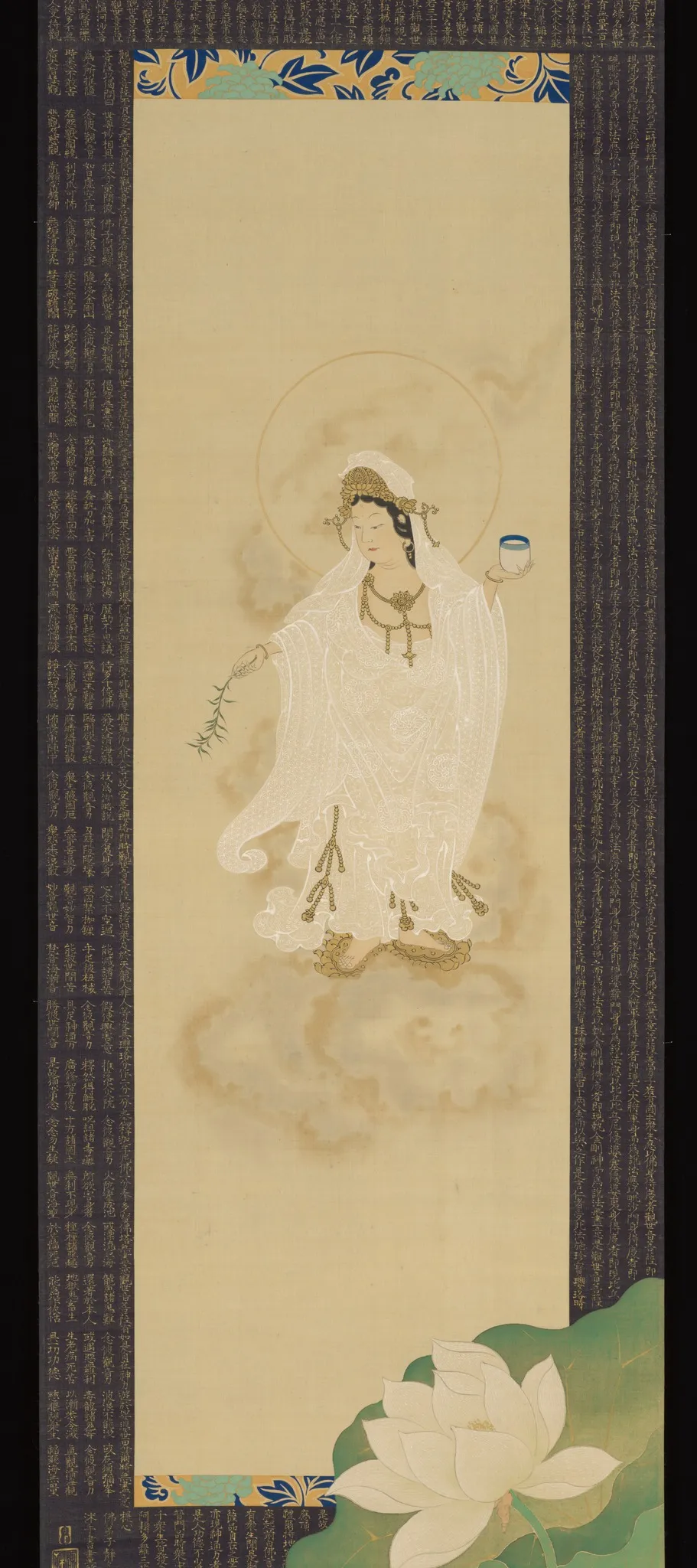
White-Robed Willow Kannon is an unspecified painting by the Nihonga artist Suzuki Shuitsu. It dates from 1866 and is held in the collection of the Metropolitan Museum of Art.
About this work
Overview
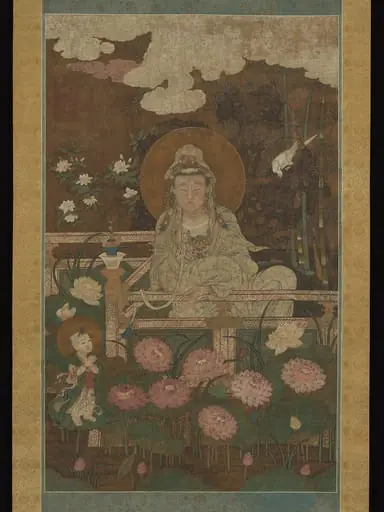
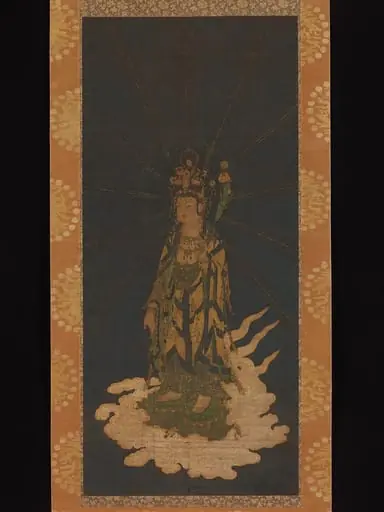
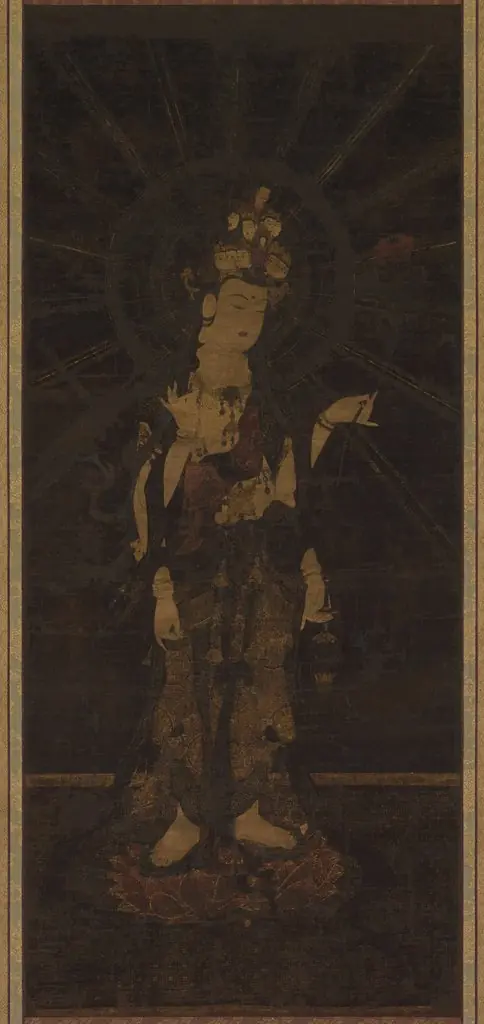
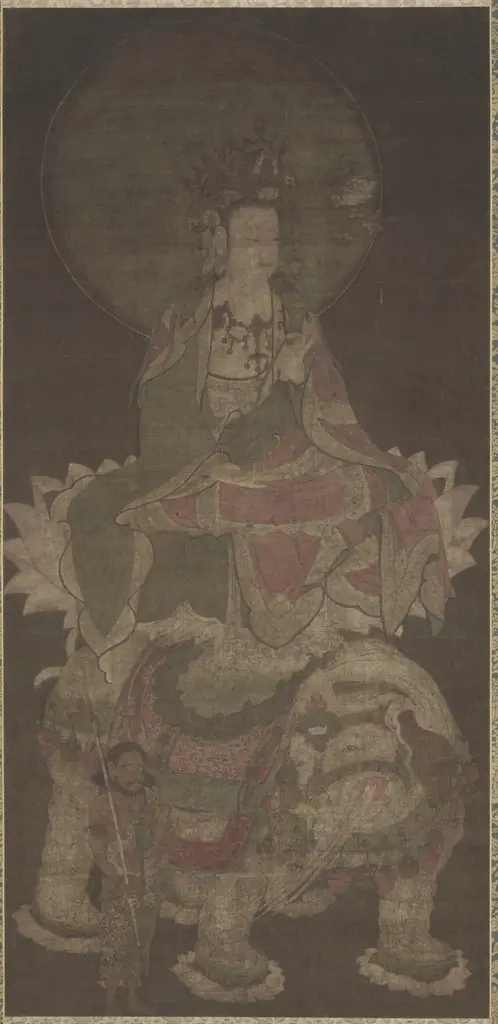
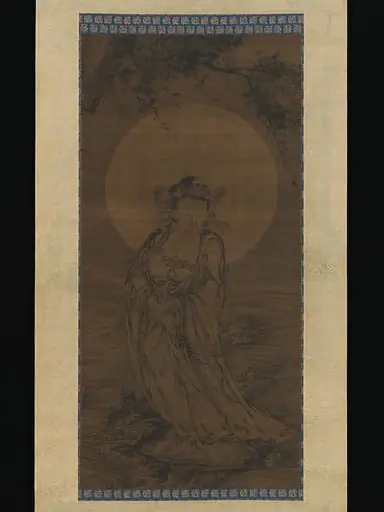
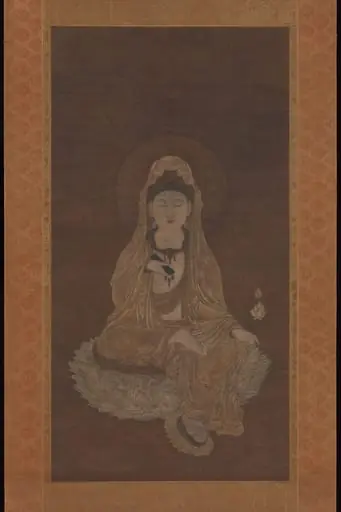
White‑Robed Willow Kannon, painted by Suzuki Shuitsu in 1866, is part of the Metropolitan Museum of Art’s collection. The work presents a solitary figure in flowing white robes, poised upon a cloud with a luminous halo. Soft yellow tones dominate the background, while a delicate floral border in blue, green and gold frames the scene, lending an overall atmosphere of quiet contemplation.
Subject & Meaning
The central figure is a representation of Kannon, the Buddhist bodhisattva of compassion, identifiable by the willow branch held in the right hand and a small blue‑and‑white cup in the left. The blurred facial features and gentle expression emphasize a spiritual, rather than personal, presence, inviting viewers to focus on the serene qualities associated with mercy and enlightenment.
Technique & Style
The composition balances linear elegance with a decorative border, reflecting the late Edo period’s synthesis of religious iconography and decorative painting.
Shuitsu employs a restrained palette of whites, yellows, and muted blues, punctuated by gold accents on the robes and border. Fine brushwork renders the cloud and floral framing with subtle texture, while the halo is suggested through a soft, diffused light. The composition balances linear elegance with a decorative border, reflecting the late Edo period’s synthesis of religious iconography and decorative painting.
History & Provenance
Created in the final years of the Edo period, the painting entered the Metropolitan Museum of Art’s collection through a 20th‑century acquisition, though specific details of its earlier ownership remain undocumented. Its presence in a major Western institution highlights the growing interest in Japanese religious art during the early modern era.
Context
Suzuki Shuitsu worked within a tradition of Buddhist visual culture that flourished in Japan’s mid‑19th century, when artists often blended devotional subjects with refined decorative elements. The inclusion of a willow—a symbol of resilience—and the cup, a common offering, situates the work within contemporary practices of visualizing compassion for both monastic and lay audiences.
Artist & collection