Artwork
Beatrix Fielden-Kaye
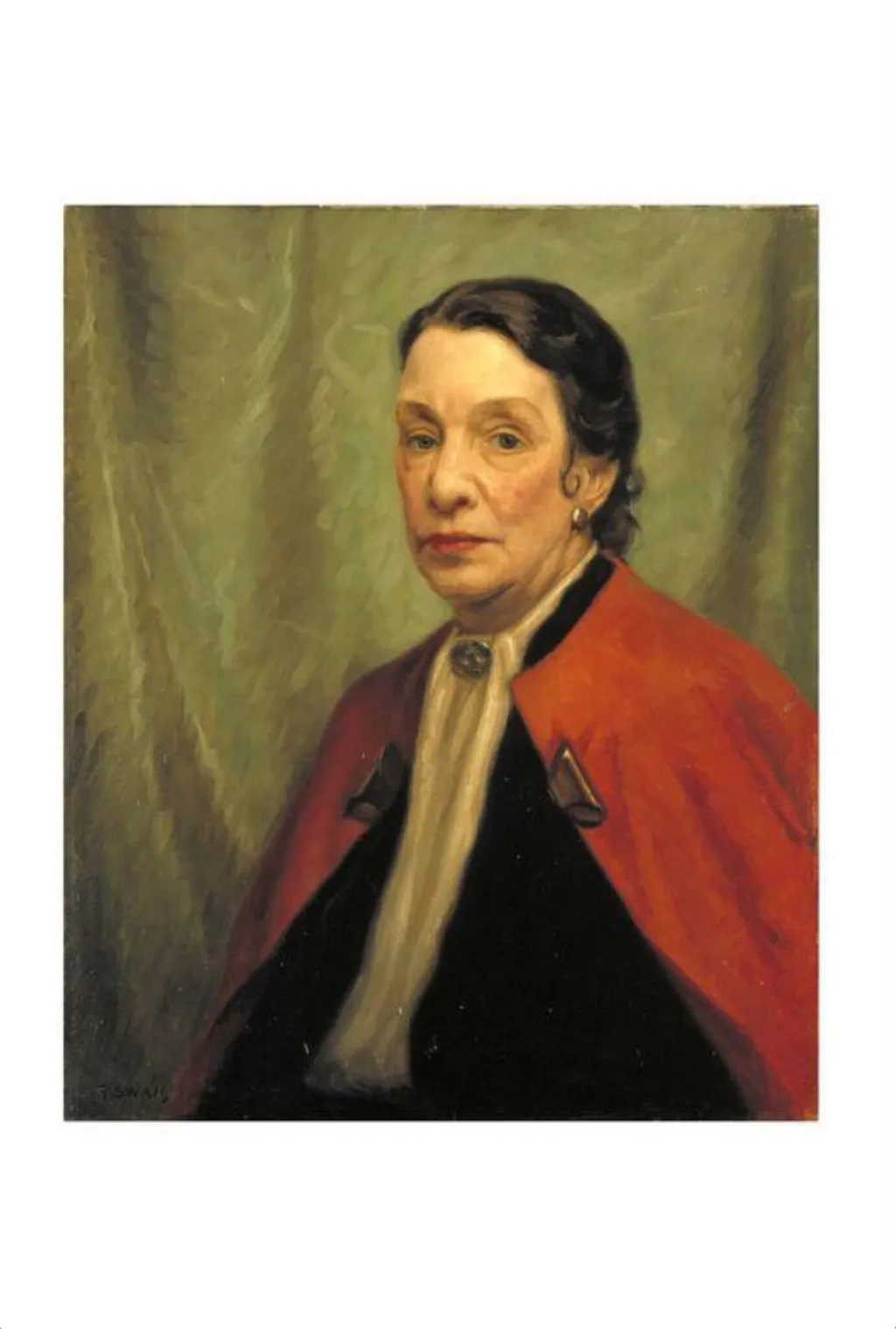
Beatrix Fielden-Kaye is a paint painting by Robert John Swan. It dates from 1939 and is held in the collection of the Victoria and Albert Museum.
About this work
Overview
This oil painting presents a half-length portrait of Beatrix Fielden-Kaye, rendered in a restrained yet evocative palette. The composition centers on the sitter, whose attire—a black dress, red cloak, and white scarf fastened by a brooch—contrasts with the muted, golden-hued drapery behind her. The artist’s signature is visible, confirming authorship and completion.
Subject & Meaning
The portrait captures Beatrix Fielden-Kaye with a solemn expression, her dark hair and direct gaze lending an air of quiet intensity.
The portrait captures Beatrix Fielden-Kaye with a solemn expression, her dark hair and direct gaze lending an air of quiet intensity. The choice of clothing, particularly the red cloak and white scarf, introduces subtle visual emphasis, while the neutral background ensures focus remains on her likeness. The work suggests a formal commission, likely intended to preserve the sitter’s presence for posterity.
Technique & Style
Executed in oil, the painting employs broad, confident brushstrokes to model light and shadow, particularly in the rendering of the face and cloak. The artist balances detail with suggestion, allowing the red shawl to emerge as a focal point against the darker tones. The soft, blurred background and restrained color scheme reflect conventions of portraiture from the period, prioritizing clarity of form over decorative excess.
History & Provenance
The painting’s origins and early ownership remain undocumented, though its style aligns with late 19th- or early 20th-century portraiture. The signature provides a starting point for attribution, while the subject’s identity suggests a connection to a family or social circle of means. Further research may clarify its commissioning and subsequent history of display or collection.
Context
Portraits of this kind were often commissioned by individuals seeking to record their likeness for private or public display. The attire and composition reflect contemporary norms for formal portraiture, where clothing and setting conveyed social status. Comparable works from the era can be found in institutions such as the Victoria and Albert Museum, offering broader insight into period conventions.
Artist & collection
Artist
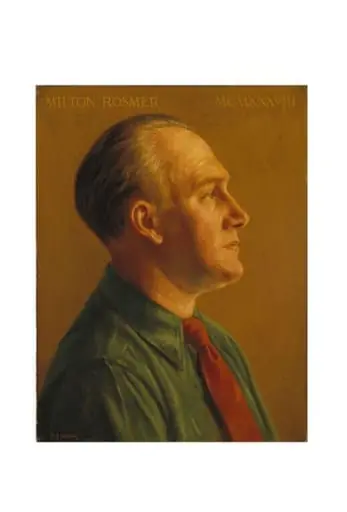
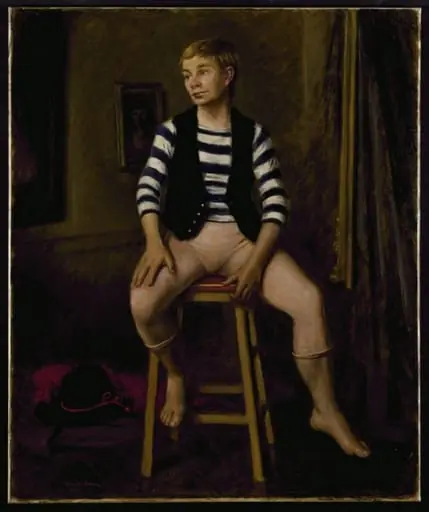
Robert John Swan painted portraits of real people in mid-20th-century Britain. His brush captured figures like Milton Rosmer in 1938 and Beatrix Fielden-Kaye in 1939, along with Lindsay Kemp in a 1962 portrait titled…

 Portret de femeie
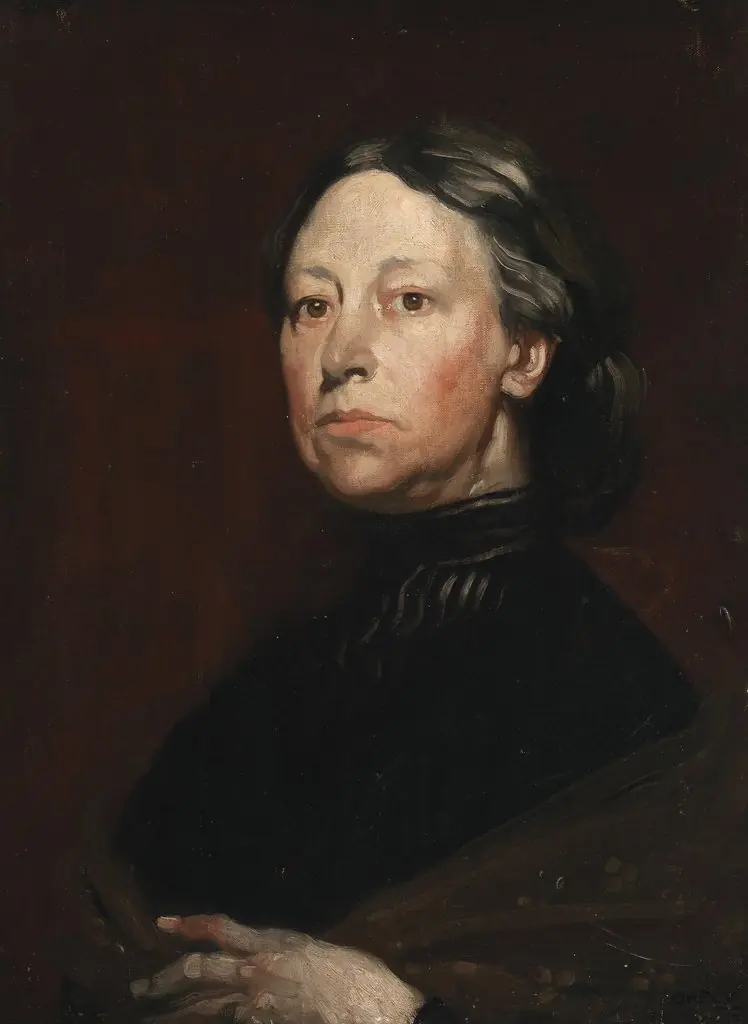 Portrait of Augusta Gregory (1852-1932), Dramatist and Folklorist
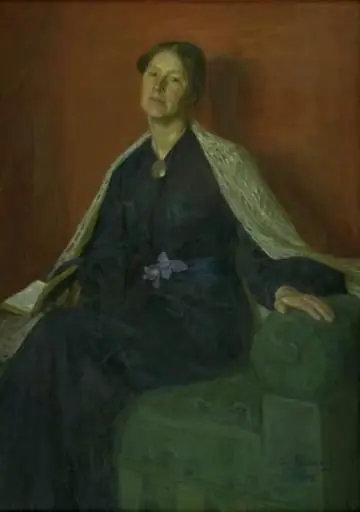 Portrait of a Lady
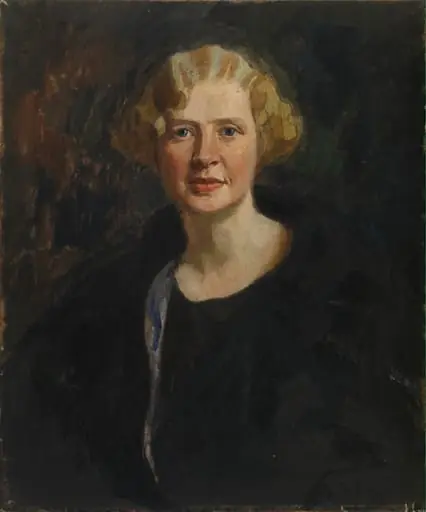 Ester Wegeliuksen os. Tawaststjernan muotokuva
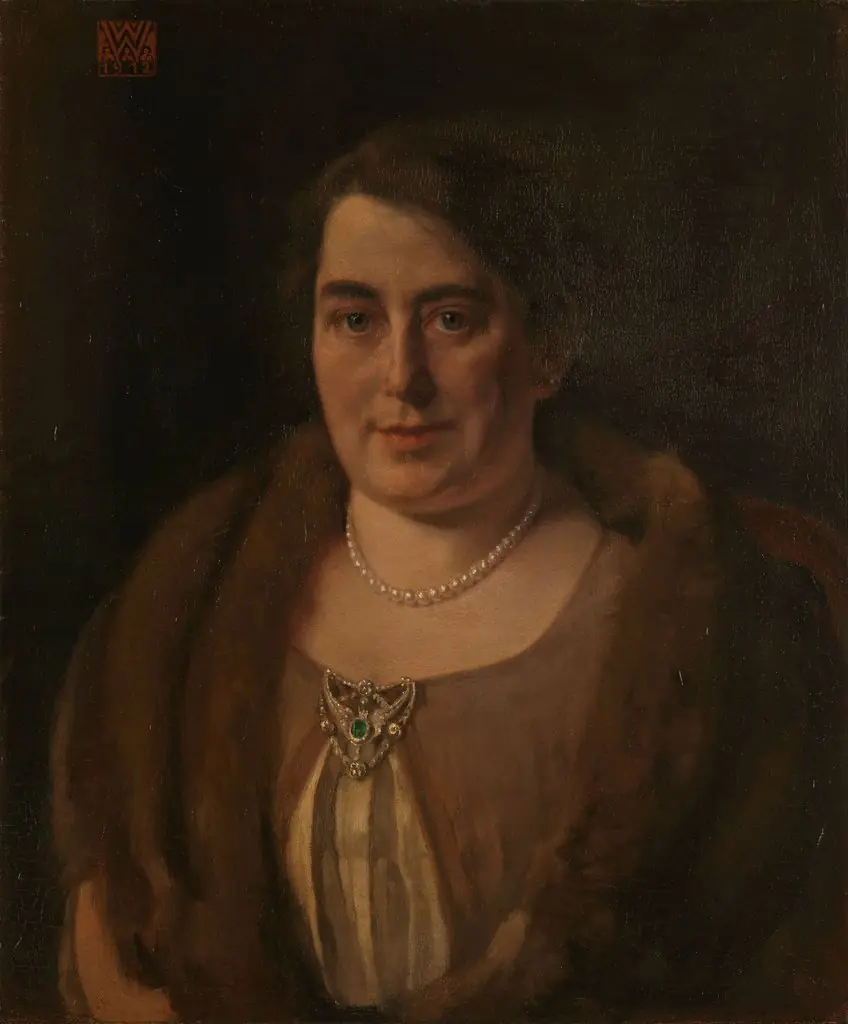 Adèle van Meekren, de tweede echtgenote van Andries van Wezel
 Portrait of a Lady
 Portrait of Miss D.K. Richmond
 Portret de femeie
 Portretul Jeniței Irimescu
 Portretul doamnei Thérèse Richard
 Mary Walker Waugh
 Lucille Lisle