Artwork
Donkeys
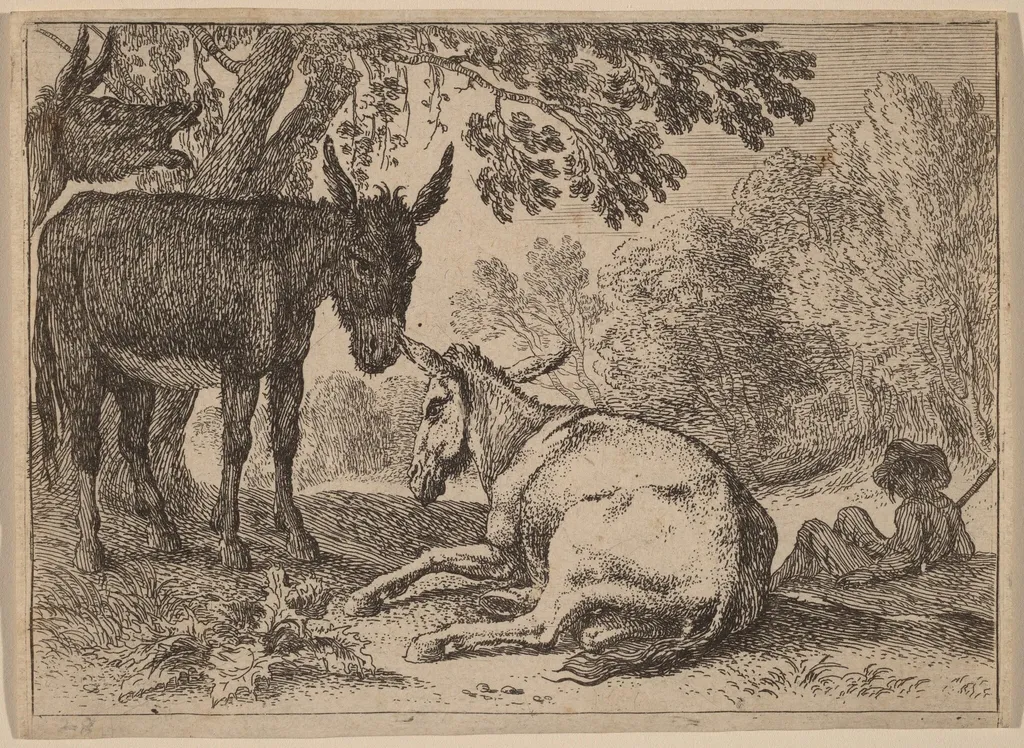
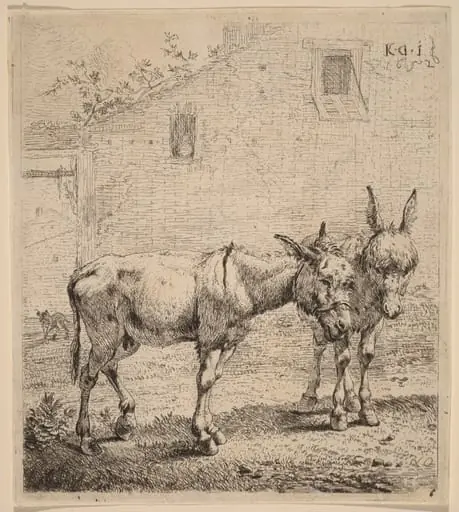
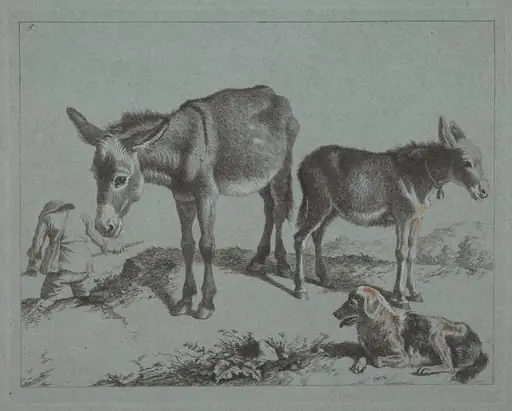
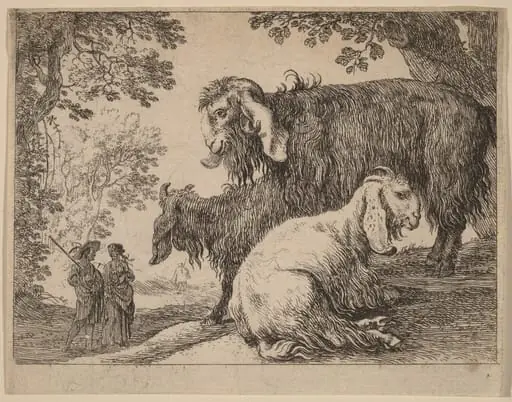
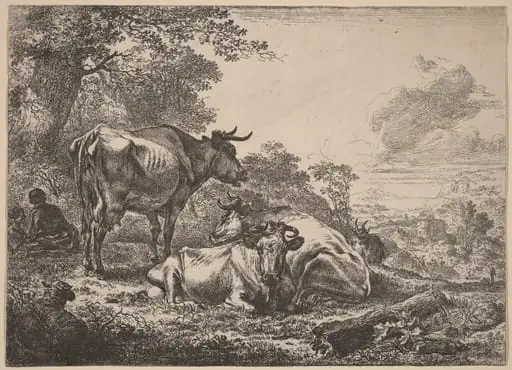
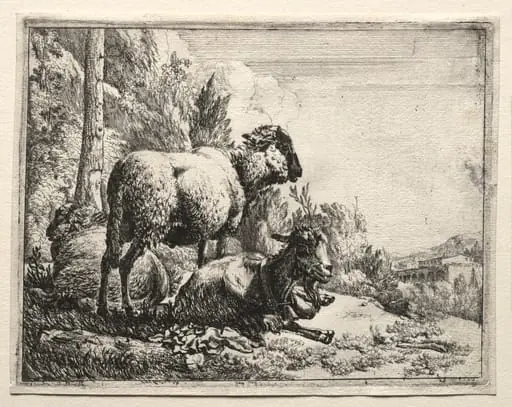
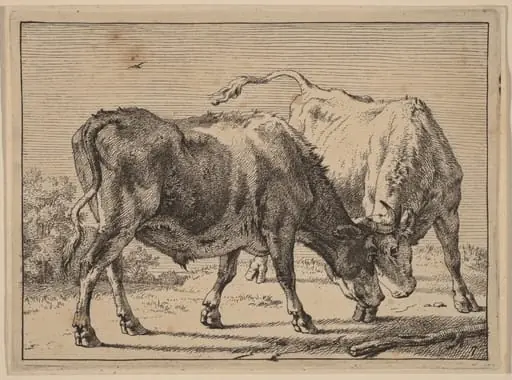
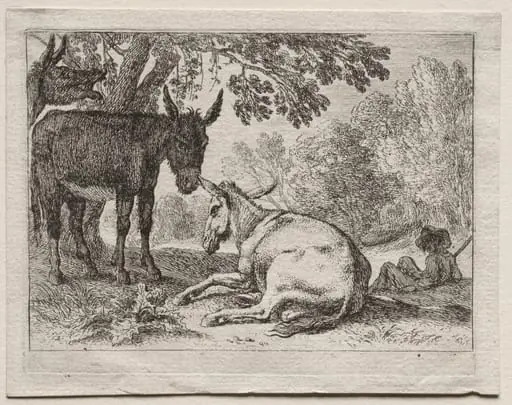
Donkeys is an ink print by the Baroque artist Herman van Swanevelt. It dates from 1628 and is held in the collection of the National Gallery of Art.
About this work
Overview
The work belongs to the printmaking tradition of early 17th-century Northern Europe, where artists turned to intimate subjects with technical precision.
Created in 1628, Donkeys is an etching by Herman van Swanevelt, depicting two donkeys standing quietly in a rural landscape. The work belongs to the printmaking tradition of early 17th-century Northern Europe, where artists turned to intimate subjects with technical precision. Van Swanevelt’s use of fine lines captures subtle movement and stillness, transforming a simple scene into a study of form and atmosphere.
Subject & Meaning
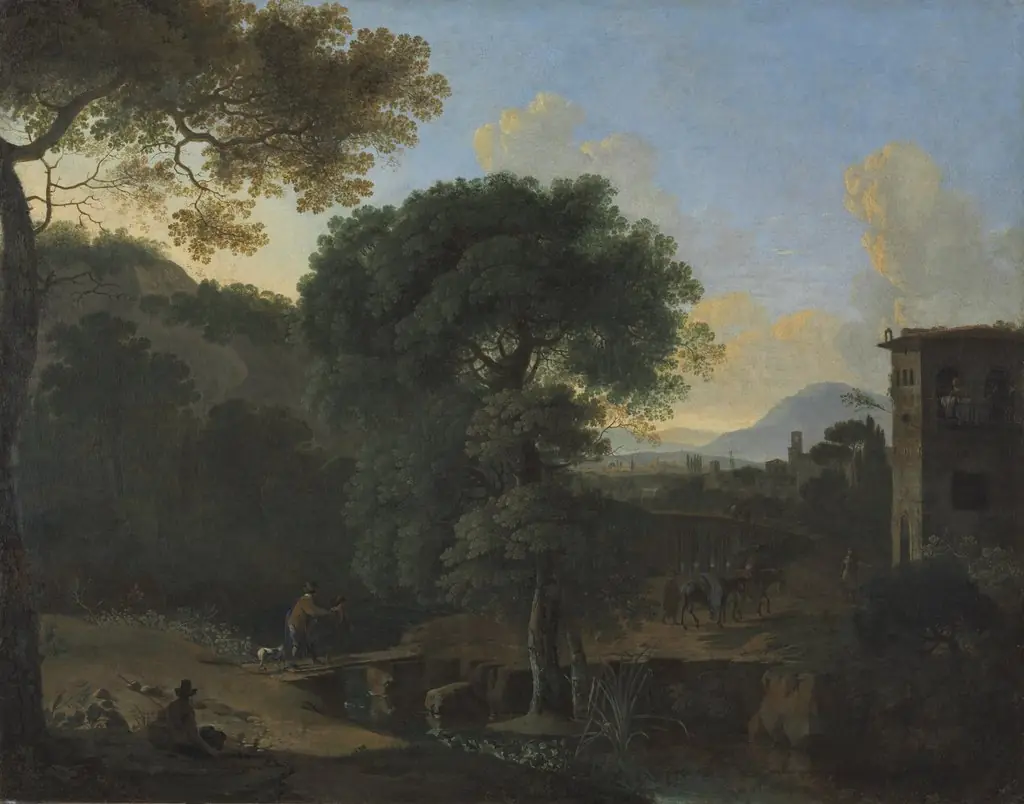
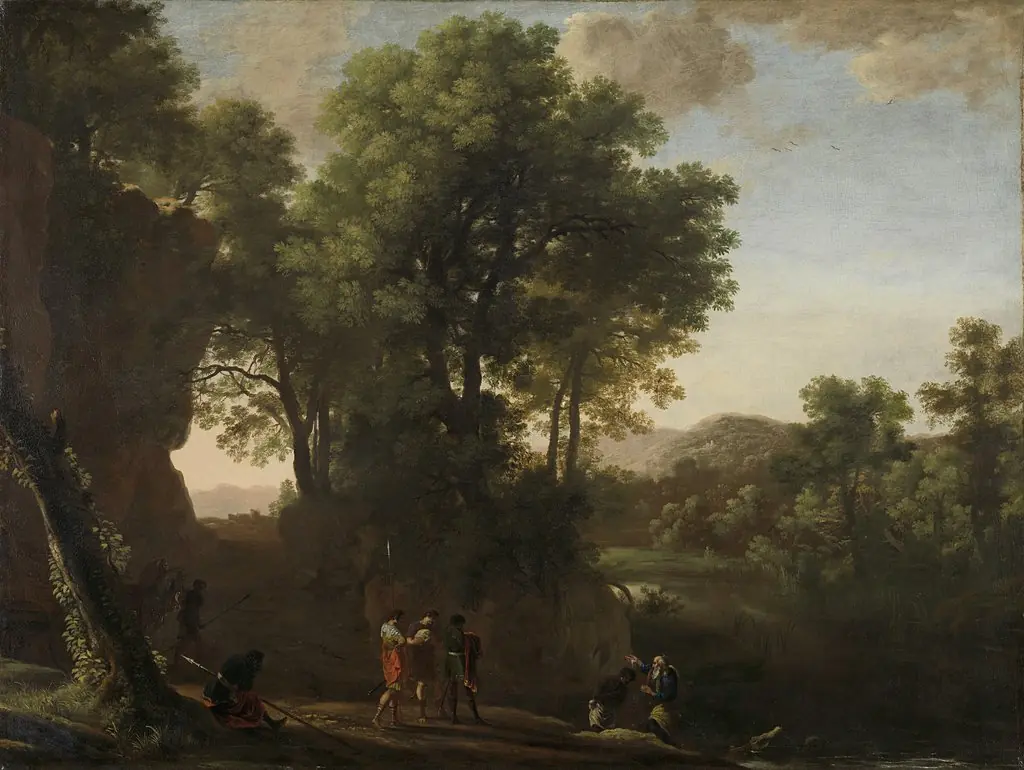
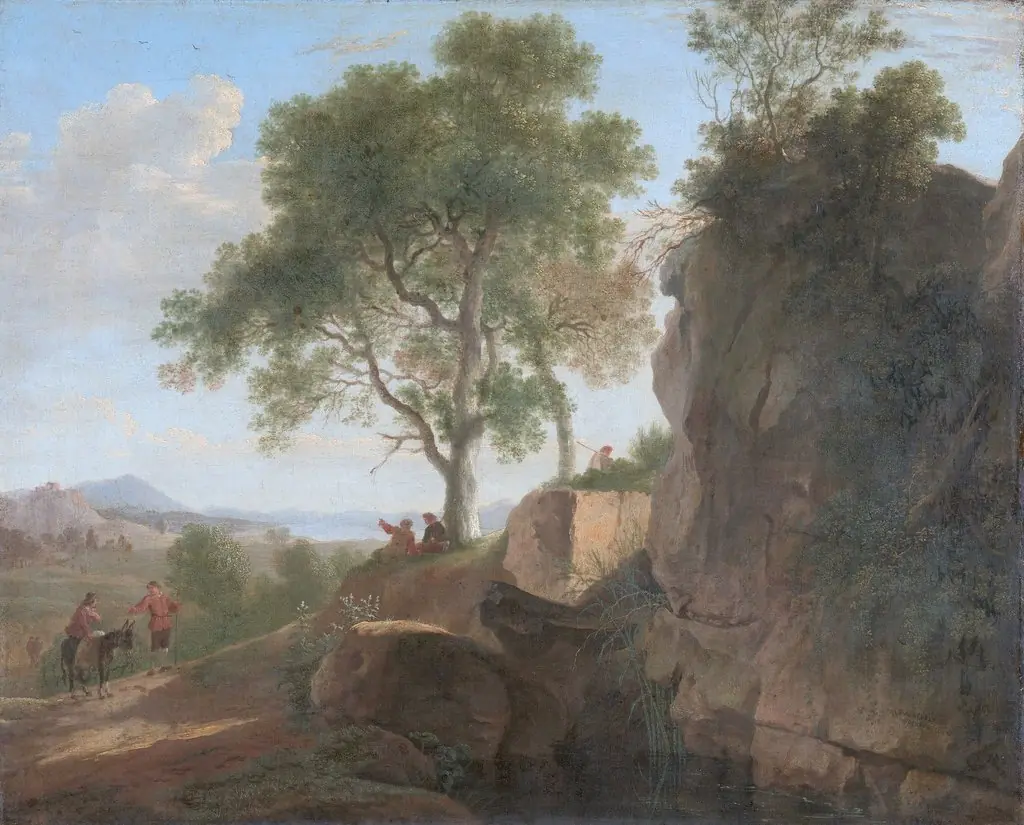
The two donkeys, rendered with quiet dignity, occupy a tranquil, undulating terrain. Their postures suggest rest rather than labor, inviting contemplation rather than narrative. The absence of human figures or overt symbolism shifts focus to the animals’ presence and the natural environment, reflecting a growing interest in everyday life as worthy of artistic attention.
Technique & Style
Van Swanevelt employed etching to achieve delicate tonal variation, using controlled line weight to define texture and light. Deeper incisions create shadow and coarse fur, while lighter, finer lines suggest soft grass and distant hills. The dry, tactile quality of the surface mirrors the landscape’s arid stillness, demonstrating mastery over the medium’s capacity for nuance.
History & Provenance
The print was produced during van Swanevelt’s early career, before his move to Rome, when he was still engaged with Dutch and Flemish landscape traditions. It likely circulated among collectors of prints, valued for its quiet observation and technical finesse. Its survival in institutional collections, including the National Gallery of Art, attests to its enduring recognition among connoisseurs.
Context
In the 1620s, landscape prints were gaining traction as independent subjects, not merely backgrounds for religious or mythological scenes. Van Swanevelt’s work aligns with this shift, echoing contemporaries who found poetic potential in humble rural subjects. His attention to natural detail reflects broader trends in Northern European art toward empirical observation and atmospheric realism.
Legacy
Donkeys stands as an early example of the animal study in print form, influencing later artists who explored similar themes with drypoint and etching. Its restrained composition and sensitivity to light continue to be referenced in discussions of 17th-century printmaking, particularly in how ordinary subjects can convey quiet resonance through technical discipline.
Artist & collection