Artwork
The Woman on the Hinny
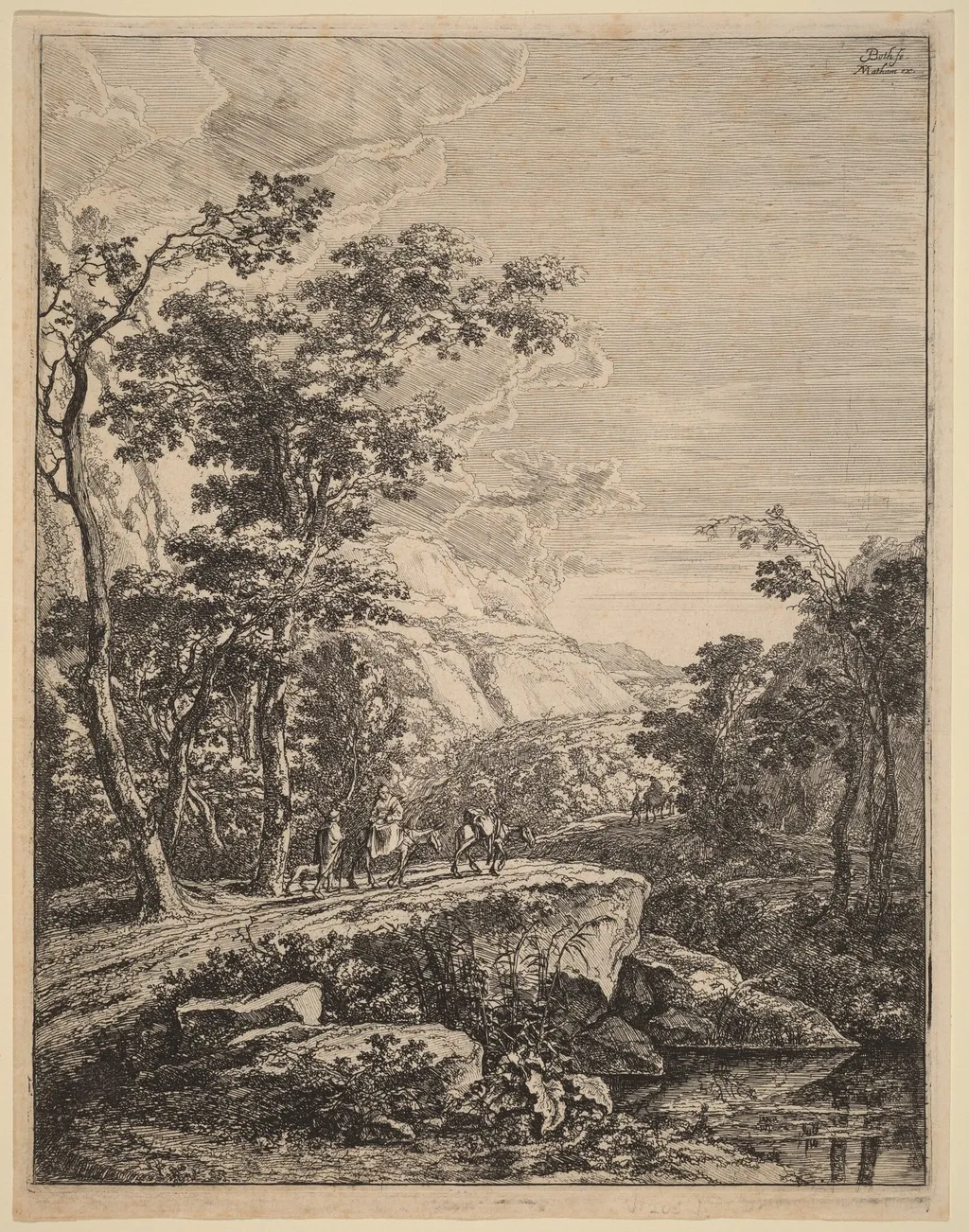
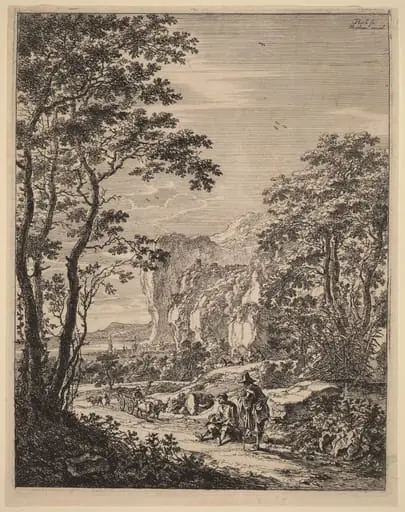
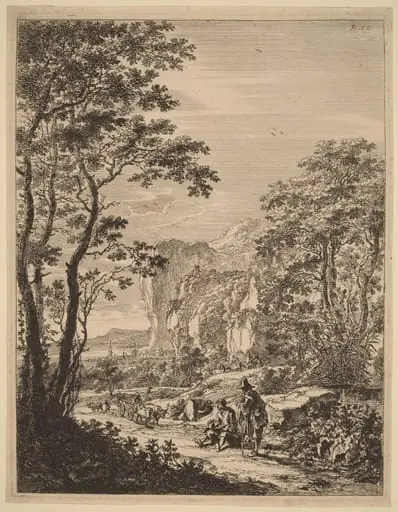
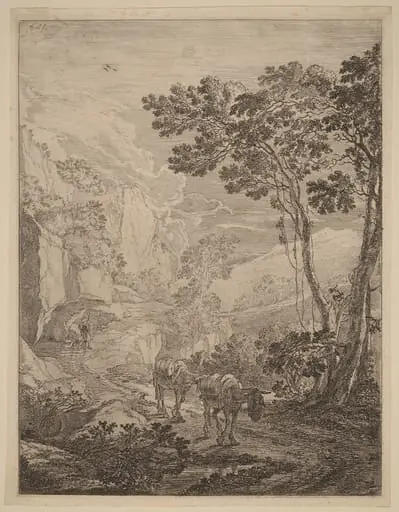
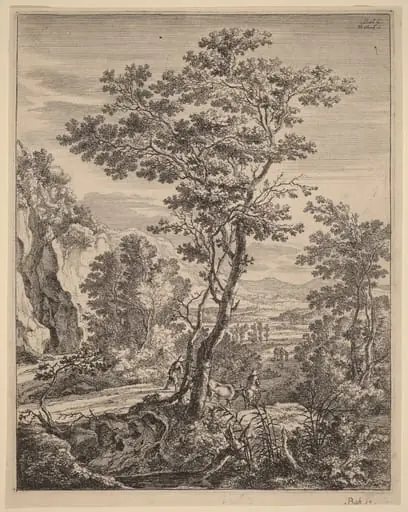
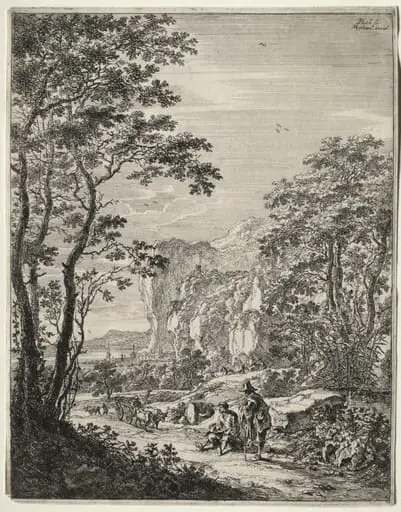
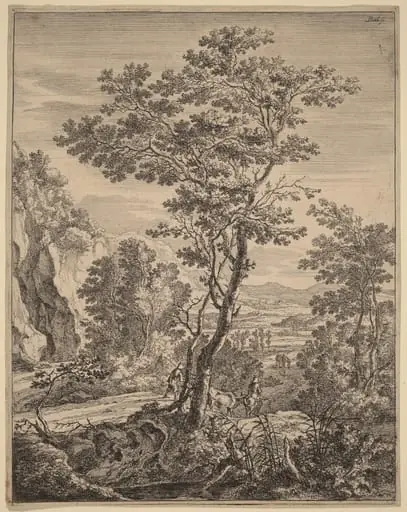
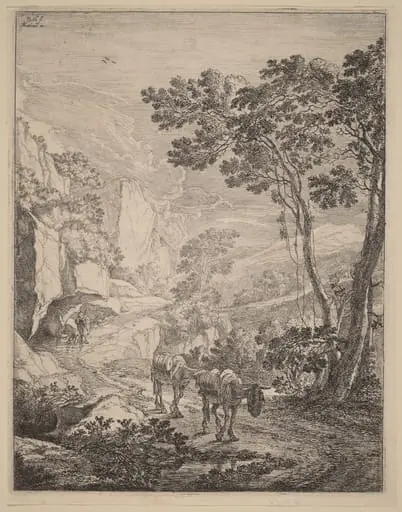
The Woman on the Hinny is an ink print by the Baroque artist Jan Both. It is held in the collection of the National Gallery of Art.
About this work
Overview
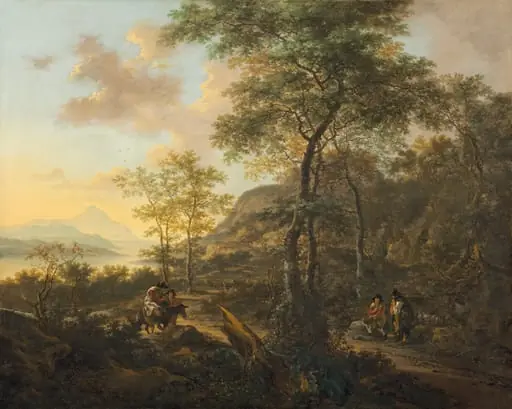
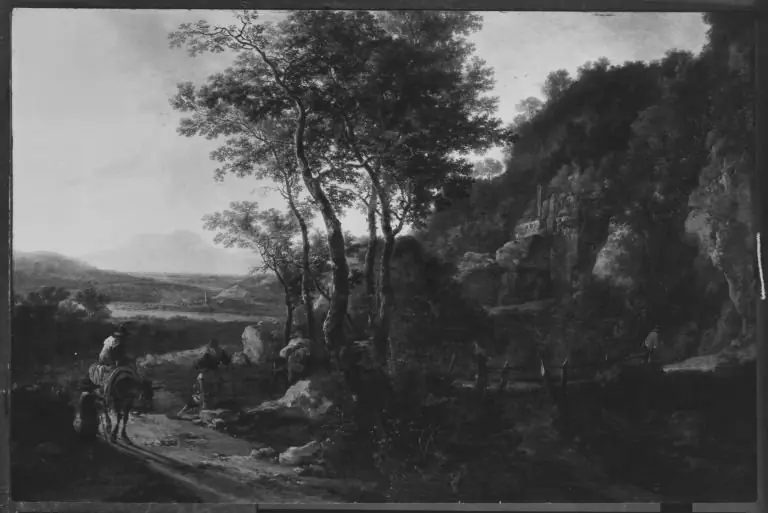
Jan Dirksz Both’s etching *The Woman on the Hinny*, executed on laid paper circa 1700, presents a solitary figure on a small hybrid animal against a gently illuminated countryside. The composition leads the eye from the foreground rider along a winding track toward distant hills and scattered structures, framing a quiet, pastoral moment.
Subject & Meaning
The central figure is a woman astride a hinny—a cross between a donkey and a horse—suggesting a modest, rural activity. The open road, flanked by trees, rocks and low vegetation, underscores themes of travel and the simple pleasures of country life that recur in Both’s work.
Technique & Style
Both employs fine etching lines on laid paper, achieving delicate tonal gradations and a subtle sense of texture. The rendering is meticulous, with careful shading that creates depth in the landscape and a realistic portrayal of the animal’s fur and the surrounding foliage.
History & Provenance
Jan Dirksz Both, a Dutch painter and printmaker active in the early‑mid‑17th century, incorporated Italianate landscape influences into his Northern European practice. This print, dated around the turn of the 18th century, reflects his later period when he favored the harmonious light and warm atmosphere characteristic of Italian scenery.
Context
The image aligns with the Italianate tradition that Dutch artists adopted after exposure to southern models, blending realistic detail with a softened, sun‑bathed environment. Both’s choice of a solitary rider on a modest animal situates the work within the genre of bucolic scenes popular among his contemporaries.
Own this work as a print
Artist & collection

Artist
Jan Dirksz Both was a Dutch painter, draughtsman, and etcher, who made an important contribution to the development of Dutch Italianate landscape painting.