Artwork
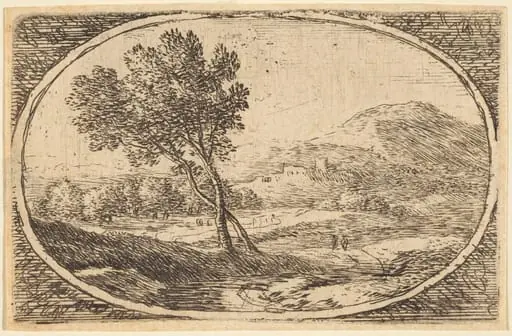
Two Trees with Crossed Trunks
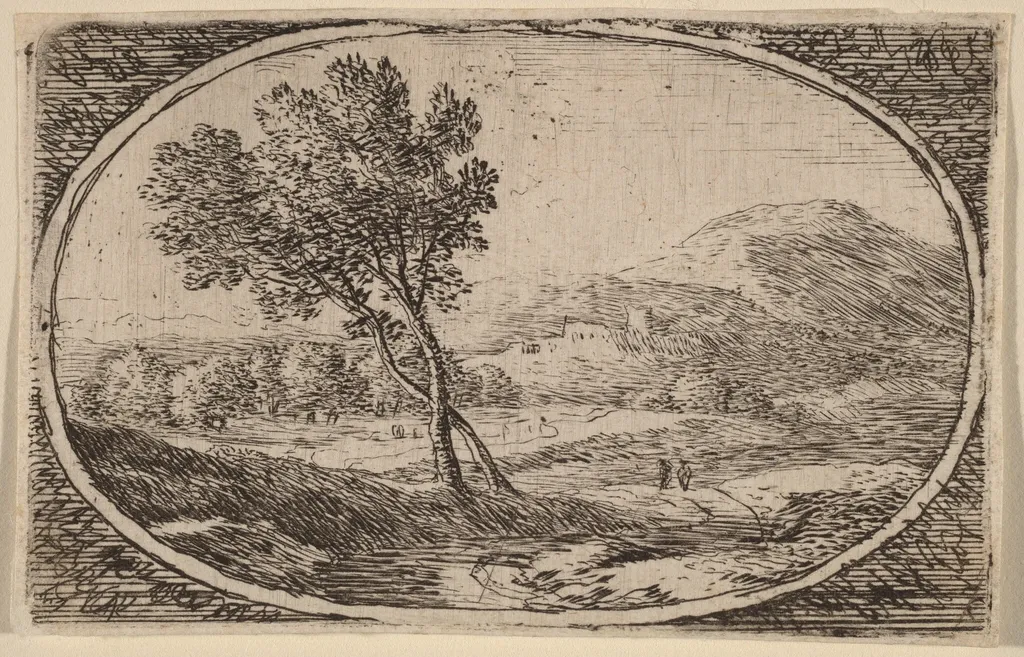
Two Trees with Crossed Trunks is an ink print by the Baroque artist Herman van Swanevelt. It dates from 1628 and is held in the collection of the National Gallery of Art.
About this work
Overview
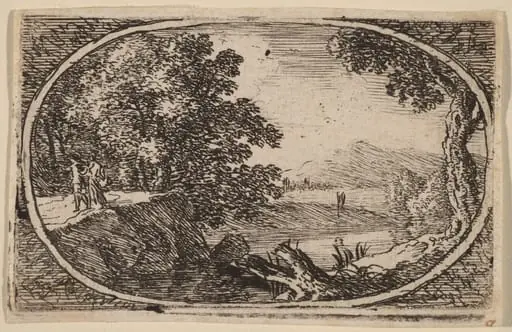
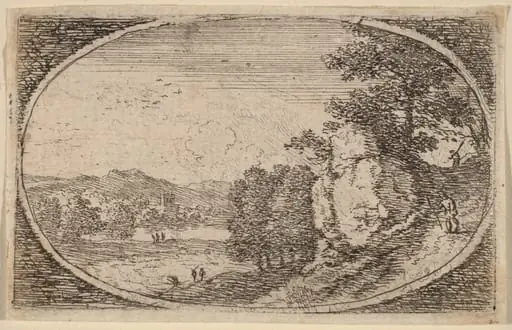
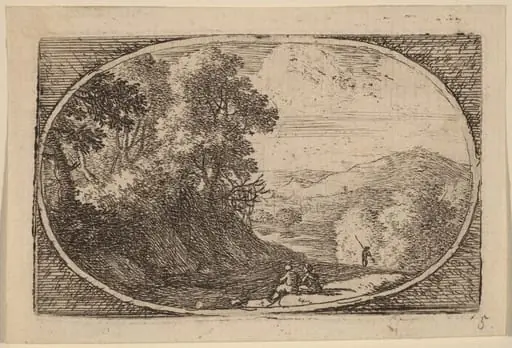
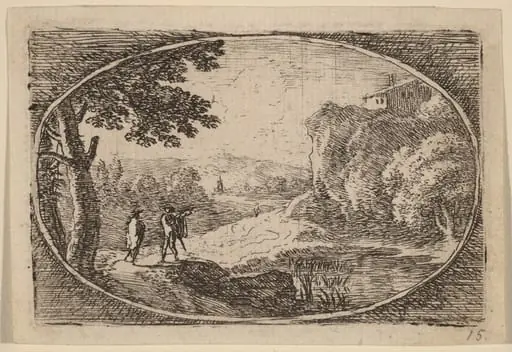
Two Trees with Crossed Trunks is an etching executed by Herman van Swanevelt in 1628. The work presents a compact, circular composition bounded by a pronounced frame. Within the circle, two contorted tree trunks dominate a modest landscape, their branches extending outward to enclose a distant hill and a few diminutive figures.
Subject & Meaning
The print depicts a pastoral scene where the intertwined trunks serve as a visual focal point, guiding the eye toward the horizon. The modest figures and rolling hill suggest a tranquil countryside, while the crossing of the trees may allude to themes of unity or the intertwining of natural forces.
Technique & Style
Swanevelt employed the etching process, incising fine lines into a metal plate to achieve delicate gradations of tone. Sharp, incisive strokes delineate the play of light and shadow on the bark, giving the trees a palpable sense of volume. The stark contrast between the dark outlines and the lighter background heightens the three‑dimensional illusion.
Context
Created in the early Baroque period, the work reflects the era’s interest in landscape as a genre and the growing popularity of printmaking for disseminating images. Swanevelt, known for his atmospheric landscapes, integrates a structured composition with naturalistic detail, aligning with contemporary Dutch and Flemish artistic trends.
Legacy
Although not as widely reproduced as some of his later paintings, this etching illustrates Swanevelt’s skill in rendering depth within a limited medium. It contributes to the broader appreciation of early 17th‑century printmaking and offers insight into the artist’s approach to landscape composition.
Artist & collection