Artwork
View of the Aqua Acetosa
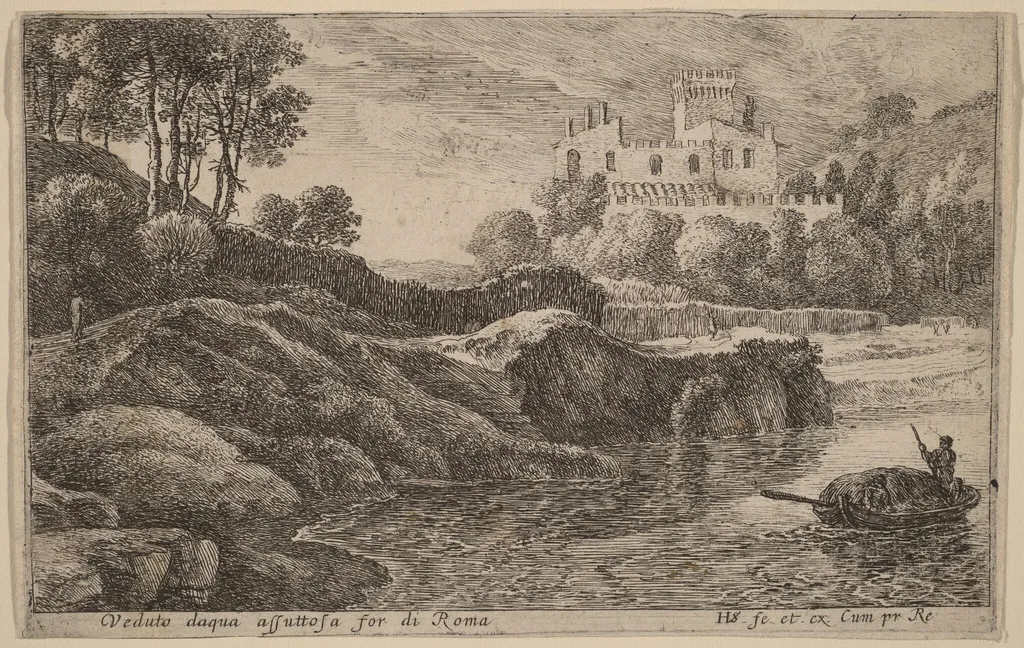
View of the Aqua Acetosa is an ink print by the Baroque artist Herman van Swanevelt. It dates from 1628 and is held in the collection of the National Gallery of Art.
About this work
Overview
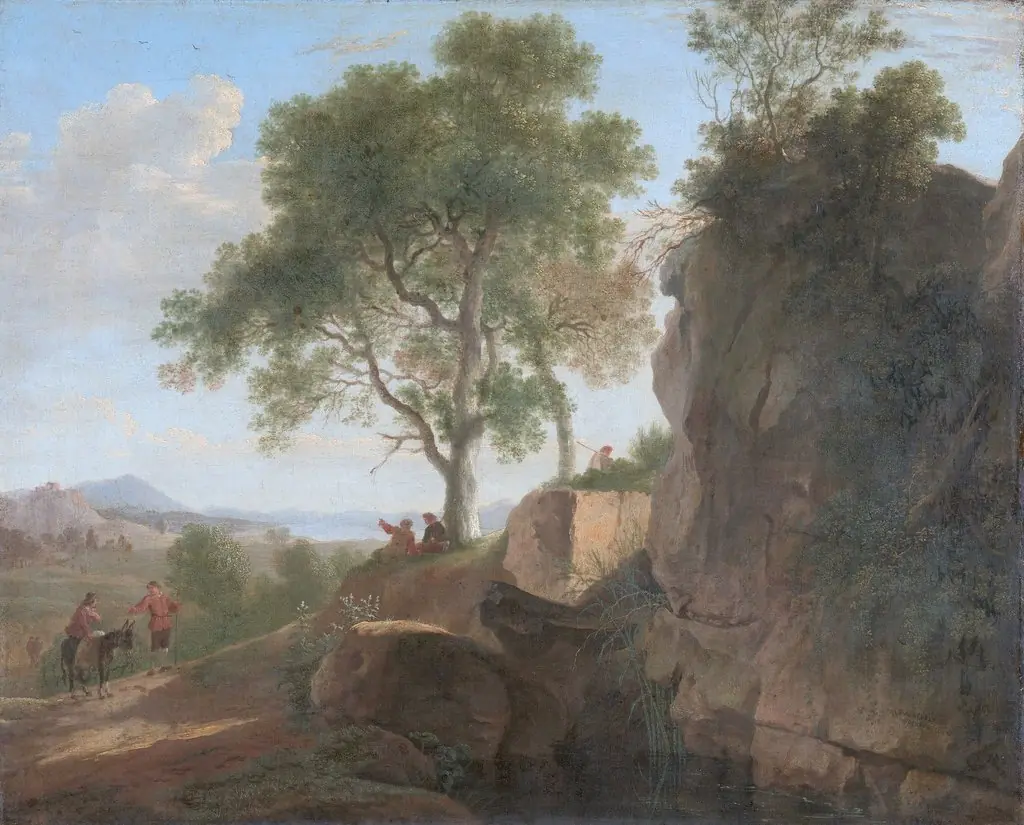
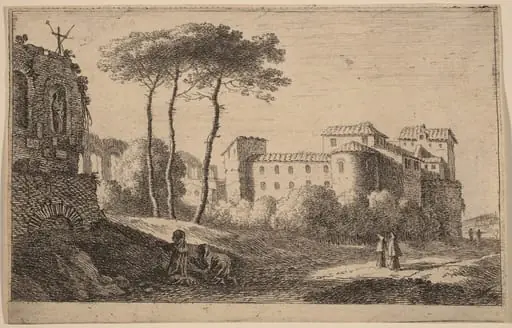
Created in 1628, this etching by Herman van Swanevelt captures a quiet Italianate landscape centered on the Aqua Acetosa, a known spring near Rome.
Created in 1628, this etching by Herman van Swanevelt captures a quiet Italianate landscape centered on the Aqua Acetosa, a known spring near Rome. The composition balances natural elements with architectural features, rendered through fine linear marks and tonal gradations characteristic of early Baroque printmaking. The scene evokes stillness, with minimal human activity suggesting contemplation rather than narrative.
Subject & Meaning
The scene portrays a rural waterside with a distant villa or fortified structure, likely referencing a real Roman landmark associated with mineral springs. A solitary figure in a small boat introduces a subtle human presence, neither dominant nor disruptive. The tranquil setting may reflect contemporary ideals of retreat and harmony with nature, common among travelers and artists drawn to Italy’s classical landscapes.
Technique & Style
Van Swanevelt employed etching to achieve nuanced light and shadow, using controlled line density to model form and depth. The contrast between the dark, dense foliage and the softly lit architecture enhances spatial recession. Delicate hatching defines textures—water, stone, and bark—while preserving a sense of atmospheric cohesion. The precision reflects Northern European training applied to Italian subjects.
History & Provenance
The print was made during van Swanevelt’s time in Rome, where he lived among other Northern artists drawn to the region’s ruins and landscapes. It circulated among collectors of Italianate views, particularly those interested in topographical accuracy and poetic atmosphere. Its survival in multiple institutional collections suggests early appreciation for its refined execution and quiet mood.
Context
In the 1620s, Rome attracted artists seeking inspiration from antiquity and nature. Van Swanevelt’s work aligned with a growing market for landscape prints that blended realism with idealized serenity. Unlike dramatic religious or mythological scenes, this etching offered a meditative alternative, resonating with educated travelers and patrons interested in the sublime in everyday scenery.
Legacy
Van Swanevelt’s etching contributed to the development of the Italianate landscape genre in Northern Europe. His use of tonal contrast and restrained composition influenced later printmakers who sought to convey mood through landscape rather than narrative. Though not widely known today, his work remains a quiet benchmark in early Baroque printmaking for its sensitivity to light and place.
Artist & collection

 View of the Church "Quattro Santi Coronati"
 Landscape with Two Figures on a Bridge
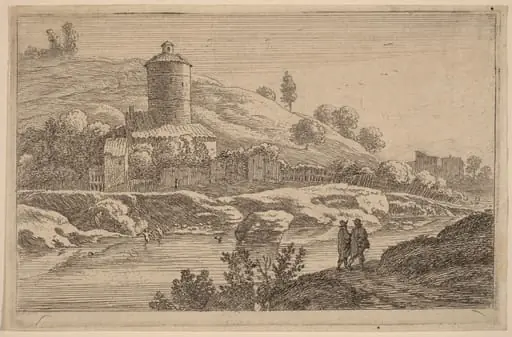 Round Tower near the Tiber
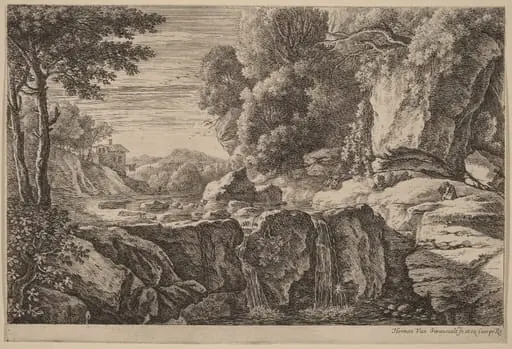 The Small Waterfall
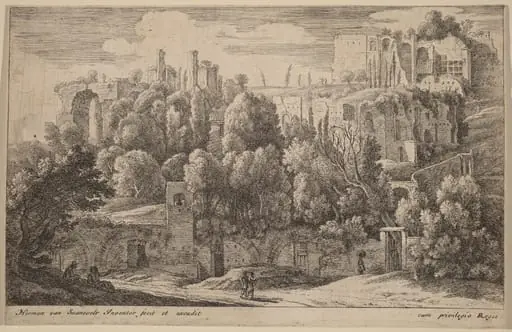 Antique Ruins of an Amphitheatre
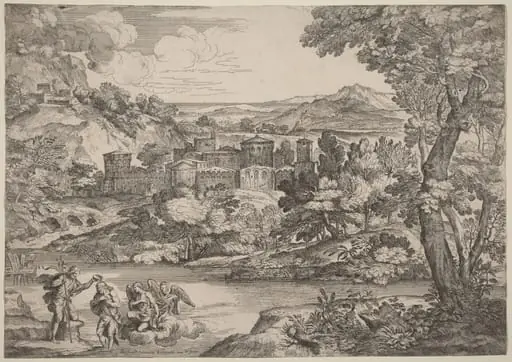 The Baptism of Christ, Set in a Mountainous Landscape
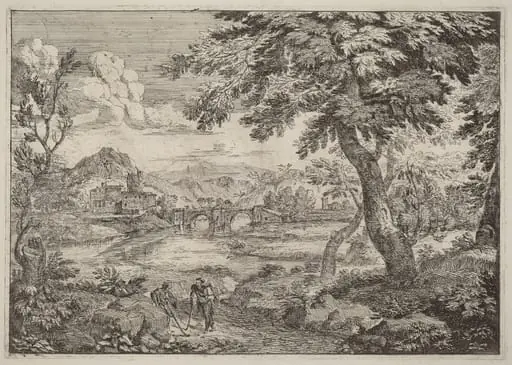 Double Arched Bridge
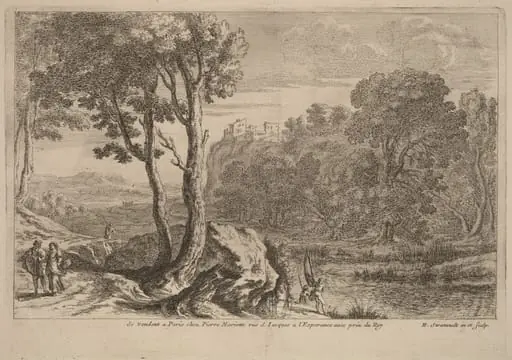 The Fishermen
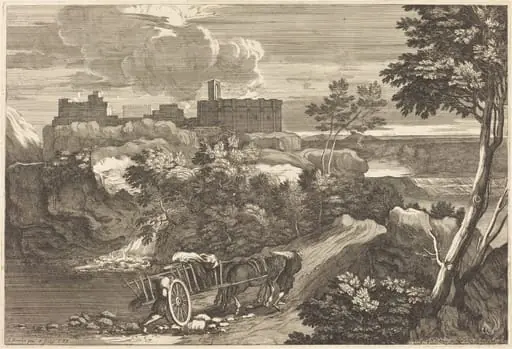 Landscape with Wagon
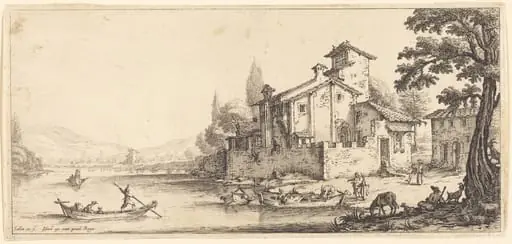 The Walk by the Water
 A Village on a Hill
 Veue d'une Antiquité de Constantin proche de Rome