Artwork
Round Tower near the Tiber
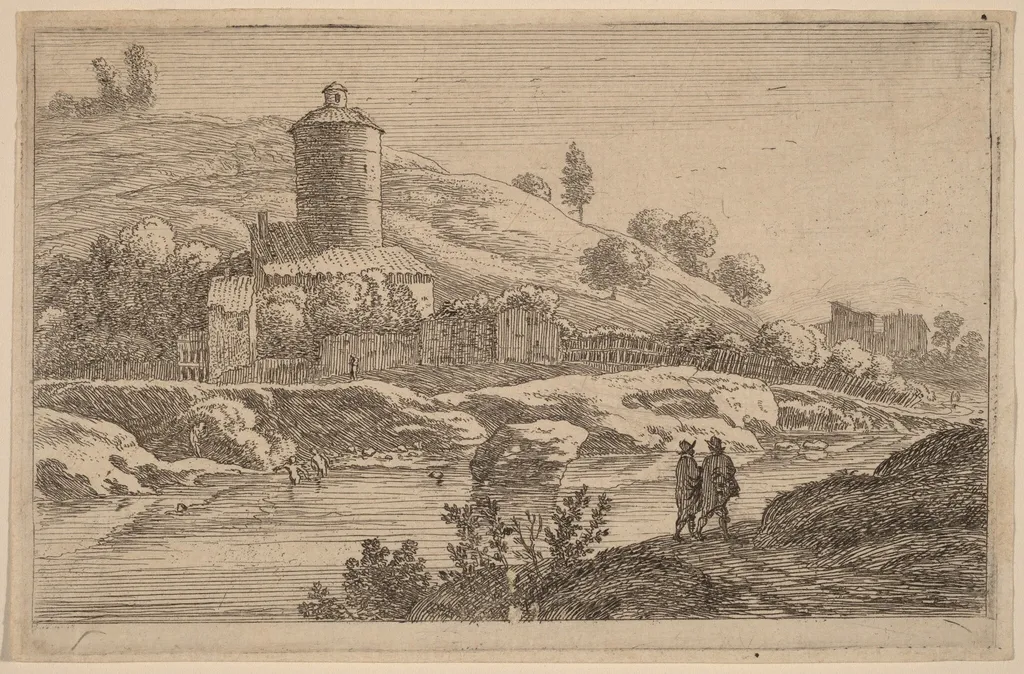
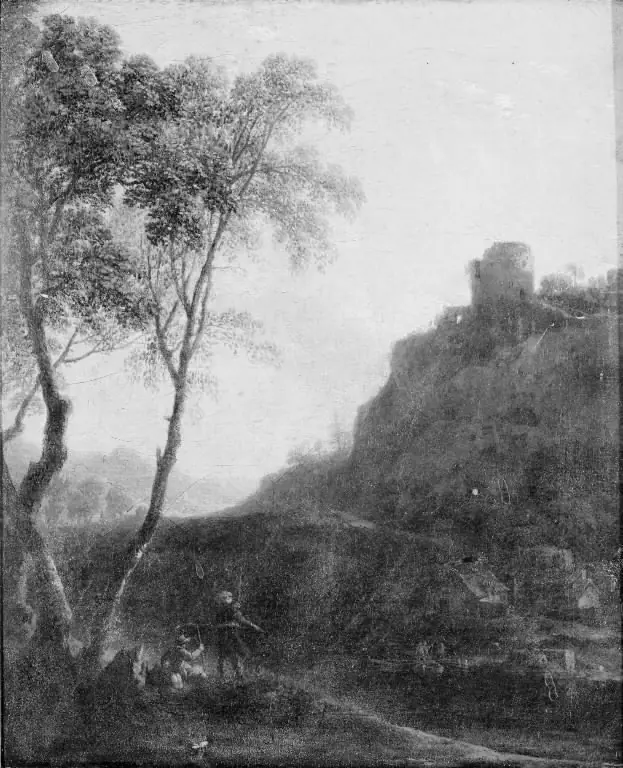
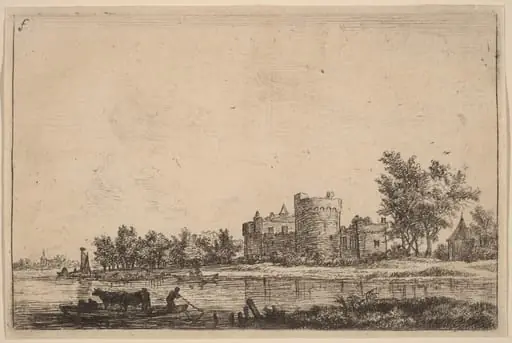
Round Tower near the Tiber is an ink print by the Baroque artist Herman van Swanevelt. It dates from 1628 and is held in the collection of the National Gallery of Art.
About this work
Overview
The work belongs to the printmaking tradition of early 17th-century Rome, where artists often captured architectural remnants amid natural surroundings.
Created in 1628, this etching by Herman van Swanevelt depicts a quiet riverside scene near the Tiber, centered on a solitary round tower. The work belongs to the printmaking tradition of early 17th-century Rome, where artists often captured architectural remnants amid natural surroundings. Van Swanevelt’s use of fine, controlled lines conveys both structure and atmosphere, distinguishing it as a refined example of landscape etching from the period.
Subject & Meaning
The tower, likely inspired by ancient Roman architecture, stands as a silent witness to time amid verdant hills and trees. Two small figures stroll along the riverbank, their presence suggesting contemplation rather than narrative. The scene avoids dramatic action, instead inviting quiet observation. The composition reflects a Romantic sensibility toward ruins and nature, common among Northern artists working in Italy during the Baroque era.
Technique & Style
Van Swanevelt employed etching to achieve subtle tonal gradations and delicate linework. The plate was incised with precision, allowing for fine textures in foliage, stone, and water. Cross-hatching and varying line density create depth and volume, while the absence of heavy shading preserves a light, airy quality. The technique emphasizes atmosphere over detail, aligning with the Northern European tradition of lyrical landscape printmaking.
History & Provenance
The etching was produced during van Swanevelt’s time in Rome, where he lived from the early 1620s until his death in 1655. It was likely made for a private collector or as part of a series of Italian views. Early ownership records are sparse, but the work entered institutional collections in the 19th century, where it was recognized for its technical finesse and topographical interest.
Context
Van Swanevelt was part of a group of Northern European artists who settled in Rome and specialized in landscape etchings. His work responded to the growing interest in classical ruins and pastoral scenery among travelers and connoisseurs. This print reflects the fusion of Italian topography with Northern European draftsmanship, contributing to the development of the idealized landscape genre in print culture.
Legacy
Though not widely known today, van Swanevelt’s etchings influenced later generations of landscape printmakers in the Netherlands and France. His careful handling of light and structure helped define a quiet, observational mode in printmaking. This work remains a representative example of how artists translated the Roman countryside into intimate, meditative images during the early Baroque period.
Artist & collection