Artwork
The Walk by the Water
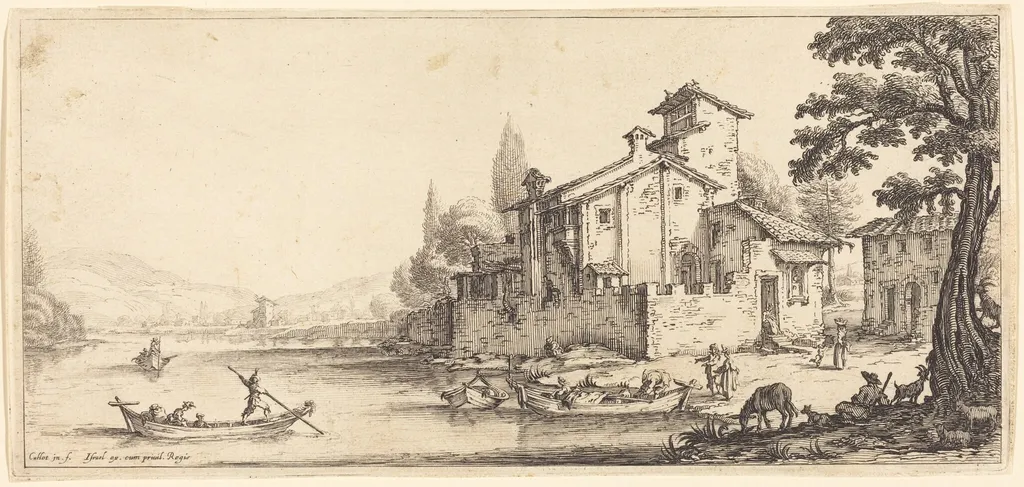
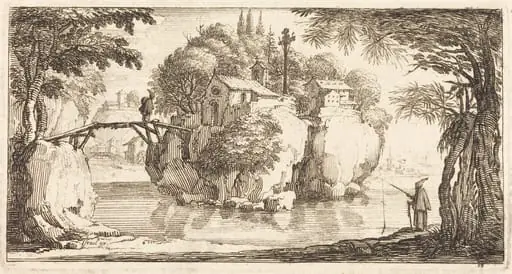
The Walk by the Water is an ink print by the Baroque artist Jacques Callot. It dates from 1630 and is held in the collection of the National Gallery of Art.
About this work
Overview
Executed on laid paper, it belongs to a vast body of over 1,400 prints he produced, many depicting daily life in early 17th-century Europe.
Created around 1630, *The Walk by the Water* is an etching by Jacques Callot, a French artist from the Duchy of Lorraine. Executed on laid paper, it belongs to a vast body of over 1,400 prints he produced, many depicting daily life in early 17th-century Europe. This work exemplifies his focus on quiet, observational scenes, contrasting with the more dramatic subjects he also rendered. The technique and composition reveal his mastery of fine-line etching and atmospheric depth.
Subject & Meaning
The scene portrays a tranquil riverside moment: figures stroll along the bank, while small boats carry people and animals. Behind them, clustered stone buildings with arched openings and a tower suggest a modest settlement, possibly monastic or rural. There is no overt narrative or symbolism; instead, the image conveys a sense of ordinary life unfolding in a quiet, timeless setting. Callot’s interest lay in documenting the texture of everyday existence rather than dramatizing it.
Technique & Style
Callot employed etching with a fine, sharp tool to incise lines into a metal plate, allowing for intricate detail and subtle tonal variation. The sketchy, precise lines define trees, architecture, and water with economy, avoiding heavy shading. The use of laid paper, with its visible chain lines, enhances the tactile quality of the print. His style balances precision with a loose, observational quality, giving the scene a sense of immediacy without sacrificing structural clarity.
History & Provenance
The print emerged during Callot’s mature period, when he was actively producing narrative etchings for collectors and patrons across Europe. While its specific early ownership is undocumented, it aligns with his broader output from the 1620s–1630s, a time when his prints circulated widely among artists and intellectuals. It was likely made for private circulation rather than public display, reflecting the growing market for refined, small-scale prints in early modern Europe.
Context
In the early 17th century, etching gained prominence as a medium for both artistic expression and documentary observation. Callot’s work stood apart for its attention to ordinary life—soldiers, peasants, travelers—set against carefully rendered landscapes. Unlike many contemporaries who focused on myth or religion, he turned his lens to the mundane, capturing the rhythms of provincial Europe during a period of religious and political upheaval.
Legacy
Callot’s technical innovations in etching, including refined line control and compositional depth, influenced generations of printmakers across Europe. *The Walk by the Water* exemplifies his contribution to elevating genre scenes within printmaking, shifting focus from grand narratives to intimate, observational moments. His approach helped establish etching as a legitimate medium for capturing the texture of daily life, paving the way for later realist traditions in graphic art.
Artist & collection

Artist
Jacques Callot was a baroque printmaker and draftsman from the Duchy of Lorraine.

 Holy Family at supper
 Restoration of the Aqueduct at Pisa
 Restoration of the Aqueduct at Pisa
 Square in Paris with Many Figures
 Square in Paris with Many Figures
 Horsemen Attacked by Robbers
 HOW WILL A COVERED PART BE CORRECTED?HOW WIKA A COVERED HEART DEED CORRECTED?
![Christ Walking on the Water [second plate], by Jacques Callot](https://artifactworldgallery.com/img/jacques-callot--christ-walking-on-the-water-second-plate--2069f3bfe4cb2126-w320.webp) Christ Walking on the Water [second plate]
Christ Walking on the Water [second plate]
 Houses at the Side of a River
 The Bent Tree
 Departure of Two Fishermen
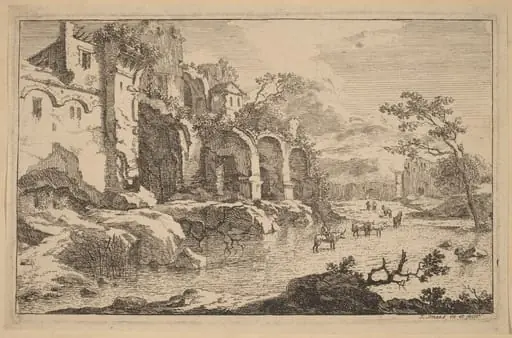 Building in Ruins at the Side of a River
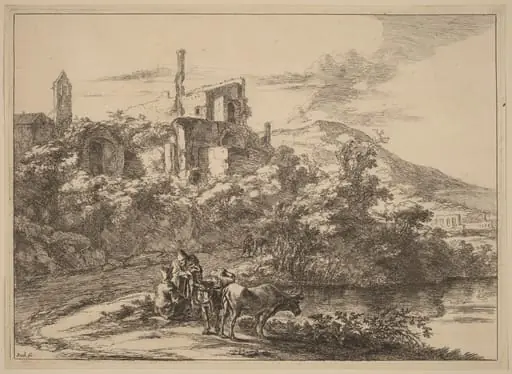 Two Cows near the River at Tivoli
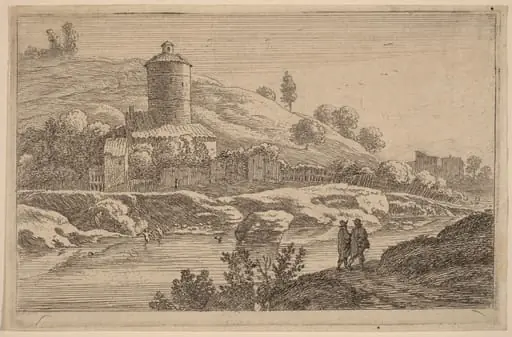 Round Tower near the Tiber
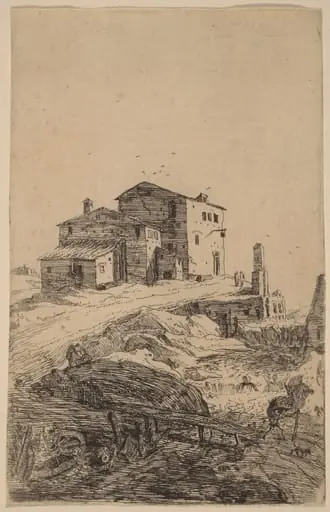 The Inn near Prima Porta
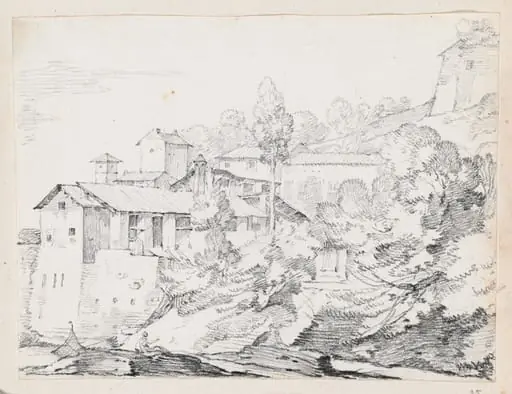 Italian Buildings on a Hillside
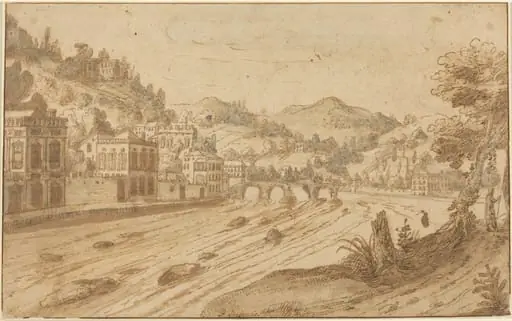 River View
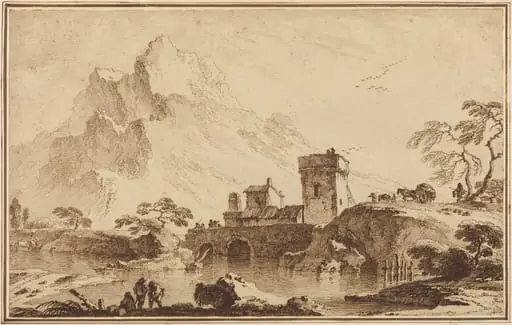 Fortified Bridge against Distant Mountains
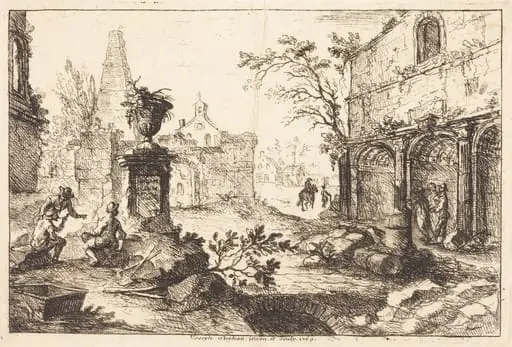 Architectural Fantasy with Roman Ruins
 Landscape