Artwork
Kaksi hedelmiä syövää kerjäläispoikaa, kopio Murillon mukaan
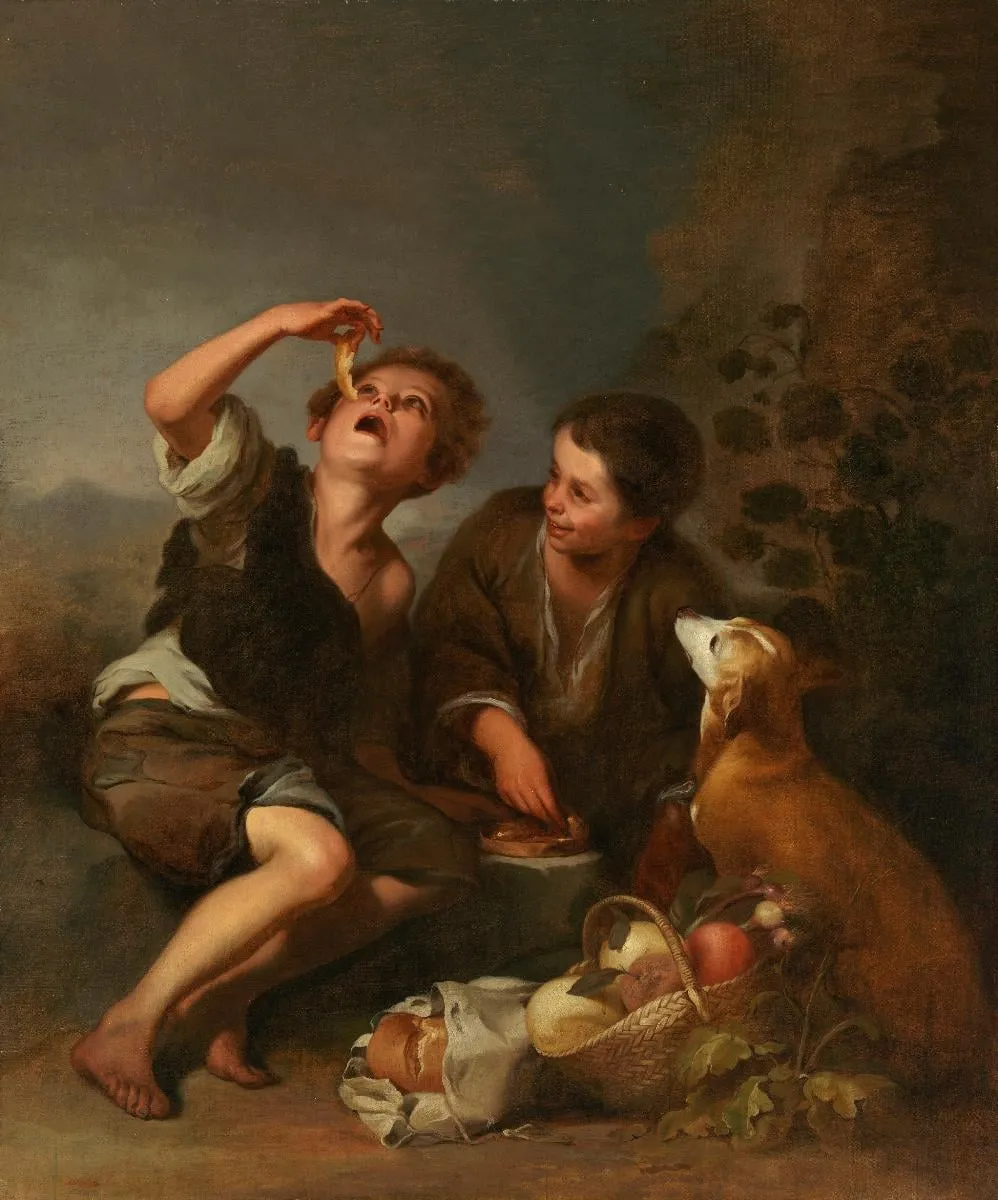
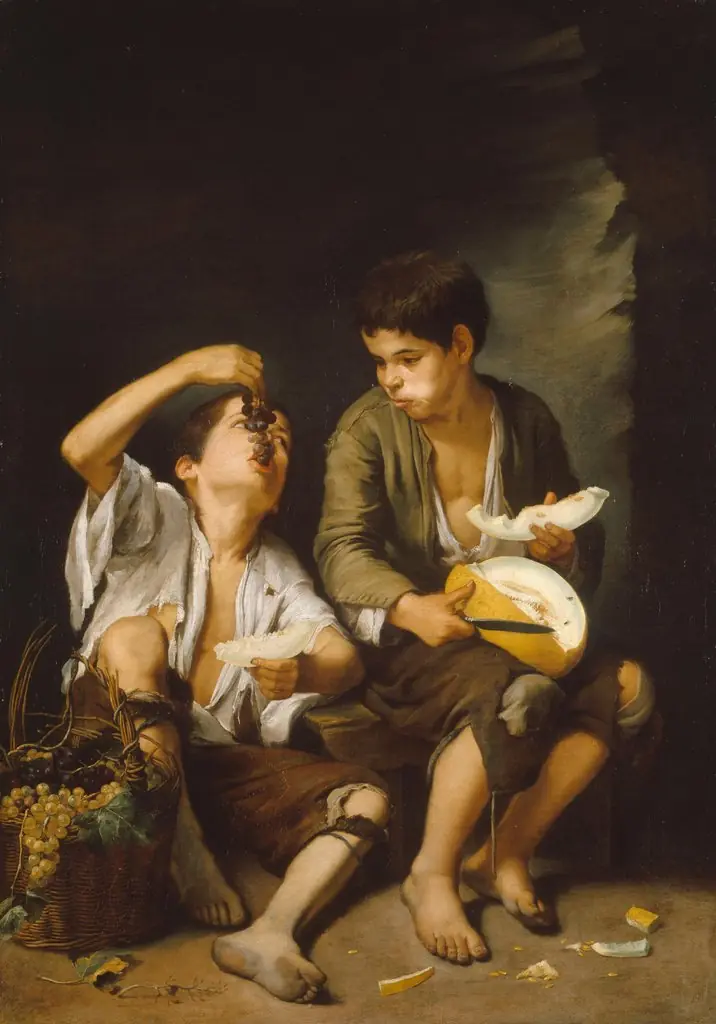
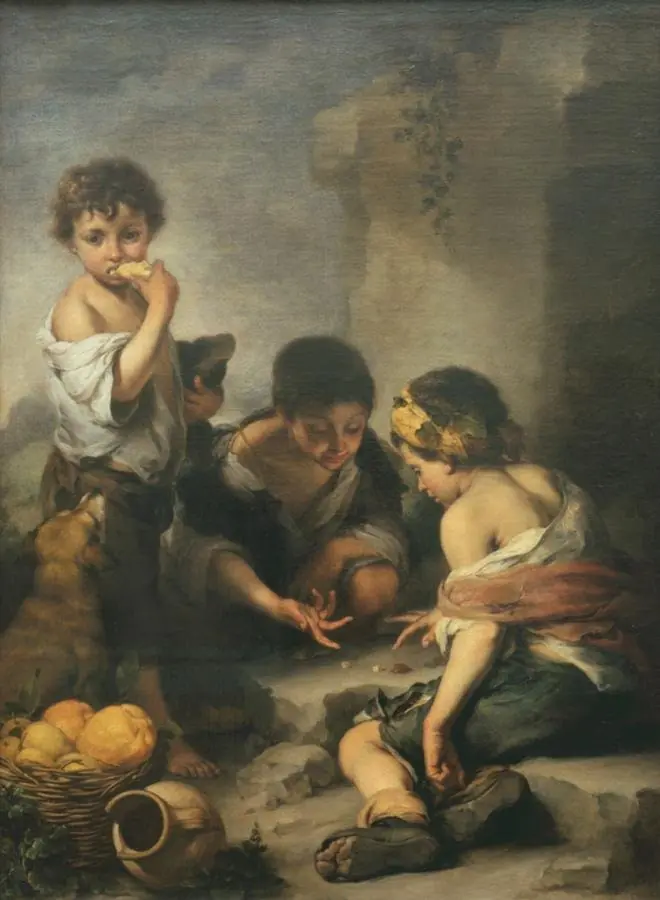
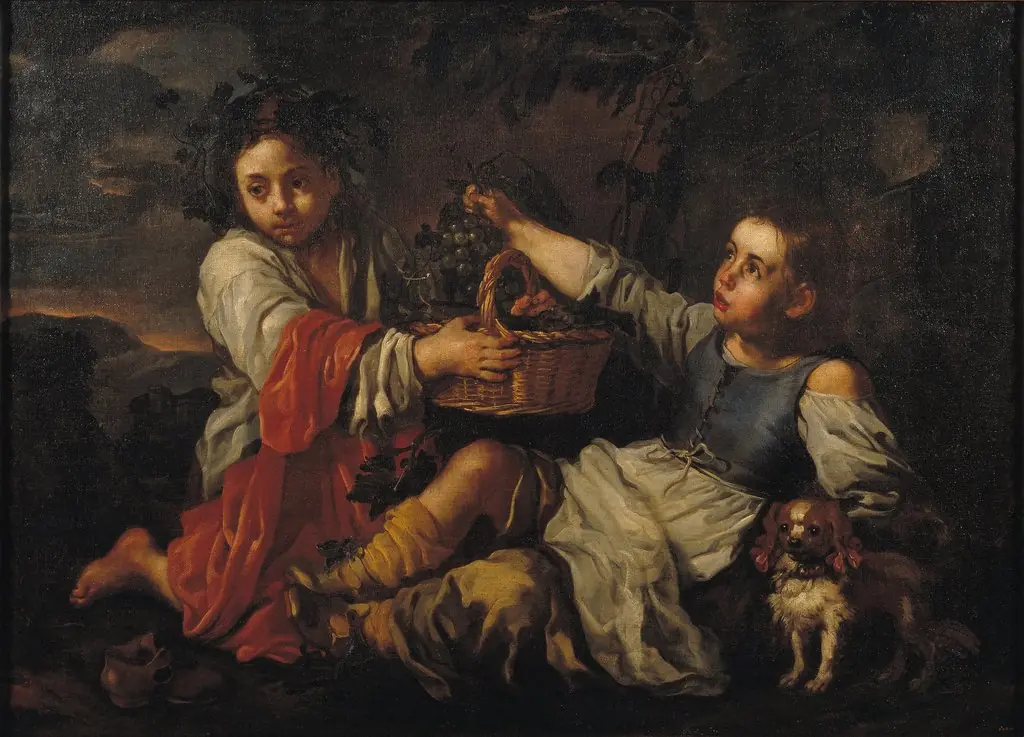
Kaksi hedelmiä syövää kerjäläispoikaa, kopio Murillon mukaan is an unspecified painting by Wladimir Swertschkoff. It is held in the collection of the Finnish National Gallery. This painting depicts two barefoot boys, likely beggars, seated outdoors with a basket of fruit and a quiet dog.
About this work
Overview
This painting depicts two barefoot boys, likely beggars, seated outdoors with a basket of fruit and a quiet dog.
This painting depicts two barefoot boys, likely beggars, seated outdoors with a basket of fruit and a quiet dog. The scene is rendered with dramatic chiaroscuro, isolating the figures against a dark, indistinct background. Their simple, worn clothing and bare feet suggest poverty, yet the abundance of fresh fruit contrasts sharply with their circumstances, creating a quiet tension between need and plenty.
Subject & Meaning
The boys are engaged in a moment of quiet consumption—one bites into a pear with surprise, the other observes passively. The presence of ripe fruit, seemingly out of reach for their social station, introduces ambiguity: is this a moment of rare indulgence, or a symbolic offering? The calm dog adds a note of companionship, grounding the scene in quiet realism rather than moral allegory.
Technique & Style
The artist employs chiaroscuro to model the boys’ forms, drawing attention to their faces and hands while dissolving the background into shadow. Brushwork is loose in the foliage and background, contrasting with the more defined textures of skin and fabric. The fruit is rendered with careful attention to surface sheen, heightening its tactile presence against the muted tones of their clothing.
History & Provenance
The work is a copy after a painting by Murillo, reflecting 19th-century interest in Spanish Golden Age subjects. While the original by Murillo is lost or unverified, this version preserves the composition and emotional tone of his genre scenes. Its origin remains tied to academic copying practices, where students and artists studied masters through replication rather than original invention.
Context
In the 19th century, depictions of impoverished children were common in European art, often blending empathy with sentimentalism. This painting aligns with a tradition that portrayed the poor with dignity, avoiding overt pathos. The choice of a Spanish subject through Murillo’s influence suggests a broader European fascination with Iberian realism and its emotional restraint.
Legacy
Though not an original work, the painting contributes to the transmission of Murillo’s visual language into later periods. It reflects how academic training relied on copying to internalize compositional and emotional techniques. Its quiet realism, free from overt moralizing, continues to invite interpretation about social inequality and the dignity of everyday moments.
Artist & collection