Artwork
Doughnut vendor
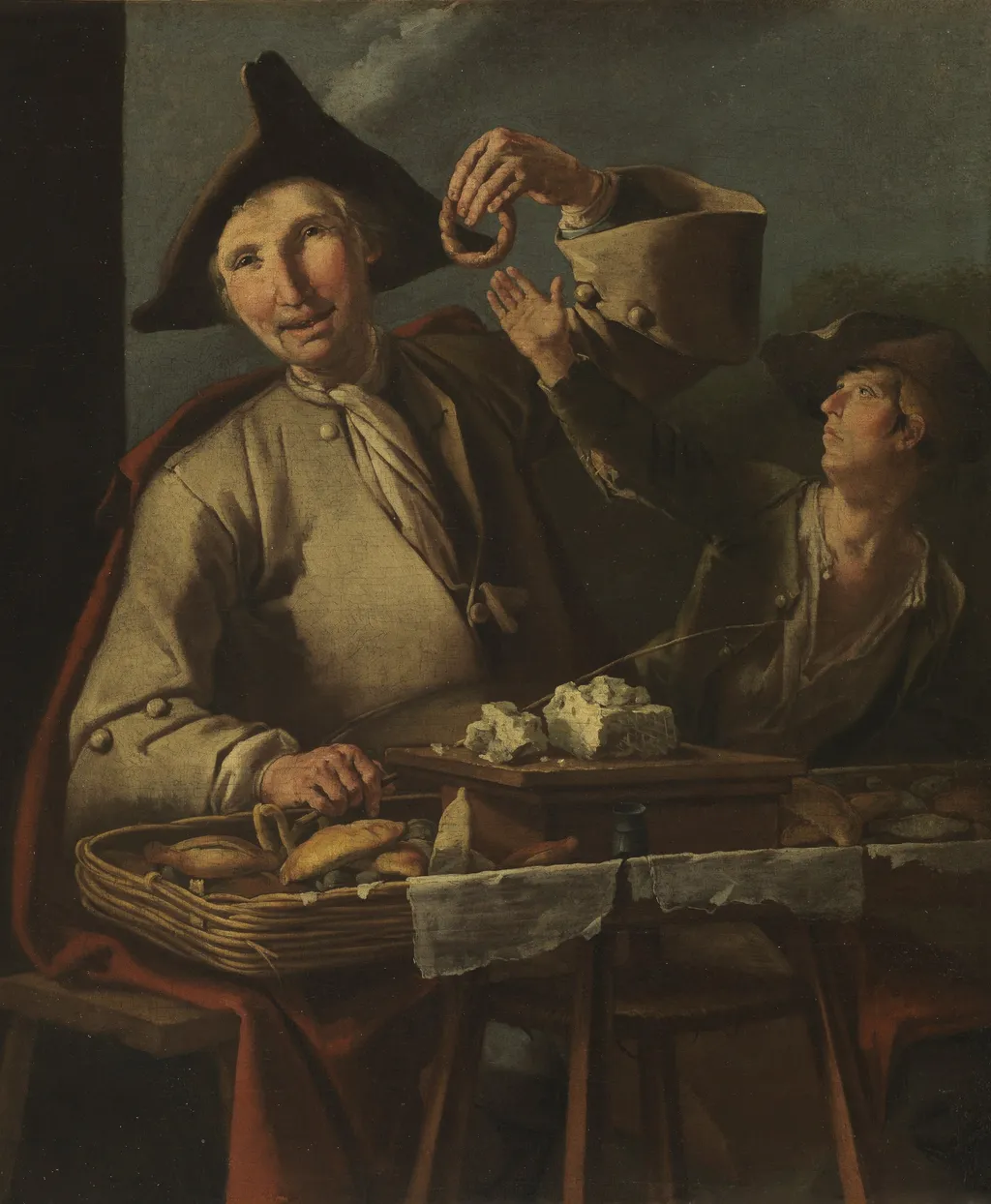
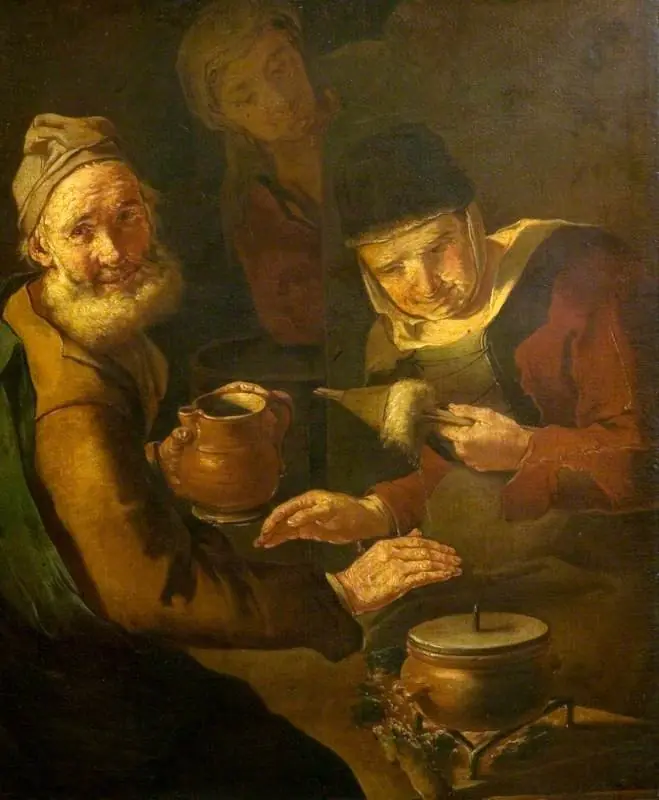
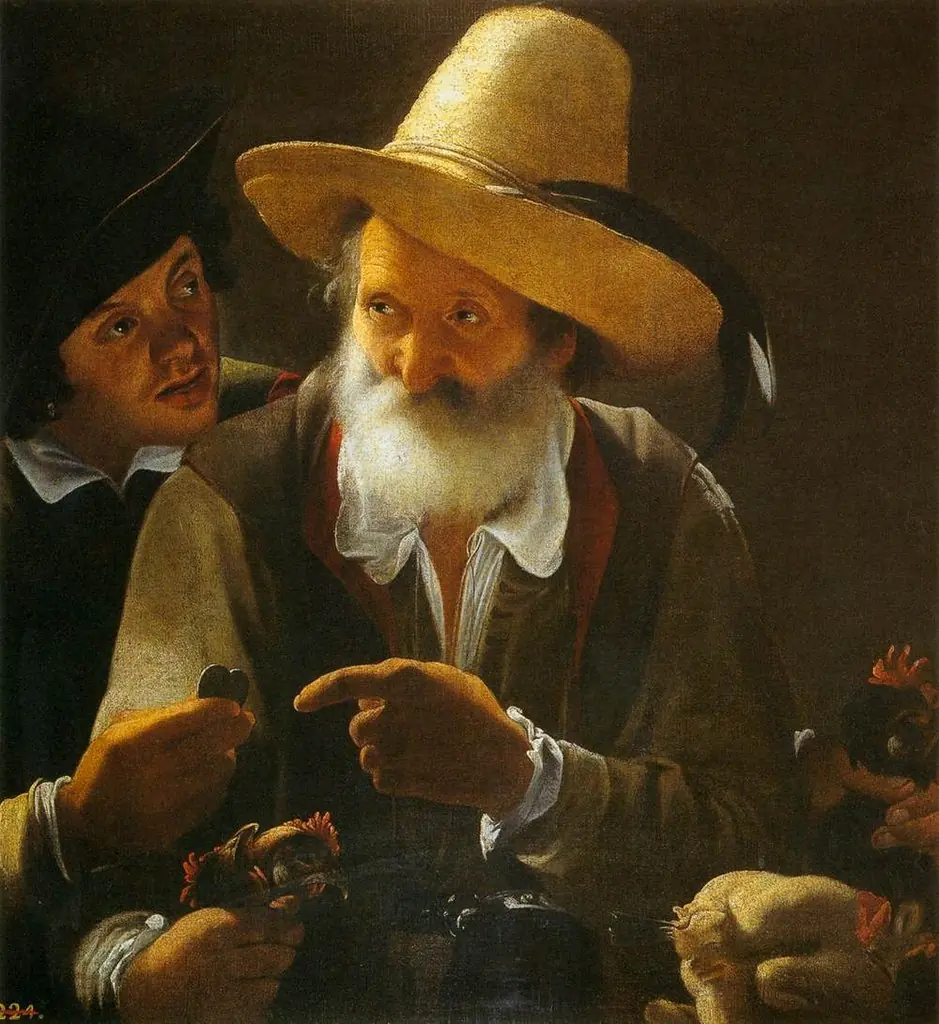
Doughnut vendor is an oil painting by the Early Baroque Italian artist Giacomo Francesco Cipper. It dates from 1601 and is held in the collection of the Museo del Prado.
About this work
Overview
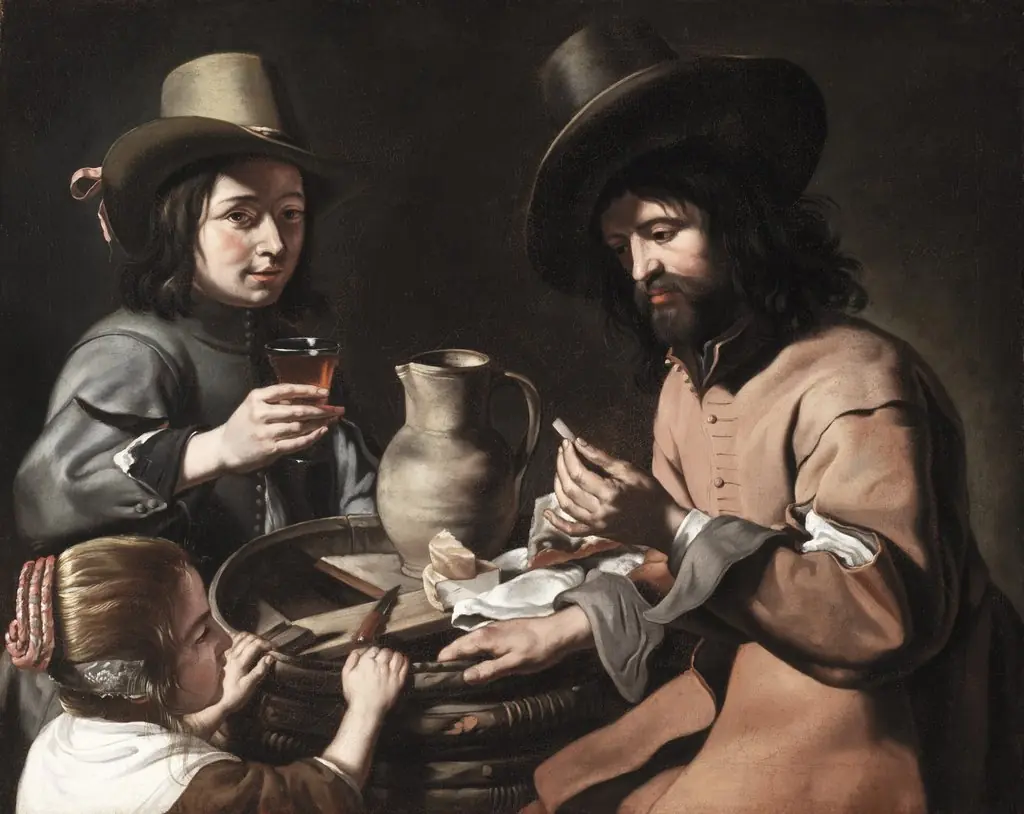
*Doughnut vendor* is an oil painting executed in 1601 by the Austrian-born artist Giacomo Francesco Cipper, who worked in Milan under the name Il Todeschini. The work belongs to the early Baroque period and is part of the Museo del Prado’s collection.
Subject & Meaning
The canvas presents a cheerful female street seller, identifiable by her wide-brimmed hat and dark coat with a white collar. She holds a doughnut on a string, while a table before her is laden with additional pastries, loaves of bread, and blocks of cheese. A nearby man in a cap leans forward, examining the offerings, suggesting a moment of everyday commerce and social interaction.
Technique & Style
Cipper employs a pronounced chiaroscuro scheme, using deep shadows to isolate the woman’s face and hands from the background. The illuminated areas accentuate the texture of the doughnuts and the folds of clothing, giving the figures a sculptural presence that heightens the sense of three‑dimensionality.
History & Provenance
Although the artist’s career in Milan spanned from the late 17th to early 18th century, this particular work is dated to 1601, indicating an earlier phase of his output. The painting entered the Museo del Prado’s holdings at an unspecified date and remains on display as part of its European Baroque collection.
Context
Created during the early Baroque, the painting reflects the period’s interest in genre scenes that capture ordinary life with dramatic lighting. Cipper’s Austrian origins and Milanese activity illustrate the cross‑regional artistic exchanges that characterized the era, blending Northern realism with Italian theatricality.
Own this work as a print
Artist & collection
Artist
Giacomo Francesco Cipper, also known as Il Todeschini, (Feldkirch, 1664 - Milan, 1736) was an Austrian painter in Milan from 1696 to 1736.