Artwork
Untitled
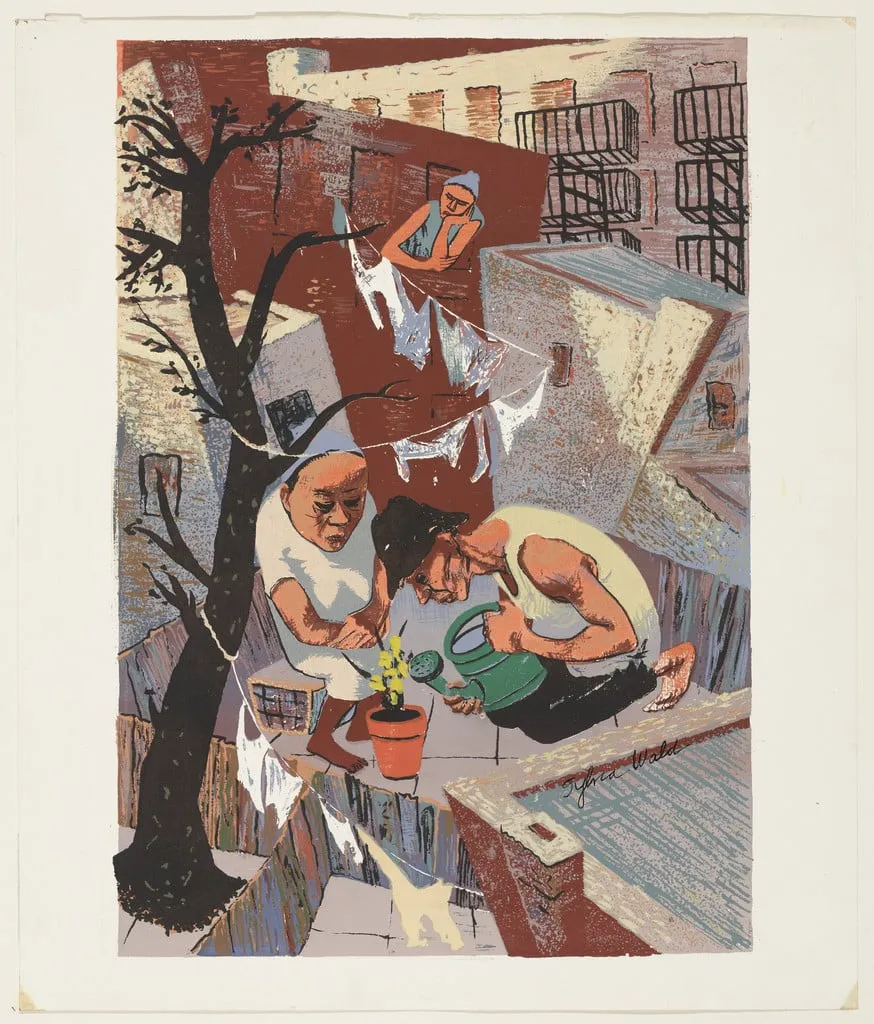
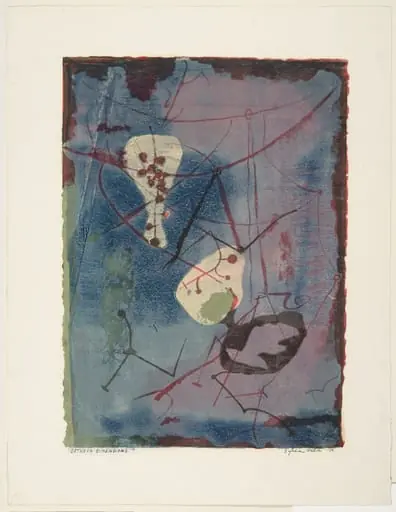
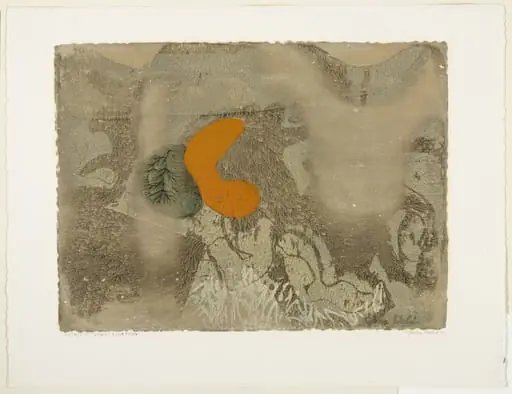
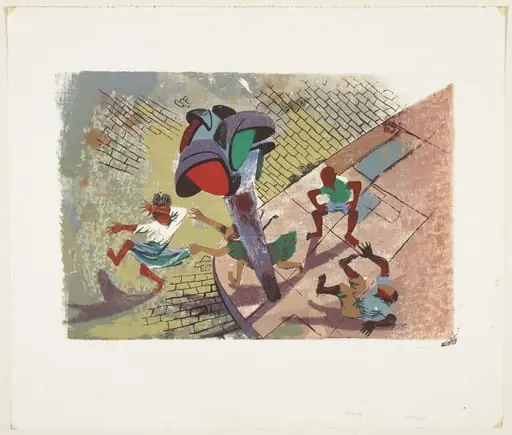
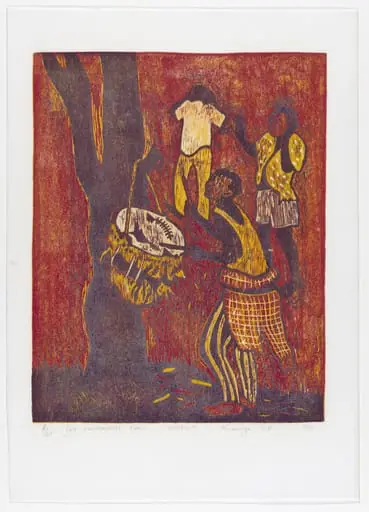
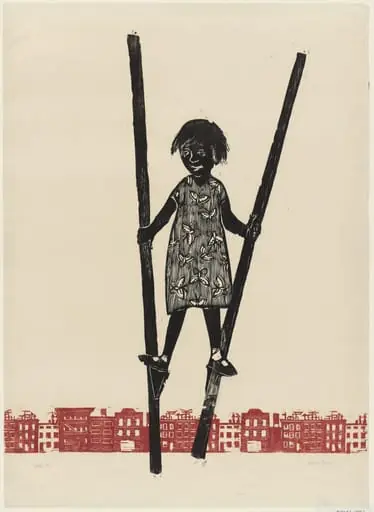
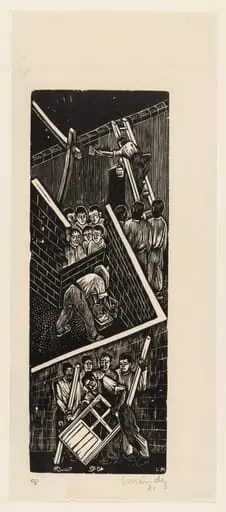
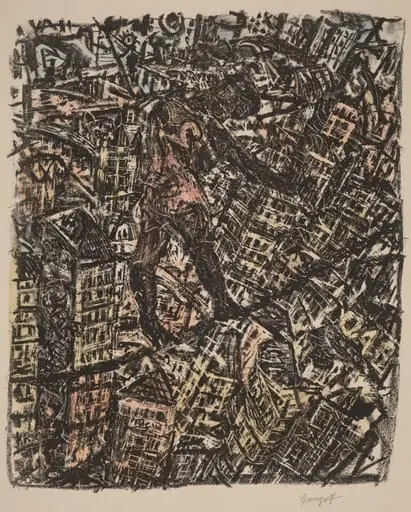
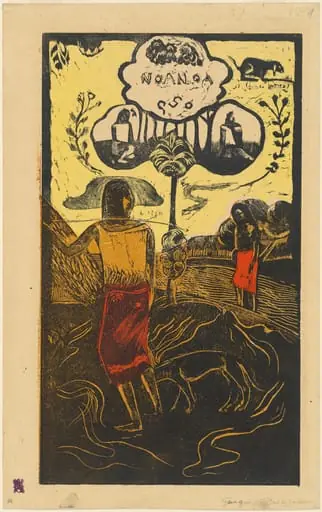
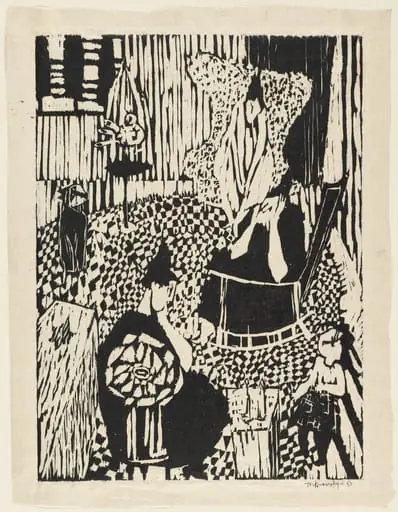
Untitled is an ink print by Sylvia Wald. It dates from 1940 and is held in the collection of the Museum of Modern Art.
About this work
Overview
Sylvia Wald, born in Philadelphia in 1915, was an American artist whose early work aligned with social realism before evolving toward abstraction.
Sylvia Wald, born in Philadelphia in 1915, was an American artist whose early work aligned with social realism before evolving toward abstraction. Around 1940, she produced an untitled screenprint now in The Museum of Modern Art’s collection. This piece exemplifies her early experimentation with silk screening, a technique she helped expand beyond commercial use into fine art contexts, blending graphic clarity with intimate subject matter.
Subject & Meaning
The print depicts a quiet domestic moment: a woman tends to a potted plant in a courtyard while a child observes beside her. Above, a figure on a balcony holds a folded sheet, suggesting laundry drying in the open air. The scene evokes everyday life in urban settings, emphasizing routine and subtle human connection. The absence of facial detail universalizes the figures, inviting viewers to see themselves in their stillness.
Technique & Style
Wald employed screenprinting to achieve flat, saturated areas of color—predominantly red, green, and white—bounded by thick black outlines. Forms are simplified into geometric shapes, giving the figures a cut-out quality. Despite this stylization, small details like the creases in the fabric or the angle of the watering can introduce tactile realism. The method allowed precise control, aligning with her interest in structure and clarity.
History & Provenance
Created circa 1940, this screenprint entered The Museum of Modern Art’s collection as part of early institutional recognition of printmaking as a legitimate medium for modern artists. Wald’s use of silk screening was uncommon among fine artists at the time, making this work a significant example of her innovation. Its preservation reflects the museum’s interest in documenting experimental print practices of the mid-20th century.
Context
In the late 1930s and early 1940s, American artists were redefining printmaking beyond reproduction, exploring its potential for original expression. Wald’s work emerged alongside broader shifts toward abstraction and a renewed focus on everyday life. Her screenprint reflects this dual current: rooted in observable reality yet shaped by formal experimentation, distinguishing her from both traditional realists and purely nonobjective painters.
Legacy
Wald’s early screenprints helped legitimize the medium in fine art circles, influencing later generations of printmakers who embraced its accessibility and graphic potential. Though she later turned to sculpture and collage, this work remains a key reference point in the history of American printmaking. Its quiet composition and technical precision continue to inform discussions about the intersection of craft and modernist abstraction.
Artist & collection
Artist
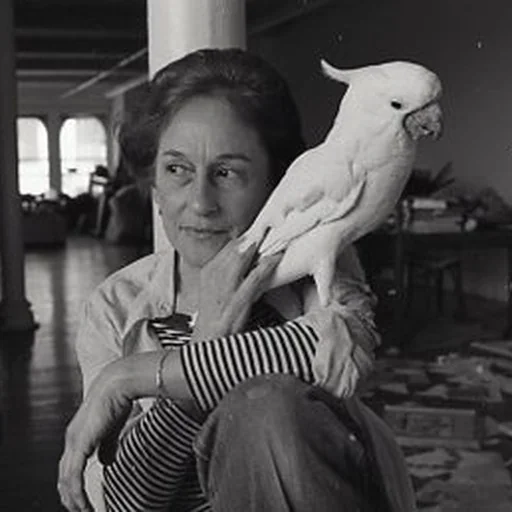
Sylvia Wald (; October 30, 1915 – March 24, 2011) was an American visual artist. Born in Philadelphia and educated at Moore Institute of Art, she began as a painter in the style of the American social realist school,…