Artwork
Untitled
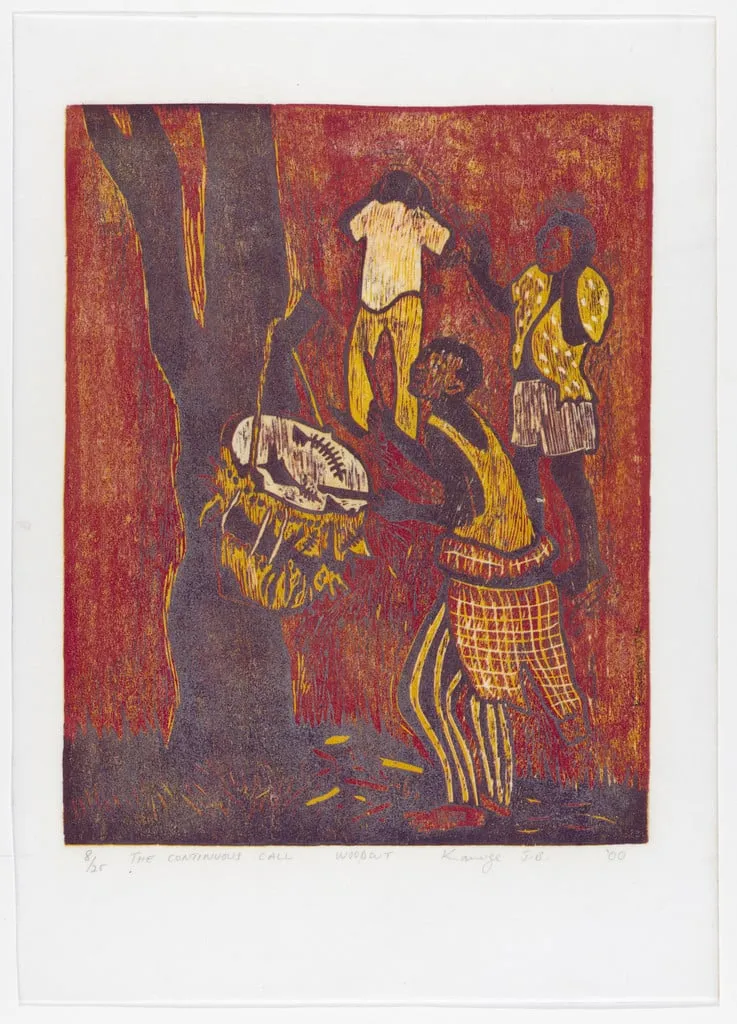
Untitled is an ink print by Daniel Ohene-Adu. It dates from 2000 and is held in the collection of the Museum of Modern Art.
About this work
Overview
Created in 2000, this woodcut is one of thirty-one prints in a mixed media portfolio by Ghanaian artist Daniel Ohene-Adu. It resides in the collection of The Museum of Modern Art. The work is defined by its stark, hand-carved lines and limited color palette, characteristic of the woodcut process. The image captures a quiet outdoor scene with minimal detail, emphasizing form over realism.
Subject & Meaning
The absence of facial features and the stylized poses invite interpretation without anchoring the scene to a specific event.
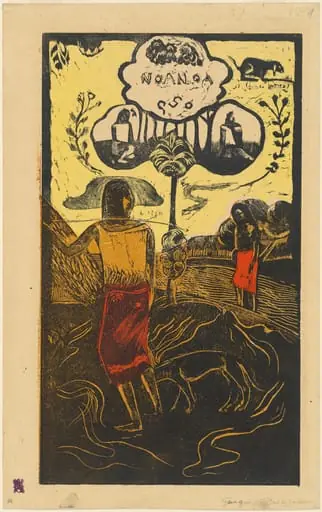
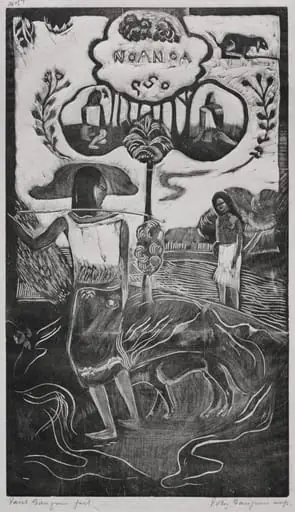
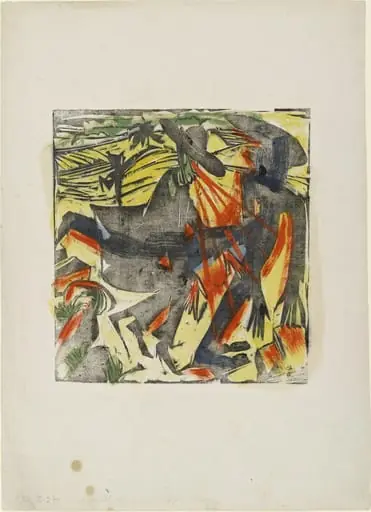
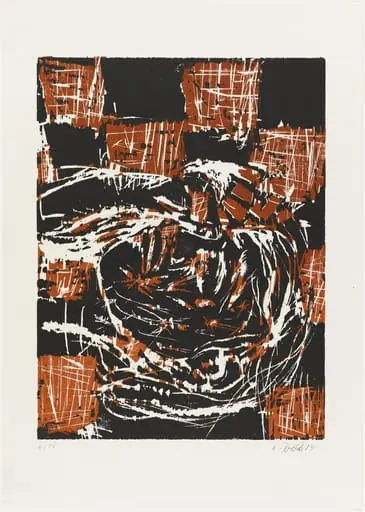
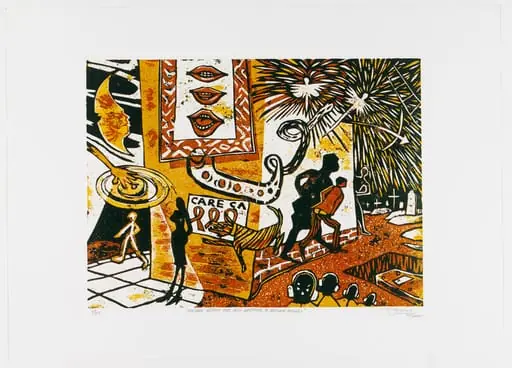
Four figures are arranged beneath a large tree, engaged in a moment of communal activity. Two play drums, one supports a drum on a stand, and another holds a reflective object, possibly a mirror. The setting suggests a ritual or social gathering, though no narrative is explicitly stated. The absence of facial features and the stylized poses invite interpretation without anchoring the scene to a specific event.
Technique & Style
The image was produced using woodcut, a relief printing method where the artist carved away non-printing areas from a wooden block. Bold black outlines define the figures, while flat fields of warm yellow and orange fill the forms. The background, composed of red and brown tones, lacks detail, reinforcing the graphic simplicity. The technique prioritizes contrast and silhouette over texture or gradation.
History & Provenance
The print was made in 2000 as part of a larger portfolio, though little public documentation exists about its initial exhibition or acquisition. It entered The Museum of Modern Art’s collection shortly after its creation, likely through direct acquisition or donation. Its inclusion in a major institution signals recognition of Ohene-Adu’s contribution to contemporary African printmaking.
Context
Ohene-Adu’s work emerges from a broader West African tradition of printmaking that blends indigenous visual languages with modern techniques. This piece reflects a postcolonial engagement with cultural memory, using symbolic imagery rather than literal representation. The use of woodcut aligns with a global revival of hand-printed methods in the late 20th century, valued for their tactile and direct qualities.
Legacy
As part of a cohesive portfolio, this woodcut contributes to a body of work that expands the visibility of Ghanaian artists in international collections. Its restrained aesthetic and symbolic content have influenced younger printmakers exploring identity and ritual through minimal forms. Though not widely reproduced, its presence in MoMA ensures its role in documenting contemporary African print practices.
Artist & collection