Artwork
nameless women
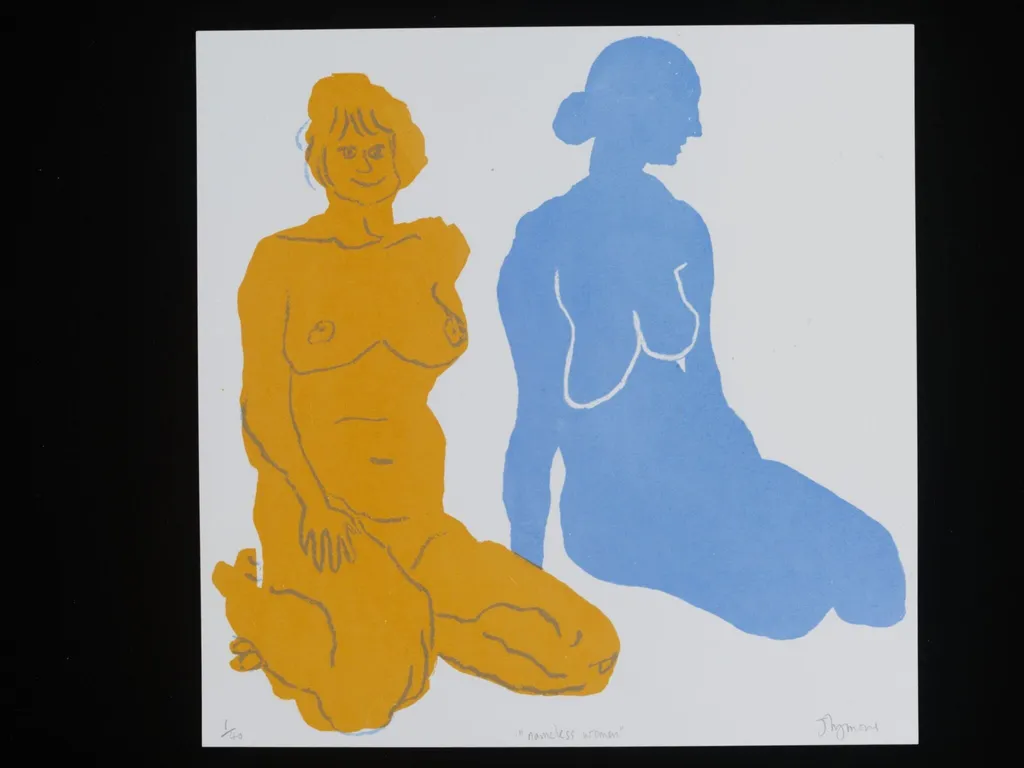
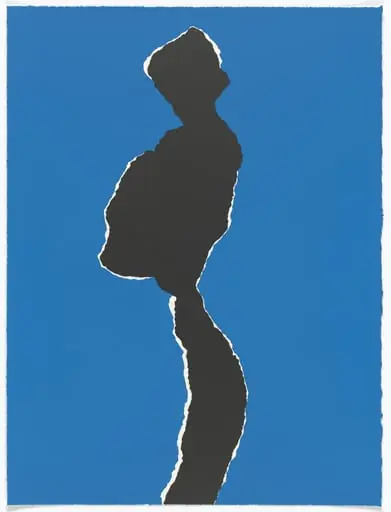
nameless women is a print by George Gardner Symons. It is held in the collection of the Victoria and Albert Museum. Created in 2012, this screenprint by Symons presents two nude female figures in simplified, abstracted forms.
About this work
Overview
Rendered in flat areas of orange and blue, the figures are positioned side by side, kneeling with minimal anatomical detail.
Created in 2012, this screenprint by Symons presents two nude female figures in simplified, abstracted forms. Rendered in flat areas of orange and blue, the figures are positioned side by side, kneeling with minimal anatomical detail. The composition omits background elements, directing focus to the stark contrast of color and form. The work is signed and numbered, indicating its place within a limited edition series.
Subject & Meaning
The two figures are intentionally devoid of individualizing features—no faces, hair, or distinctive markings—suggesting they represent collective rather than personal identities. The title, *Nameless Women*, reinforces this anonymity, inviting interpretation around erasure, universality, or the reduction of women to form in visual culture. Their posture and unity imply shared experience without narrative specificity.
Technique & Style
Symons employed screenprinting to achieve sharp, unmodulated color fields. The orange figure is defined by clean, linear contours, while the blue counterpart appears as a near-silhouette, emphasizing tonal contrast over detail. The absence of shading or texture aligns with a modernist aesthetic, prioritizing geometric clarity and visual economy. The medium’s reproducibility supports the work’s conceptual emphasis on multiplicity.
History & Provenance
This print is part of a small edition produced in 2012, with each piece signed and numbered by the artist. It has been held in private collections and has appeared in exhibitions focused on contemporary British printmaking. No public institutional acquisition is documented prior to its inclusion in the Victoria and Albert Museum’s study collection, where it is referenced for its formal approach to figuration.
Context
Emerging from a tradition of 20th-century British printmaking that favored abstraction and social commentary, the work reflects broader trends in contemporary art that strip figures of individuality to explore identity, visibility, and representation. Its minimalism resonates with movements that question the male gaze, though it avoids overt political messaging, favoring quiet formal inquiry.
Legacy
The print contributes to ongoing dialogues in contemporary printmaking about the representation of the female body through reduction and abstraction. Its restrained palette and deliberate anonymity have influenced emerging artists exploring similar themes of erasure and collective identity. While not widely exhibited, it remains a reference point in academic studies of post-2000 British prints.
Artist & collection