Artwork
L'Ame invisible; Mademoiselle Fifi
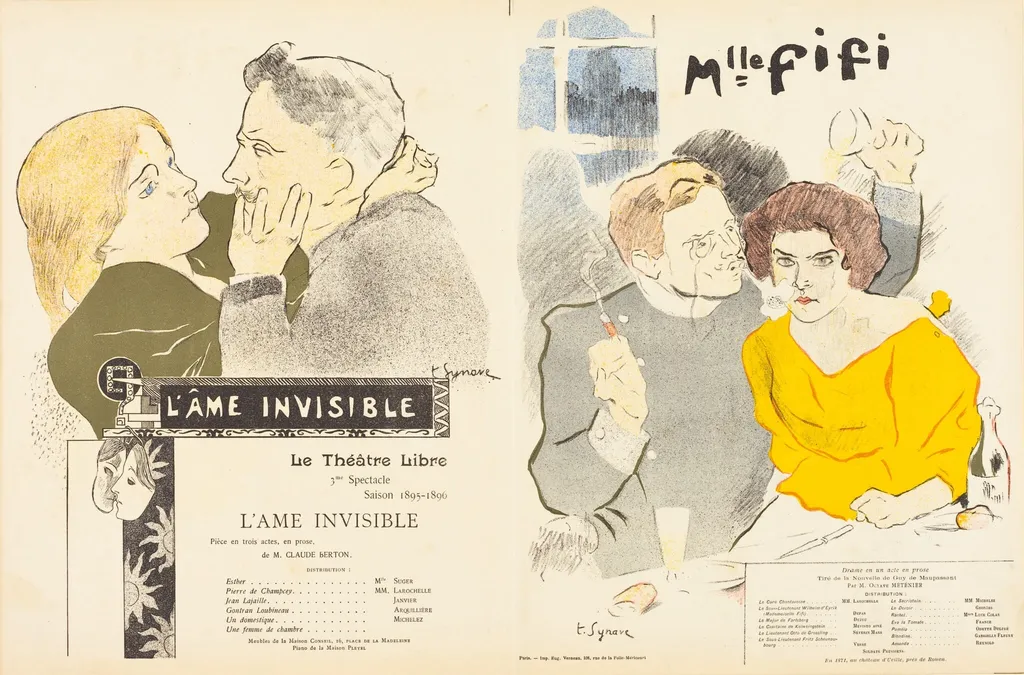
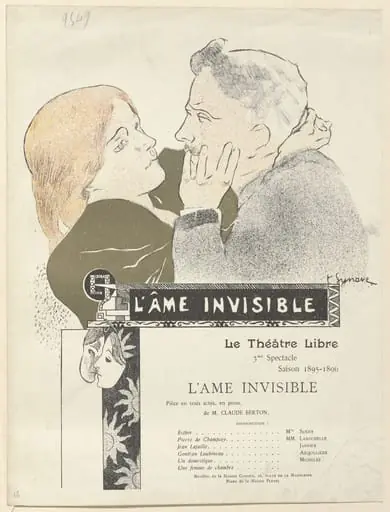
L'Ame invisible; Mademoiselle Fifi is an ink print by the Impressionist artist Tancrède Synave. It dates from 1896 and is held in the collection of the National Gallery of Art.
About this work
Overview
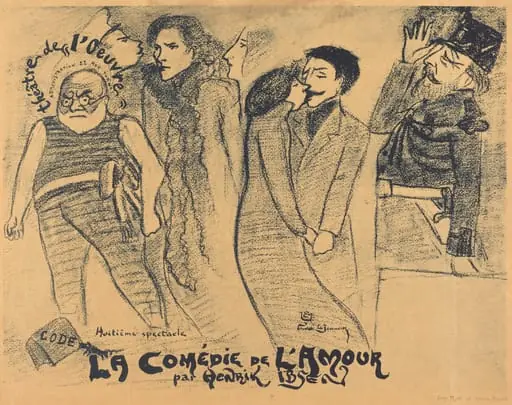
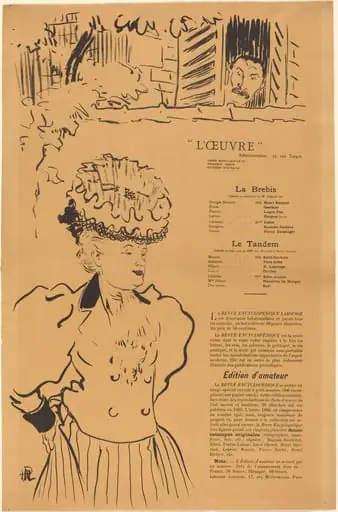
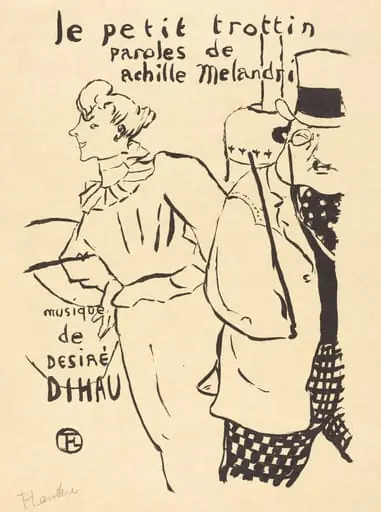
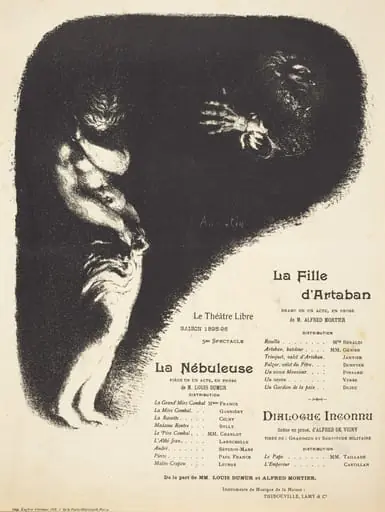
L'Ame invisible; Mademoiselle Fifi is a five‑color lithograph executed on wove paper by French printmaker Tancrède Synave in 1896. The work comprises two adjacent scenes that present intimate moments between a man and a woman, each rendered with a limited palette and careful line work that emphasizes mood over narrative detail.
Subject & Meaning
In the left panel, a couple shares a tender embrace, the woman’s hand resting gently on the man’s cheek, suggesting affection or private consolation. The right panel shifts to a more relaxed setting: the pair sit at a table, the woman in a yellow dress and the man holding a cigarette, evoking a quiet, perhaps contemplative, domestic interaction.
Technique & Style
Synave employed lithography with five distinct inks, allowing for subtle tonal variations and a textured surface. Bold outlines and expressive strokes define the figures, while the limited colour scheme creates depth without overwhelming detail. The print’s flat areas of hue contrast with delicate shading, giving the scenes a sense of immediacy and intimacy.
History & Provenance
Created in the late nineteenth century, the lithograph reflects the period’s interest in everyday life and personal relationships. While specific ownership records are scarce, the work is catalogued among Synave’s prints that were circulated in Parisian artistic circles, contributing to his reputation as a chronicler of contemporary social moments.
Context
The 1890s saw a rise in printed media that captured modern life’s fleeting encounters. Synave’s choice of lithography aligns with this trend, offering reproducible yet artistically nuanced images for a growing audience. The dual‑panel format mirrors the era’s fascination with juxtaposing contrasting yet related scenes to explore themes of love and domesticity.
Artist & collection