Artwork
The Little Errand-Girl (Le petit trottin)
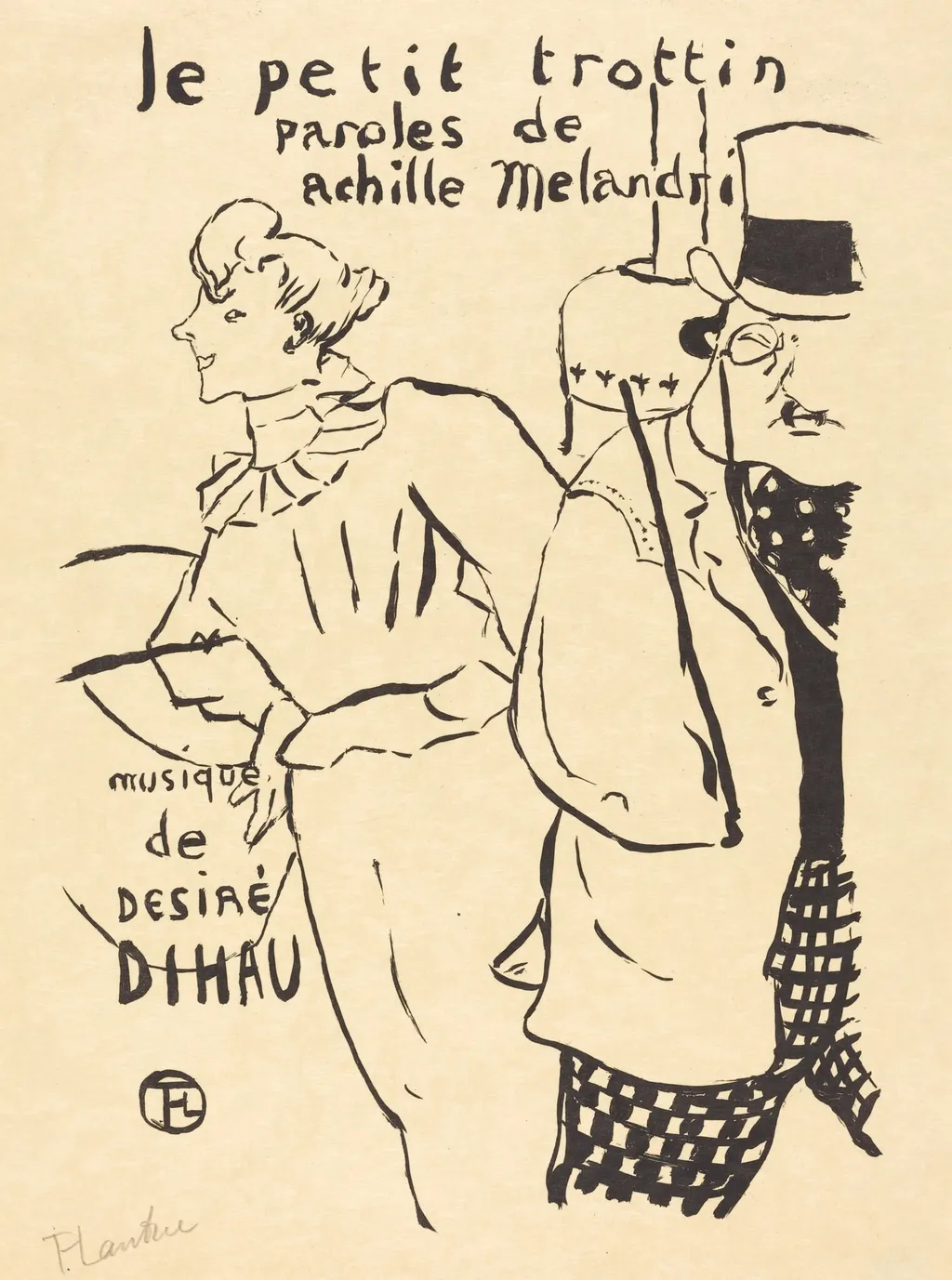
The Little Errand-Girl (Le petit trottin) is an ink print by the Impressionist artist Henri de Toulouse-Lautrec. It dates from 1893 and is held in the collection of the National Gallery of Art.
About this work
Overview
The Little Errand-Girl (Le petit trottin) is a 1893 lithograph on Japan paper by Henri de Toulouse-Lautrec, depicting a young girl walking down the street with a package, dressed in a long coat and a large hat, her expression quiet and focused.
Subject & Meaning
The subject, a young errand-girl, offers a glimpse into everyday life in late 19th-century Paris, highlighting Toulouse-Lautrec's interest in portraying urban, often marginalized, figures in their mundane tasks.
Technique & Style
Executed in black lithograph on Japan paper, the work showcases Toulouse-Lautrec's proficiency in printmaking, characterized by bold lines and a minimalist color palette, emphasizing the subject's simplicity and everyday nature.
History & Provenance
Created in 1893 by Henri de Toulouse-Lautrec, a French artist of aristocratic birth who turned to art after adolescence injuries, the piece is part of his broader oeuvre focusing on Parisian nightlife and urban life.
Context
Set against the backdrop of late 19th-century Paris, the piece reflects the city's vibrant, yet often harsh, urban reality, where children undertook various tasks for livelihood.
Own this work as a print
Artist & collection
Artist
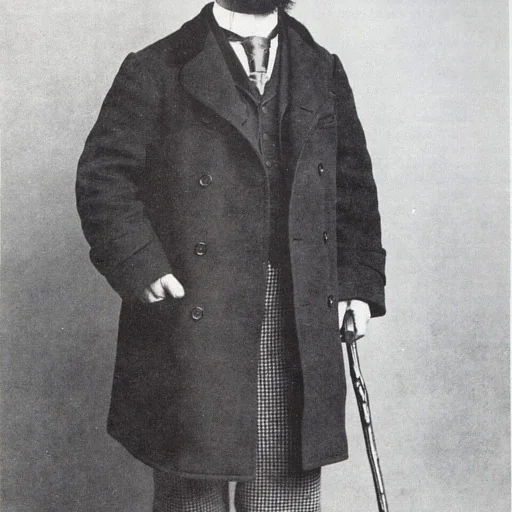
Comte Henri Marie Raymond de Toulouse-Lautrec-Montfa (24 November 1864 – 9 September 1901), known as Toulouse-Lautrec (French: ), was a French painter, printmaker, draughtsman, caricaturist, and illustrator.

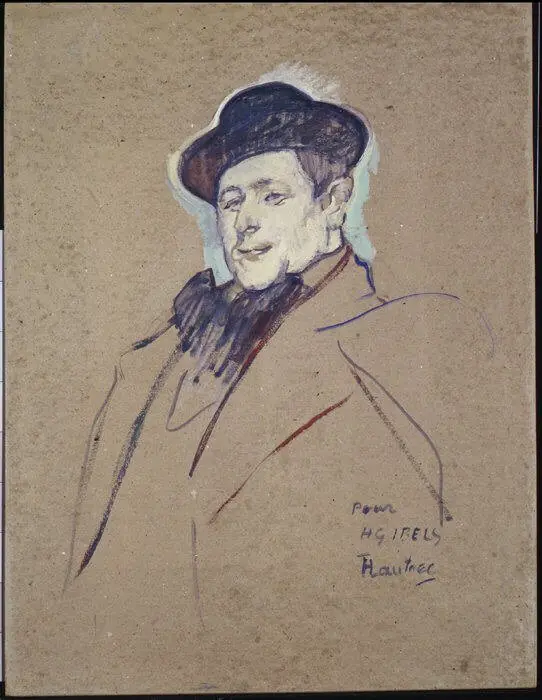
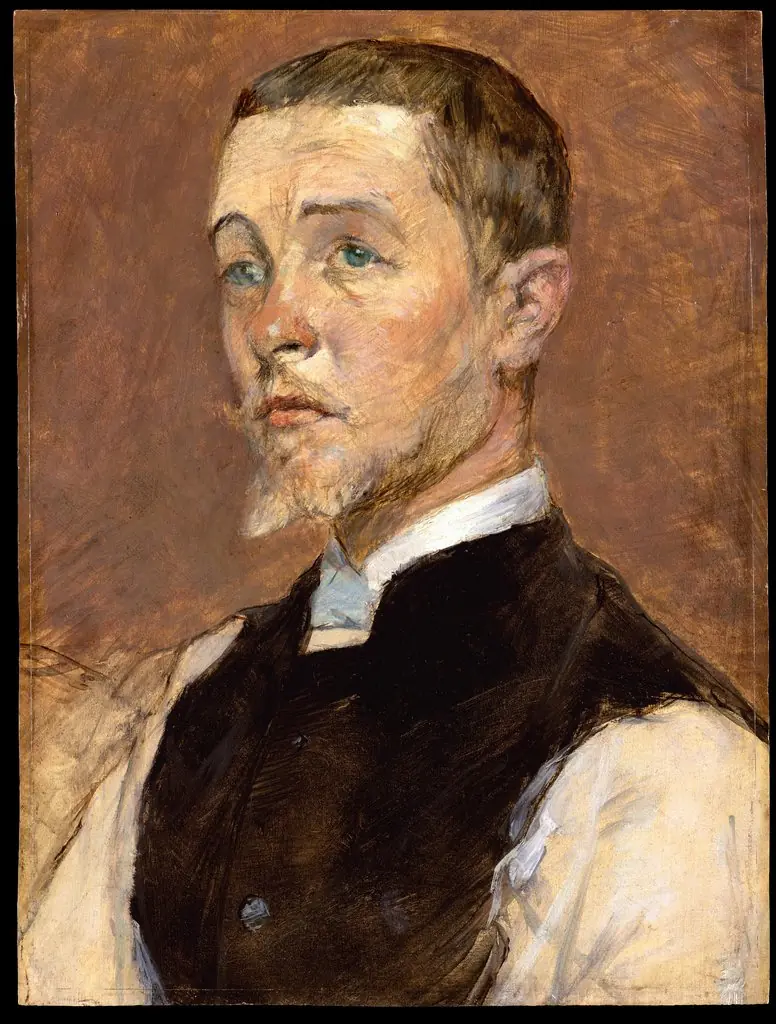
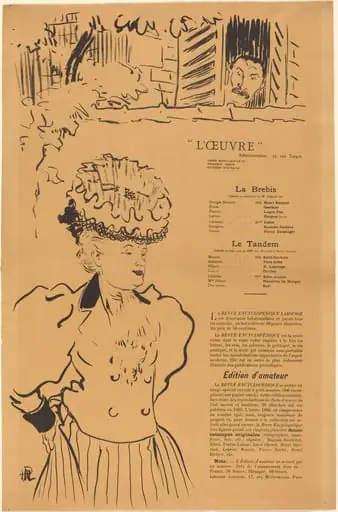 La Brebis; Le Tandem
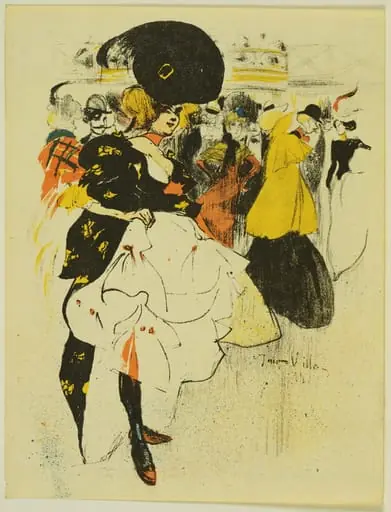 Untitled
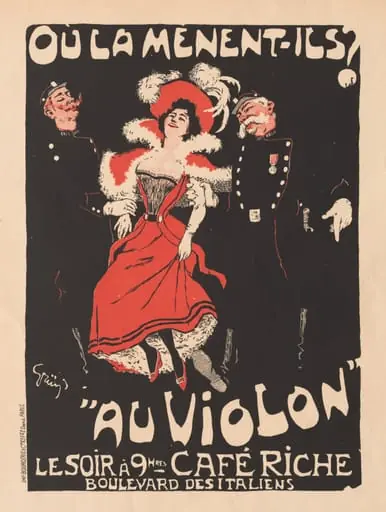 Les Maitres de L'Affiche: Pl. 103 Café Reche
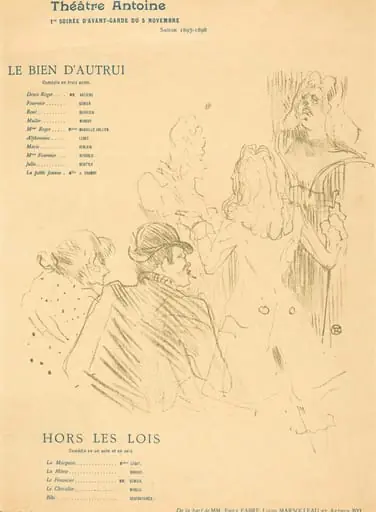 Le Bien d'autrui; Hors Les Lois
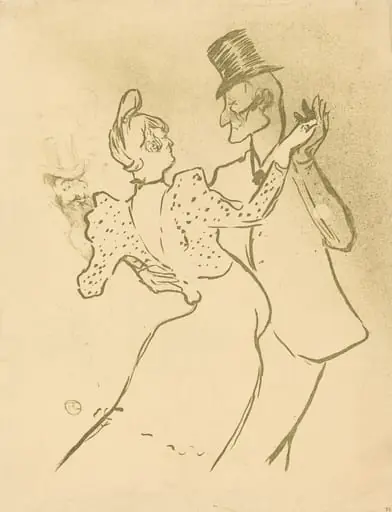 La Goulue
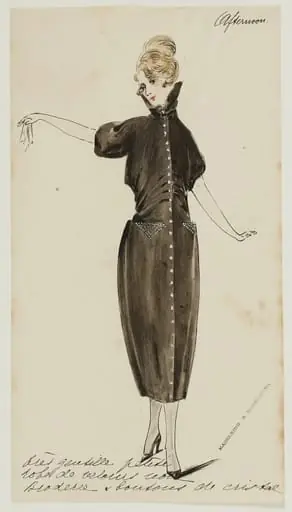 Afternoon
 In the Skating Professional Beauty
 Untitled
 La Comédie de l'amour
 At the Concert (Au concert)
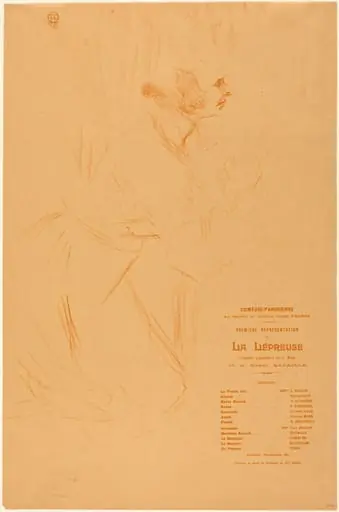 Program for "La lepreuse" (Programme pour "La lépreuse")
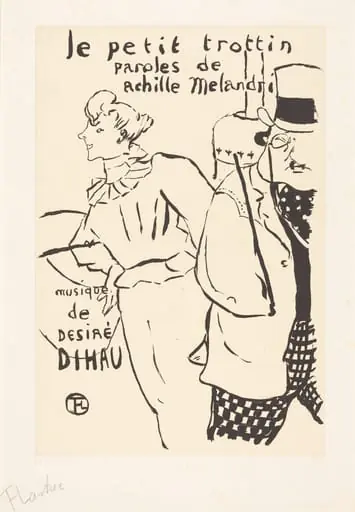 The Little Errand-Girl (Le petit trottin)