Artwork
Înserare senină
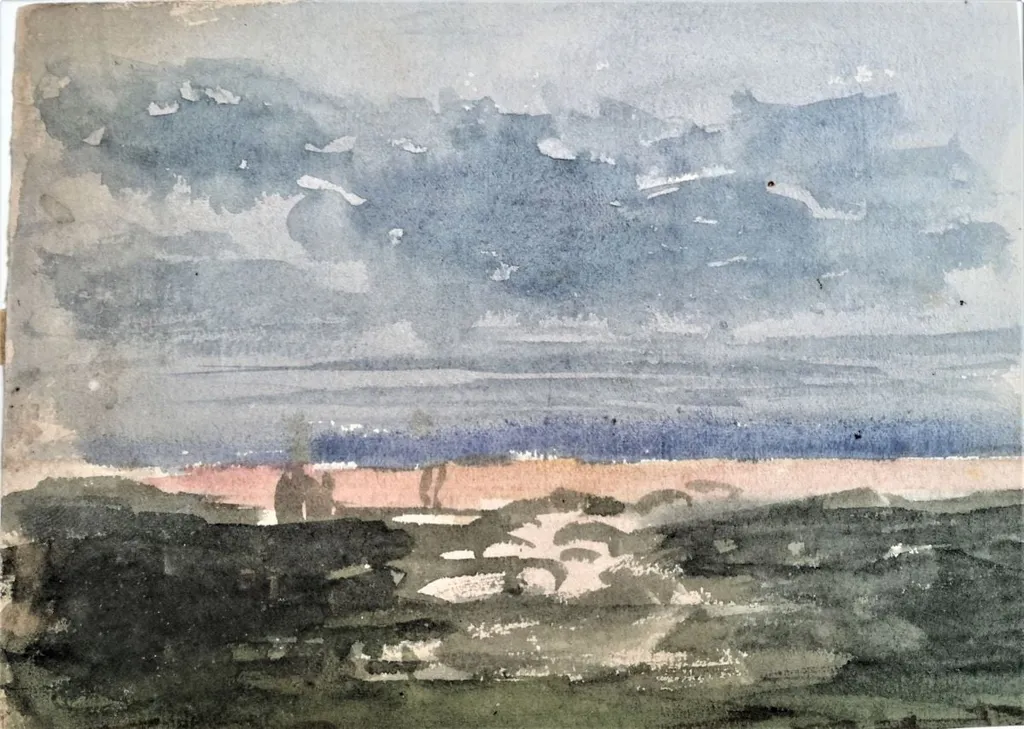
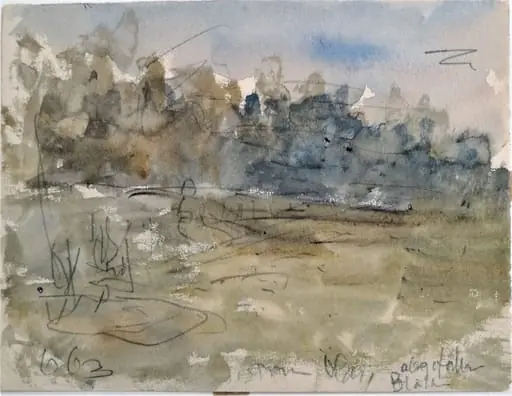
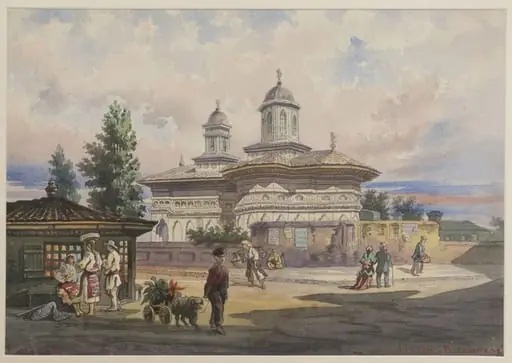
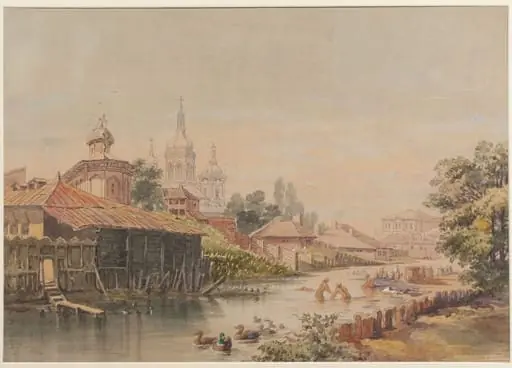
Înserare senină is a print by Carol Pop de Szathmári. It dates from 1874 and is held in the collection of the Bucharest Municipality Museum.
About this work
Overview
Though Szathmari is best known for his early photographic work, this piece reflects his continued engagement with visual composition through painting.
Created around 1874 by Carol Szathmari, Înserare senină is a quiet landscape rendered in a soft, atmospheric style. Though Szathmari is best known for his early photographic work, this piece reflects his continued engagement with visual composition through painting. The work is part of the collection at the Museum of Ethnography in Bucharest, representing a lesser-known facet of his artistic output beyond documentary imagery.
Subject & Meaning
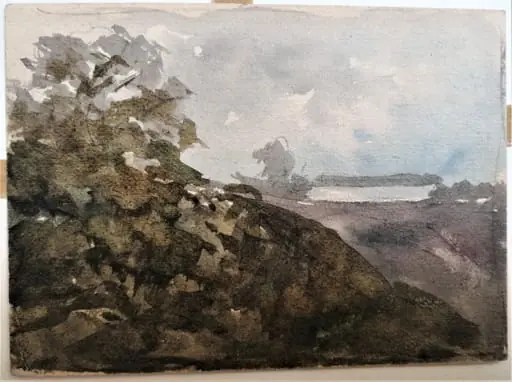
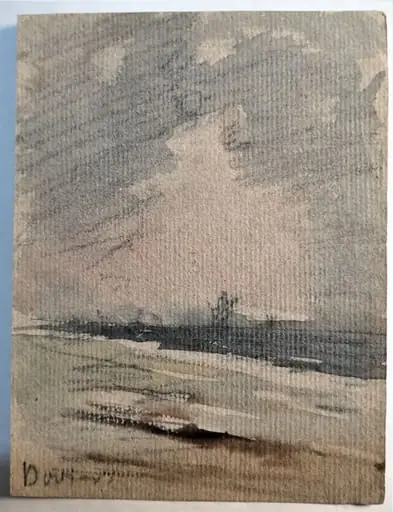
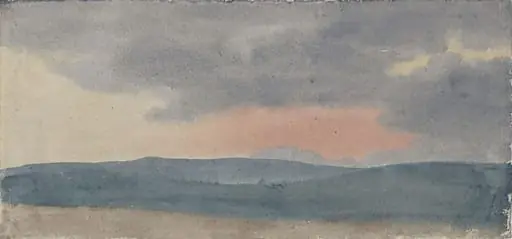
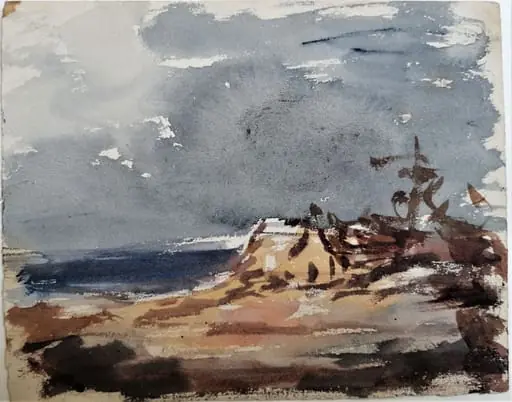
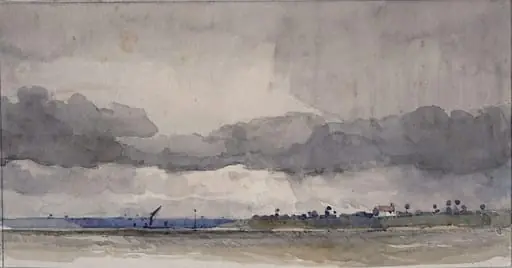
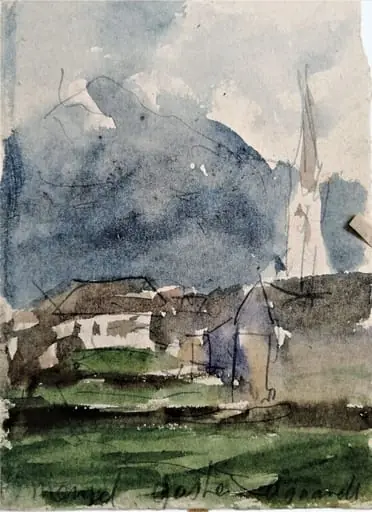
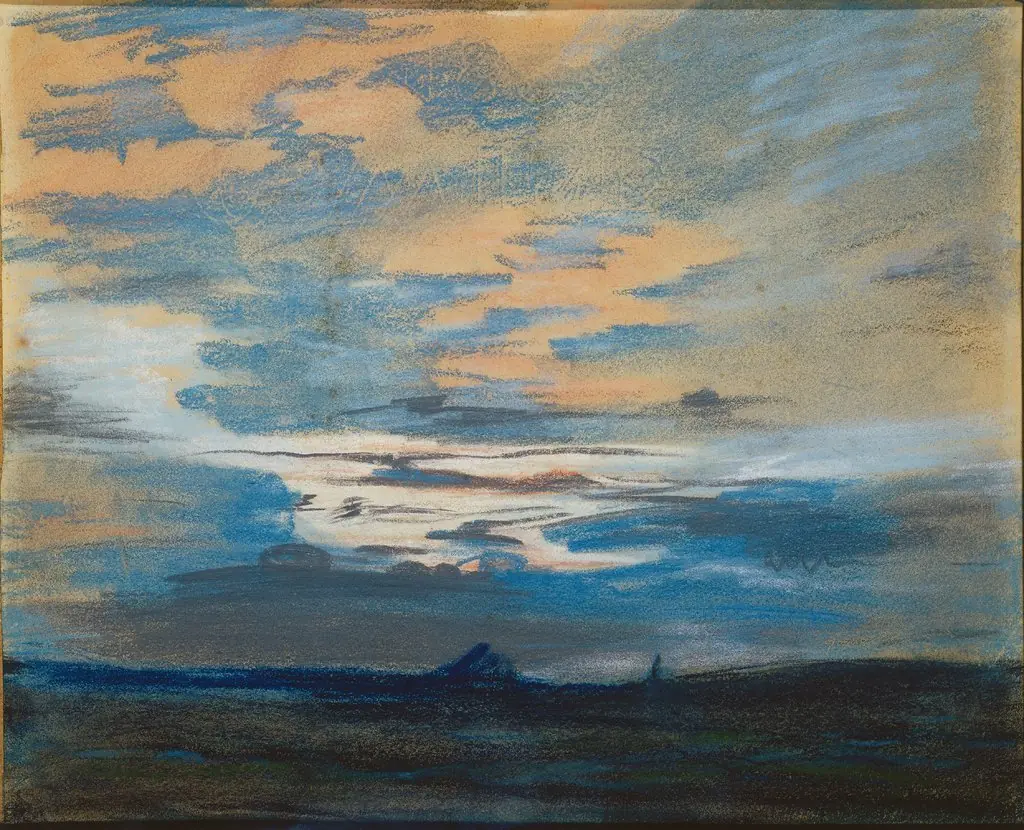
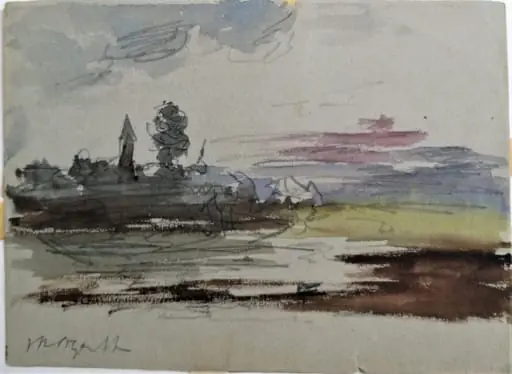
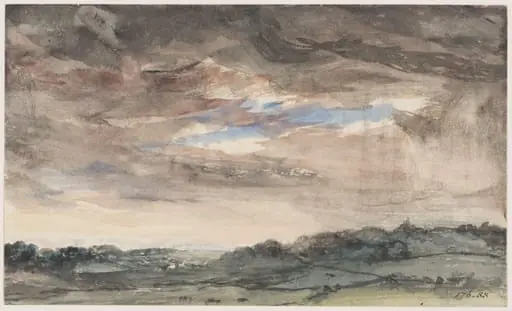
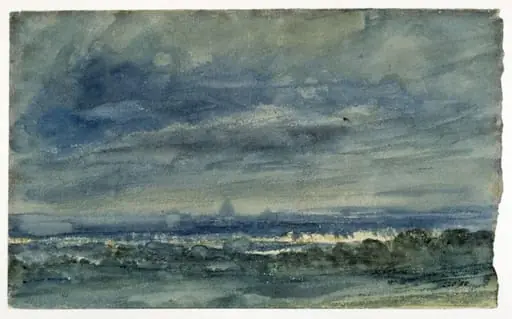
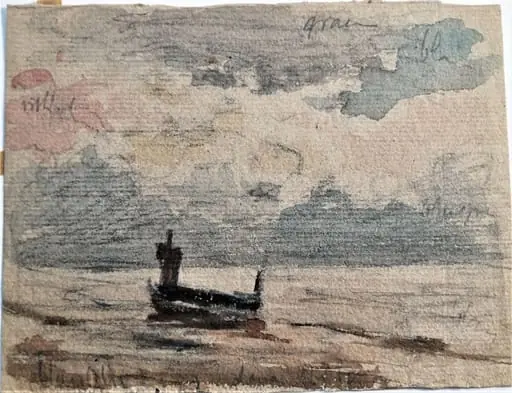
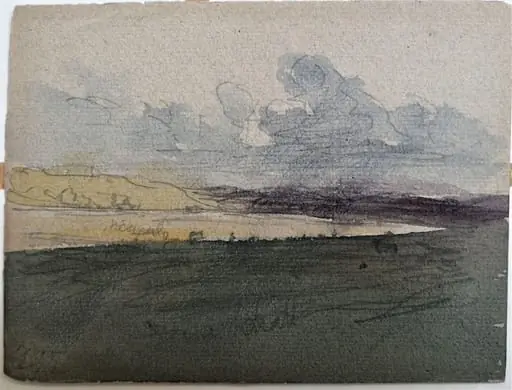
The scene depicts a tranquil, mist-laden countryside with a subtle path winding through a rocky foreground. Distant, indistinct forms suggest trees or figures, while the pale sky holds diffuse clouds. There is no narrative or dramatic event—only the stillness of an overcast morning. The absence of strong light or motion invites contemplation, emphasizing mood over action, and aligning with 19th-century European tendencies toward lyrical naturalism.
Technique & Style
Szathmari employs muted tones—soft greens, grays, and faint pink hues—to evoke a hazy, diffused atmosphere. Edges are blurred, light is even, and shadows are understated, avoiding dramatic chiaroscuro. The brushwork is delicate, favoring tonal gradations over sharp definition. This approach creates a sense of quiet immersion, where the landscape feels neither idealized nor detailed, but quietly observed and emotionally restrained.
History & Provenance
After moving to Romania at age 18, Szathmari became a central figure in the country’s early photographic history, notably documenting the Crimean War. Înserare senină dates from later in his career, when he increasingly turned to painting. The work entered the Museum of Ethnography’s collection, likely through donation or acquisition in the early 20th century, preserving a personal, non-documentary side of his artistic practice.
Context
In the 1870s, Romanian artists were exploring national identity through landscape, often influenced by German and French Romantic traditions. Szathmari’s work diverges from grand historical themes, instead focusing on intimate, everyday atmospheres. This painting reflects a broader cultural shift toward introspective nature studies, even as photography remained his primary legacy. His transition from lens to brush reveals a deeper engagement with perception beyond documentation.
Legacy
Though overshadowed by his photographic achievements, Înserare senină contributes to understanding Szathmari’s broader artistic sensibility. It demonstrates his ability to translate observational precision into painterly quietude, bridging documentary realism and poetic atmosphere. The work remains a quiet testament to his evolving relationship with visual representation, offering insight into the personal, non-public dimensions of his creative life.
Artist & collection
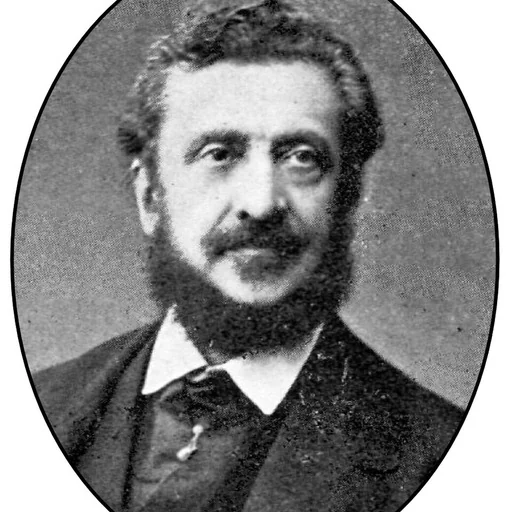
Artist
Carol Szathmari (Romanian: Carol Popp de Szathmari, Hungarian: Szathmáry Pap Károly; 11 January 1812, Kolozsvár – 3 July 1887, Bucharest) was a Romanian painter, lithographer, and photographer of Transylvanian Hungarian…