Artwork
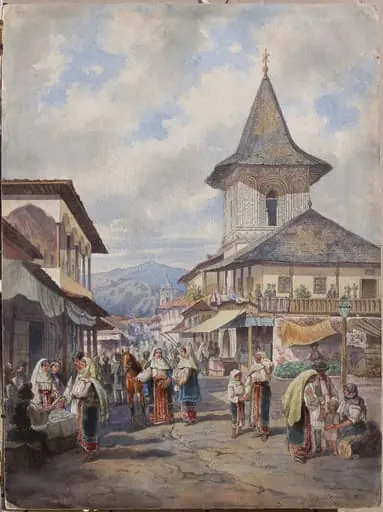
Biserica Batiștei
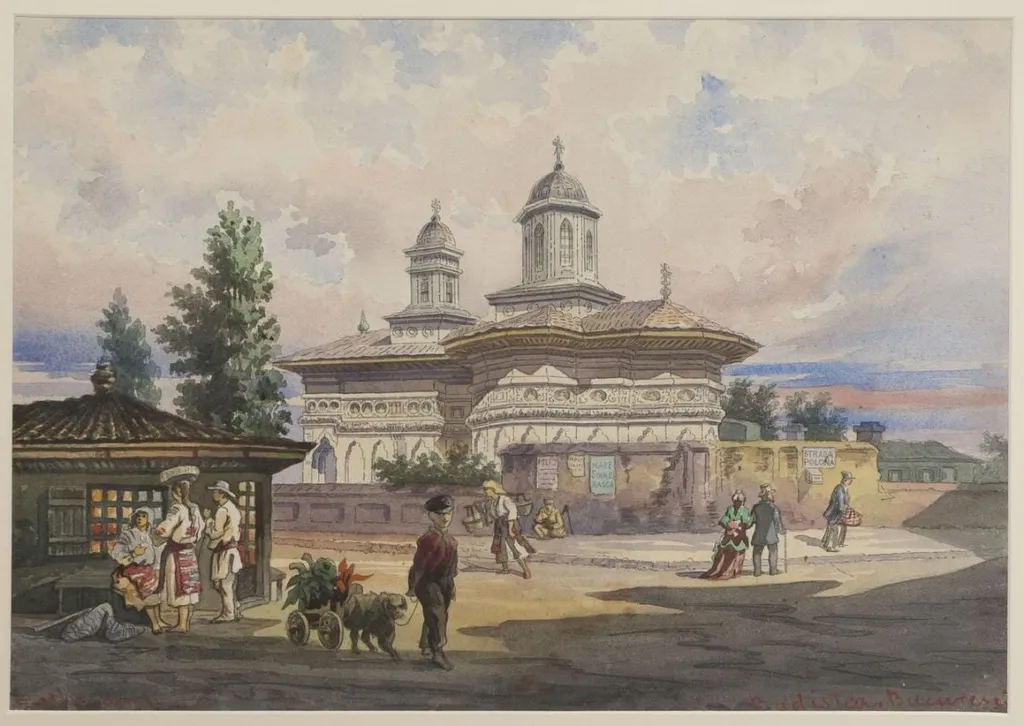
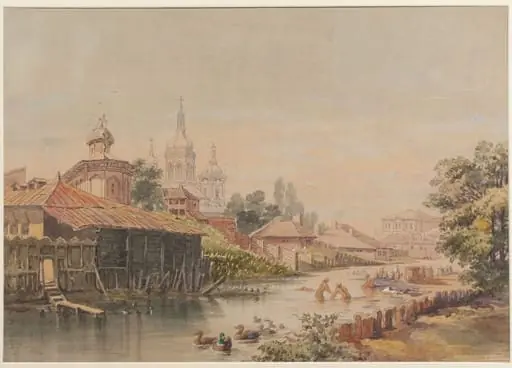
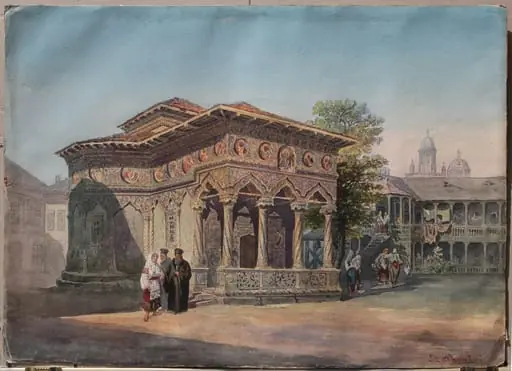
Biserica Batiștei is a print by Carol Pop de Szathmári. It dates from 1850 and is held in the collection of the National Museum of Art of Romania.
About this work
Overview
Szathmari, a Transylvanian Hungarian artist active in Romania, blended his training in painting with the new possibilities of photography.
Created around 1850 by Carol Szathmari, *Biserica Batiștei* is a photographic print capturing a quiet moment in Bucharest’s urban life. Szathmari, a Transylvanian Hungarian artist active in Romania, blended his training in painting with the new possibilities of photography. This work exemplifies his early use of the medium to document everyday scenes, positioning him as a pioneer in Romanian visual culture.
Subject & Meaning
The image centers on Batiștei Church, a wooden religious structure with twin towers and a central dome, surrounded by daily activity. Figures in traditional dress interact near a shop with jars, a man walks a dog, and carts pass through the square. The inclusion of a street sign reading 'Strada Polona' anchors the scene in a specific local context, suggesting an interest in recording the ordinary rhythms of city life rather than idealized or ceremonial moments.
Technique & Style
Szathmari employed careful composition and natural lighting to create depth and atmosphere. Soft, diffused light gently illuminates the church’s carved surfaces and fades toward the horizon, enhancing the sense of spatial recession. The use of chiaroscuro, though subtle, adds volume to architectural forms and figures, reflecting his painterly background. The print’s quiet tonal range avoids dramatic contrast, favoring a serene, observational tone.
History & Provenance
The photograph was made during Szathmari’s early career in Bucharest, before his later documentation of the Crimean War. As one of the first photographers in the region, his work was largely personal or locally commissioned. *Biserica Batiștei* likely served as both a record of a familiar landmark and an artistic experiment in capturing architecture and social life through the lens, though its original ownership and early exhibition history remain undocumented.
Context
In mid-19th century Romania, photography was still novel, and few artists had access to the technology. Szathmari’s work emerged alongside growing interest in national identity and urban documentation. The depiction of a wooden church in a bustling street reflects a transitional period—traditional architecture coexisting with emerging modernity. His choice to photograph ordinary life, rather than monuments or elites, set his approach apart from contemporaries.
Legacy
Szathmari’s photographs, including *Biserica Batiștei*, laid foundational visual records of Romanian urban life. His integration of photographic technique with artistic sensibility influenced later generations of local photographers. Though not widely exhibited in his lifetime, his body of work is now recognized as among the earliest and most significant contributions to Romania’s photographic heritage, offering insight into the country’s social and architectural landscape before widespread industrialization.
Artist & collection
Artist
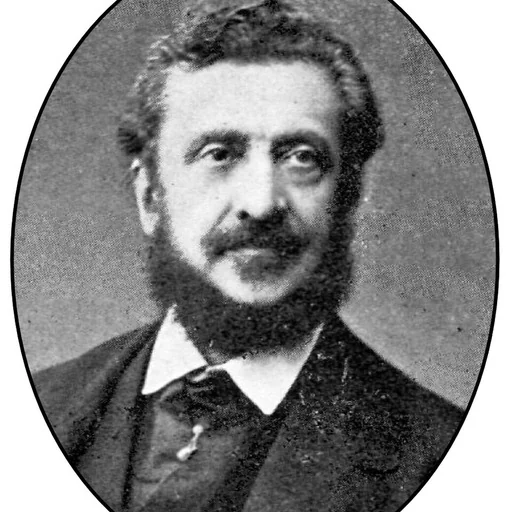
Carol Szathmari (Romanian: Carol Popp de Szathmari, Hungarian: Szathmáry Pap Károly; 11 January 1812, Kolozsvár – 3 July 1887, Bucharest) was a Romanian painter, lithographer, and photographer of Transylvanian Hungarian…