Artwork
Archangel Michael helps in the capture of Jericho
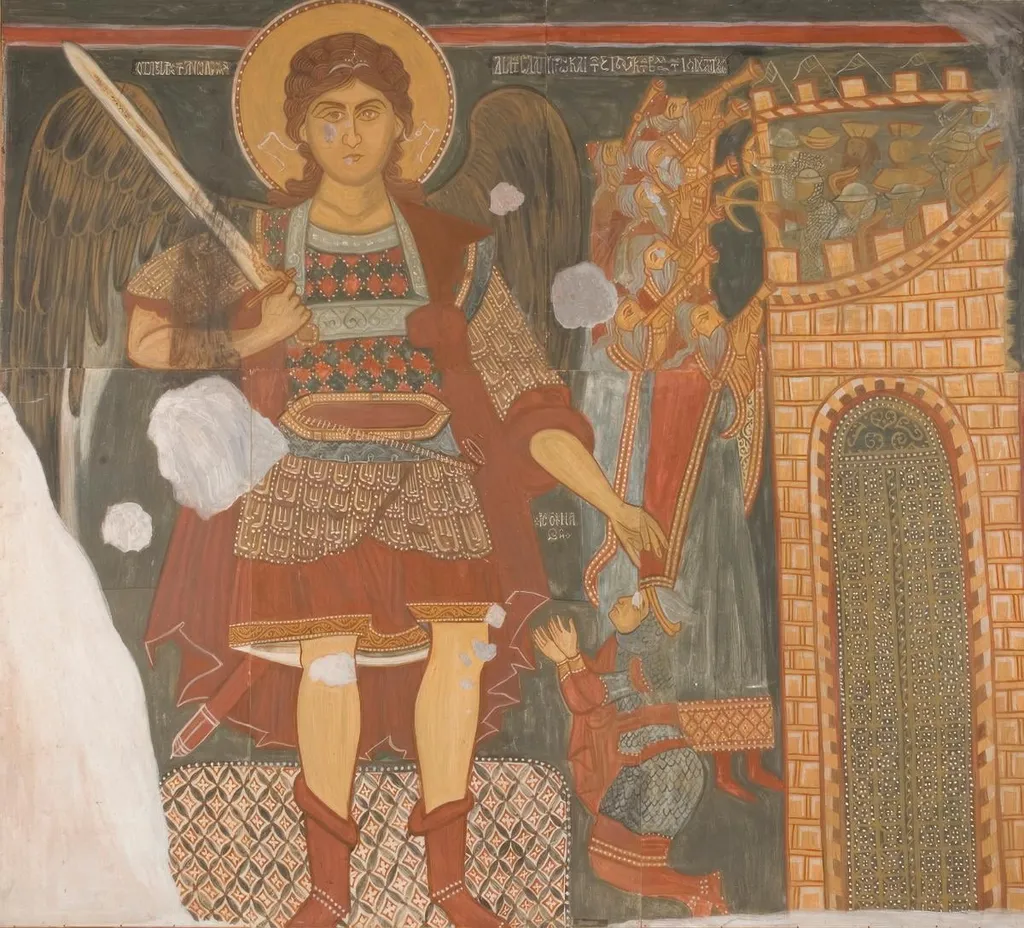
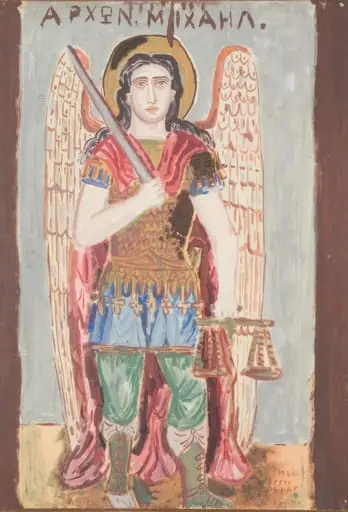
Archangel Michael helps in the capture of Jericho is an unspecified painting by Taka Athena. It dates from 1959 and is held in the collection of the Athens School of Fine Arts.
About this work
Overview
Its composition emphasizes symbolic presence over spatial realism, using flat planes and vivid color to convey spiritual authority rather than physical depth.
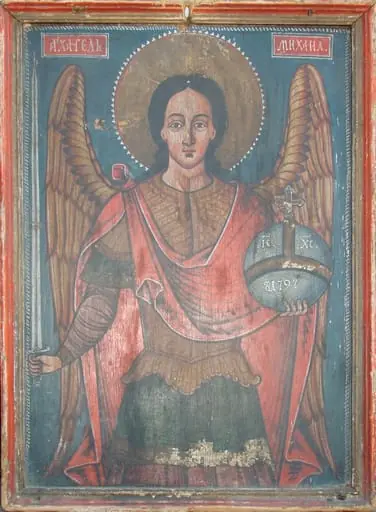
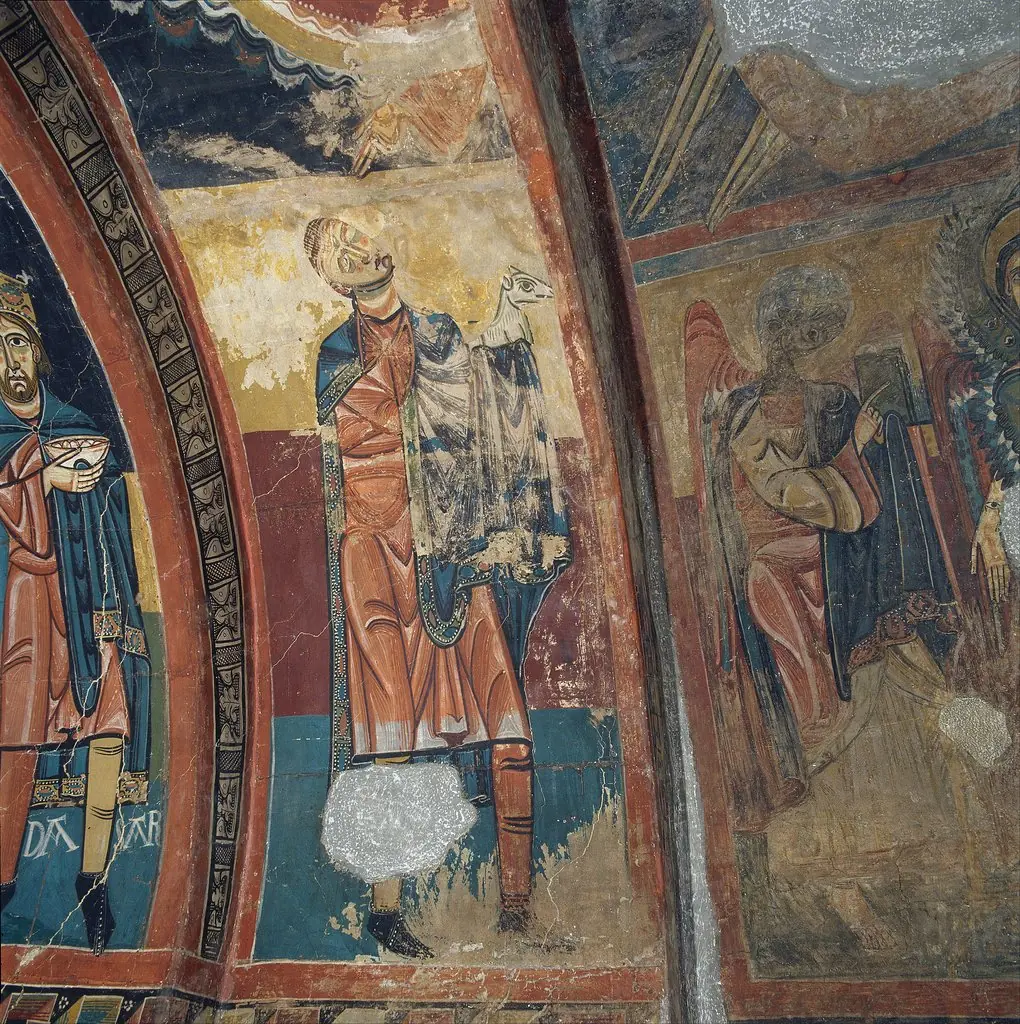
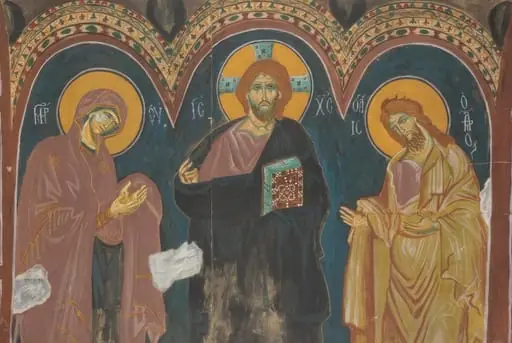
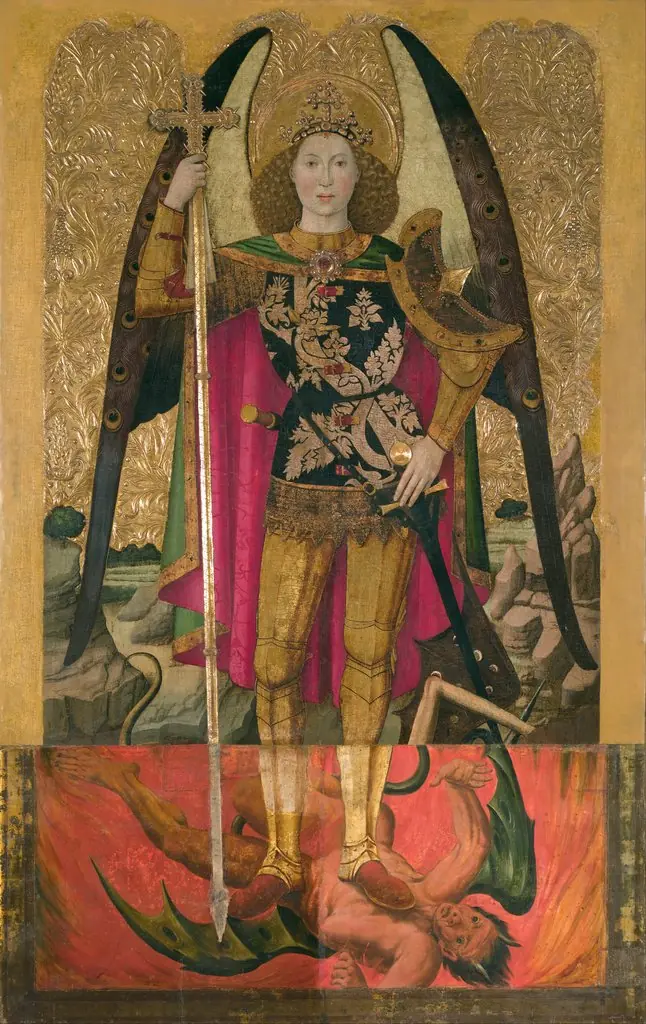
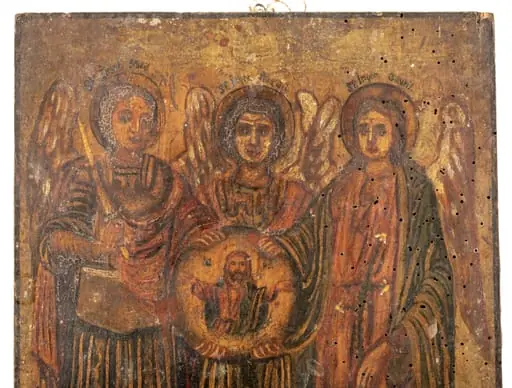
Created in 1959 by Taka Athena, this painting depicts the biblical story of Jericho’s fall, with the Archangel Michael as a divine agent. Executed in a stylized, non-naturalistic manner, the work is part of the Museum of Ethnography’s collection. Its composition emphasizes symbolic presence over spatial realism, using flat planes and vivid color to convey spiritual authority rather than physical depth.
Subject & Meaning
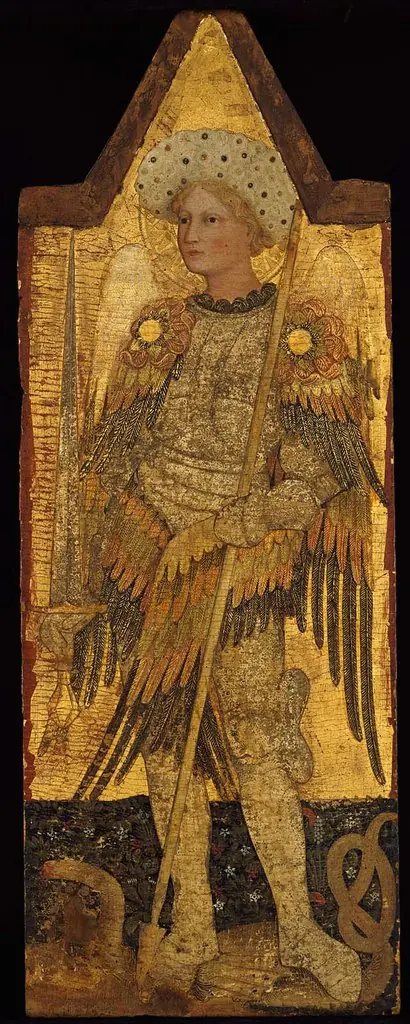
The scene illustrates the Archangel Michael intervening in the conquest of Jericho, as described in the Book of Joshua. The winged figure, radiant and elevated, represents divine power, while the kneeling armored soldier symbolizes human submission to sacred will. The city behind them, rendered with simplified architecture, serves as the object of divine judgment, reinforcing the narrative of faith-driven victory over fortified resistance.
Technique & Style
Taka Athena employs bold outlines and unmodulated color, avoiding chiaroscuro or perspective to create a flat, icon-like surface. Gold detailing on the halo and robe suggests sacredness, while the warm reds and yellows of the city evoke both heat and antiquity. The lack of shadow and the sharp, angular forms reflect a deliberate departure from Western naturalism, aligning instead with symbolic and liturgical visual traditions.
History & Provenance
The painting was completed in 1959 and entered the Museum of Ethnography’s holdings shortly thereafter. Its origin lies outside mainstream Western art circles, suggesting possible influence from religious iconography or non-European visual languages. No documentation indicates prior ownership or exhibition history before its acquisition by the museum, leaving its immediate artistic context partially unresolved.
Context
Emerging in the late 1950s, the work reflects a period when some artists revisited religious themes through non-Western or folk-inspired aesthetics. Taka Athena’s approach diverges from contemporary modernist trends, instead drawing on archetypal imagery to communicate spiritual narratives. The stylization may relate to broader postcolonial reimaginings of biblical stories through localized visual vocabularies.
Legacy
Though not widely exhibited beyond its institutional home, the painting contributes to a lesser-known strand of 20th-century religious art that prioritizes symbolic clarity over realism. Its presence in an ethnographic museum signals an interest in how faith narratives are visually adapted across cultures. The work remains a quiet example of how sacred stories can be reinterpreted through distinctive, non-canonical artistic languages.
Artist & collection
Artist
Taka Athena made metalwork that tells stories, like the shiny plaque showing how Archangel Michael helped take Jericho.