Artwork
Court Version of "New Feng"
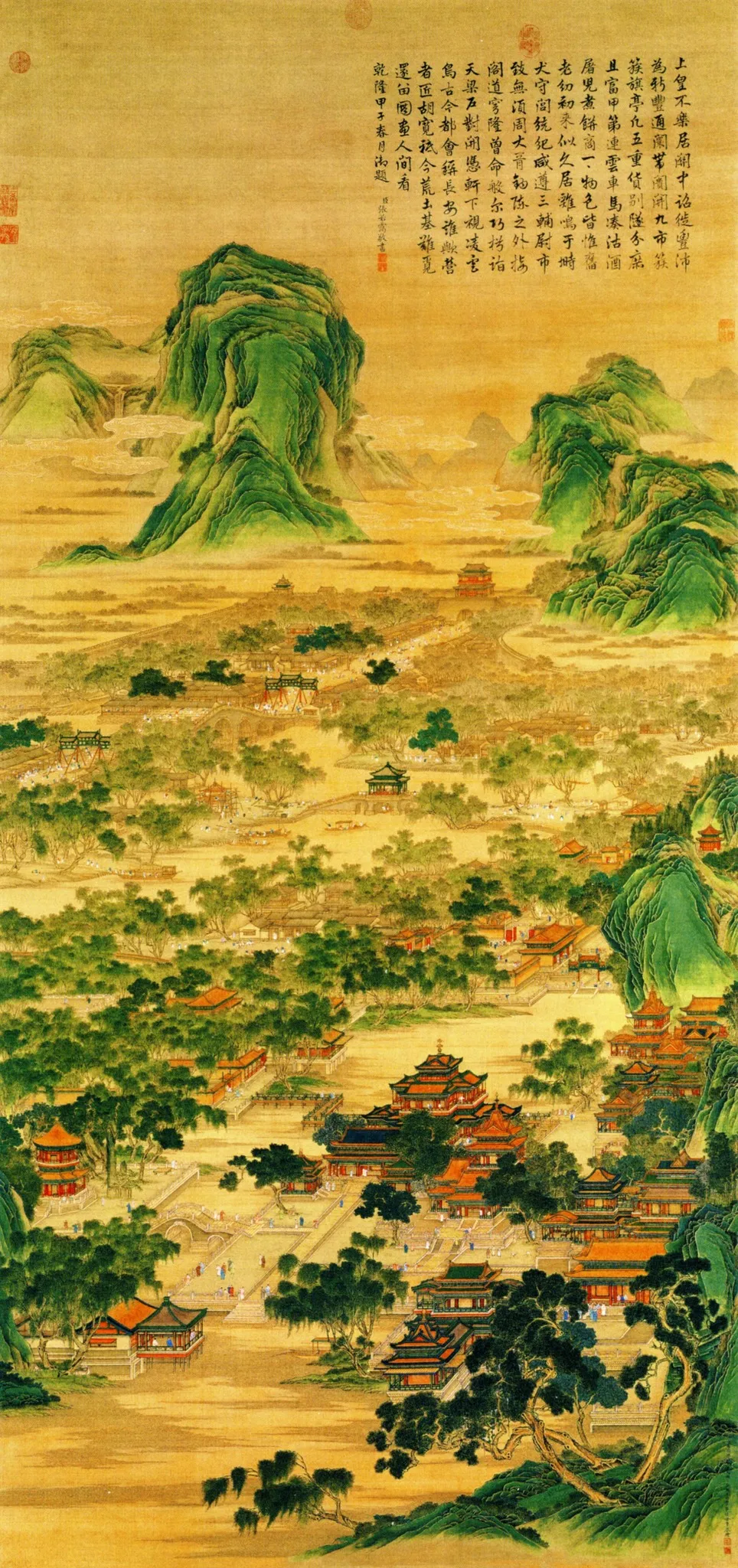
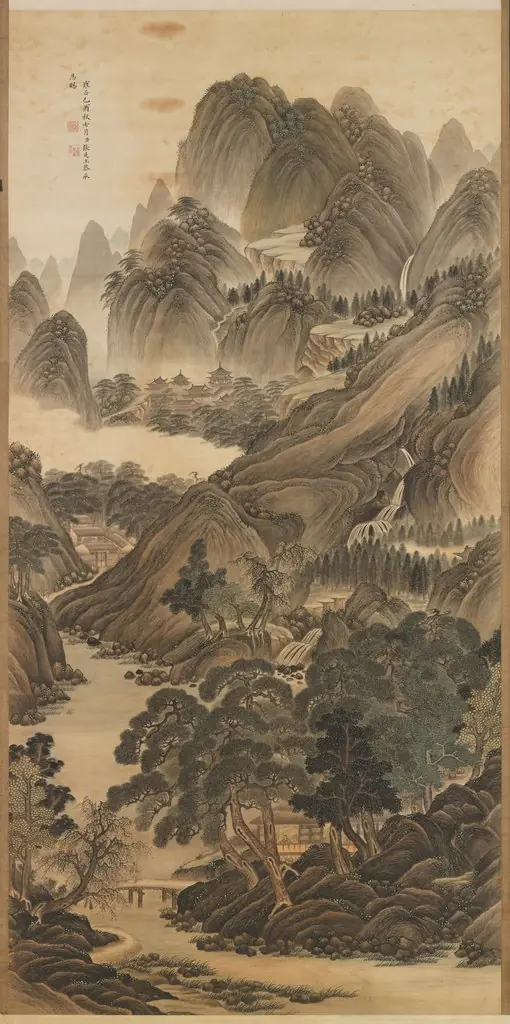
Court Version of "New Feng" is an unspecified painting by the Qing dynasty painting artist Tangdai. It dates from 1722 and is held in the collection of the National Palace Museum.
About this work
Overview
Created around 1722, this landscape painting is attributed to the Qing dynasty artist Tangdai. It belongs to a series of court-commissioned works that reflect imperial tastes for idealized natural scenery. The piece is part of the National Palace Museum’s collection in Taipei, where it is preserved as an example of early 18th-century Chinese court painting.
Subject & Meaning
The scene depicts a tranquil rural settlement nestled among towering mountains, with clustered buildings featuring orange-tiled roofs and dense foliage. The composition suggests harmony between human habitation and nature, a recurring theme in imperial Chinese art. The absence of human figures enhances the sense of quietude, reinforcing an idealized vision of order and balance.
Technique & Style
Executed in ink and color on silk, the painting employs fine brushwork to render intricate details of architecture and vegetation. The background mountains are textured with layered ink washes and delicate linework, creating depth and volume. The pale yellow sky contrasts subtly with the greens and earth tones, contributing to a serene, atmospheric tone consistent with courtly aesthetics.
History & Provenance
Commissioned during the Yongzheng reign, the work was likely produced within the imperial painting academy. It remained in the Qing imperial collection until the early 20th century, when it was moved to Taiwan along with other artifacts from the Forbidden City. Its attribution to Tangdai is based on stylistic analysis and archival records from the court workshop.
Context
This painting reflects the Qing court’s interest in legitimizing rule through cultural continuity with earlier dynasties. Landscape painting, especially in the 'New Feng' tradition, was used to convey moral and cosmological ideals. The emphasis on harmony and controlled nature aligns with Confucian values promoted by the imperial administration during the early 1700s.
Legacy
Tangdai’s work, including this piece, contributed to the development of Qing court landscape conventions. While not widely known outside scholarly circles, his paintings remain important for understanding how imperial patronage shaped artistic expression. The painting continues to serve as a reference for studies on 18th-century Chinese visual culture and institutional art production.
Artist & collection

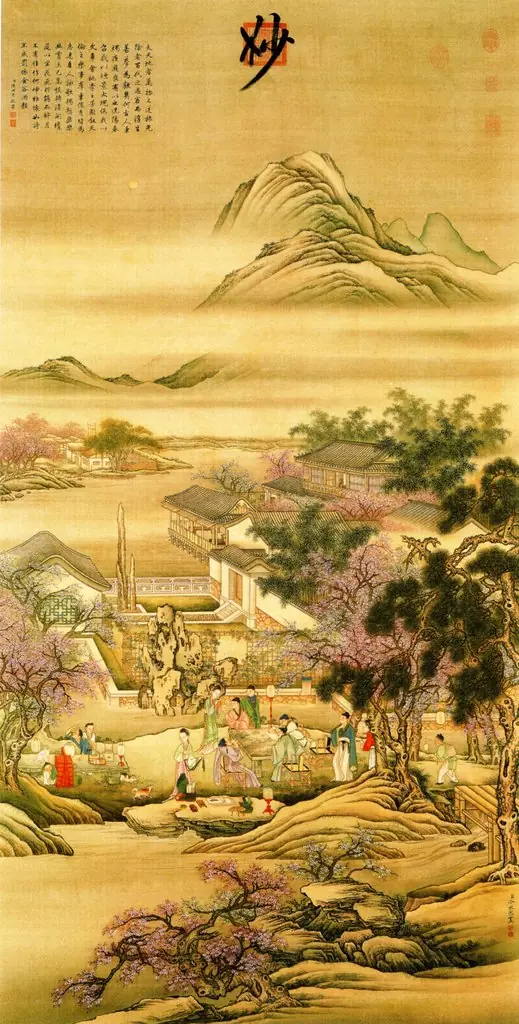 Banquet at the Peach and Pear Blossom Garden on a Spring Evening
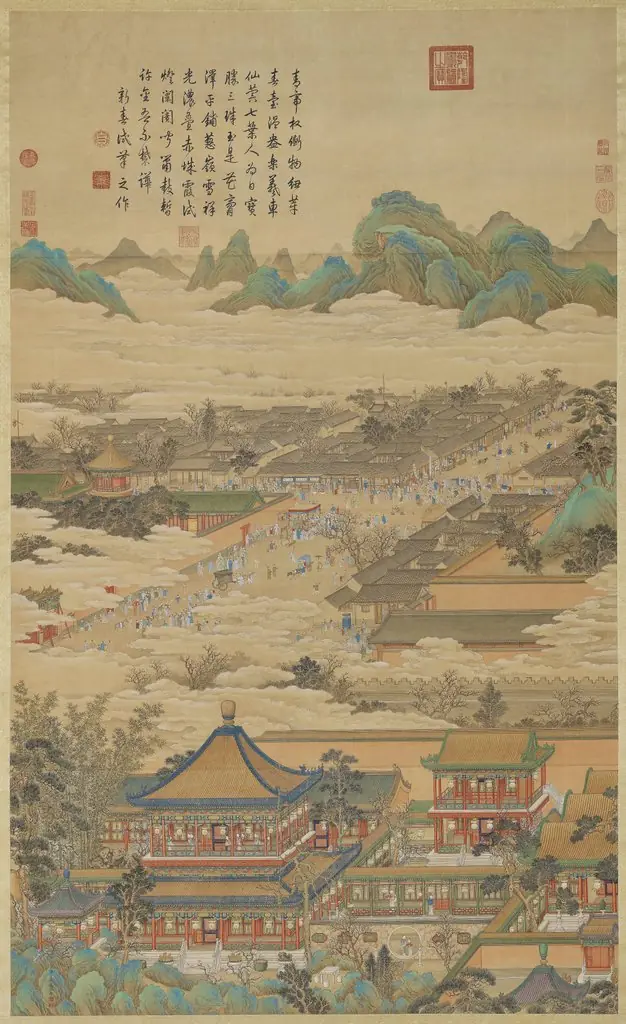 Peace for the New Year
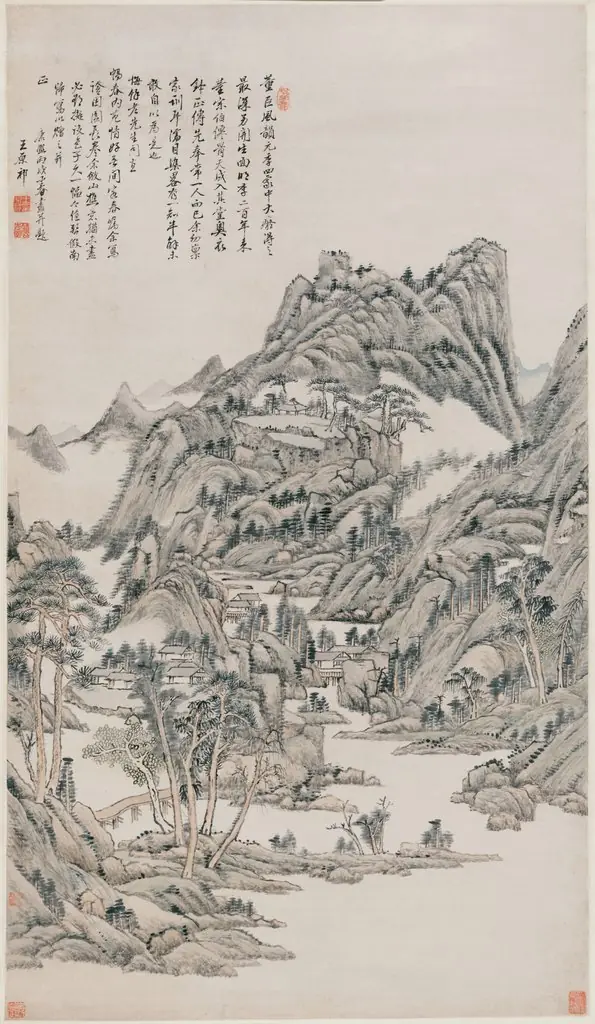 Landscape
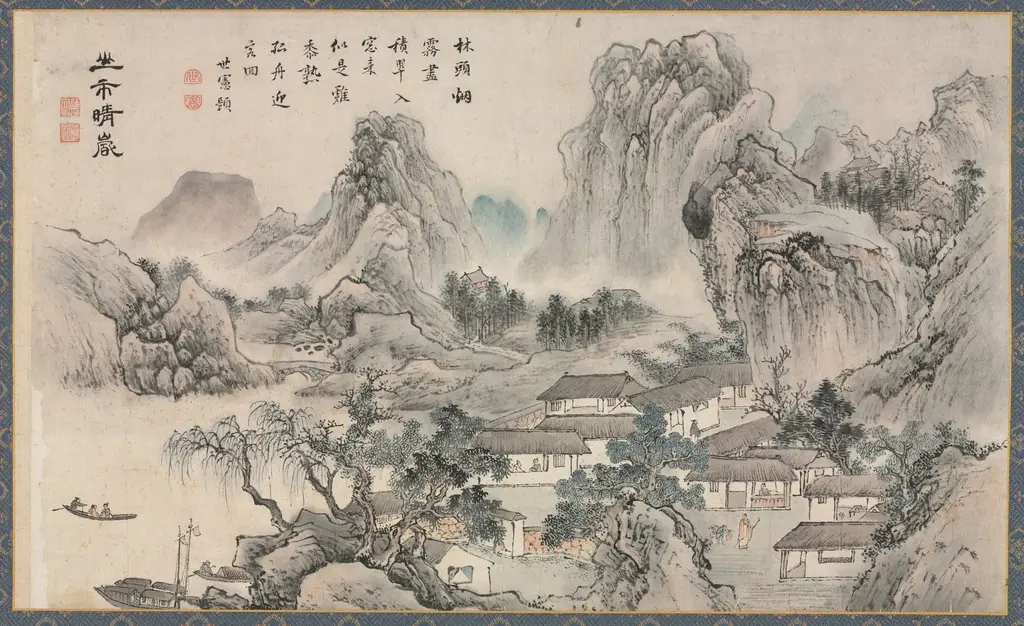 Mountain Market in Clearing Mist, from Eight Views of Xiao-Xiang
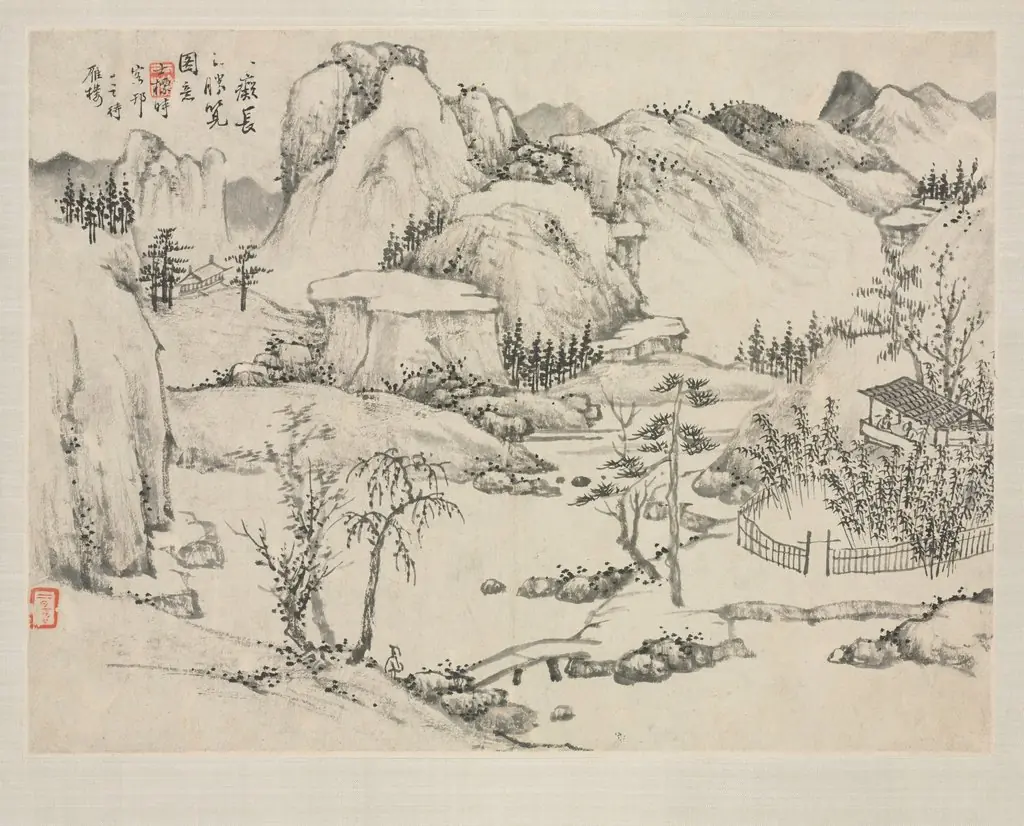 Landscape Album in Various Styles: Scenery of Mt. Changbai after Huang Gongwang
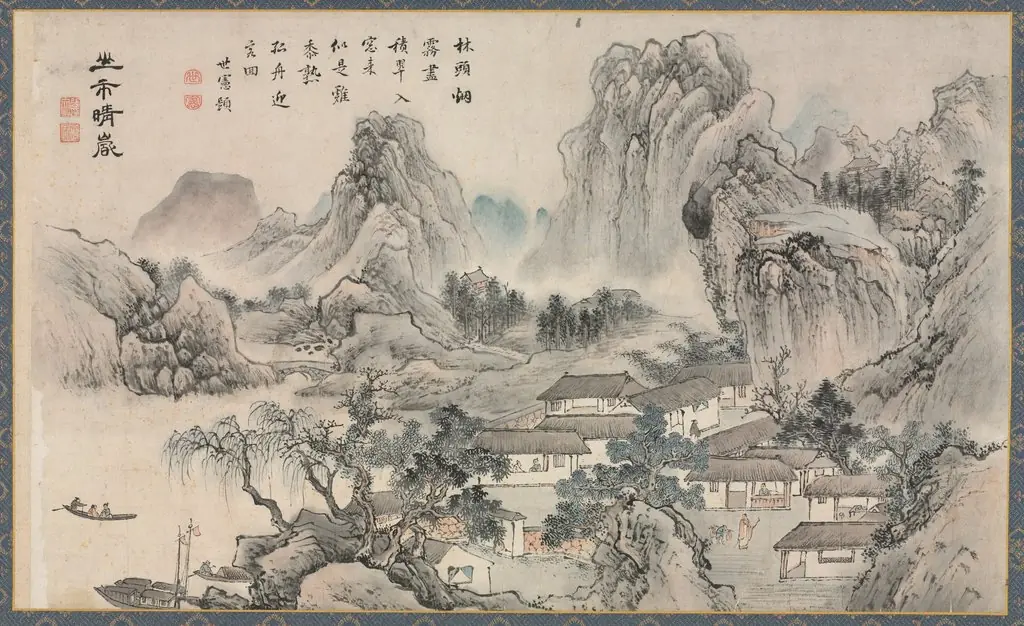 Four Motifs from the Eight Views of Xiao-Xiang
 Landscape Album in Various Styles: Scenery of Mt. Changbai after Huang Gongwang
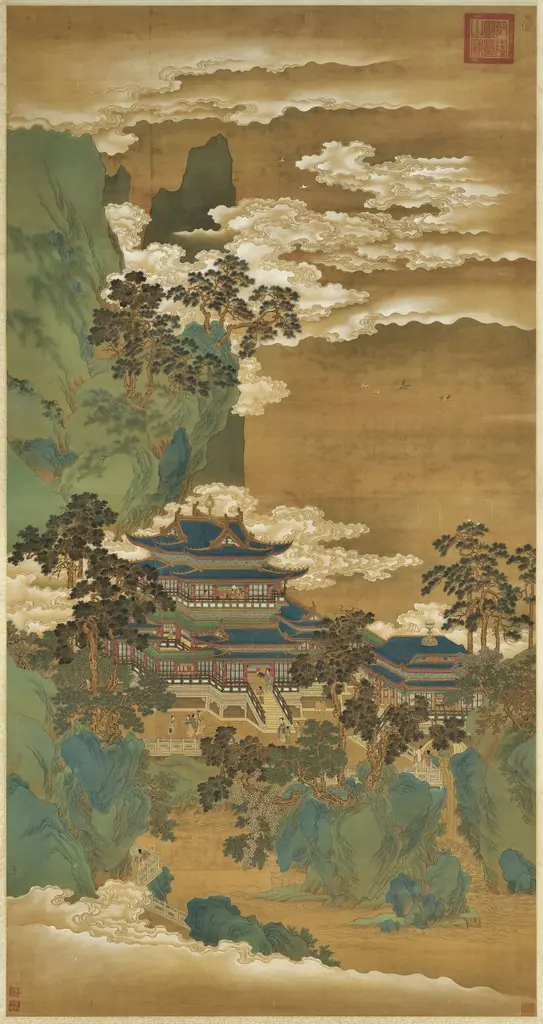 Towers and Pavilions in Mountains of the Immortals
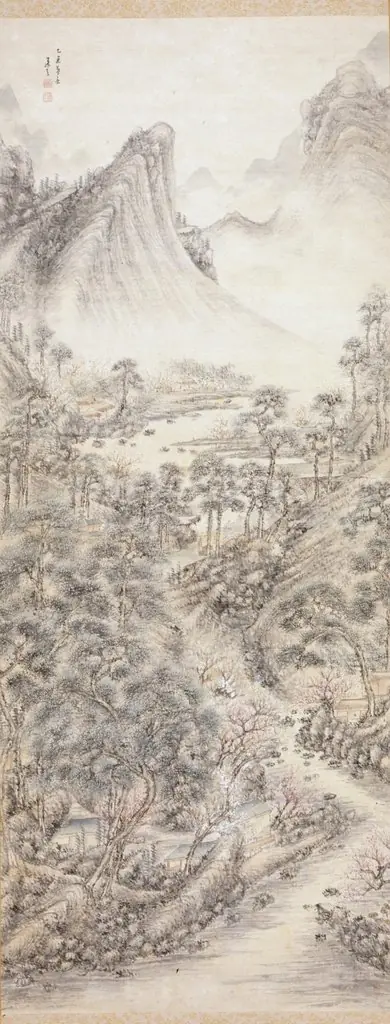 Literati in a Rustic Landscape
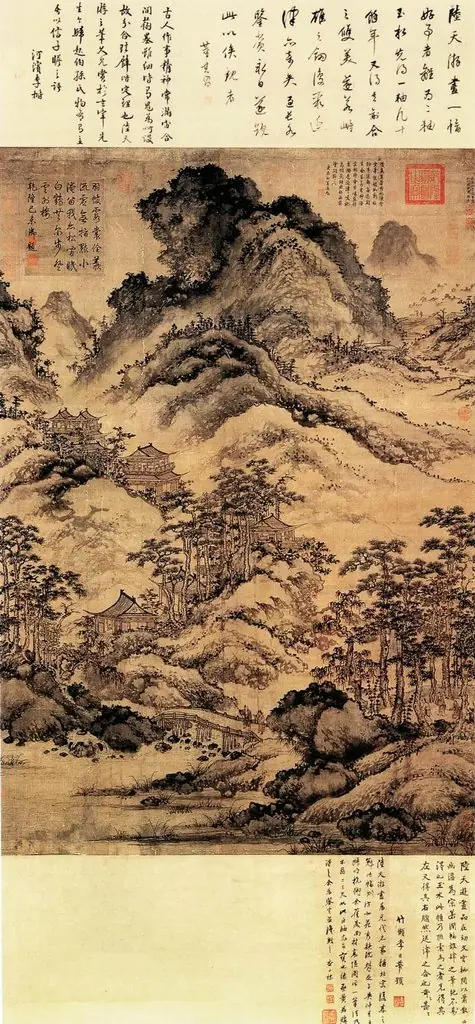 Buildings in the Mountains of the Immortals
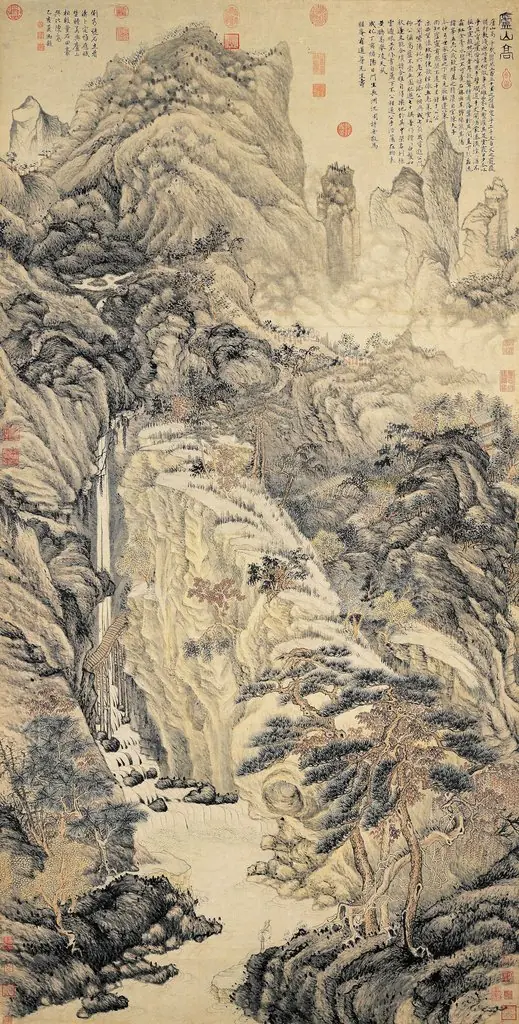 Lofty Mount Lu
 Landscape