Artwork
Jan Maurits Quinkhard
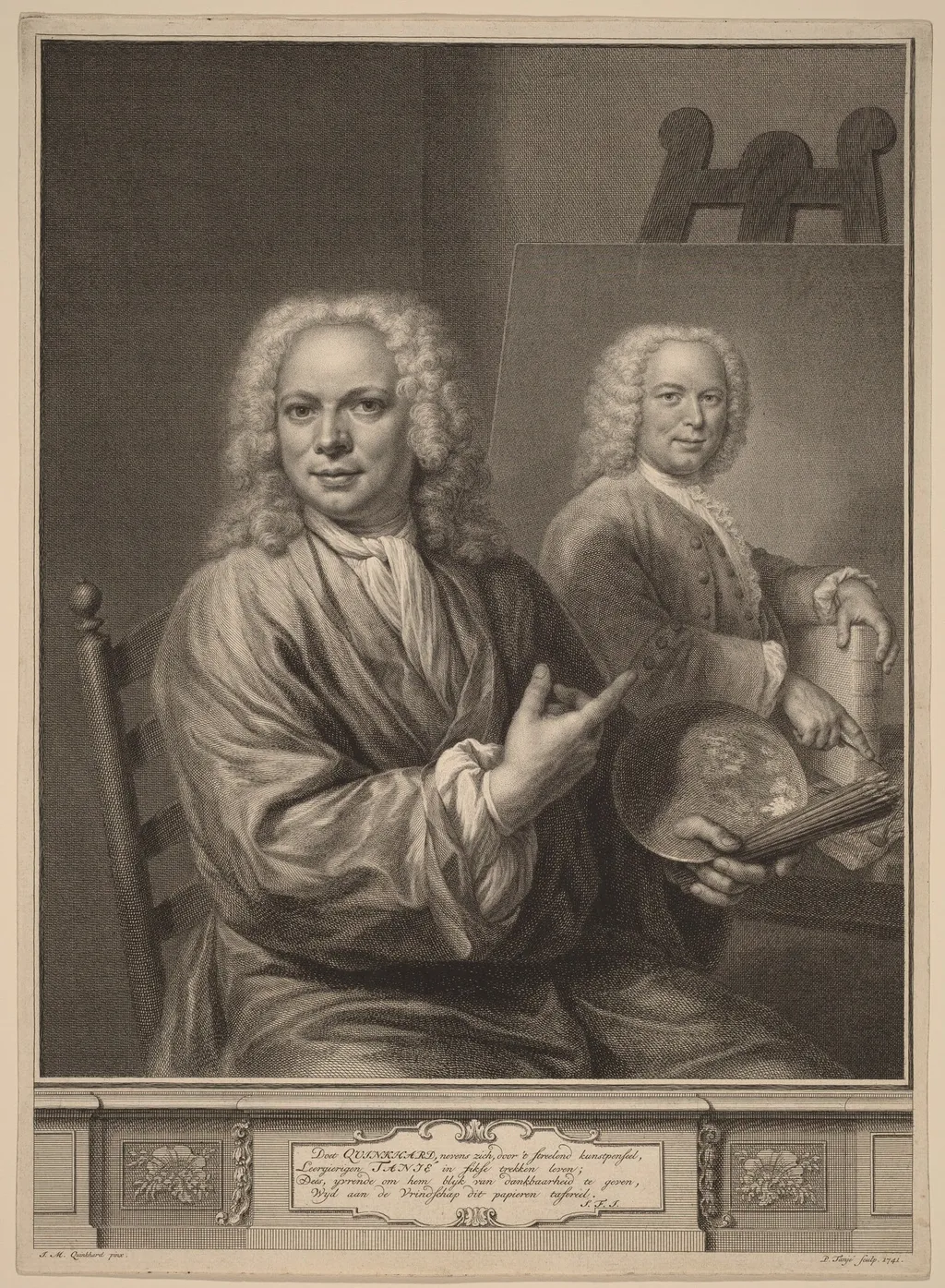
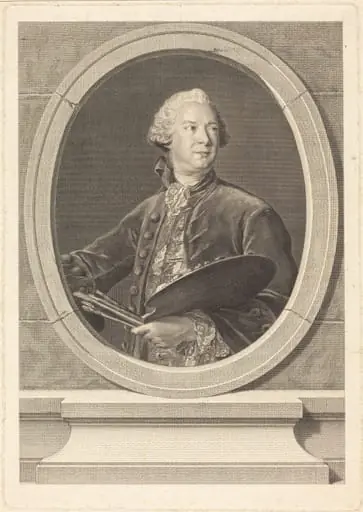
Jan Maurits Quinkhard is an ink print by the Baroque artist Pieter Tanje. It dates from 1741 and is held in the collection of the National Gallery of Art. This 1741 engraving on laid paper presents a seated figure surrounded by the tools of his trade.
About this work
Overview
This 1741 engraving on laid paper presents a seated figure surrounded by the tools of his trade. The subject, identifiable as Jan Maurits Quinkhard, is shown in a flowing robe, his long curls rendered with fine lines. He holds a painter’s palette and brushes, while an easel behind him supports a smaller portrait of the same individual, creating a visual dialogue between artist and artwork.
Subject & Meaning
The composition emphasizes the dual identity of Quinkhard as both creator and subject. By positioning the painter before a canvas that mirrors his own likeness, the image reflects a self‑referential awareness common among 18th‑century artists, suggesting contemplation of artistic practice and personal legacy within the frame of a single work.
Technique & Style
Executed by Pieter Tanje, the print relies on intricate cross‑hatching to model form and convey texture, from the sheen of the robe’s folds to the delicate curls of hair. The careful modulation of line density produces subtle gradations of light and shadow, achieving a realistic depth characteristic of late Baroque printmaking.
History & Provenance
Created in 1741, the engraving was produced shortly after Quinkhard’s rise as a prominent Dutch portraitist. Pieter Tanje, a skilled engraver of the period, rendered the image for distribution among patrons and fellow artists. The print has since been held in several European collections, documenting the collaborative networks of Dutch art production in the mid‑18th century.
Artist & collection