Artwork
Louis Galloche
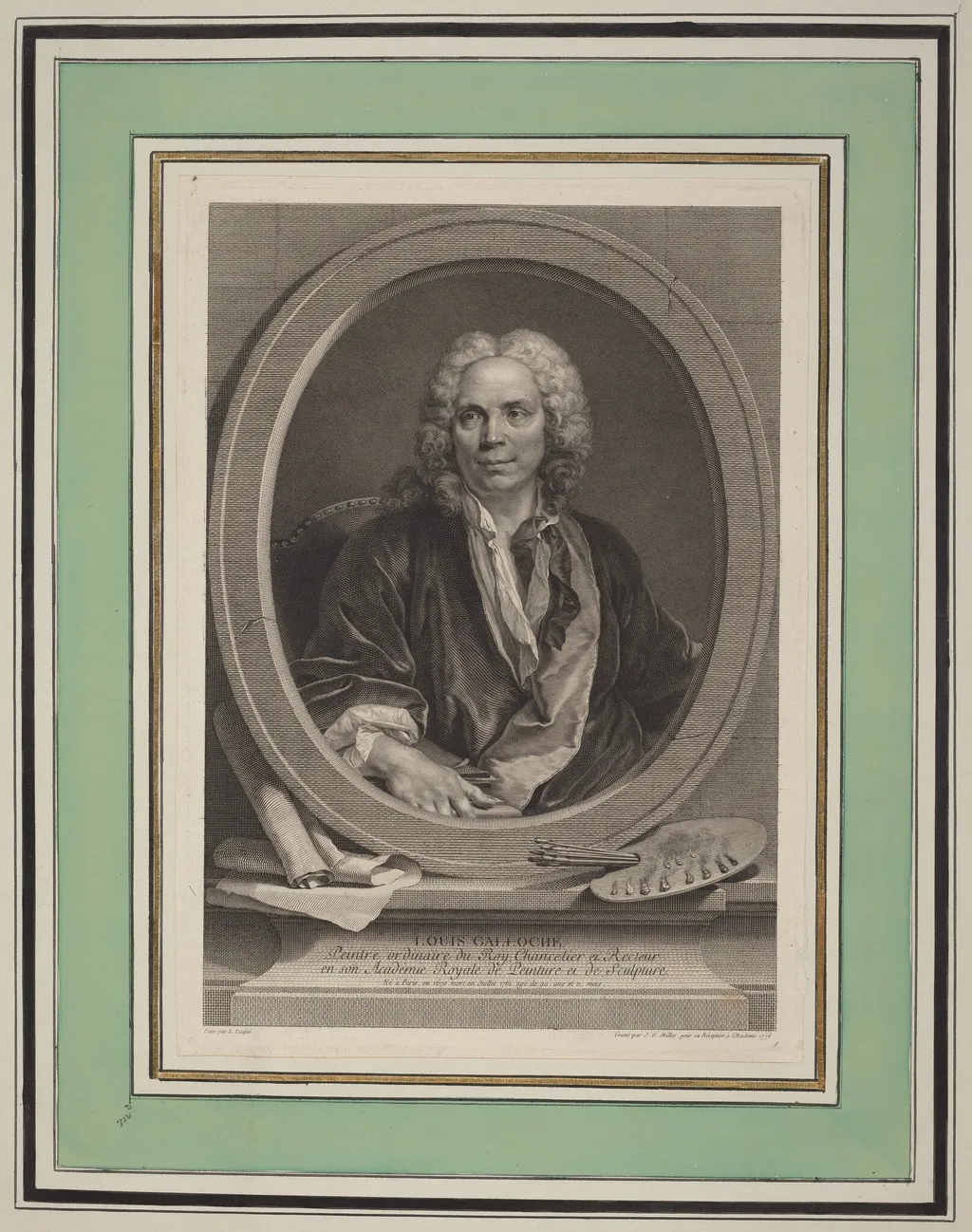
Louis Galloche is an ink print by the Romanticist artist Johann Gotthard Müller. It dates from 1776 and is held in the collection of the National Gallery of Art.
About this work
Overview
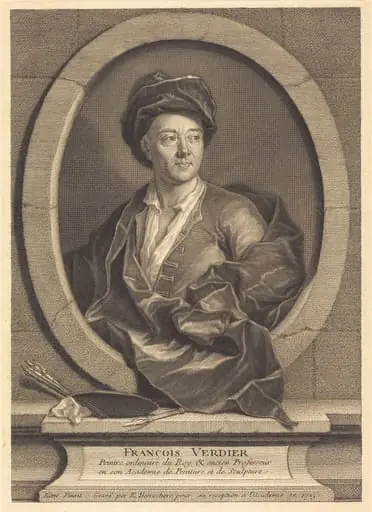
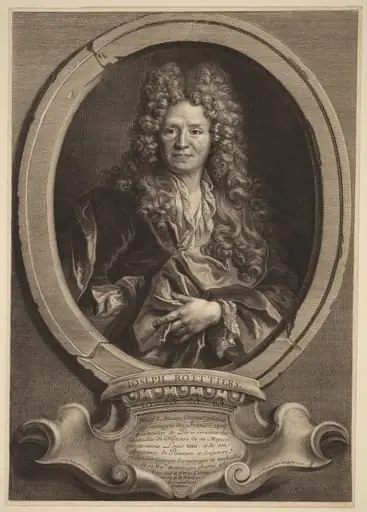
Rendered in monochrome on laid paper, the portrait is composed within an oval frame, emphasizing the subject’s dignified presence.
This 1776 engraving by Johann Gotthard Müller depicts Louis Galloche, a French artist and educator. Rendered in monochrome on laid paper, the portrait is composed within an oval frame, emphasizing the subject’s dignified presence. The composition is restrained, with minimal background detail, focusing attention on Galloche’s posture and attire. His hands rest on a ledge beside a small container of artistic tools, subtly indicating his professional identity.
Subject & Meaning
Louis Galloche is portrayed as a man of intellectual and artistic authority. His powdered wig and dark coat reflect 18th-century professional dress, while the tools beside him—likely for drawing or engraving—signal his role in the visual arts. The absence of grandeur or symbolic elements suggests a quiet reverence for his craft and teaching, positioning him not as a celebrity but as a dedicated practitioner of artistic discipline.
Technique & Style
Müller employed fine linear engraving to render texture and form with precision. The contrast between the dark coat, pale shirt, and powdered wig is achieved through controlled hatching and cross-hatching. The oval format and smooth gradations in the skin tones reflect conventions of portraiture in printmaking of the period. The plain background enhances the focus on the figure, a hallmark of scholarly portraiture in the Enlightenment era.
History & Provenance
Created in 1776, the engraving was likely produced to commemorate Galloche’s reputation as a painter and instructor at the Académie Royale. Müller, a Swiss engraver active in France, often illustrated cultural figures of the time. The print’s survival suggests it was circulated among art students or institutions, serving as both tribute and reference. No earlier or later versions are known, indicating it was a singular commemorative piece.
Context
In late 18th-century France, portraiture in print was a common means of honoring artists and academics. Galloche, who taught at the Académie Royale, belonged to a generation that emphasized technical training over romantic expression. The inclusion of tools in the portrait aligns with a broader trend of depicting professionals with their instruments, reinforcing the dignity of craft and the transmission of knowledge within artistic communities.
Legacy
The engraving preserves the likeness of a lesser-known but influential figure in French art education. While Galloche’s own paintings have faded from public view, this print endures as a record of his role in shaping artistic pedagogy. It exemplifies how printmaking served as a vehicle for documenting the intellectual and professional culture of the time, beyond the fame of major painters.
Artist & collection