Artwork
Peisaj dunărean
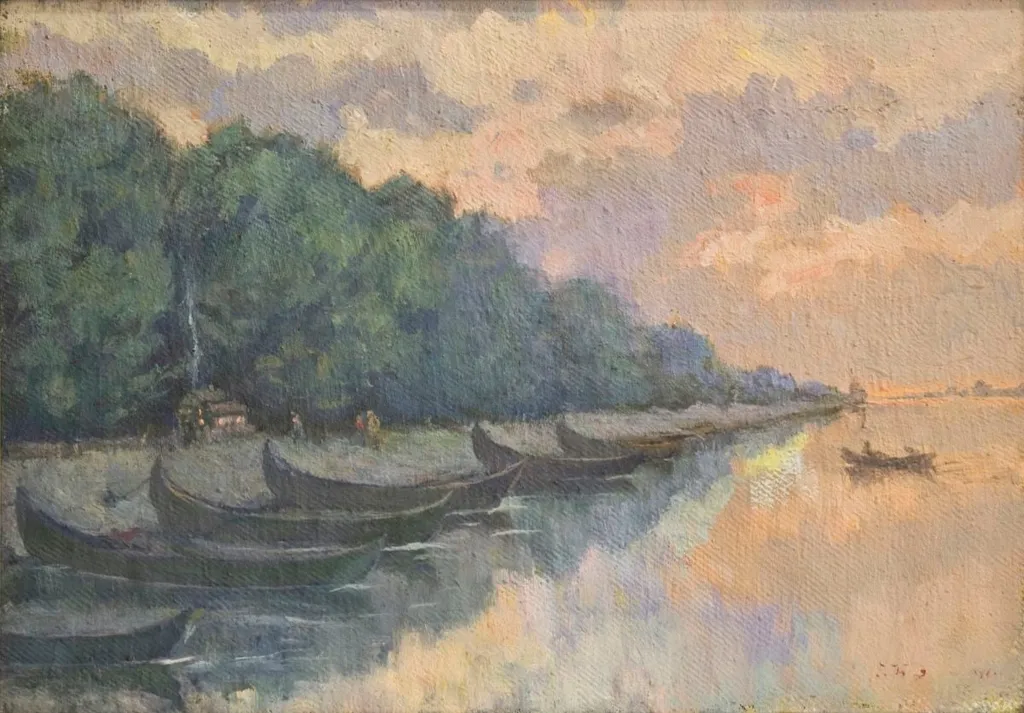
Peisaj dunărean is an unspecified painting by Stavru Tarasov. It dates from 1949 and is held in the collection of the Gavrilă Simion Eco-Museum Research Institute Tulcea - Art Museum.
About this work
Overview
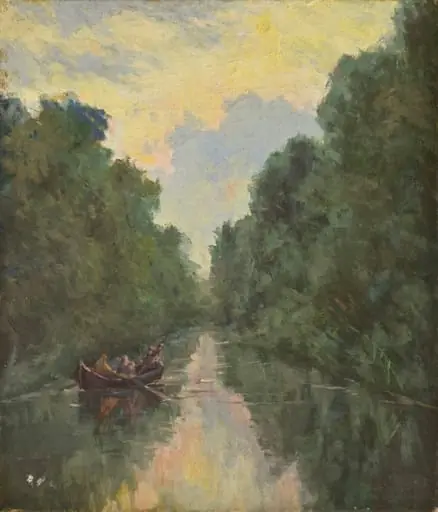
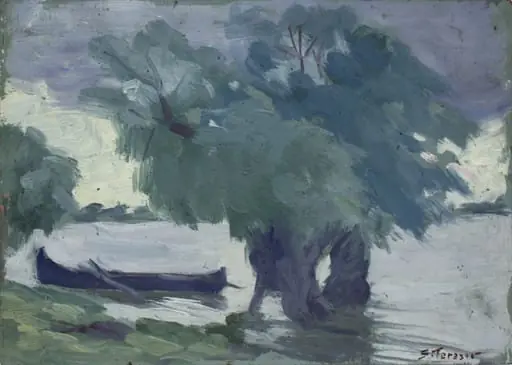
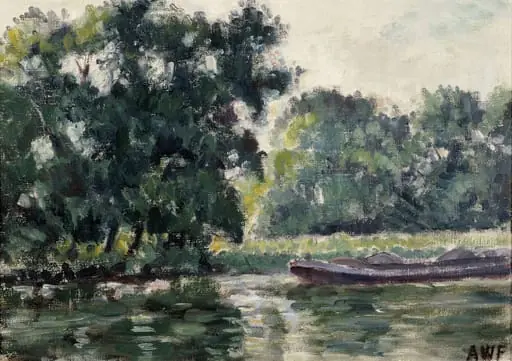
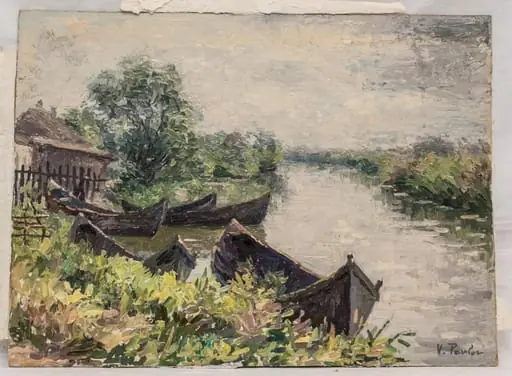
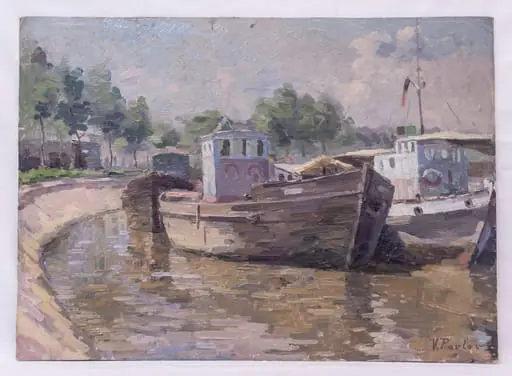
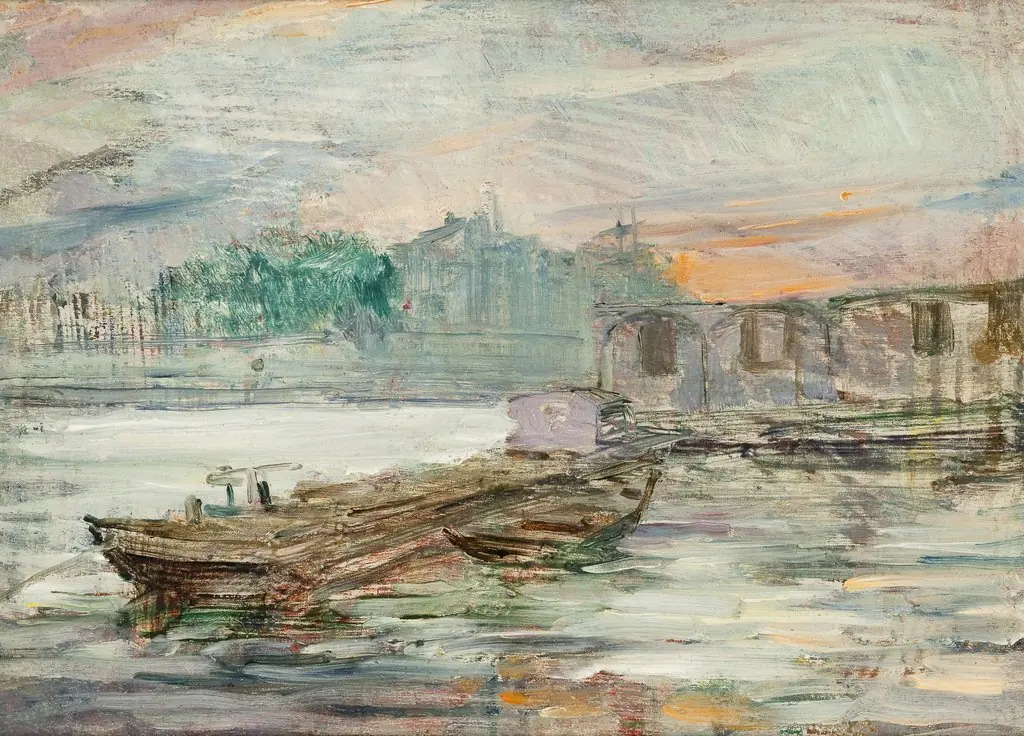
Stavru Tarasov painted this riverscape around 1949, capturing a tranquil stretch of the Danube with two moored boats. The work is part of the Museum of Ethnography’s collection, reflecting the artist’s engagement with regional landscapes during the postwar period. Its quiet composition and tactile surface distinguish it from more formalized depictions of the era.
Subject & Meaning
The scene portrays a quiet moment along the Danube, with two small boats resting near the bank under an overcast sky. There are no figures, no narrative action—only the stillness of water and shore. This absence of human presence suggests contemplation of nature’s rhythm, aligning with a broader tendency in mid-century Romanian art to find dignity in ordinary, unadorned landscapes.
Technique & Style
Tarasov applied paint thickly in places, using impasto to build texture in the water and sky. The brushstrokes are deliberate and physical, creating a sense of movement and atmosphere without relying on fine detail. The palette is restrained—pale blues, grays, and muted earth tones—enhancing the subdued mood and reinforcing the painting’s quiet realism.
History & Provenance
Its acquisition reflects institutional interest in documenting regional artistic responses to everyday environments during a period of political transition.
Created in the late 1940s, the painting entered the Museum of Ethnography’s holdings shortly after its completion. Its acquisition reflects institutional interest in documenting regional artistic responses to everyday environments during a period of political transition. No earlier ownership records are publicly documented, suggesting it remained in the artist’s circle before institutional acquisition.
Context
In postwar Romania, landscape painting often served as a subtle form of cultural expression amid state-driven artistic directives. Tarasov’s focus on the Danube—a recurring motif in Romanian visual culture—aligns with a quiet resistance to ideological grandeur. His approach prioritized sensory observation over symbolism, distinguishing his work from official socialist realism.
Legacy
Tarasov’s work, including this piece, contributes to a lesser-known but persistent strand of Romanian modernism that valued intimate observation over spectacle. While not widely exhibited beyond regional collections, his use of texture and restrained color influenced later generations of artists seeking authenticity in landscape representation without overt political messaging.
Artist & collection
Artist
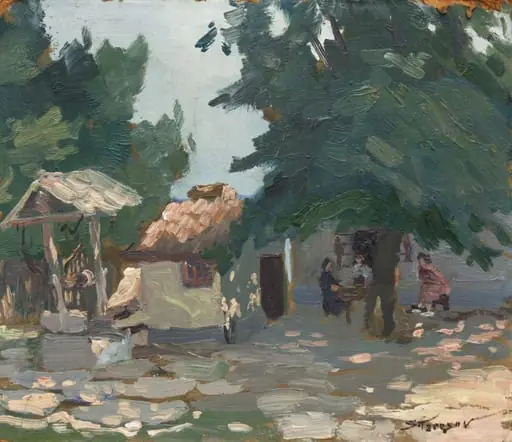
Stavru Tarasov painted everyday scenes in oil and sculpture—villages, riverbanks, and women weaving at looms.
Museum
Gavrilă Simion Eco-Museum Research Institute Tulcea - Art Museum
Continue through works from the same source collection.