Artwork
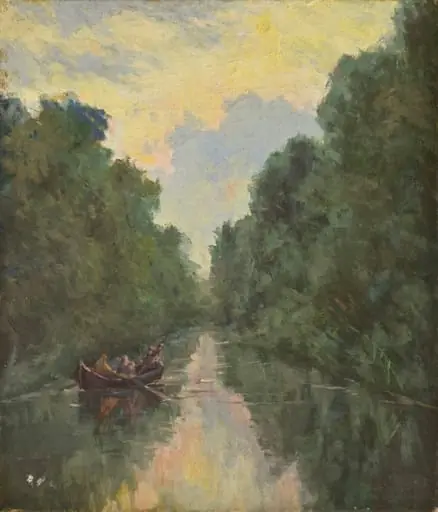
Pe malul Dunării
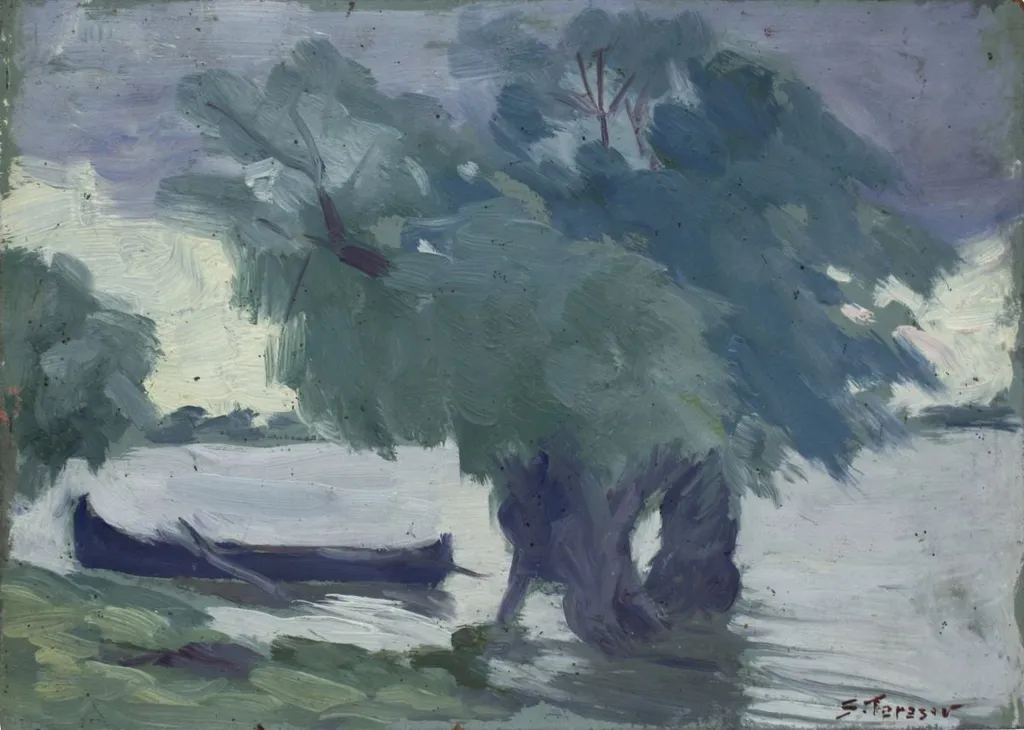
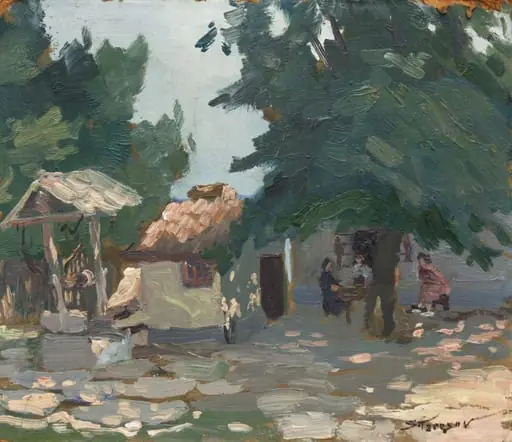
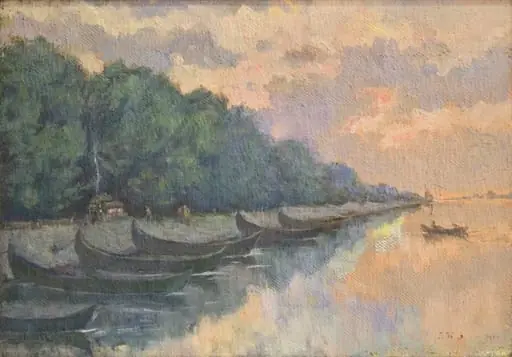
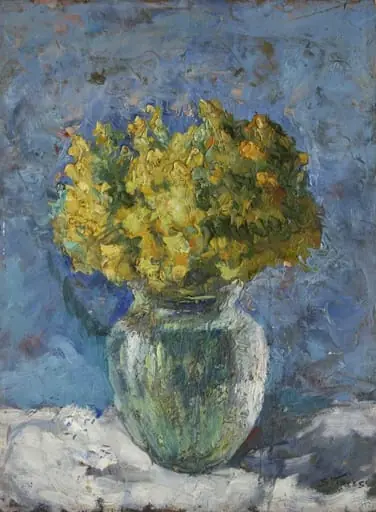
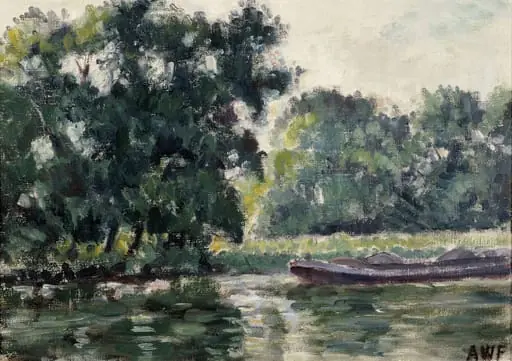
Pe malul Dunării is an unspecified painting by Stavru Tarasov. It dates from 1949 and is held in the collection of the Gavrilă Simion Eco-Museum Research Institute Tulcea - Art Museum.
About this work
Overview
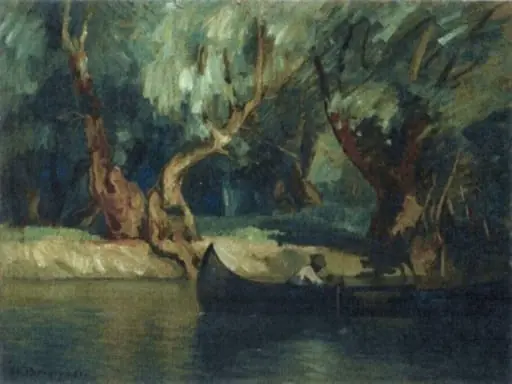
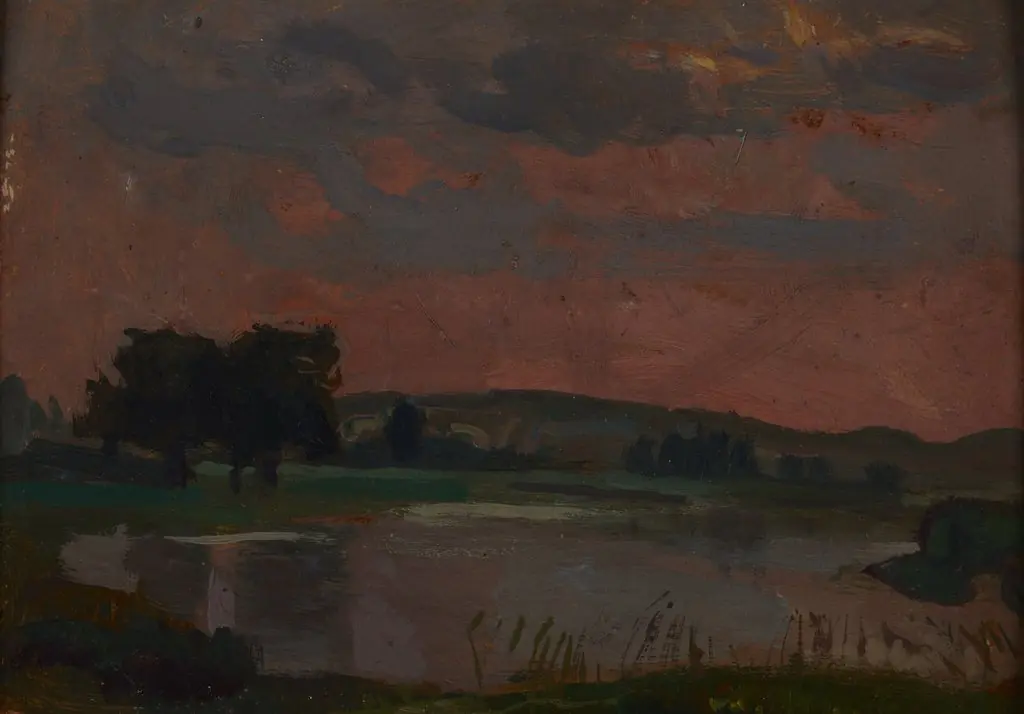
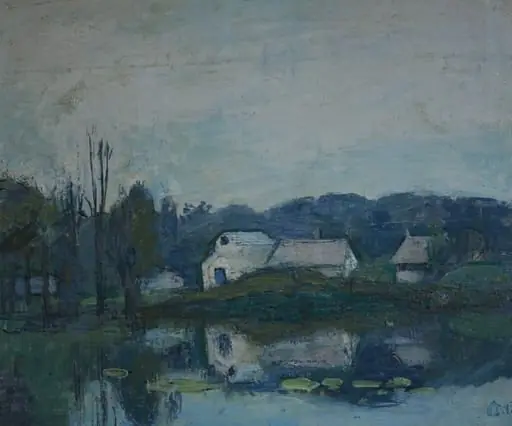
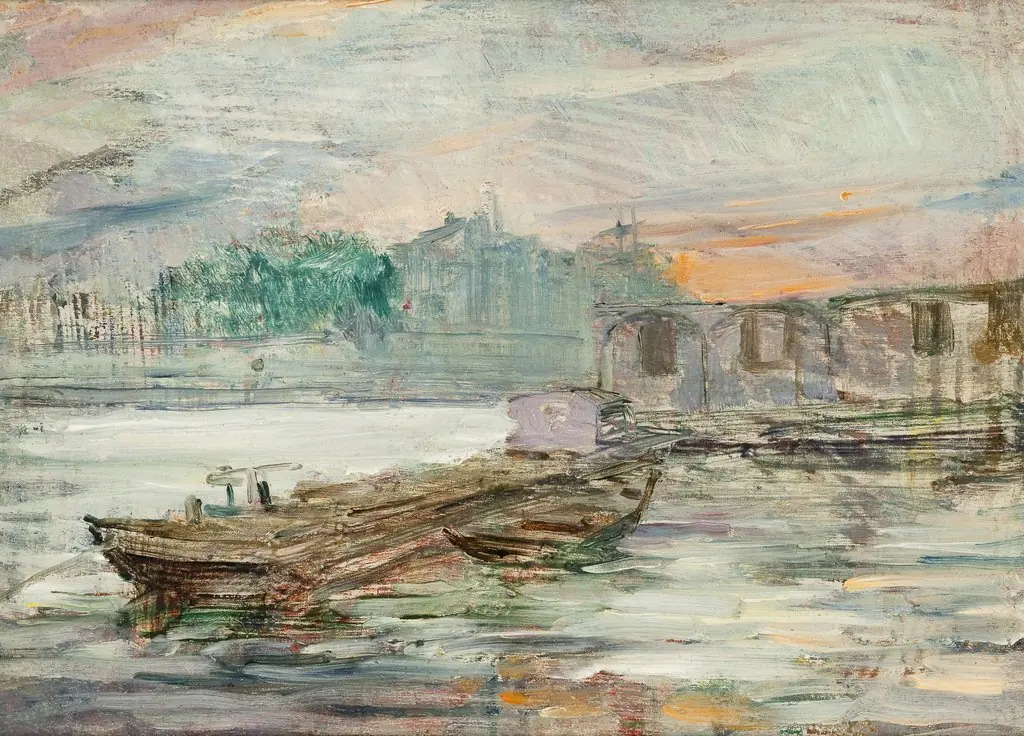
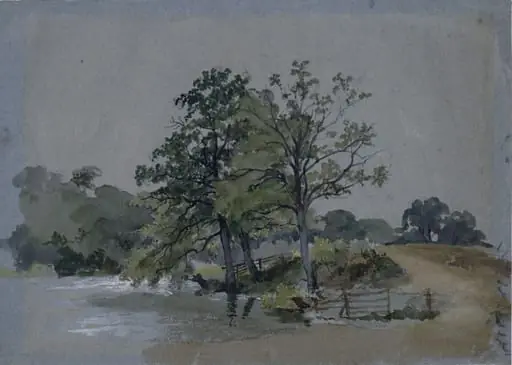
Painted around 1949 by Stavru Tarasov, this landscape depicts a quiet riverside scene along the Danube. The work is part of the Museum of Ethnography’s collection and reflects a contemplative approach to natural surroundings. Its subdued palette and textured brushwork suggest a focus on atmosphere over narrative detail, characteristic of Tarasov’s postwar style.
Subject & Meaning
A solitary boat floats on still water beneath a large, leafy tree, its scale emphasizing the quiet dominance of nature. The absence of human figures and the stillness of the composition evoke solitude and introspection. The painting does not illustrate an event but rather a moment of calm, inviting quiet observation rather than storytelling.
Technique & Style
Tarasov applied paint thickly, particularly in the foliage and water, creating a tactile surface through impasto.
Tarasov applied paint thickly, particularly in the foliage and water, creating a tactile surface through impasto. Muted greens, blues, and whites dominate, with minimal contrast enhancing the sense of serenity. The brushwork is deliberate yet loose, suggesting observation from life rather than idealized composition. The signature, 'S. Tarasov,' is casually inscribed, reinforcing the work’s personal, unpolished character.
History & Provenance
The painting was likely completed shortly after World War II, during a period when Romanian artists increasingly turned to landscape as a form of quiet resistance to political pressures. It entered the Museum of Ethnography’s holdings in the mid-20th century, possibly through direct acquisition or donation, though specific details of its early ownership remain undocumented.
Context
In late 1940s Romania, official art promoted socialist realism, yet many artists privately explored lyrical or abstracted natural scenes. Tarasov’s work aligns with this undercurrent—using landscape to express emotional resonance without overt political messaging. His focus on the Danube reflects regional identity, grounding the painting in local geography and sensory experience.
Legacy
Though not widely exhibited beyond institutional collections, the painting exemplifies a quieter strand of Romanian modernism that prioritized mood and materiality over doctrine. Tarasov’s use of texture and restrained color influenced later generations seeking alternatives to state-sanctioned aesthetics, preserving a personal vision within a constrained cultural landscape.
Artist & collection
Artist
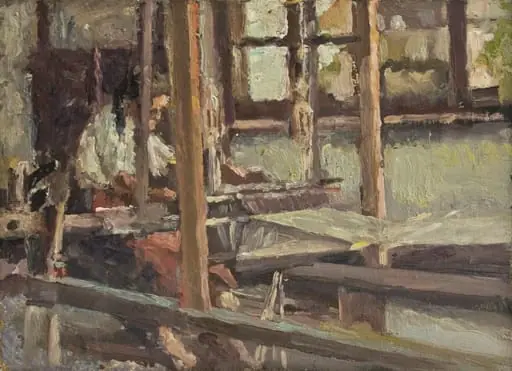
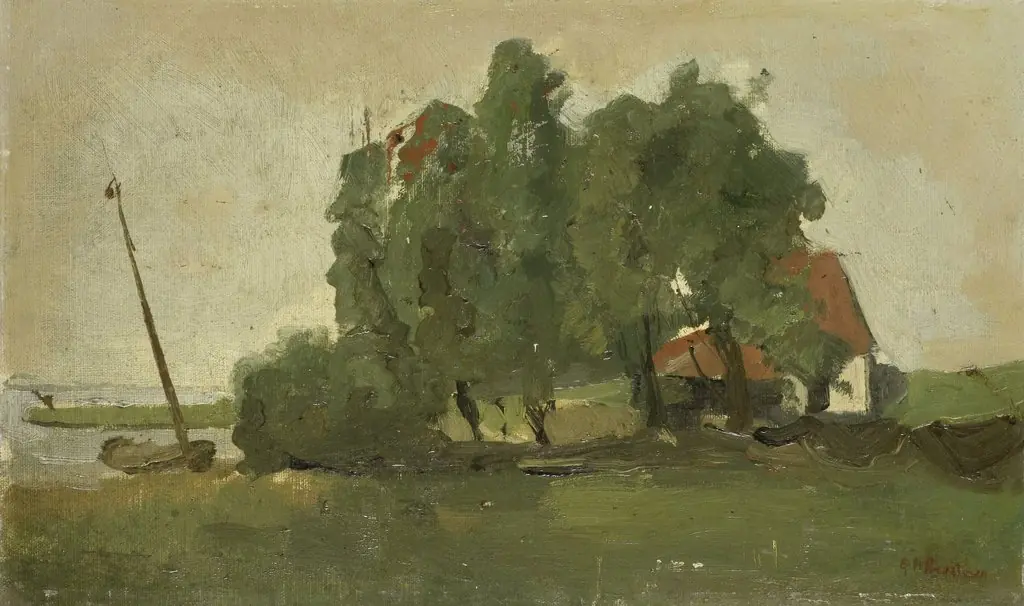
Stavru Tarasov painted everyday scenes in oil and sculpture—villages, riverbanks, and women weaving at looms.
Museum
Gavrilă Simion Eco-Museum Research Institute Tulcea - Art Museum
Continue through works from the same source collection.