Artwork
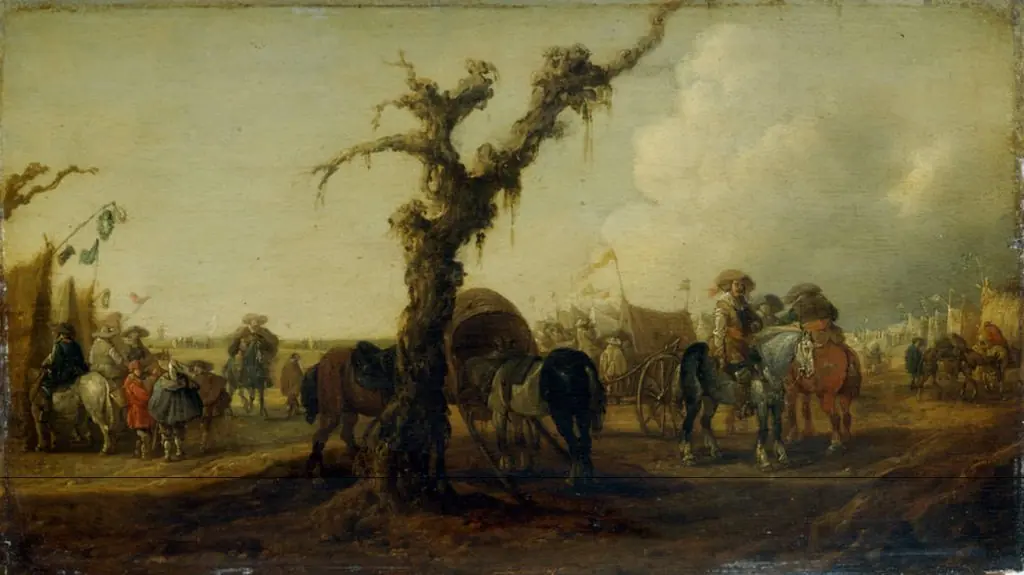
Gipsies on the road
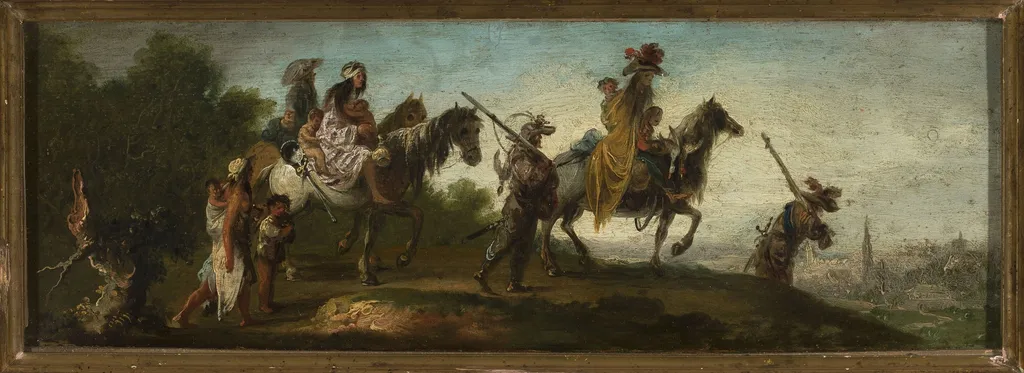
Gipsies on the road is an oil painting by the Barbizon school artist Jacques Callot. It dates from 1623 and is held in the collection of the National Museum in Warsaw.
About this work
Overview
Created around 1623, Gipsies on the Road is an oil painting by the French artist Jacques Callot. It depicts a group of travelers on a path, rendered with careful attention to movement and detail. The work is part of the collection at the National Museum in Warsaw, where it has been held since the early 20th century. Callot’s interest in marginal figures is evident in this small-scale composition.
Subject & Meaning
Callot presents them without overt sentimentality, focusing instead on their presence within the landscape.
The painting portrays a band of itinerant people, likely Romani travelers, moving along a rural road. Their posture and belongings suggest transient lives, distinct from settled communities. Callot presents them without overt sentimentality, focusing instead on their presence within the landscape. The scene reflects 17th-century European perceptions of nomadic groups, neither idealized nor vilified.
Technique & Style
Callot employs fine brushwork and muted earth tones to convey texture and atmosphere. Figures are rendered with subtle gestures and varied postures, suggesting individuality within the group. The composition is tightly framed, drawing attention to the procession’s rhythm. His background in printmaking informs the clarity of line and attention to minute detail, even in this painted work.
History & Provenance
The painting entered the National Museum in Warsaw in the early 1900s, likely through acquisition or donation. Prior to that, its ownership history is undocumented. It was cataloged in Polish collections by the 1920s, and its attribution to Callot has remained consistent. No major restorations or alterations are recorded, preserving its original surface and tonal balance.
Context
In early 17th-century Europe, Romani communities were frequently depicted in art, often as symbols of transience or otherness. Callot, known for his engravings of soldiers and beggars, extended this interest to painted works. This piece aligns with broader Northern European traditions of genre scenes that observed everyday life beyond aristocratic circles, capturing the margins of society with quiet observation.
Legacy
Gipsies on the Road remains a rare example of Callot’s painted output, as he is better known for his prints. Its preservation offers insight into how minor figures were visually represented in Baroque art. While not widely exhibited, it contributes to scholarly understanding of his range and the cultural attitudes toward nomadic populations in early modern Europe.
Artist & collection

Artist
Jacques Callot was a baroque printmaker and draftsman from the Duchy of Lorraine.

 Holy Family at supper
 Restoration of the Aqueduct at Pisa
 Restoration of the Aqueduct at Pisa
 Square in Paris with Many Figures
 Square in Paris with Many Figures
 Horsemen Attacked by Robbers
 HOW WILL A COVERED PART BE CORRECTED?HOW WIKA A COVERED HEART DEED CORRECTED?
![Christ Walking on the Water [second plate], by Jacques Callot](https://artifactworldgallery.com/img/jacques-callot--christ-walking-on-the-water-second-plate--2069f3bfe4cb2126-w320.webp) Christ Walking on the Water [second plate]
Christ Walking on the Water [second plate]
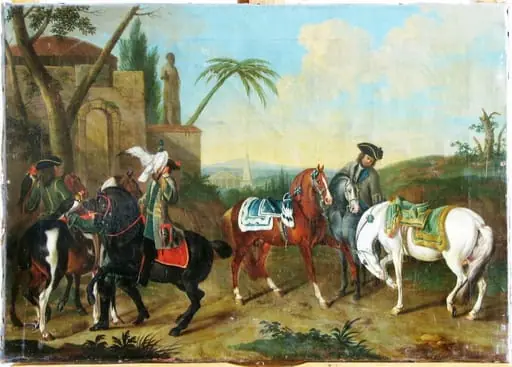 Plecare la vânătoare cu șoimi; pandant: Plecare la vânătoare cu câini
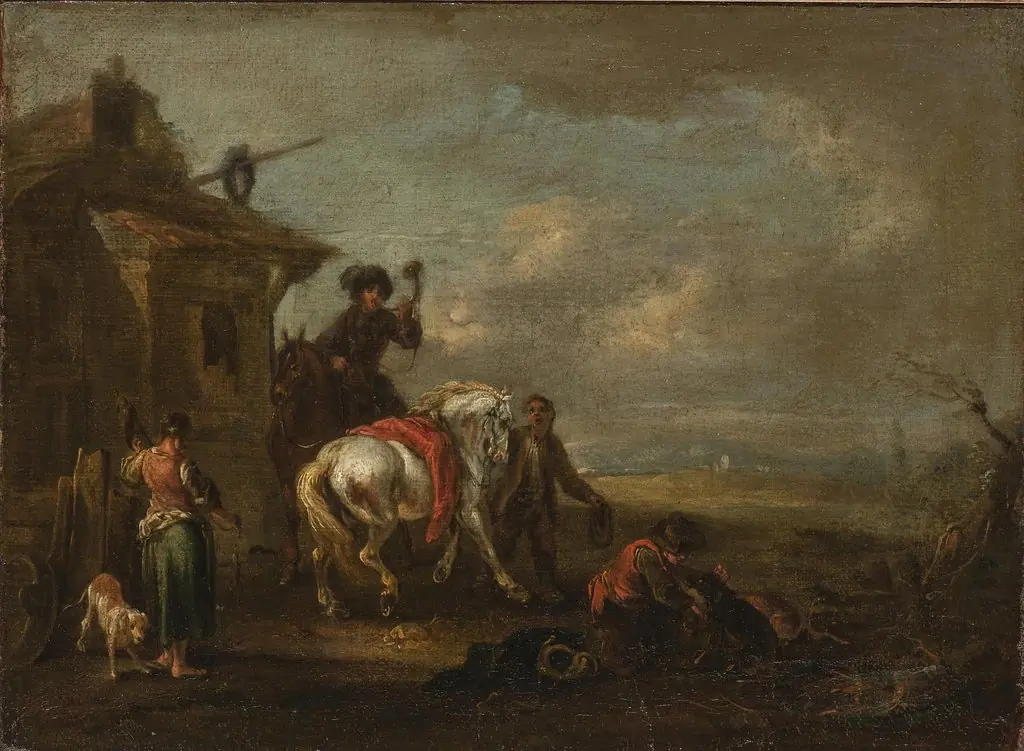 Hunters by a Tavern
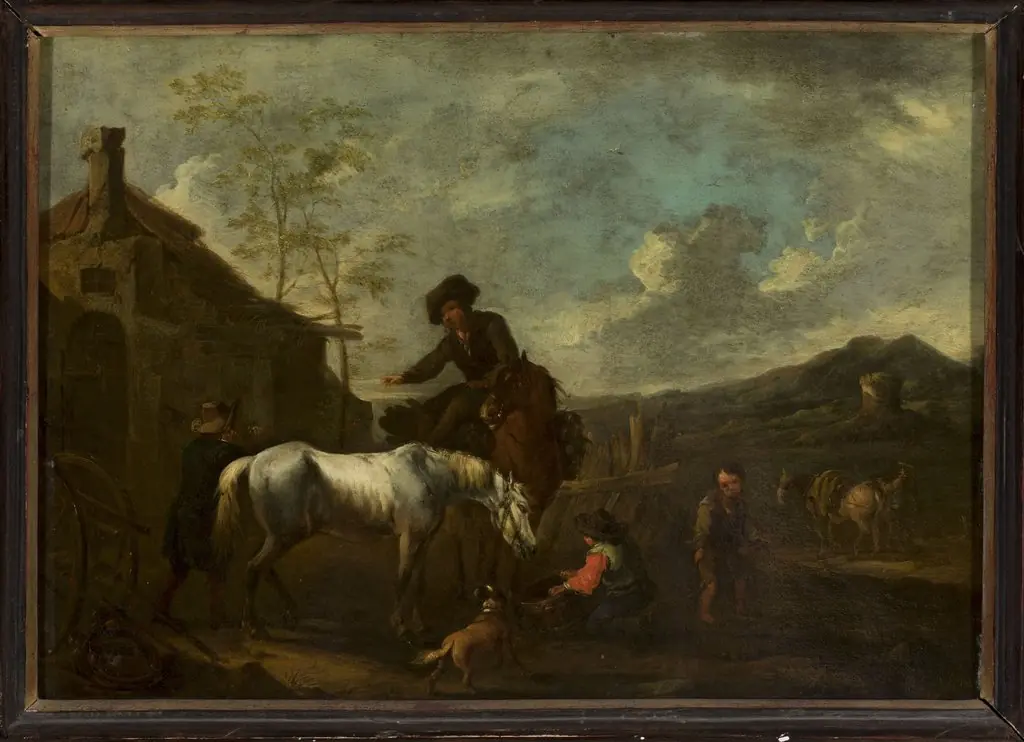 Watering the horses
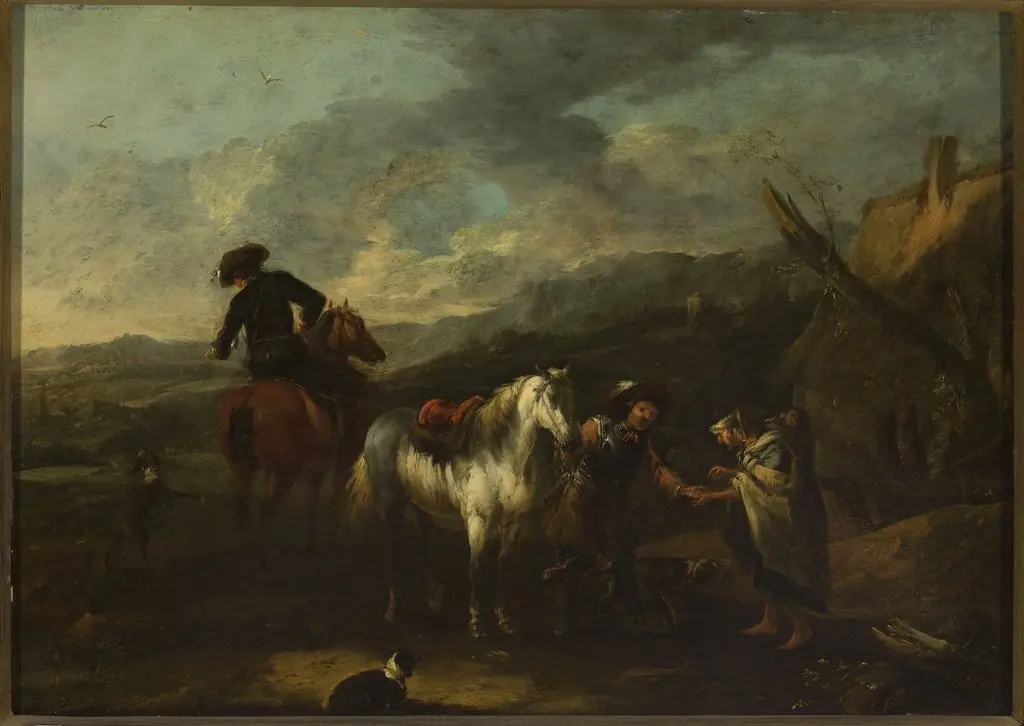 Horsemen and a beggar woman against landscape
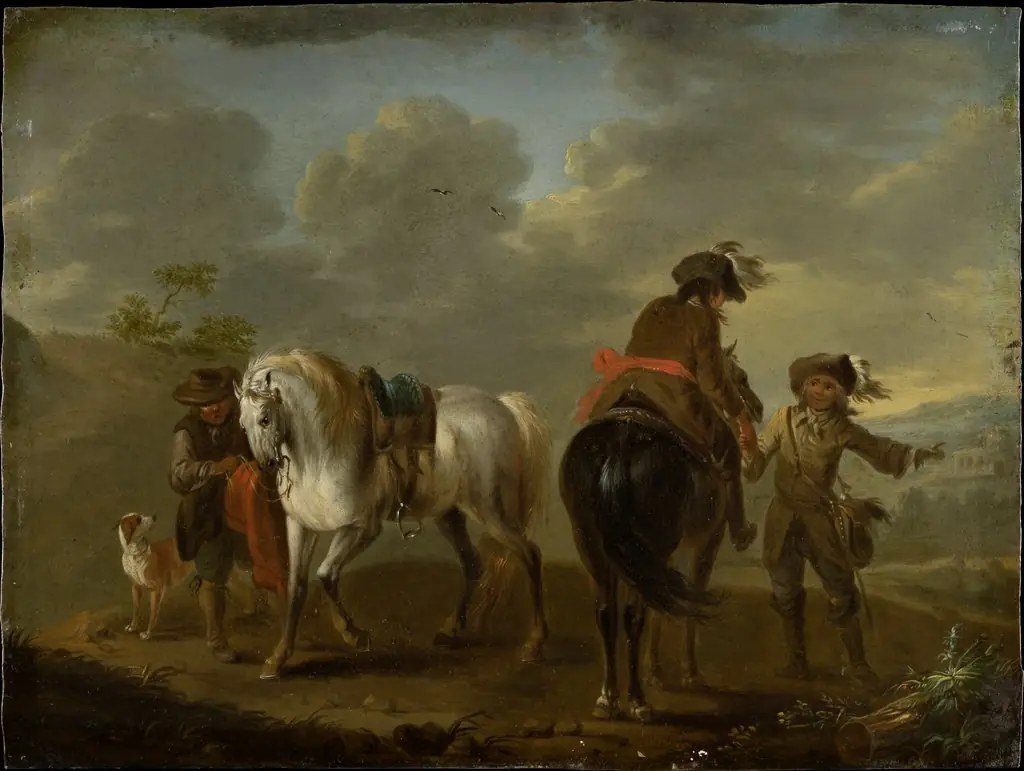 Landscape with Riders
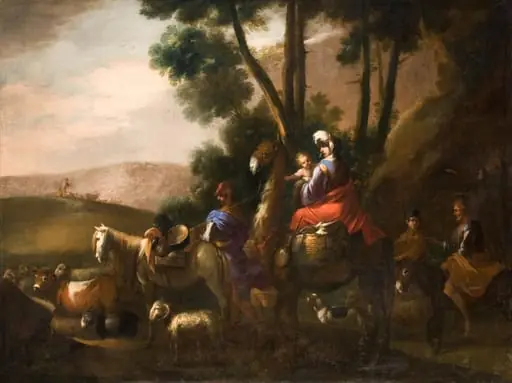 Fuga lui Iacov
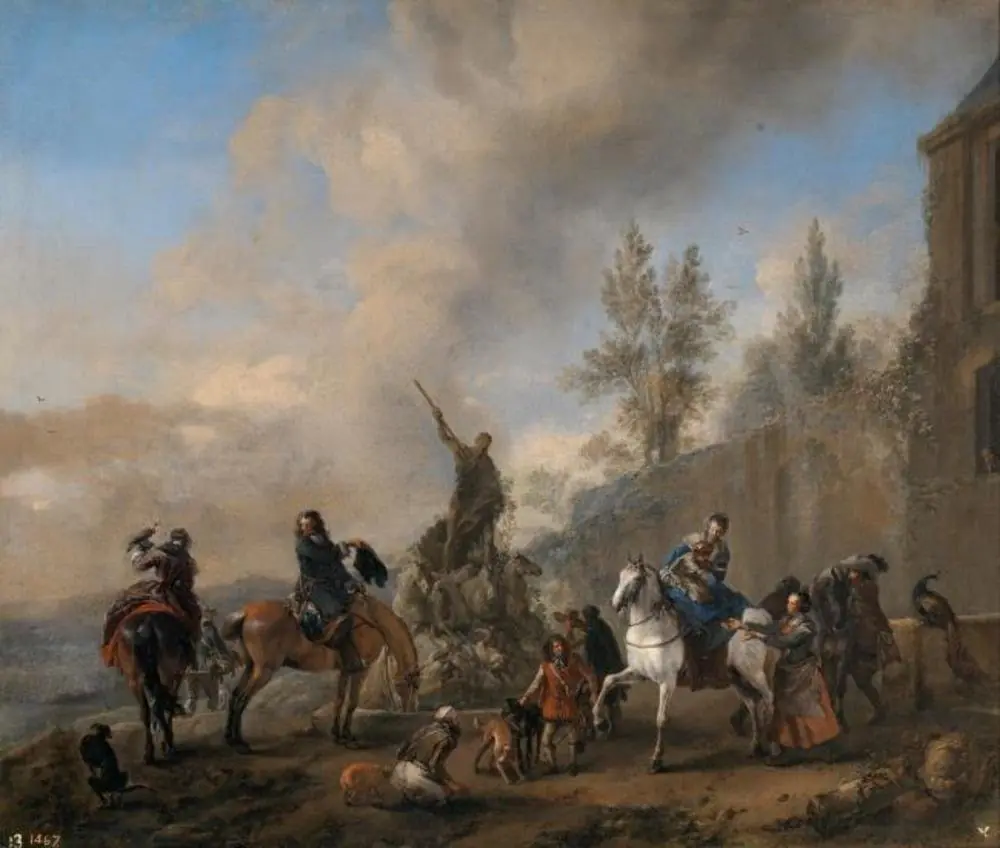 Falconers setting out on a Hunt
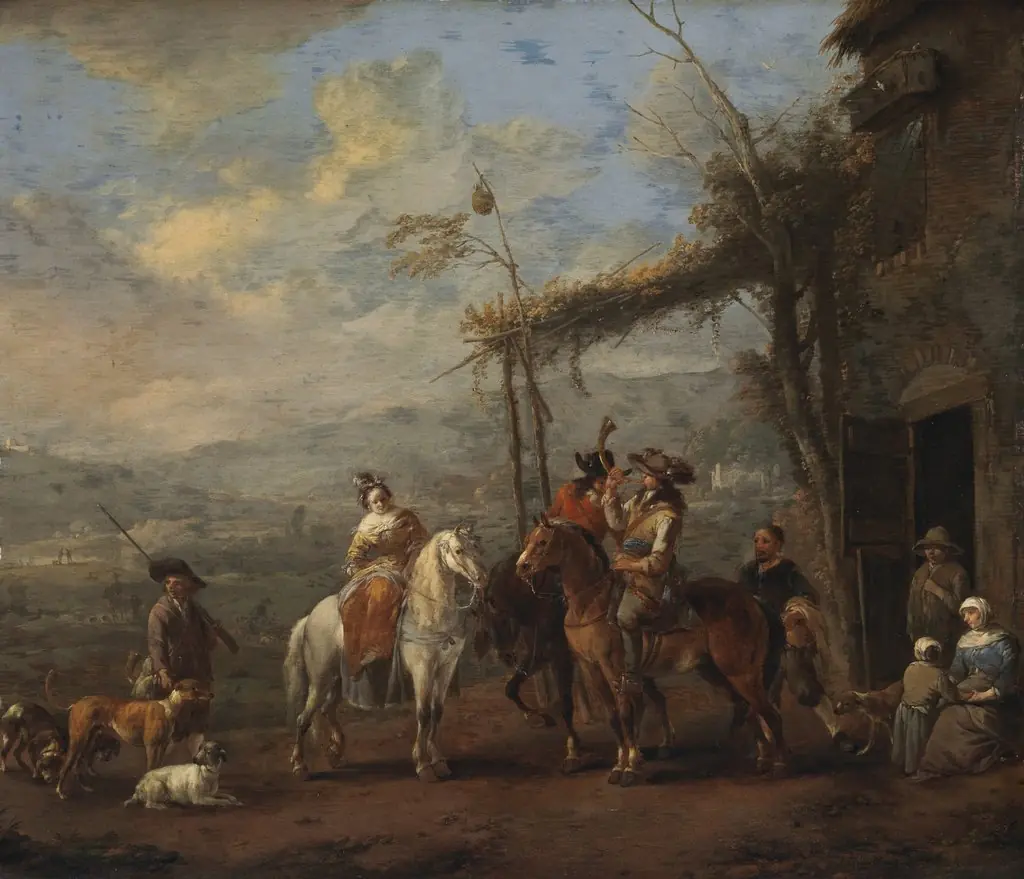 A Hunting Party
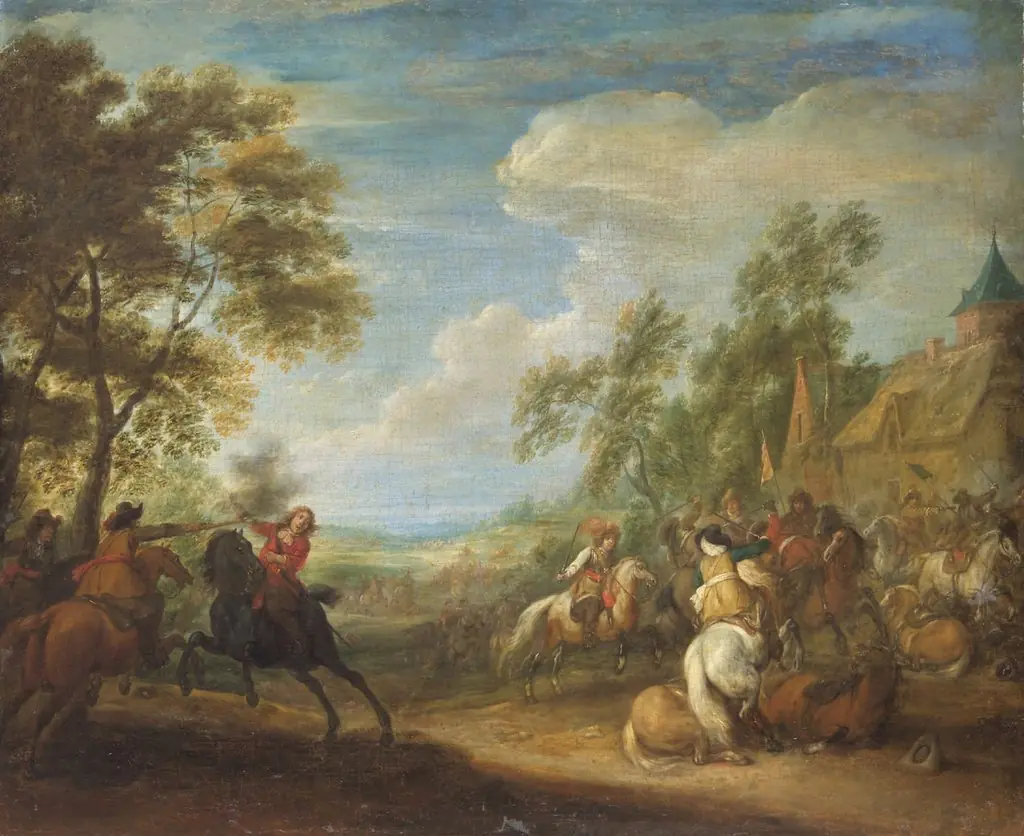 Reitergefecht
 A Landscape with Figures and Horses
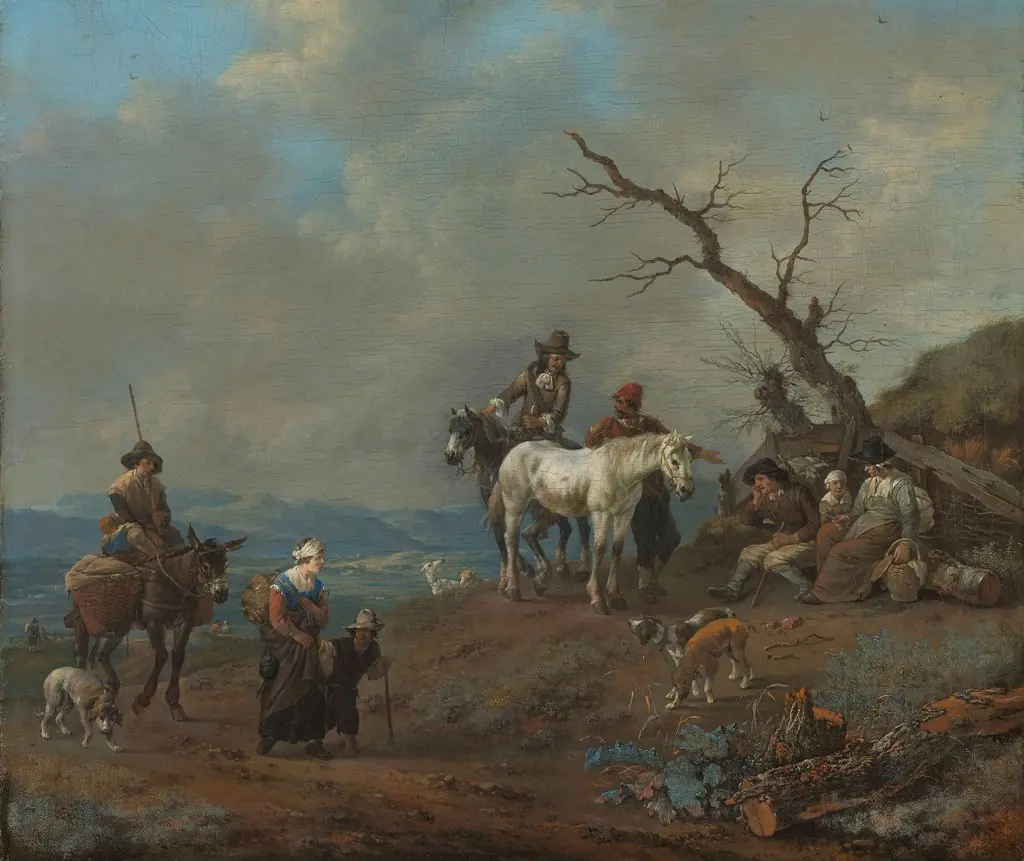 Country road with hunter and peasants
 Military camp