Artwork
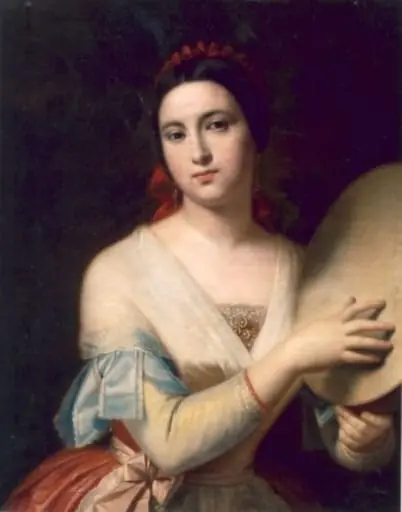
Fata cu tamburina
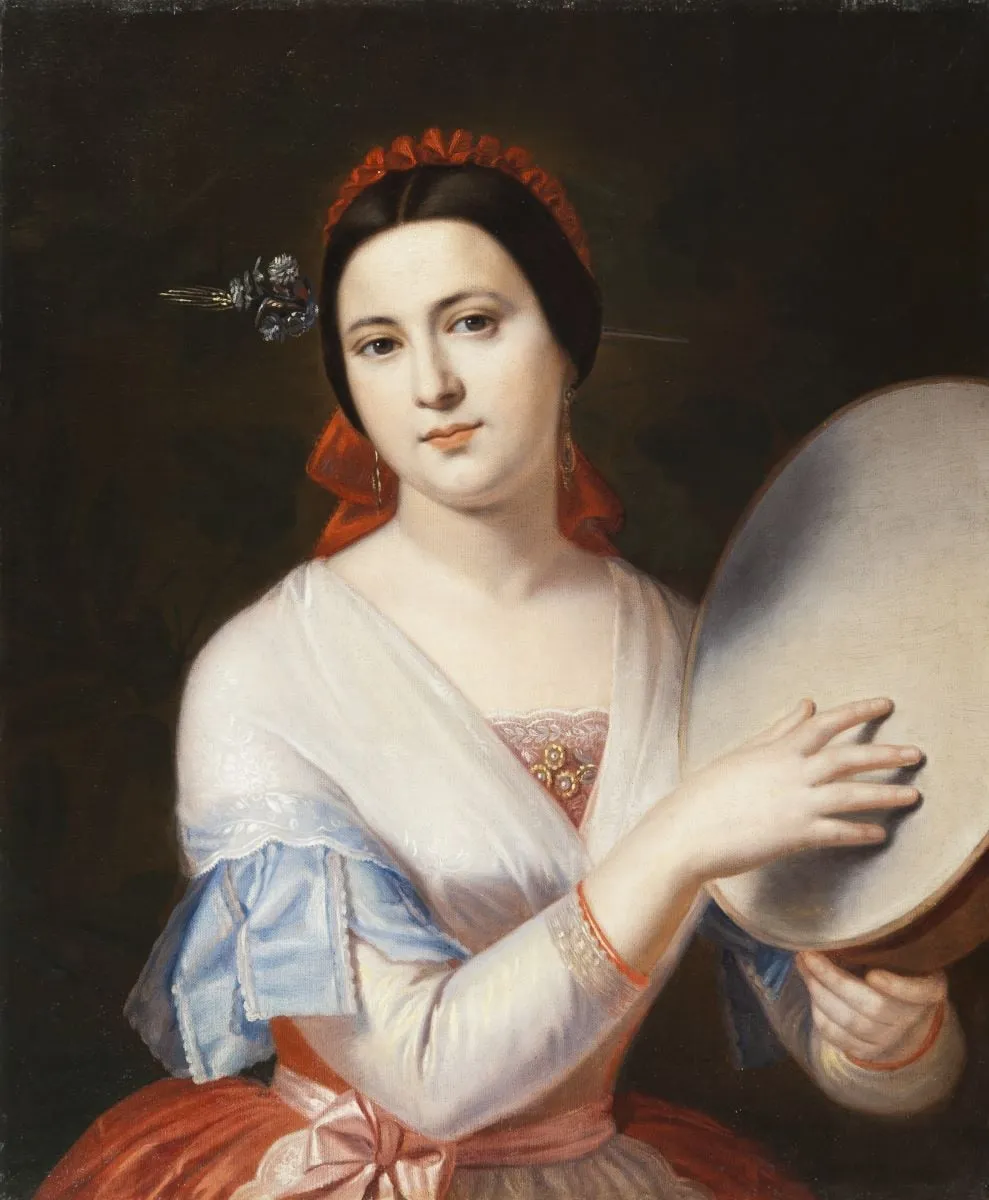
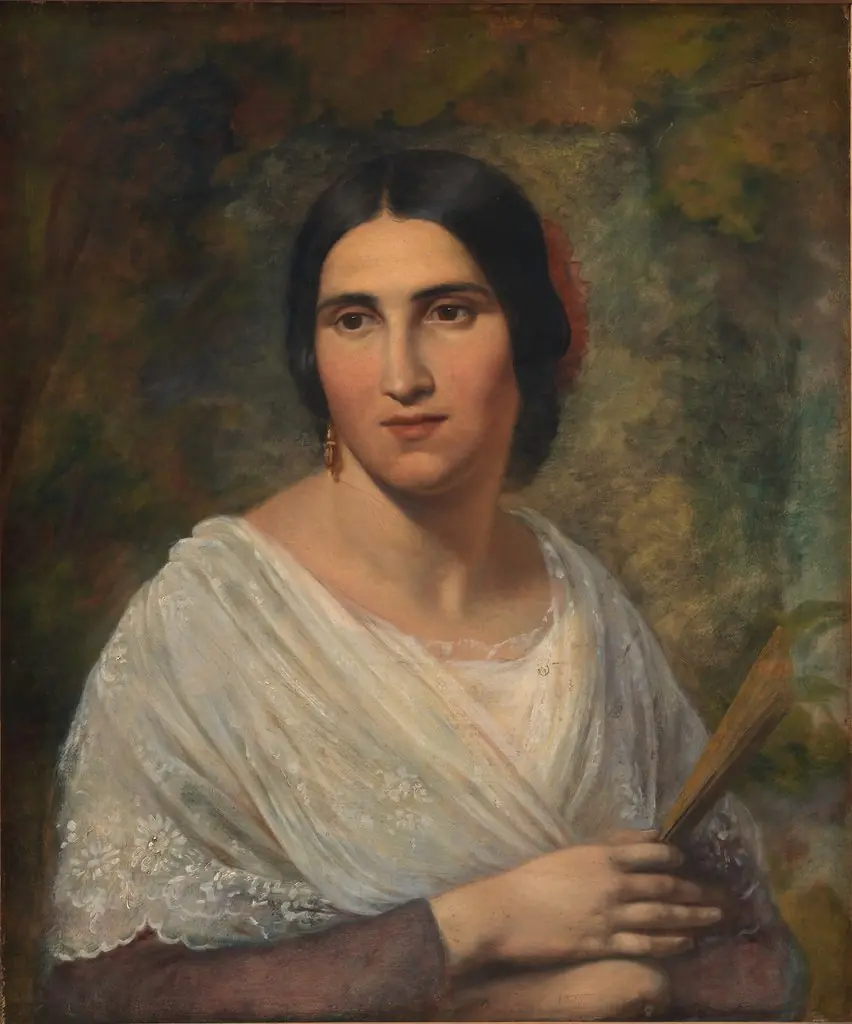
Fata cu tamburina is a print by Gheorghe M. Tattarescu. It dates from 1850 and is held in the collection of the National Museum of Art of Romania. Painted around 1850 by Gheorghe M.
About this work
Overview
The work reflects a transitional moment in Romanian art, blending academic technique with local subject matter.
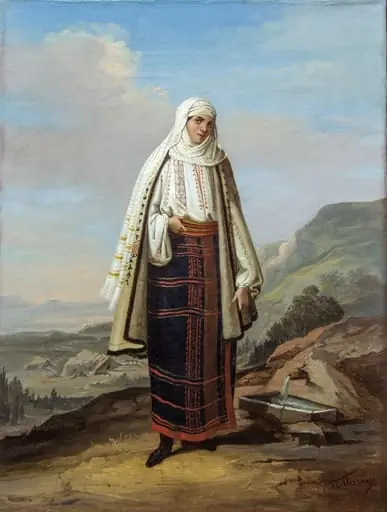
Painted around 1850 by Gheorghe M. Tattarescu, this portrait depicts a young woman seated with a round frame in her hands. The composition is intimate and restrained, focusing on her expression and attire. The dark, unmodeled background isolates her form, drawing attention to her features and clothing. The work reflects a transitional moment in Romanian art, blending academic technique with local subject matter.
Subject & Meaning
The woman, dressed in traditional rural garments, holds a tambourine-like frame, possibly suggesting musical or ceremonial association. Her quiet demeanor and simple jewelry imply modesty rather than performance. The attire, though stylized, evokes regional customs of the early 19th century. The image does not narrate a specific event but preserves a sense of cultural identity through dress and gesture.
Technique & Style
Tattarescu employs chiaroscuro to model the woman’s face and hands, creating subtle volume through soft gradations of light and shadow. The brushwork is precise yet unobtrusive, favoring clarity over texture. The red-and-white dress contrasts with the dark background, enhancing spatial depth. The undershirt’s pale blue adds a quiet tonal variation, reinforcing the restrained palette and deliberate composition.
History & Provenance
The painting was created during Tattarescu’s early career, shortly after his studies in Rome. It remained in Romanian collections throughout the 19th century and is now held in a national institution. Its survival through political upheavals reflects its recognition as a representative work of early Romanian academic painting, though its exact early ownership is not fully documented.
Context
In mid-19th century Romania, artists like Tattarescu sought to define a national visual language amid Ottoman and Habsburg influences. This portrait aligns with a broader movement to depict local people with dignity, using Western techniques. Unlike grand historical scenes, it focuses on everyday presence, signaling a shift toward intimate, culturally grounded portraiture.
Legacy
The painting became a reference point for later Romanian artists exploring national identity through costume and character. Its quiet realism and technical discipline influenced generations seeking to balance academic training with indigenous themes. Though not widely exhibited abroad, it remains a touchstone in domestic art history for its restrained elegance and cultural specificity.
Artist & collection
Artist