Artwork
Țăran din Câmpulung-Muscel
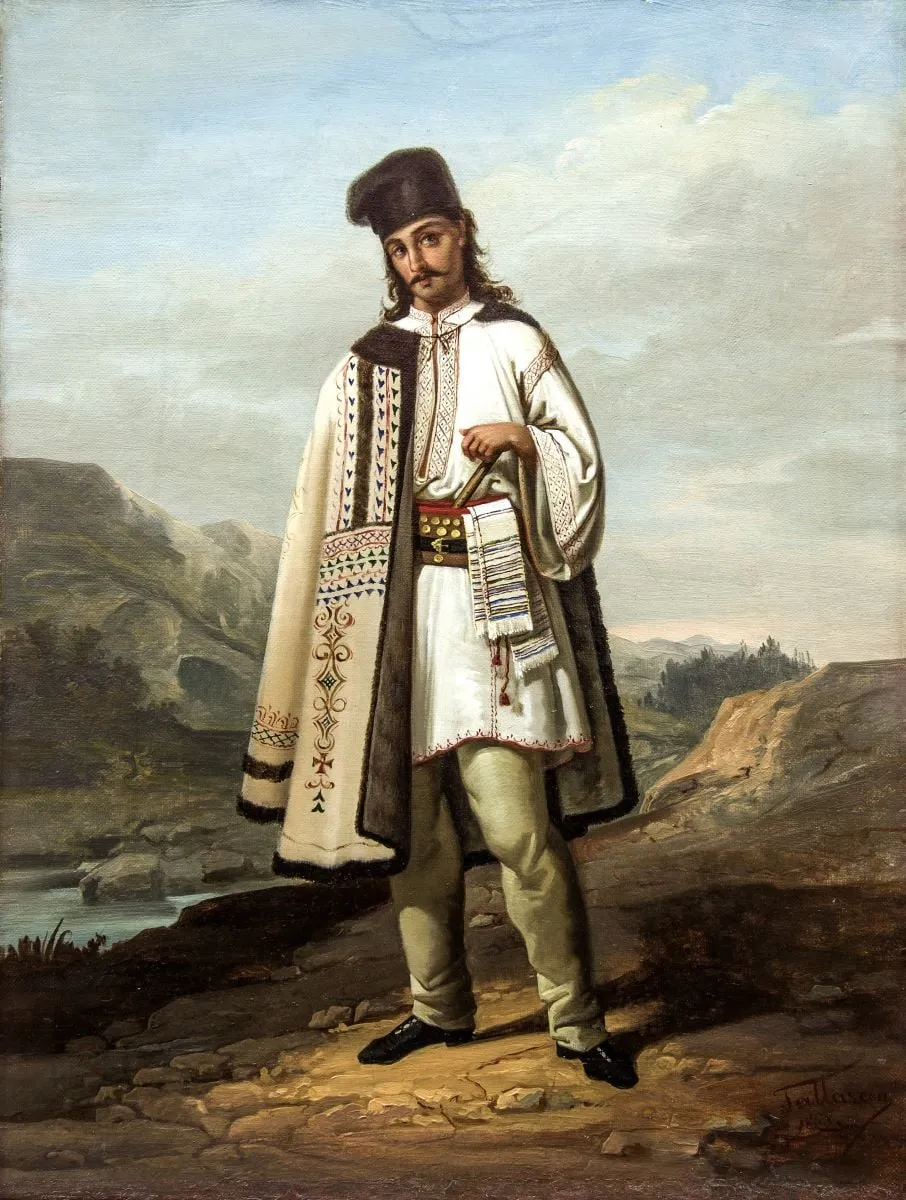
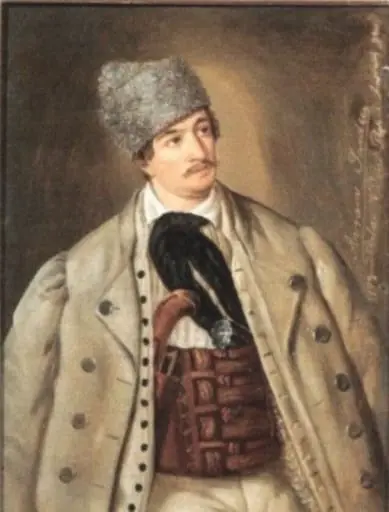
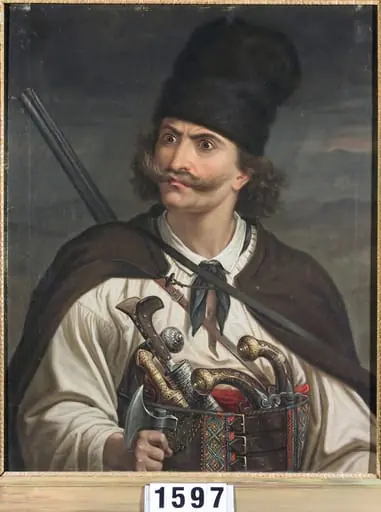
Țăran din Câmpulung-Muscel is a print by the Impressionist artist Gheorghe M. Tattarescu. It dates from 1868 and is held in the collection of the National Museum of Art of Romania. Painted in 1868 by Gheorghe M.
About this work
Overview
Tattarescu, this portrait depicts a peasant man from Câmpulung-Muscel, a region in southern Romania.
Painted in 1868 by Gheorghe M. Tattarescu, this portrait depicts a peasant man from Câmpulung-Muscel, a region in southern Romania. The figure stands on a rocky ledge, framed by distant mountains and a quiet stretch of water. Rendered in a straightforward, observational manner, the work captures a moment of stillness, emphasizing the subject’s connection to the land without overt narrative or symbolism.
Subject & Meaning
The man, dressed in a white tunic and trousers with a draped overcoat and black hat, represents rural Romanian life in the late 19th century. His posture is calm, his gaze directed outward, suggesting quiet dignity rather than hardship. The cloth held in his left hand may imply labor or utility, grounding the figure in everyday existence. The painting avoids idealization, presenting the subject as a member of a specific place and social class.
Technique & Style
Tattarescu employs a realistic approach with careful attention to texture and form. The folds of the coat, the weave of the fabric, and the roughness of the rocks are rendered with precision. The landscape behind is softly modeled, using muted tones to recede into the distance, allowing the figure to remain the focal point. Light falls evenly, avoiding dramatic contrasts, reinforcing the work’s documentary tone.
History & Provenance
Created during a period of national cultural consolidation in Romania, the painting reflects growing interest in depicting rural life as part of national identity. It was produced shortly after the unification of Moldavia and Wallachia, when artists increasingly turned to local subjects. The work remains in Romanian public collections, though its exact exhibition history after 1868 is not widely documented.
Context
In the decades following Romania’s political unification, artists like Tattarescu sought to define a visual language rooted in local traditions. This painting aligns with broader efforts to elevate peasant life as worthy of artistic representation, countering earlier European tendencies to romanticize or marginalize rural subjects. It emerges alongside ethnographic studies and folkloric collections of the era.
Legacy
Tattarescu’s portrait contributed to a shift in Romanian art toward socially grounded realism. While not widely reproduced, it is recognized as an early example of the nation’s move toward depicting its own people with dignity and specificity. Later generations of Romanian painters drew from such works as models for portraying everyday life without sentimentality or exoticism.
Artist & collection
Artist