Artwork
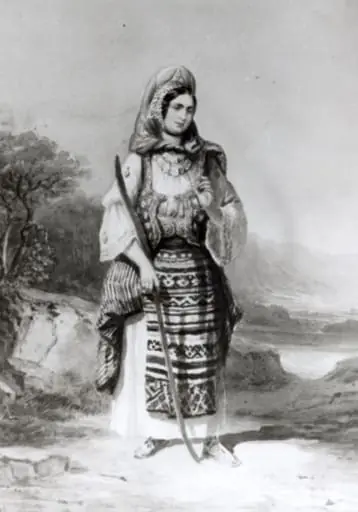
Țărancă din Câmpulung-Muscel
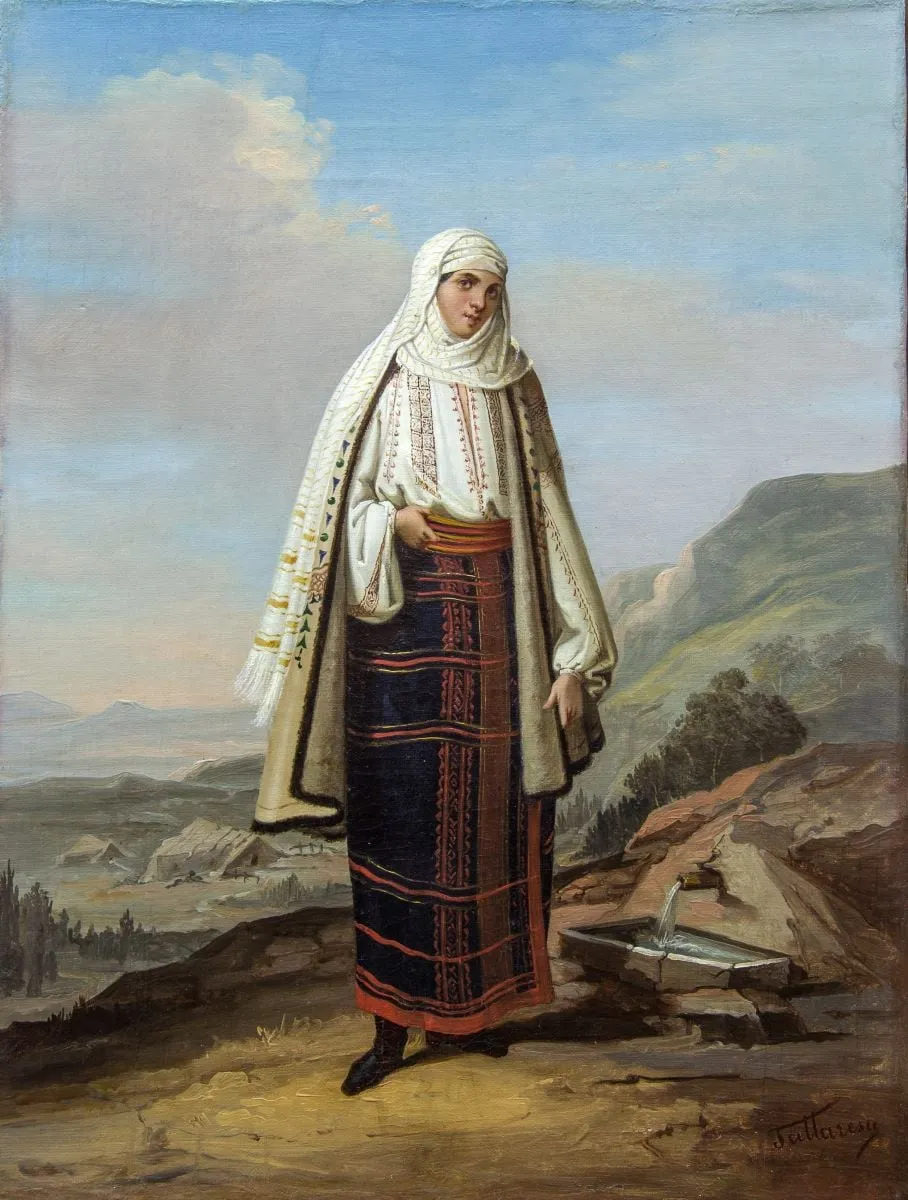
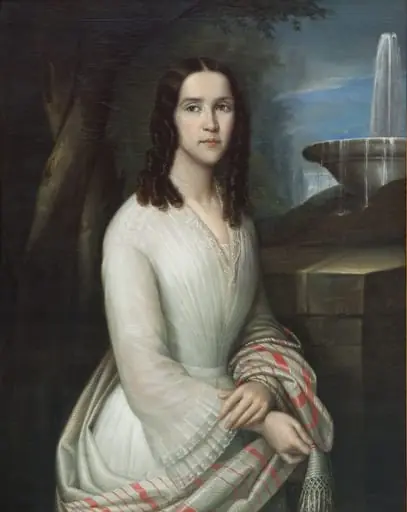
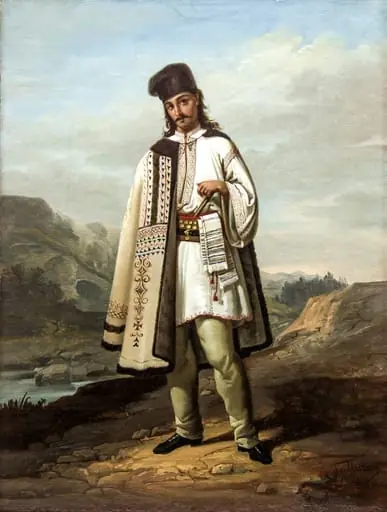
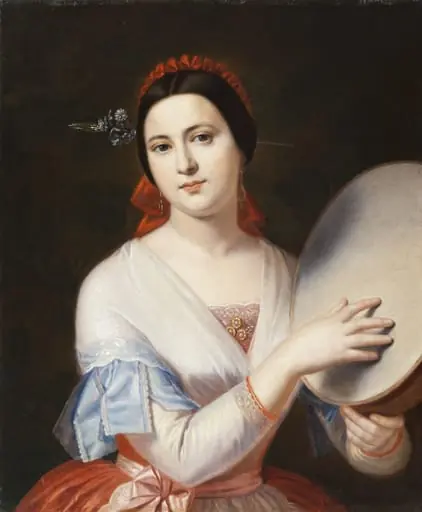
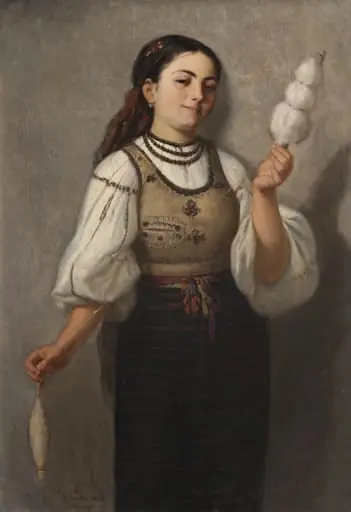
Țărancă din Câmpulung-Muscel is a print by Gheorghe M. Tattarescu. It dates from 1850 and is held in the collection of the National Museum of Art of Romania. Painted around 1850 by Gheorghe M.
About this work
Overview
The work belongs to a series of studies Tattarescu made of regional dress and rural identity during a period of national cultural awakening.
Painted around 1850 by Gheorghe M. Tattarescu, this portrait captures a rural woman from Câmpulung-Muscel in southern Romania. The figure stands alone on a quiet path, framed by natural elements that suggest the quiet rhythm of peasant life. The composition avoids dramatic action, instead emphasizing stillness and dignity through posture and setting. The work belongs to a series of studies Tattarescu made of regional dress and rural identity during a period of national cultural awakening.
Subject & Meaning
The woman depicted is not an idealized figure but a specific local inhabitant, rendered with attention to the details of her attire and environment. Her clothing reflects the traditional dress of the region, signaling cultural continuity and regional pride. The presence of a stone fountain and distant hills grounds her in a tangible landscape, reinforcing a connection between identity and place. The calm demeanor and solitary stance suggest resilience and quiet self-possession, values often associated with rural life in 19th-century Romanian thought.
Technique & Style
Tattarescu employs a restrained palette dominated by earth tones and the vivid contrast of the woman’s red-and-blue skirt against her white garments. Light falls evenly across the figure, with subtle modeling that defines form without heavy chiaroscuro. Brushwork is precise yet unobtrusive, favoring clarity over texture. The background is rendered with soft, atmospheric perspective, allowing the figure to remain the focal point while still integrating her into a believable natural setting.
History & Provenance
Created during Tattarescu’s early career, the painting emerged from his interest in documenting Romanian folk types as part of a broader movement to define national identity through visual culture. It was likely produced for private or academic circulation rather than public exhibition. The work remained within Romanian collections throughout the 19th and 20th centuries, eventually entering a public institution where it is now preserved as part of the nation’s artistic heritage.
Context
In the mid-19th century, Romanian intellectuals and artists sought to articulate a distinct national character amid Ottoman and Habsburg influences. Tattarescu, trained in Rome, brought academic techniques to bear on local subjects, bridging European artistic conventions with indigenous themes. This painting reflects that synthesis: it is neither purely folkloric nor fully academic, but a deliberate attempt to elevate everyday rural life as worthy of artistic representation.
Legacy
The painting contributed to a growing visual archive of Romanian peasant life, influencing later generations of artists who turned to rural subjects as symbols of authenticity. While not widely exhibited internationally, it holds significance within Romania as an early example of ethnographic realism in painting. Its enduring presence in national collections underscores its role in shaping how Romanian identity was visually constructed during the formative years of modern nationhood.
Artist & collection
Artist