Artwork
Crossing at Sano
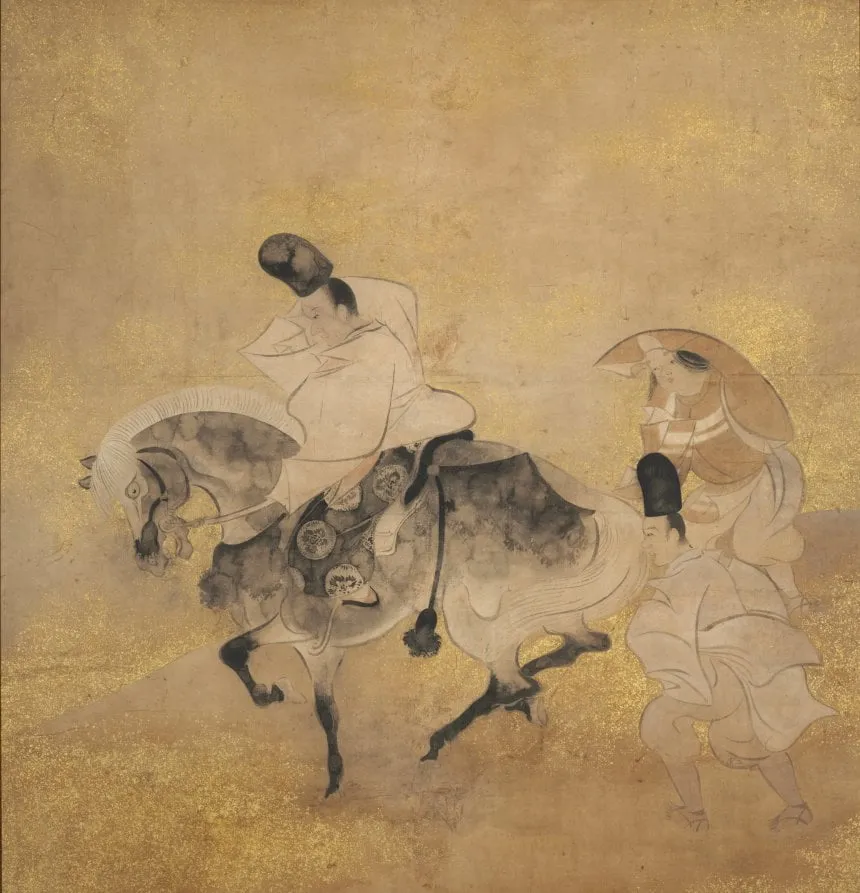
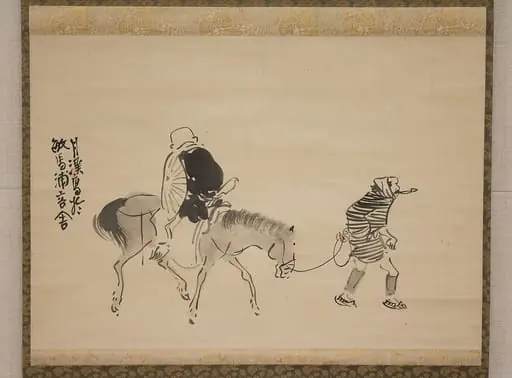
Crossing at Sano is an unspecified painting by the Baroque artist Tawaraya Sōtatsu. It dates from 1620 and is held in the collection of the Cleveland Museum of Art.
About this work
Overview
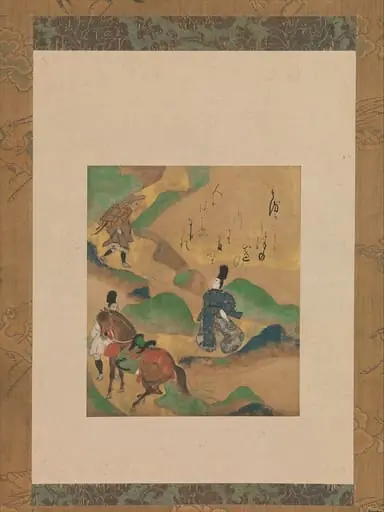
Crossing at Sano is a painting executed in ink, mineral colors, and gold, characteristic of the Sōtatsu studio in Kyoto. It depicts a serene scene of a mounted figure with two attendants crossing an ancient bridge over the Kino River in Sano, Wakayama Prefecture.
Subject & Meaning
The painting illustrates a moment of tranquil pause, as a dignitary, attended by two servants, crosses a bridge. The scene is rooted in a poem by Fujiwara no Teika, which describes stopping at Sano Crossing on an evening snowy day, seeking no shelter but rather a contemplative moment to brush off sleeves.
Technique & Style
Technically, the work blends ink, mineral pigments, and gold, evoking the formal elegance of 12th- to 13th-century aristocratic Japanese art. Compositionally, it reflects the Sōtatsu studio's tradition, notably associated with Tawaraya Sōtatsu's style.
History & Provenance
Originating from the Sōtatsu studio (associated with the Tawaraya shop in Kyoto), the painting's specific creation date and ownership history are not detailed here, emphasizing instead its stylistic lineage.
Context
The work is contextualized within the poetic and artistic traditions of Japan's aristocracy, where landscapes inspired by literature were common. Fujiwara no Teika's poem directly influences the scene's setting and mood.
Legacy
While specific impacts are not outlined, the painting represents a continuation of traditional Japanese artistic themes and techniques, potentially influencing later works in the Sōtatsu style or inspiring interest in the intersection of poetry and visual art in Japan.
Artist & collection
Artist
Tawaraya Sōtatsu (俵屋 宗達; c. 1570 – c. 1640) was a Japanese furniture designer and painter of the Rinpa school. Sōtatsu is best known for his decorations of calligraphic works by his partner Hon'ami Kōetsu (1558–1637),…

 伝俵屋宗達筆 源氏物語図「宿木」 |“Trees Encoiled in Vines of Ivy” (Yadorigi)
 Untitled
 Untitled
 Selections from the New Collection of Japanese Poems from Ancient and Modern Times (Shinkokin wakashū) with Printed Designs of Chinese Lions and Crab Finger Grass
 White Heron (Shirosagi zu)
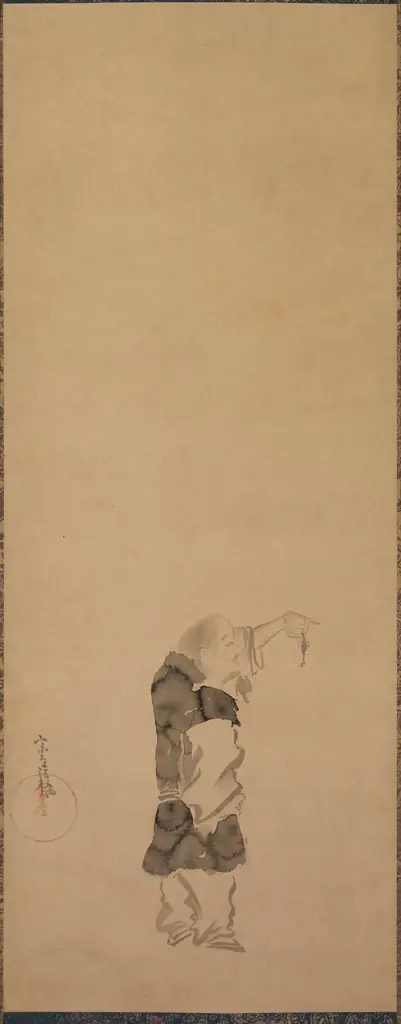 Kenshu, Monk with Shrimp
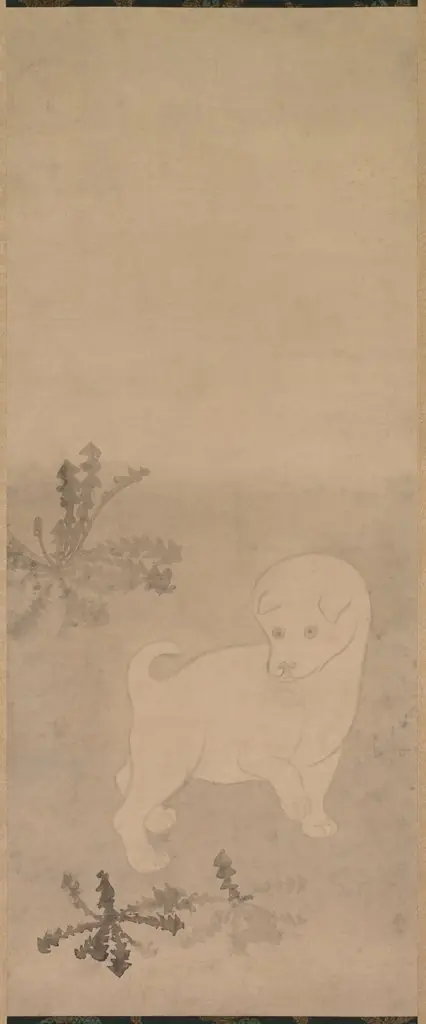 Puppy with Dandelions
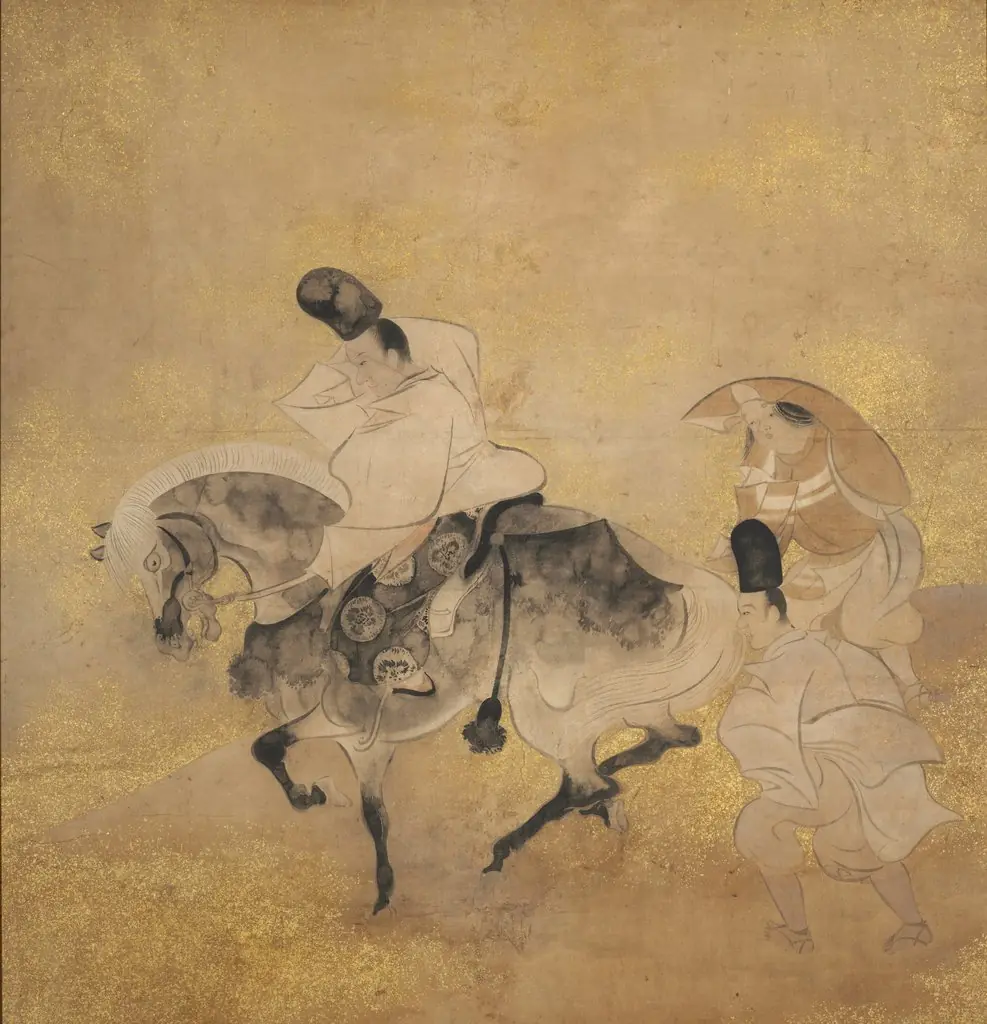 Crossing at Sano