Artwork
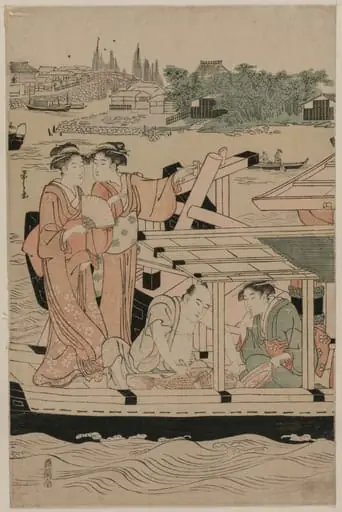
Pleasure Boat on the Sumida River
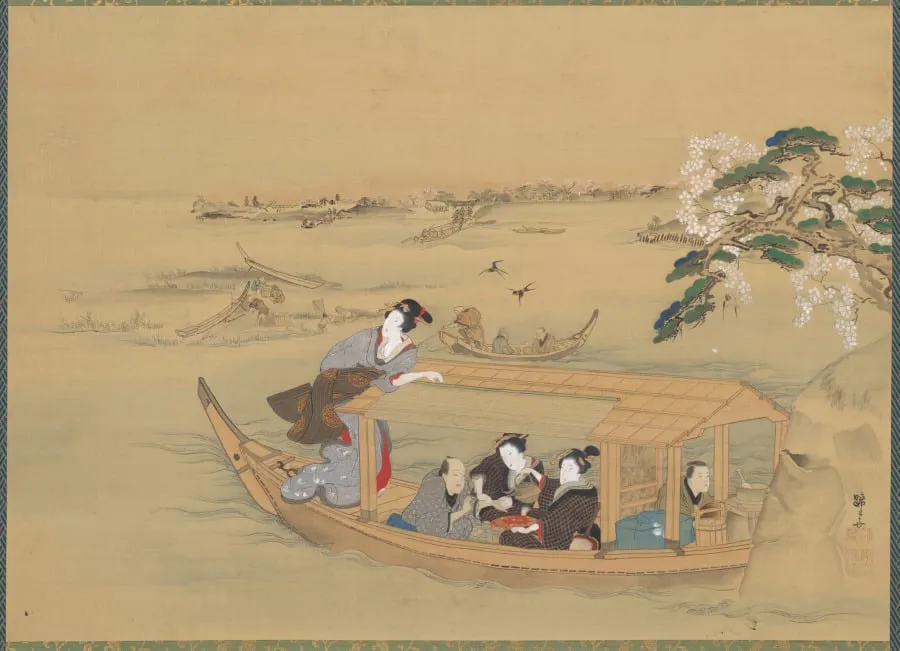
Pleasure Boat on the Sumida River is an unspecified painting by the Romanticist artist Teisai Hokuba. It dates from 1804 and is held in the collection of the Cleveland Museum of Art.
About this work
This painting shows a boat on the Sumida River.
It's a scene from everyday life in Japan. The boat has people serving food and drinks, while others chat or fish.
The details in this painting reveal a lot about life in the Edo period, like how people traveled and socialized.
You can learn more about this time and place by looking up the subject: japan, edo period (1615–1868).
Overview
This painting captures a moment on the Sumida River during the Edo period, depicting a pleasure boat transporting clients to the Yoshiwara district.
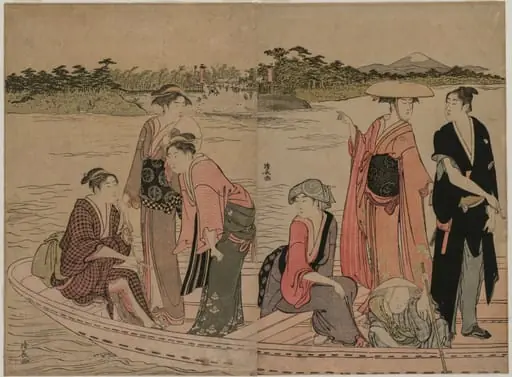
This painting captures a moment on the Sumida River during the Edo period, depicting a pleasure boat transporting clients to the Yoshiwara district. The scene unfolds with quiet activity: attendants serve refreshments, a cook tends to a small kitchen, and a courtesan gazes across the water. Nearby, smaller boats carry ordinary travelers, while fishermen anchor near a modest island. The composition reflects the river’s role as both a thoroughfare and a social space in Edo’s urban life.
Subject & Meaning
The painting portrays the ritualized journey to Yoshiwara, a licensed pleasure quarter accessible only by water after its relocation following a fire. The courtesan’s distant gaze and the attendants’ focused labor suggest the transactional nature of the voyage. Surrounding figures—commuters, fishermen—contrast the boat’s purpose, framing pleasure as one thread in a broader tapestry of riverine life. The scene is neither romanticized nor condemned, but observed with quiet realism.
Technique & Style
The artist employs fine brushwork to distinguish textures: the checkered robes of attendants, the wooden hull of the boat, the ripples of water. Figures are rendered with subtle detail, their postures and gestures conveying function rather than drama. The composition is horizontally balanced, with the river anchoring the scene and the distant horizon suggesting depth. Color is restrained, emphasizing natural tones over theatrical contrast, typical of Edo-period genre painting.
History & Provenance
The painting originates from the late 17th or early 18th century, a period when Yoshiwara’s relocation to the Sumida River’s edge reshaped Edo’s social geography. Such scenes were common in ukiyo-e prints and paintings, documenting the city’s evolving leisure culture. While the specific artist and early ownership remain undocumented, the work aligns with a broader tradition of riverine genre scenes produced for urban patrons seeking depictions of contemporary life.
Context
In Edo, the Sumida River was more than a waterway—it was a stage for commerce, transport, and social ritual. The San’ya Canal, near which the boat is positioned, marked the gateway to Yoshiwara, a space tightly regulated yet culturally significant. Fishing, commuting, and pleasure-seeking coexisted along its banks, reflecting the layered realities of urban life under the Tokugawa shogunate, where leisure and labor were spatially intertwined.
Legacy
This painting contributes to a visual record of Edo’s daily rhythms, preserving details of dress, vessel design, and social interaction that written records often omit. While not widely known outside specialist circles, it exemplifies how genre painting captured the quiet rhythms of urban Japan. Its value lies not in grandeur, but in its unembellished testimony to a vanished way of life along the river’s edge.
Artist & collection


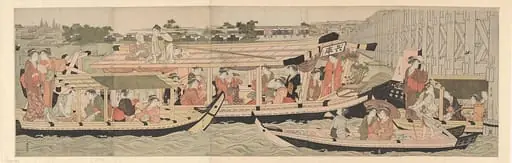 新大橋橋下の涼み船|Pleasure Boats on the Sumida River beneath Shin-Ōhashi Bridge
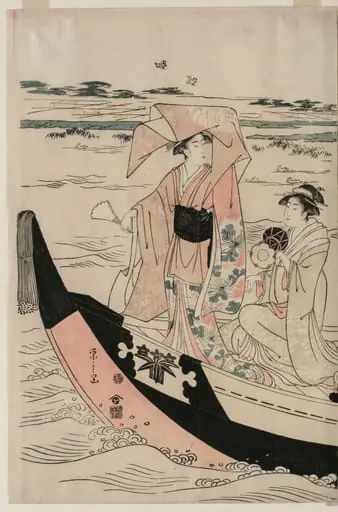 Women in a Pleasure Boat on the Sumida River
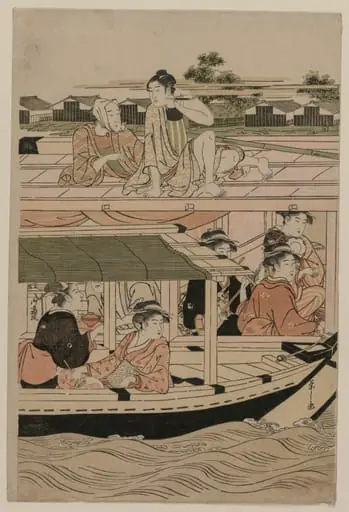 Print from Pleasure Boats on the Sumida River beneath Shin-Ōhashi Bridge
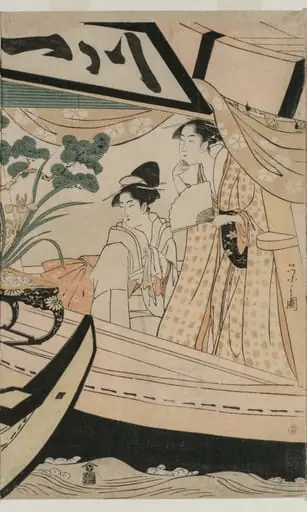 Party on the Pleasure Boat Kawaichimaru
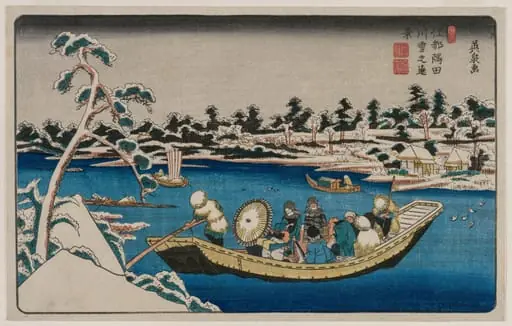 A Distant View of Snow on the Sumida River in Edo
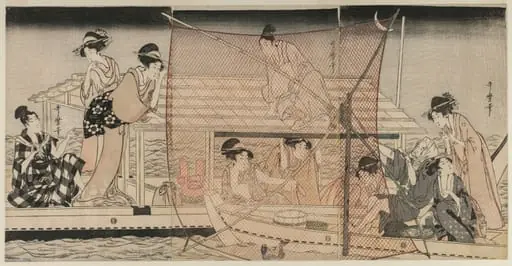 Net Fishing at Night on the Sumida River
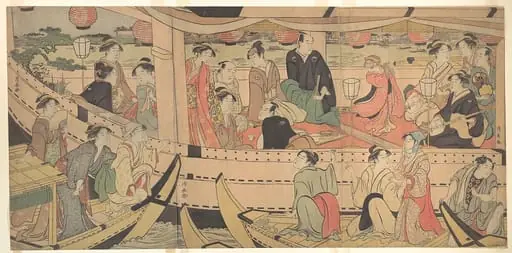 三俳優隅田川船遊び|Sumida River Holiday
 Leftmost Print from Pleasure Boats on the Sumida River beneath Shin-Ōhashi Bridge
 Passengers in a Ferry Boat on the Sumida River