Artwork
Untitled
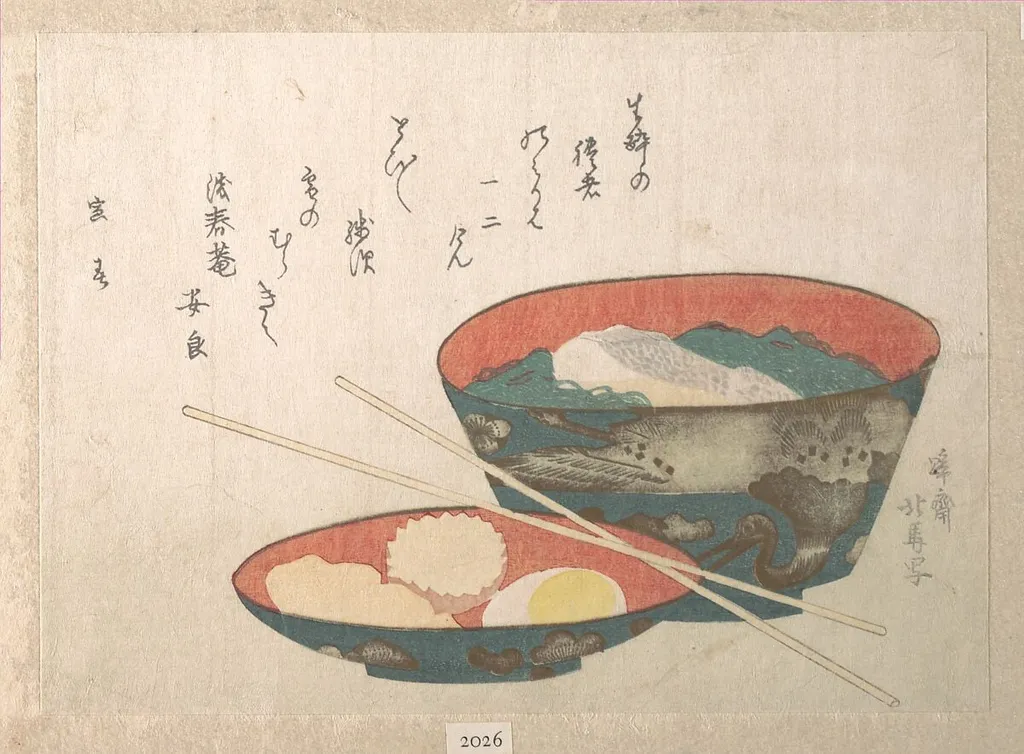
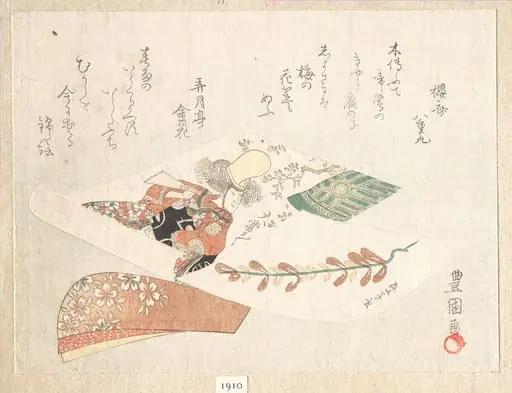
Untitled is an ink print by the Romanticist artist Teisai Hokuba. It dates from 1808 and is held in the collection of the Metropolitan Museum of Art.
About this work
Overview
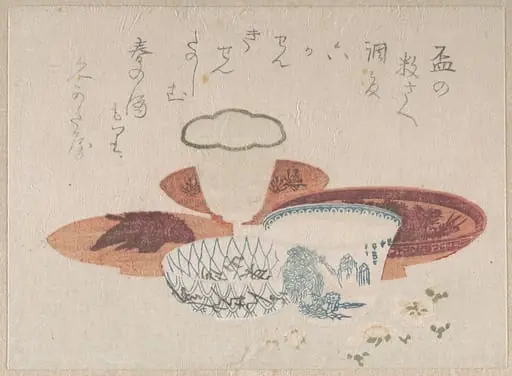
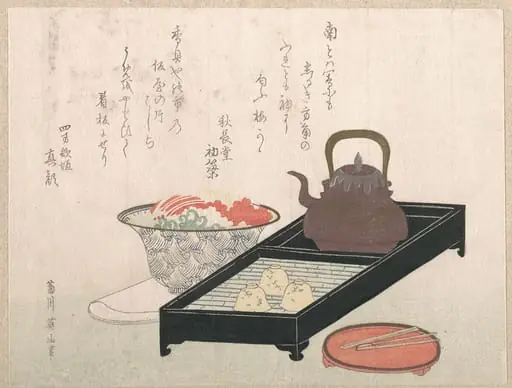
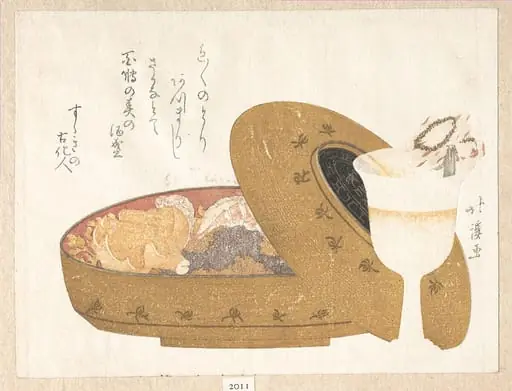
Created around 1808 by Teisai Hokuba, this woodblock print is a surimono—a privately commissioned work often produced for special occasions. Executed in ink and subtle color on paper, it depicts a modest meal arranged with quiet precision. The print resides in The Metropolitan Museum of Art’s collection, valued for its restrained aesthetic and intimate subject matter.
Subject & Meaning
The bowl’s interior bears a miniature landscape of mountains and clouds, suggesting a contemplative space where the everyday and the poetic converge.
The scene presents a simple domestic meal: rice in a bowl, accompanied by fried egg, mushrooms, and fish, with chopsticks resting across the rim. The bowl’s interior bears a miniature landscape of mountains and clouds, suggesting a contemplative space where the everyday and the poetic converge. The composition invites stillness, reflecting a Japanese sensibility that finds dignity in ordinary moments.
Technique & Style
Hokuba employed fine, controlled lines to render textures—delicate ridges on the fish, grain in the rice, and the glazed surface of the bowl. Soft washes of red, blue, and white create a muted palette, avoiding flamboyance. Cross-hatching and subtle tonal gradations lend volume without overt realism, aligning with the surimono tradition of refined, intimate craftsmanship.
History & Provenance
As a surimono, this print was likely commissioned by a literary or artistic circle for seasonal or celebratory exchange, not mass distribution. Its survival and eventual acquisition by The Metropolitan Museum of Art reflect its preservation within private collections before entering institutional care, a common trajectory for these delicate, limited-edition works.
Context
Surimono emerged in the late 18th century as luxury prints for elite patrons, blending poetry, calligraphy, and imagery. Unlike commercial ukiyo-e, they prioritized subtlety and personal expression. Hokuba’s work fits this tradition, using minimal elements to evoke atmosphere, resonating with contemporary literary ideals of wabi-sabi and quiet observation.
Legacy
Though not widely known outside specialist circles, this print exemplifies the quiet sophistication of Edo-period surimono. Its emphasis on restraint, material presence, and layered symbolism influenced later generations of printmakers who sought to elevate everyday subjects through refined technique and poetic suggestion.
Artist & collection


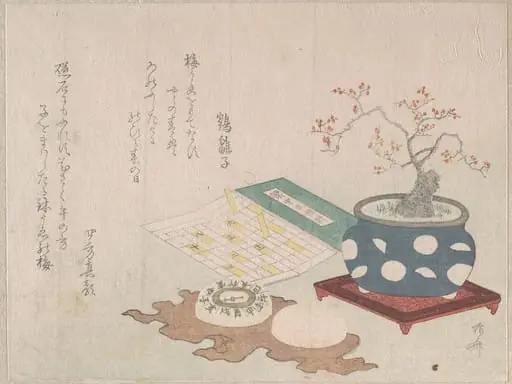 鉢梅、懐中日時計、羅針盤|Bonsai Plum, Compass, and Pocket Sundial with Design of Calendar, from Spring Rain Surimono Album (Harusame surimono-jō, vol. 3)
 Untitled
 Untitled
 Untitled
 Untitled
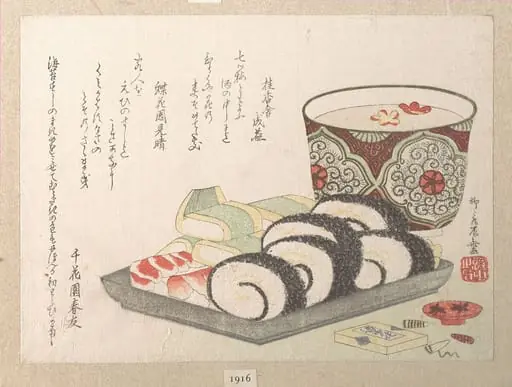 寿司と酒|Sushi and New Year’s Sake
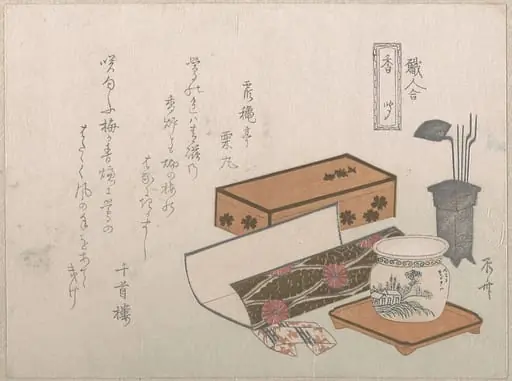 「職人合香聞 」|Utensils for the Incense Ceremony, “Incense Master” (Kōgiki), from the series An Array of Artisans
 Untitled
 Untitled
 Untitled
 Untitled
 娘道成寺図の錦絵|Print of a Kabuki Dancer from the Maiden of the Dōjōji Temple (Musume Dōjōji)