Artwork
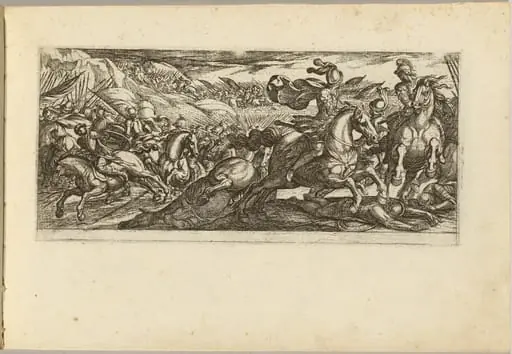
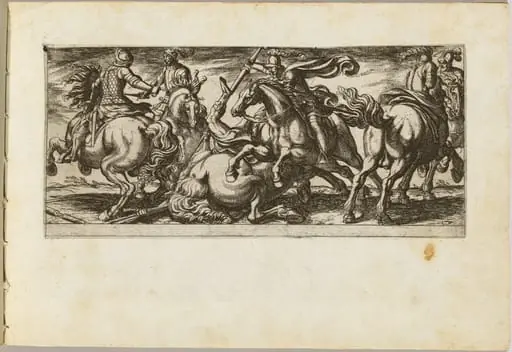
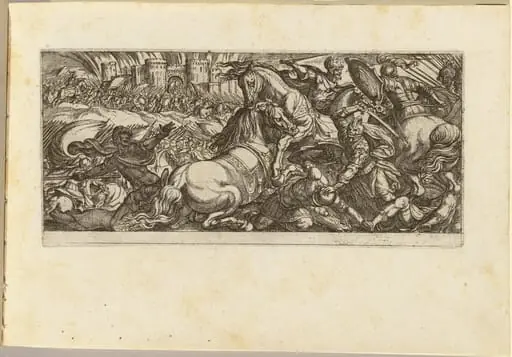
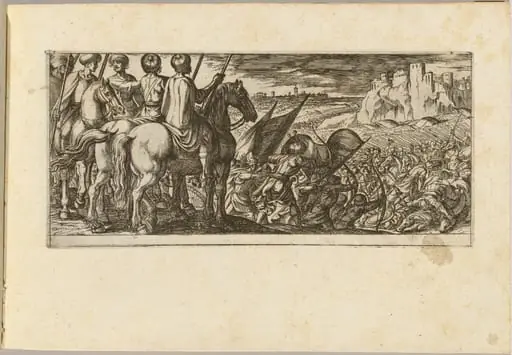
Cavalry Attack with Soldiers Fleeing
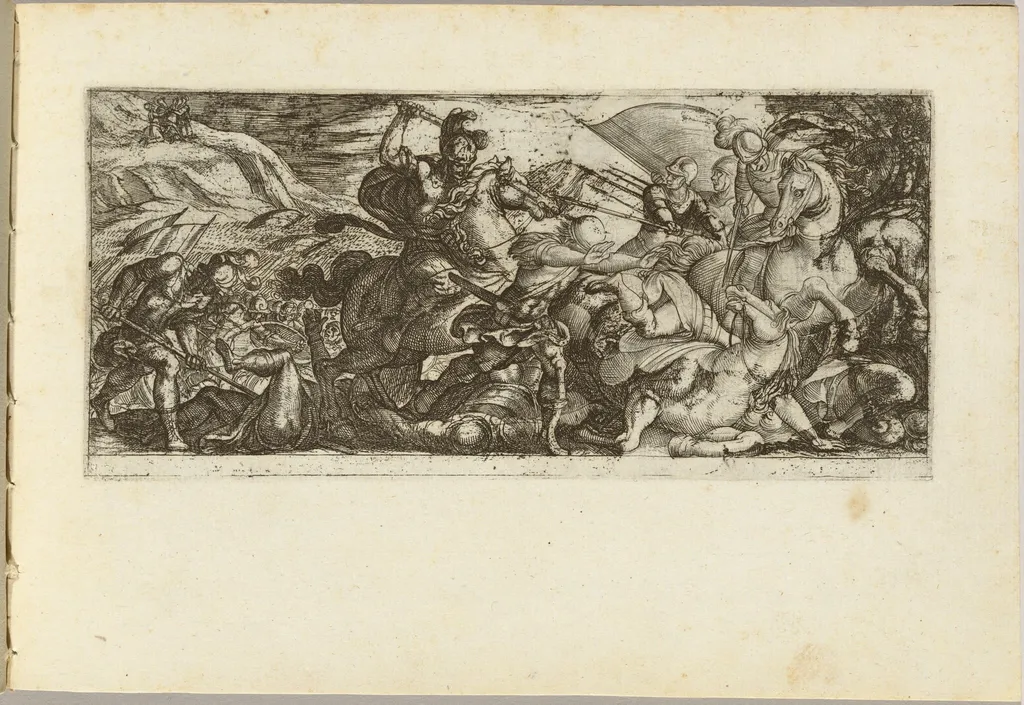
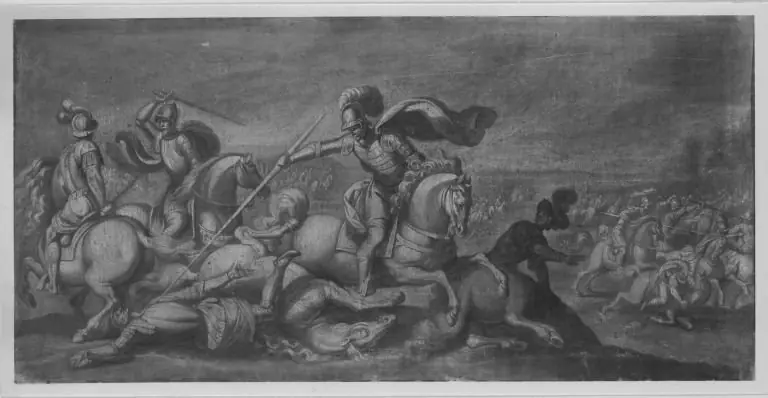
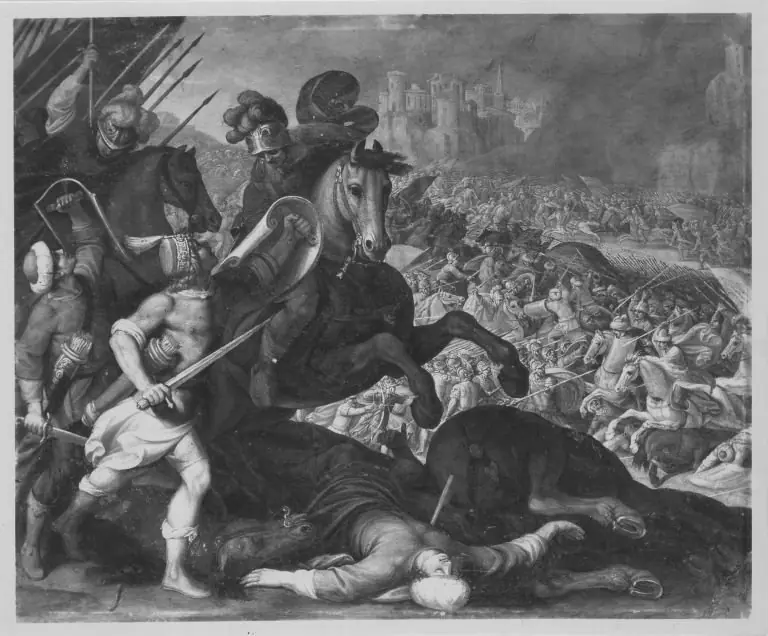
Cavalry Attack with Soldiers Fleeing is an ink print by the Renaissance artist Antonio Tempesta. It dates from 1592 and is held in the collection of the National Gallery of Art.
About this work
Overview
Cavalry Attack with Soldiers Fleeing is a 1592 etching by Antonio Tempesta, capturing a tumultuous battle scene with horses and soldiers in frantic motion.
Subject & Meaning
The etching reflects Tempesta's penchant for depicting military conflicts and historical themes, conveying intense chaos and energy through the fleeing soldiers and horses.
Technique & Style
Executed in etching, a medium Tempesta utilized to broaden his reach, the work showcases his ability to evoke dramatic movement and tension, characteristic of his Baroque style influenced by both Roman and Antwerp artistic traditions.
History & Provenance
Created in 1592 by Antonio Tempesta, a Florentine-born artist (1555) who worked across painting and engraving, bridging artistic practices between Rome and Antwerp.
Context
Part of a broader oeuvre focused on battle imagery, this etching can be contextualized alongside other works by Tempesta and within the technical tradition of etching, as further explored at institutions like the National Gallery of Art, Washington.
Legacy
While specific lasting impacts of *Cavalry Attack with Soldiers Fleeing* are not detailed, it contributes to Tempesta's recognized body of work emphasizing dynamic conflict scenes in early Baroque art.
Artist & collection
Artist
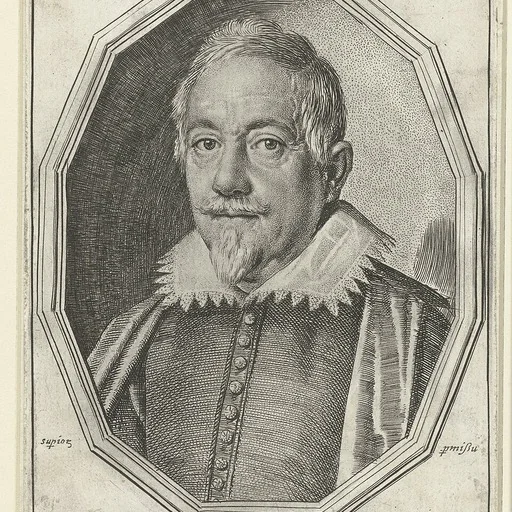
Antonio Tempesta, also called il Tempestino (1555 – 5 August 1630), was an Italian painter and engraver, whose art acted as a point of connection between Baroque Rome and the culture of Antwerp.