Artwork
Winter and Spring Landscape
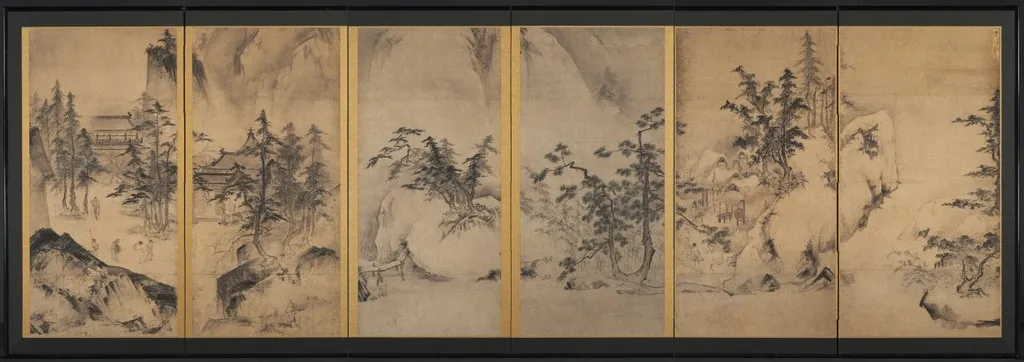
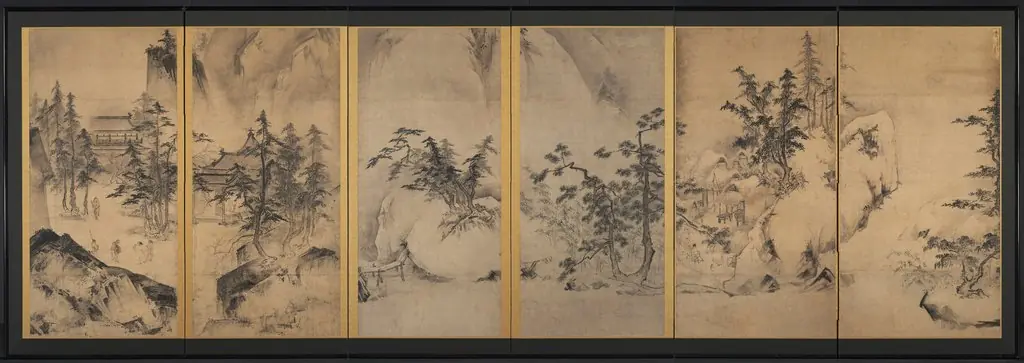
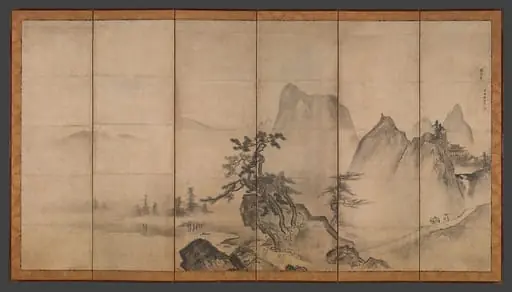
Winter and Spring Landscape is an unspecified painting by the Ming dynasty painting artist Tenshō Shūbun. It dates from 1404 and is held in the collection of the Cleveland Museum of Art.
About this work
Overview
Winter and Spring Landscape, attributed to the Japanese painter Tenshō Shūbun and dated to around 1404, consists of a vertical six‑panel composition. Executed in ink with subtle washes of pale pigment, the work is presently displayed in the Cleveland Museum of Art. Its narrow format presents a series of mountain and forest scenes that transition from wintry barrenness to the hint of early spring.
Subject & Meaning
Each panel depicts a slender stretch of rugged terrain where twisted, leafless trees dominate the foreground and occasional structures emerge from the foliage. Snow clings to the ground in the first sections, gradually giving way to lighter tones that suggest thawing soil and the first signs of growth, evoking the seasonal cycle that underpins much of Japanese landscape symbolism.
Technique & Style
Shūbun employs brisk, almost calligraphic brushstrokes that convey a sense of immediacy, as if the artist were sketching directly from observation. The ink lines are loose yet purposeful, rendering rock faces and bark with a dynamic energy. Light washes of muted color provide atmospheric depth, while the soft, faded sky serves as a neutral backdrop that unifies the six scenes.
History & Provenance
Created in the early 15th century, the painting entered the collection of the Cleveland Museum of Art, where it remains a representative example of early Muromachi period painting. Its attribution to Tenshō Shūbun, a monk‑artist associated with the Zen monastery of Daitoku-ji, reflects the period’s emphasis on spontaneous brushwork linked to spiritual practice.
Context
The work belongs to the Muromachi era (1336–1573), a time when Japanese ink painting (suiboku-ga) was heavily influenced by Chinese Song and Yuan aesthetics. Artists like Shūbun integrated Chinese monochrome techniques with native landscape motifs, producing compositions that served both as visual meditation and as didactic illustrations of nature’s transience.
Artist & collection


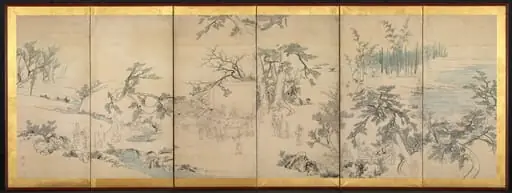 Literary Gathering in the Orchid Pavilion
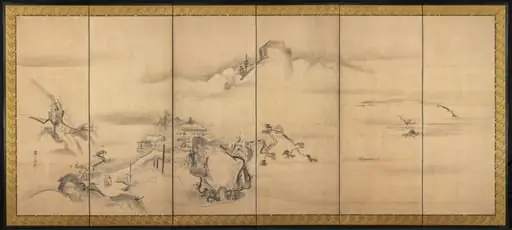 Eight Views of the Xiao and Xiang Rivers
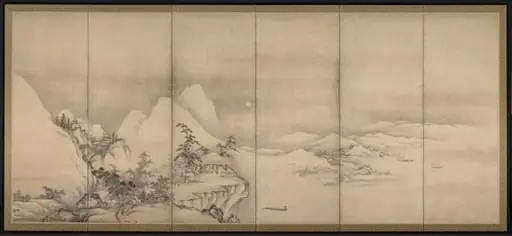 Chinese Landscape
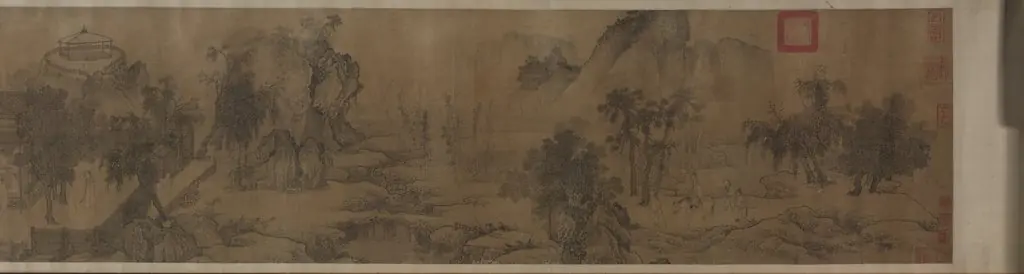 Tao Yuanming's Return Home
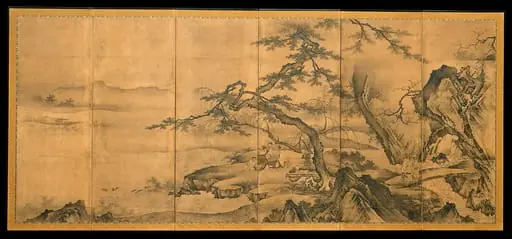 琴棋書画図屏風|The Four Accomplishments
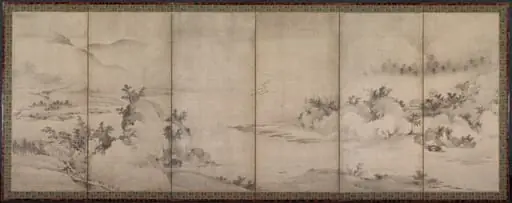 Landscape with Motifs from the Eight Views of Xiao-Xiang
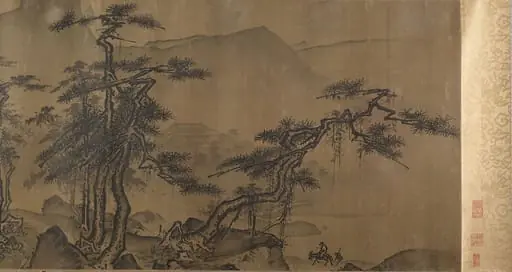 明/清 佚名 李遠(僞款) 仿夏珪江山清遠圖 卷|Landscape
 Streams and Mountains without End
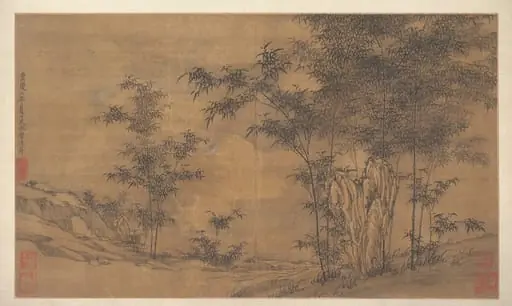 清 佚名 舊傳管道昇 竹石圖 冊頁|Bamboo
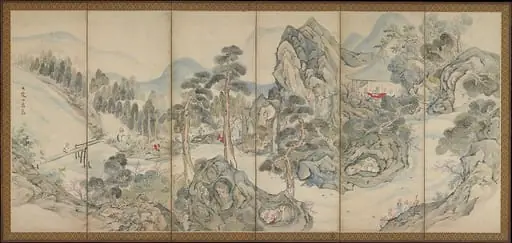 池大雅筆 蘭亭曲水図屏風 秋社図屏風|Orchid Pavilion Gathering; Autumn Harvest Festival