Artwork
Chinese Landscape
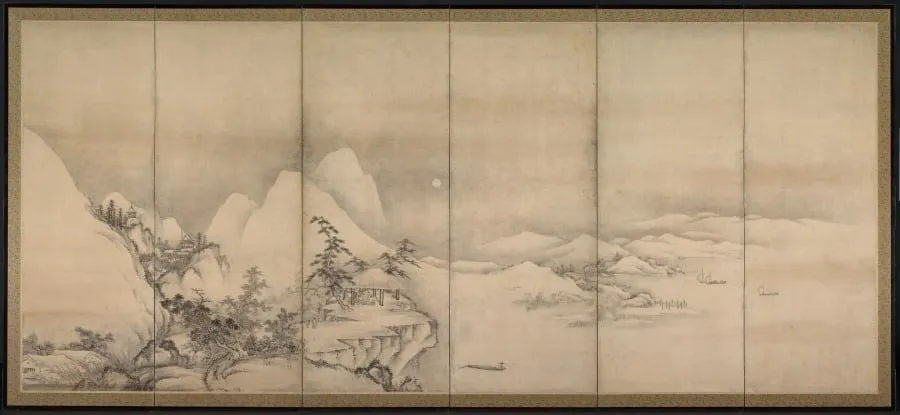
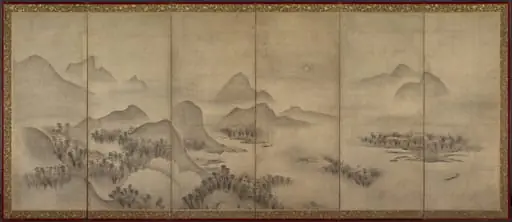
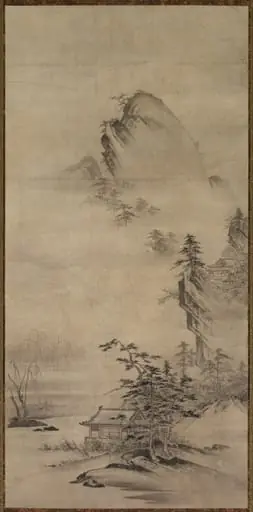
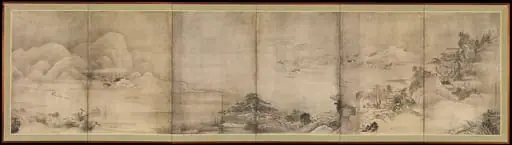
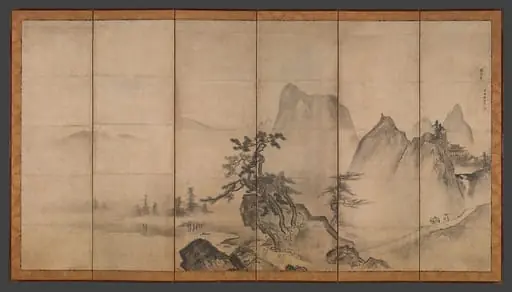
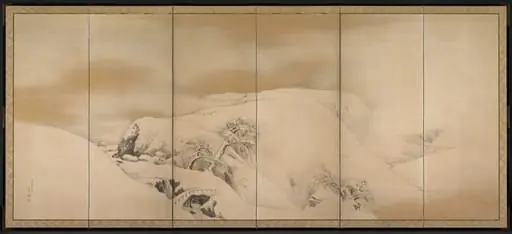
Chinese Landscape is an unspecified painting by the Ming dynasty painting artist Unknown. It dates from 1504 and is held in the collection of the Cleveland Museum of Art. The work presents a nocturnal landscape of mist‑shrouded peaks, a broad river and a distant village illuminated by moonlight.
About this work
You see misty mountains, a wide river, and three men sitting under a tree at night, sharing tea while a village glows in the distance.
You see misty mountains, a wide river, and three men sitting under a tree at night, sharing tea while a village glows in the distance.
This painting was made in Japan, but it copies older Chinese ink paintings. The artist changed the small scroll format into a big folding screen that could divide a room. The soft moonlight and quiet scene feel like a break from busy life.
To see more like this, look up subject: japan, muromachi period (1392–1573).
Overview
The work presents a nocturnal landscape of mist‑shrouded peaks, a broad river and a distant village illuminated by moonlight. Three figures sit beneath a solitary tree, sharing tea in quiet contemplation, while the scene unfolds across a large folding screen rather than a traditional handscroll.
Subject & Meaning
The composition evokes a moment of retreat from urban bustle, emphasizing harmony between humanity and nature. The gathering of the three gentlemen under moonlit sky suggests scholarly leisure and the cultural practice of tea drinking as a meditative activity.
Technique & Style
Executed in ink on a multi‑panel screen, the painting adapts the delicate brushwork of Chinese landscape scrolls to a broader, architectural format. The artist employs soft washes to render mist and moonlight, balancing detailed figures with expansive, atmospheric space.
History & Provenance
Created in Japan during the Muromachi period (1392–1573), the piece directly references earlier Chinese ink paintings that entered Japan in the late 13th century. By reconfiguring the intimate scroll format into a folding screen, the work served both decorative and spatial functions within a room.
Context
The influx of Chinese landscape aesthetics profoundly influenced Japanese painters, who initially reproduced these models in albums and scrolls. Over time, the motif was expanded onto larger surfaces such as byōbu screens, reflecting evolving tastes for interior partitioning and the integration of art into daily environments.
Artist & collection

 Domestic Scene
 Giacomo and Cardinal Marco, investing Andrea, Abbot of San Zeno, with his Benefice
 The Nymph of Fontainebleau
 Portrait of a Woman
 Madonna and Child with Saints in the Enclosed Garden
 Venus and Minerva
 Family Group of Four on Sofa
 Wall painting from Room H of the Villa of P. Fannius Synistor at Boscoreale