Artwork
Camel
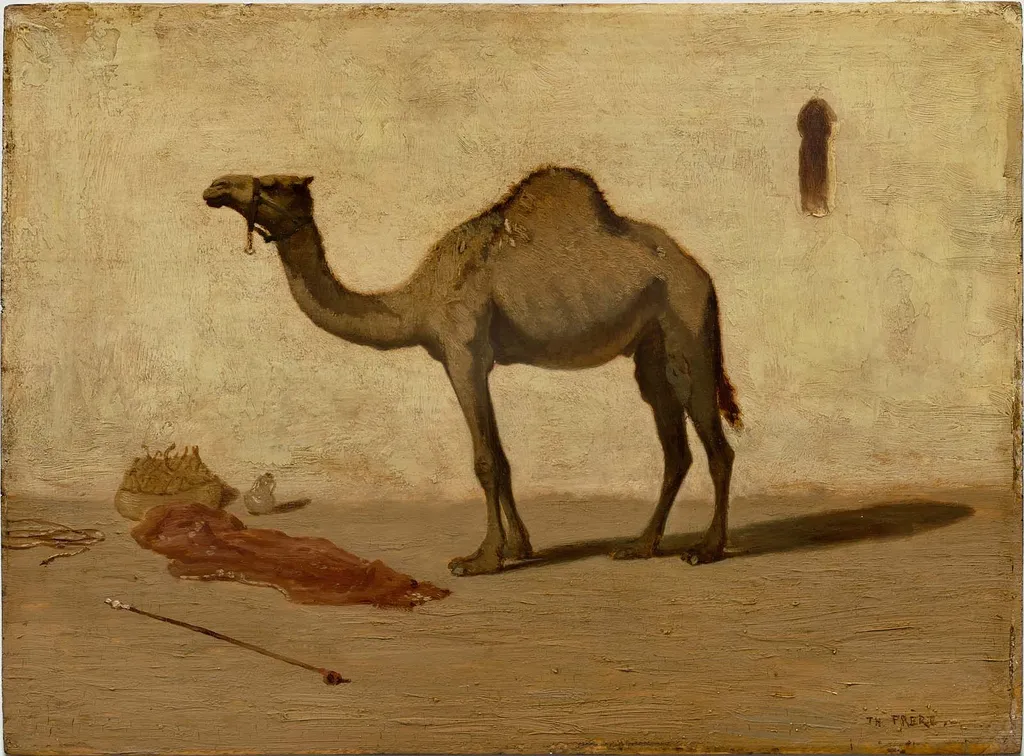
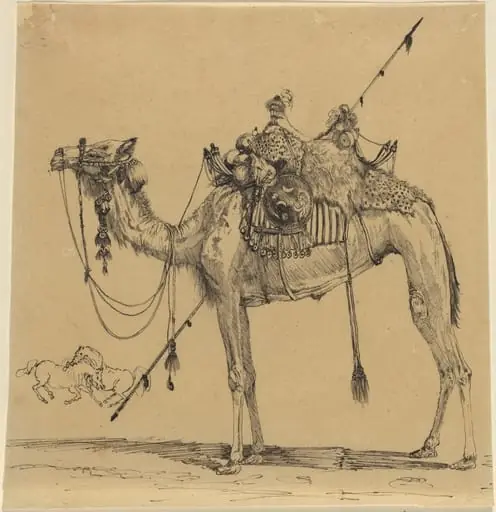
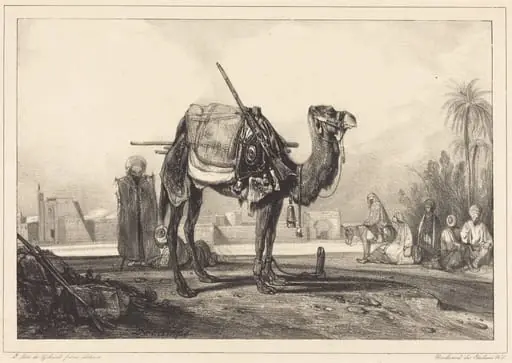
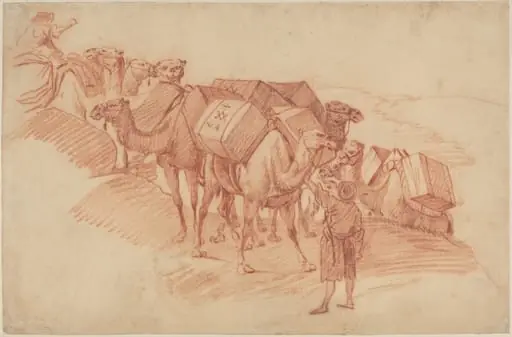
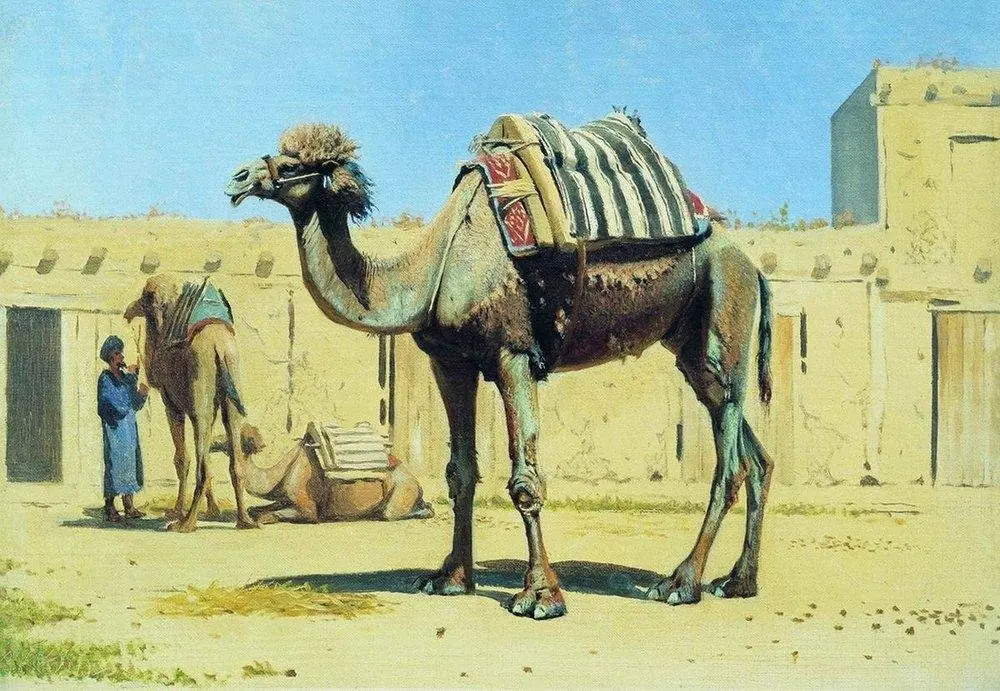
Camel is an unspecified painting by Théodore Frère. It dates from 1861 and is held in the collection of the Museum of Fine Arts Boston.
About this work
Overview
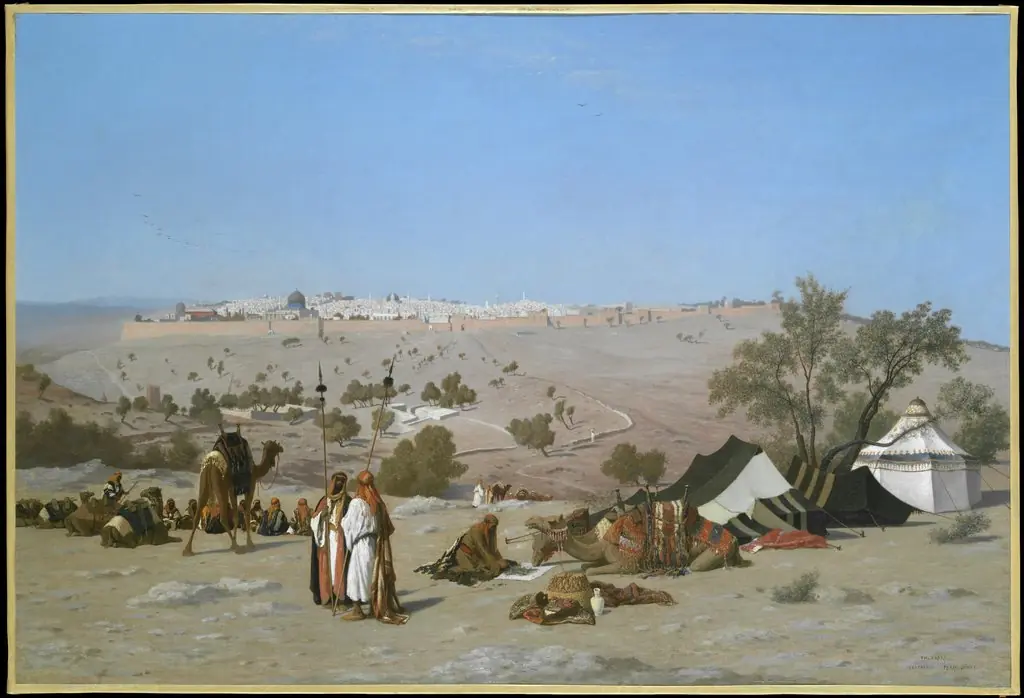
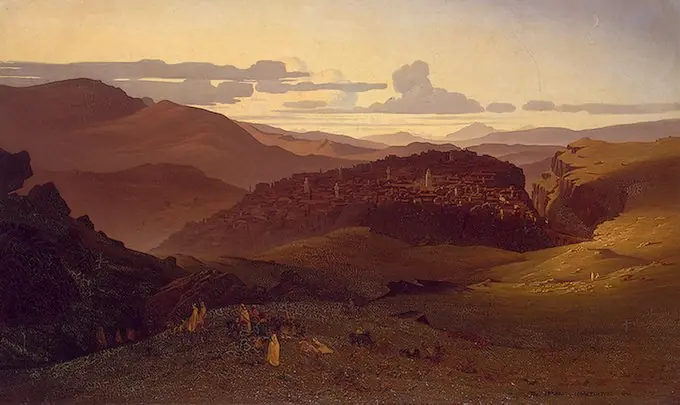
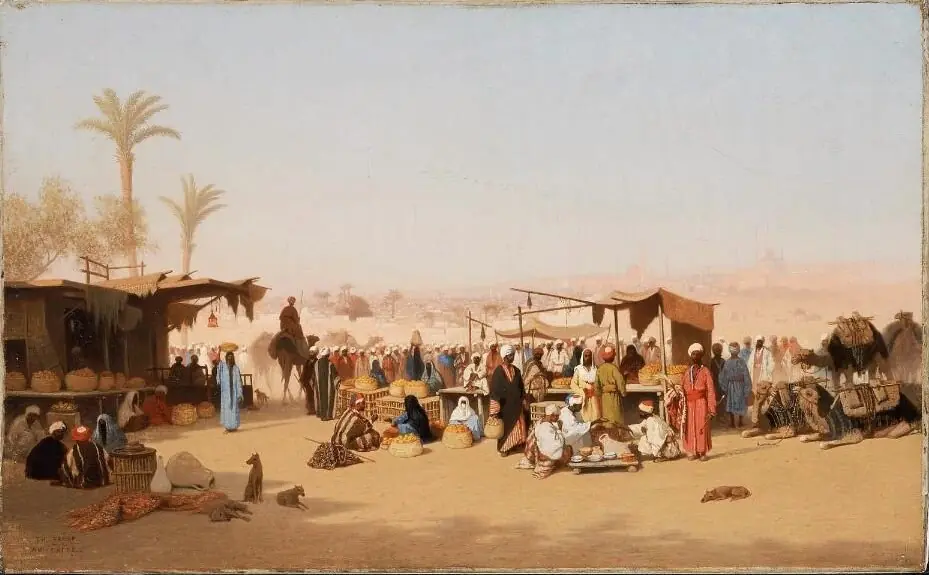
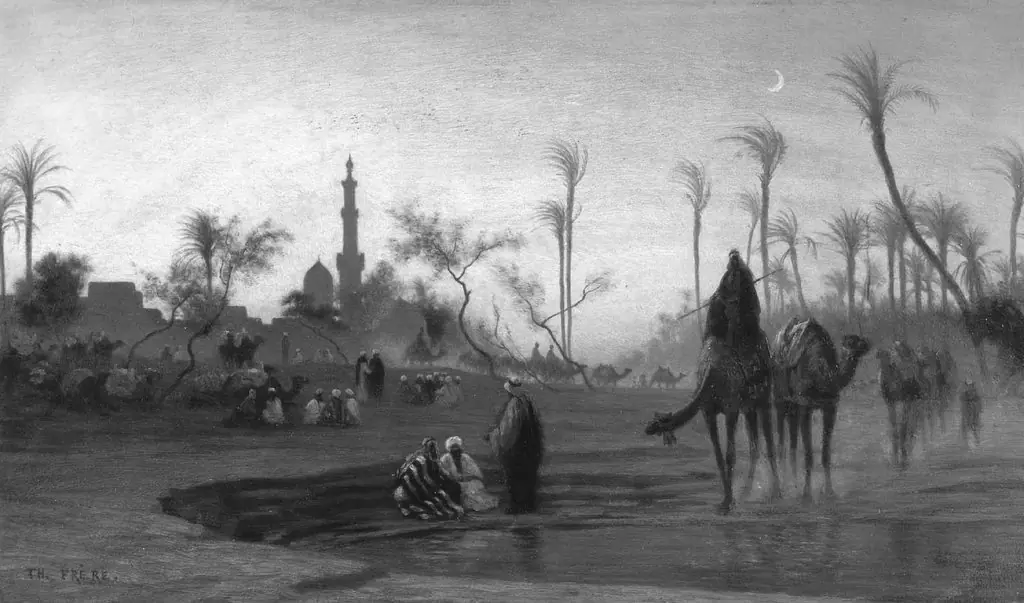
Théodore Frère, a French painter associated with Orientalist subjects, executed the canvas titled *Camel* circa 1861. The work is part of the Museum of Fine Arts, Boston’s holdings and exemplifies the artist’s interest in North African and Middle Eastern motifs that were popular among European painters of the mid‑nineteenth century.
Subject & Meaning
The composition centers on a single camel positioned within an interior space, its profile turned toward the left. A red cloth lies at its feet, accompanied by a long staff, while a darker draped form or shadow occupies the right side of the scene. The animal’s stillness and the sparse setting convey a quiet, contemplative atmosphere.
Technique & Style
Frère renders the camel’s flesh in layered browns, employing a subtle chiaroscuro that models the form through a darker shadow on its right flank. The background consists of a light beige wash applied with visible brushstrokes, giving the surface a textured quality. The limited palette of earth tones reinforces the work’s calm mood.
History & Provenance
Created around 1861, the painting entered the Museum of Fine Arts, Boston, where it remains in the permanent collection. Its acquisition reflects the institution’s broader effort to represent 19th‑century European depictions of exotic locales.
Artist & collection
Artist
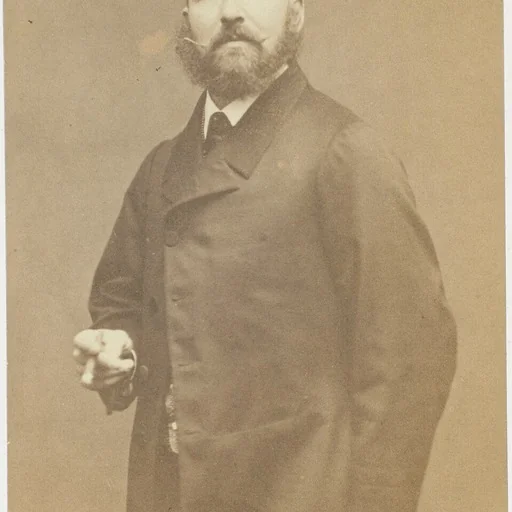
Charles-Théodore Frère (21 June 1814, Paris – 24 March 1888) was a French Orientalist painter. His younger brother, Pierre-Édouard, and his nephew and namesake, Charles Edouard Frère, were also painters.