Artwork
Boxers
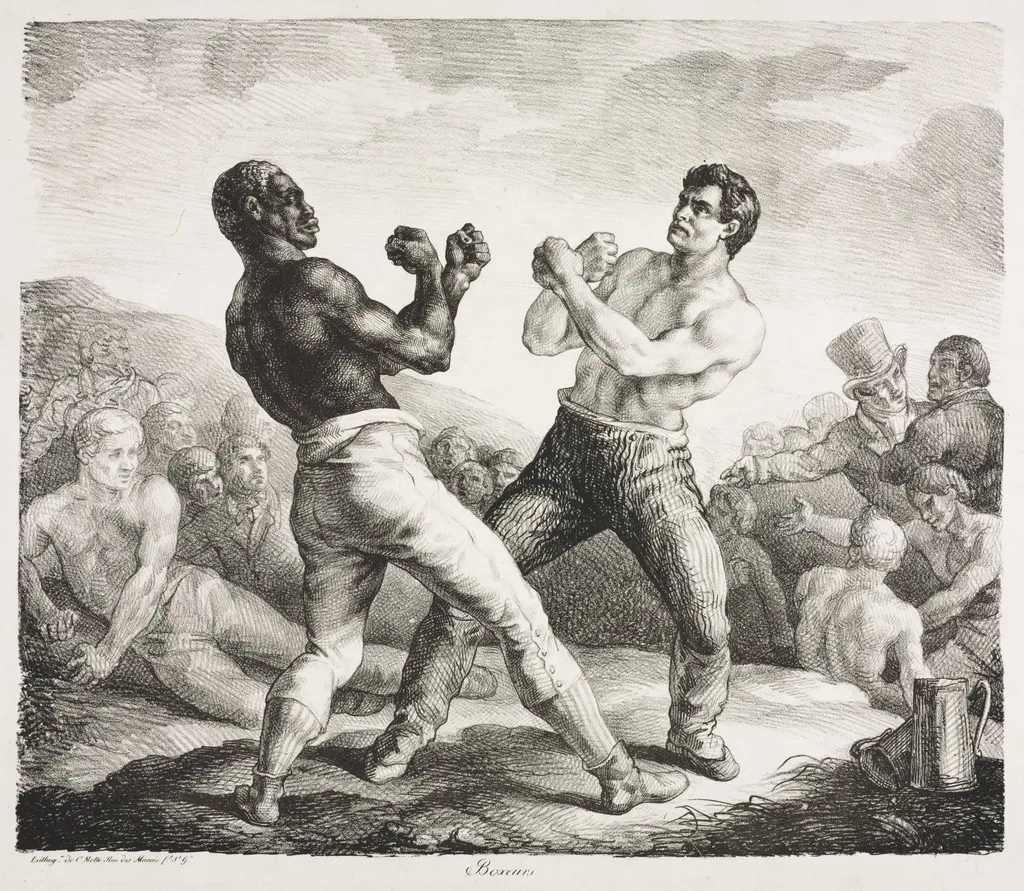
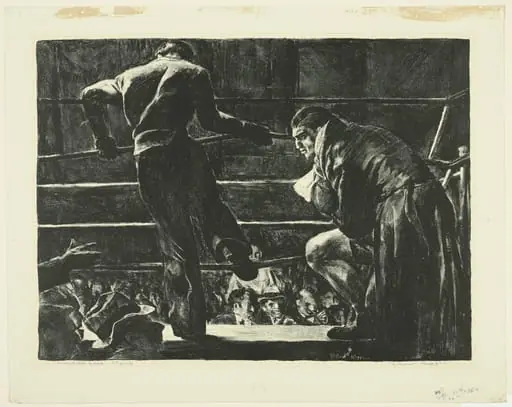
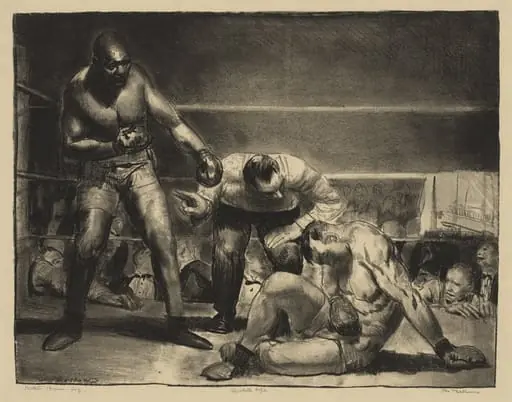
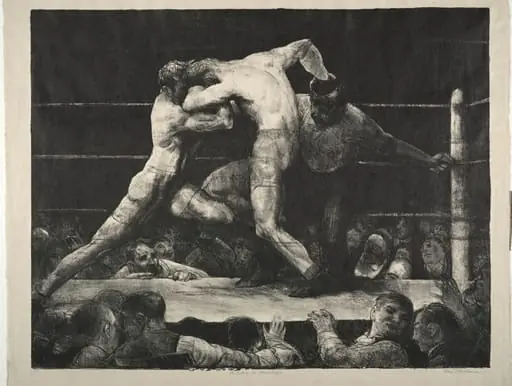
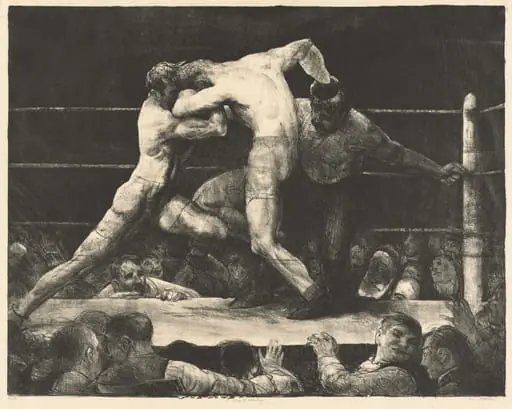
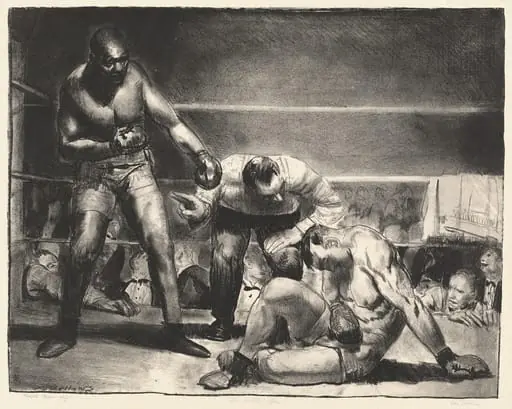
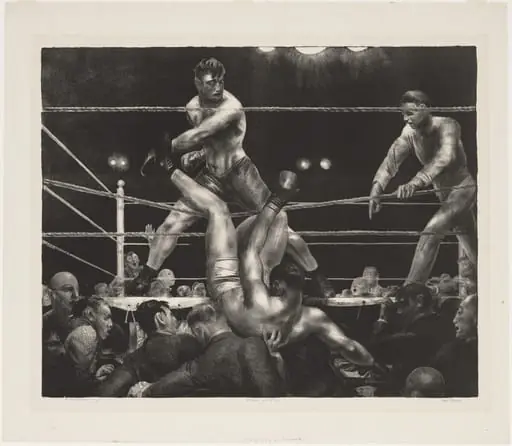
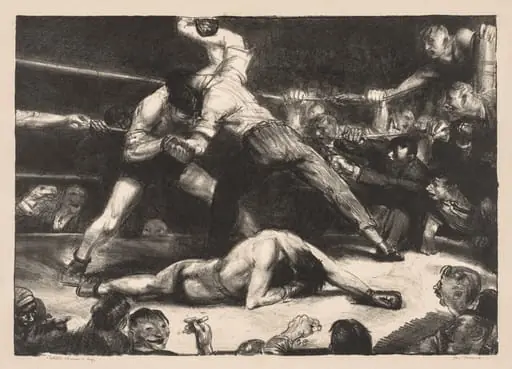
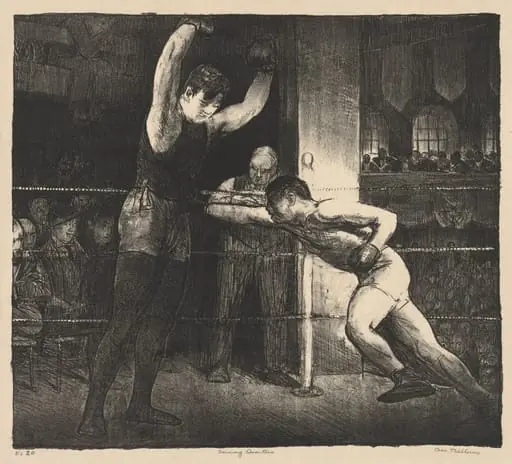
Boxers is a print by the Romanticist artist Théodore Géricault. It dates from 1818 and is held in the collection of the Cleveland Museum of Art.
About this work
Overview
Executed in a medium that allowed for rapid reproduction, the print extends his exploration of movement beyond canvas into the realm of accessible imagery.
Théodore Géricault produced *Boxers* in 1818 as a lithographic print, capturing a moment of physical struggle with intense immediacy. Though less known than his monumental *Raft of the Medusa*, this work reflects his enduring interest in human exertion and raw bodily presence. Executed in a medium that allowed for rapid reproduction, the print extends his exploration of movement beyond canvas into the realm of accessible imagery.
Subject & Meaning
The print portrays two bare-chested boxers in mid-combat: one kneeling, delivering upward blows; the other standing, poised to strike. Their postures convey imbalance and vulnerability, not heroism. A sparse audience lingers on the periphery, emphasizing the isolation of the contest. Géricault avoids moralizing, instead presenting combat as a primal, unvarnished human act—focused on physical truth over narrative symbolism.
Technique & Style
Géricault employed bold, incised lines and stark contrasts to render sweat, muscle tension, and motion. He omitted background detail and refined finishes, favoring a rough, almost sketchlike quality that heightens the sense of urgency. The lithographic process allowed him to translate the spontaneity of his drawings directly into print, reinforcing the immediacy of the scene and aligning with Romantic ideals of emotional authenticity over polished finish.
History & Provenance
Created during Géricault’s Parisian years, *Boxers* emerged from his fascination with contemporary urban life and physical spectacle. Likely made as a study or independent print, it was not commissioned but circulated among artists and collectors. Its survival in multiple impressions suggests modest but sustained interest, particularly among those drawn to his unidealized depictions of the human form.
Context
In early 19th-century France, boxing was a marginalized, often illegal pastime, yet Géricault found in it a potent subject for studying anatomy and emotion. His focus on such subjects aligned with Romanticism’s turn toward the visceral and the real, contrasting with academic traditions that privileged mythological or historical grandeur. This work reflects a broader cultural shift toward valuing lived experience over idealized narrative.
Legacy
Though not widely exhibited in his lifetime, *Boxers* contributed to Géricault’s reputation for unflinching realism. Later artists, particularly those in the Realist and Impressionist movements, drew from his willingness to depict ordinary, unglamorous moments with psychological depth. The print stands as a quiet but significant step toward modern art’s embrace of the everyday as worthy of serious attention.
Own this work as a print
Artist & collection
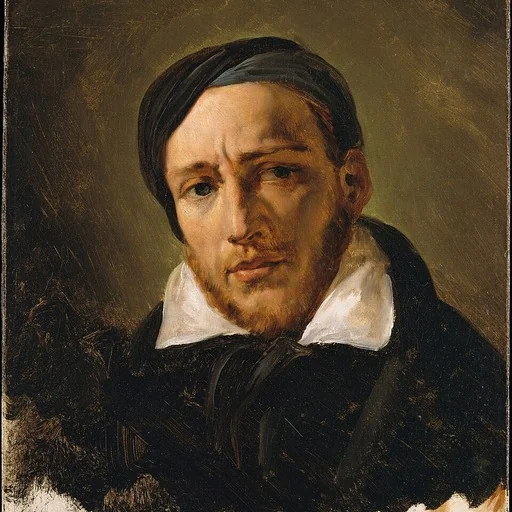
Artist
Jean-Louis André Théodore Géricault (French: ; 26 September 1791 – 26 January 1824) was a French painter and lithographer.