Artwork
Egyptian Mare
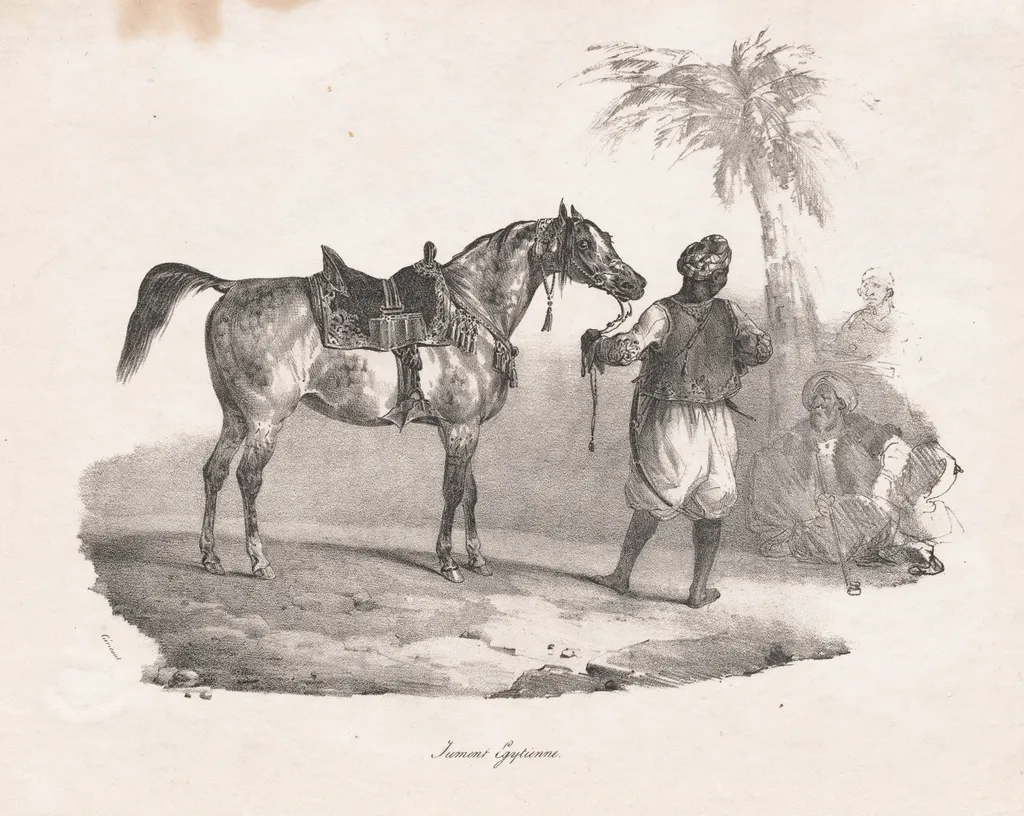
Egyptian Mare is a print by the Romanticist artist Théodore Géricault. It dates from 1822 and is held in the collection of the Cleveland Museum of Art.
About this work
Overview
Théodore Géricault created *Egyptian Mare* in 1822 as a lithographic print, part of his broader exploration of equine forms.
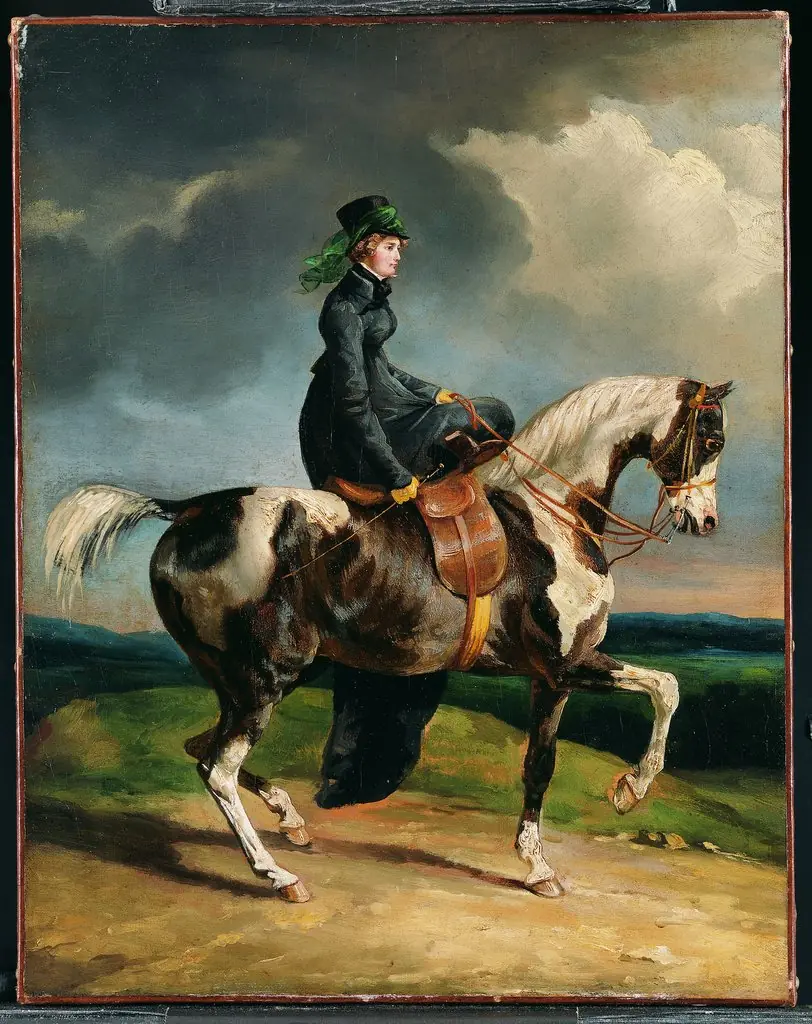
Théodore Géricault created *Egyptian Mare* in 1822 as a lithographic print, part of his broader exploration of equine forms. Though best known for large-scale historical paintings, he devoted significant attention to animals, particularly horses, capturing their anatomy and presence with precision. This work reflects his interest in movement and naturalism, rendered through the medium of print rather than oil.
Subject & Meaning
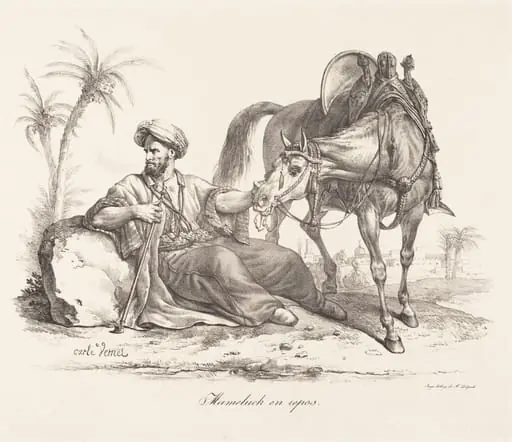
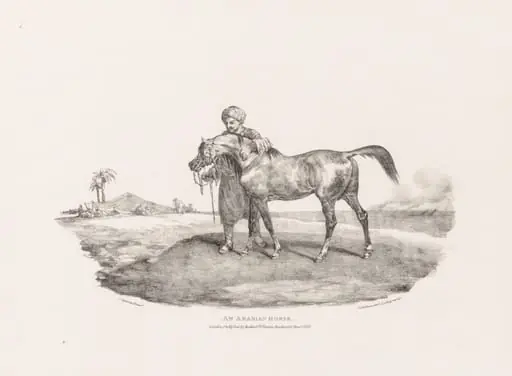
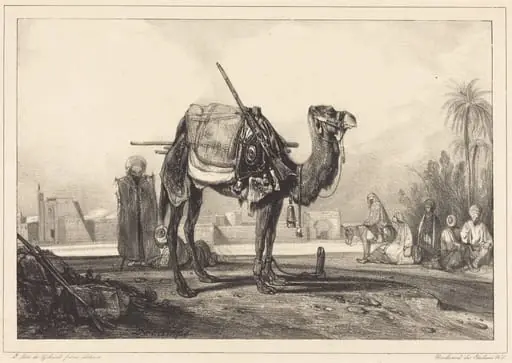
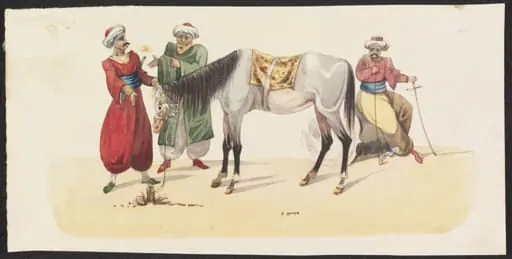
The print depicts a sturdy horse led by a man along a sunlit, sandy path. The animal’s muscular build and ornate saddle suggest status or utility in a regional context, while the two figures seated beneath a palm tree convey a moment of quiet repose. The scene avoids overt drama, instead offering a restrained observation of daily life, grounded in observation rather than narrative.
Technique & Style
Géricault employed lithography to achieve soft tonal gradations and loose, suggestive lines. The background figures and foliage are rendered with blurred edges, creating atmospheric depth without sharp definition. The horse, in contrast, is modeled with firm contours and textured shading, emphasizing its physicality. The technique balances realism with a tactile, almost impressionistic handling of light and form.
History & Provenance
Created during Géricault’s travels in the Mediterranean, *Egyptian Mare* emerged from his studies of North African and Middle Eastern equestrian culture. He made numerous sketches of horses and local life during this period, later refining them into prints. The work was likely produced for private circulation rather than public exhibition, reflecting his personal fascination with animal anatomy and regional customs.
Context
While Géricault is associated with Romanticism’s emotional intensity, *Egyptian Mare* exemplifies a quieter strain of the movement—one rooted in direct observation. His focus on the horse as a subject aligns with broader 19th-century European interest in exoticism and natural history. The scene’s calmness contrasts with his more turbulent works, revealing a nuanced engagement with the world beyond spectacle.
Legacy
This print contributes to Géricault’s reputation as a keen observer of animal form, influencing later artists who sought anatomical accuracy in motion. Though less celebrated than his major paintings, works like *Egyptian Mare* demonstrate his versatility and commitment to studying life in its unadorned moments. His lithographs remain important for understanding the breadth of his artistic inquiry.
Artist & collection
Artist
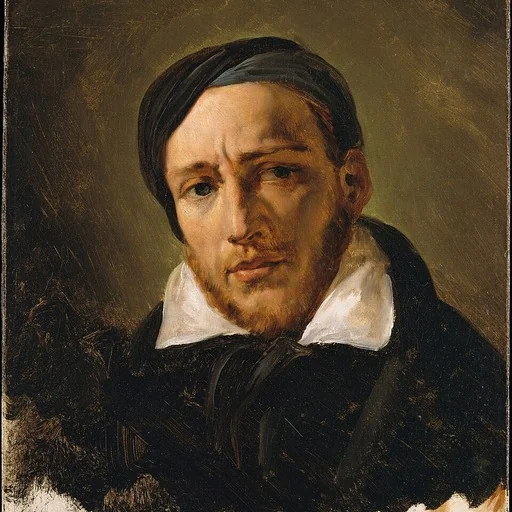
Jean-Louis André Théodore Géricault (French: ; 26 September 1791 – 26 January 1824) was a French painter and lithographer.