Artwork
Un Corps de Garde
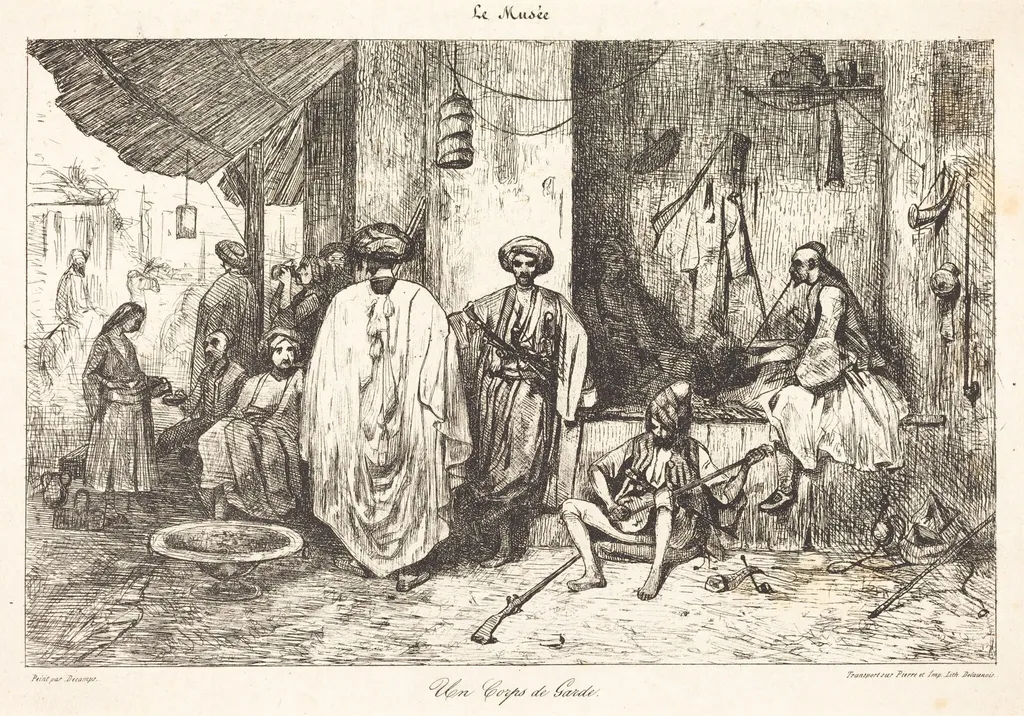
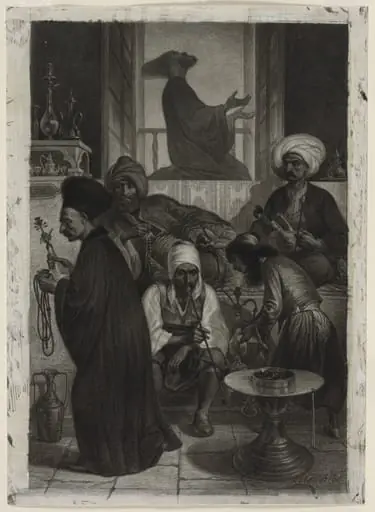
Un Corps de Garde is an ink print by the Romanticist artist Alexandre Gabriel Decamps. It dates from 1832 and is held in the collection of the National Gallery of Art.
About this work
Overview
Created in 1832, Un Corps de Garde is a transfer lithograph executed by French artist Alexandre‑Gabriel Decamps. The work presents a solitary guard positioned within a doorway, rendered in a restrained palette that emphasizes the figure’s stillness and the architectural setting.
Subject & Meaning
The composition captures a brief, everyday episode: a guard, dressed in period attire, appears to have been stationed for an extended time. The quiet pose and lack of narrative action suggest a focus on the routine presence of authority in public spaces, inviting contemplation of the mundane aspects of 19th‑century urban life.
Technique & Style
Decamps employed the lithographic transfer process, a method that allowed fine line work and subtle tonal variations. The artist’s meticulous handling of texture—particularly in the fabric of the guard’s clothing and the stone doorway—produces a realistic surface quality that aligns with the detailed observation characteristic of his broader oeuvre.
Context
During the early 1830s, lithography was gaining popularity as a means of reproducing detailed images for a wider audience. Decamps, known for his Orientalist subjects, turned to domestic scenes such as this to explore contemporary French society, reflecting a broader artistic interest in documenting ordinary moments with precision.
Artist & collection
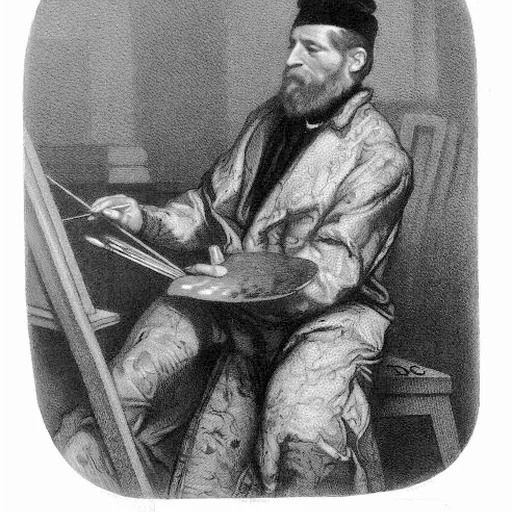
Artist
Alexandre-Gabriel Decamps was a French painter noted for his Orientalist works.