Artwork
A Mameluck Resting
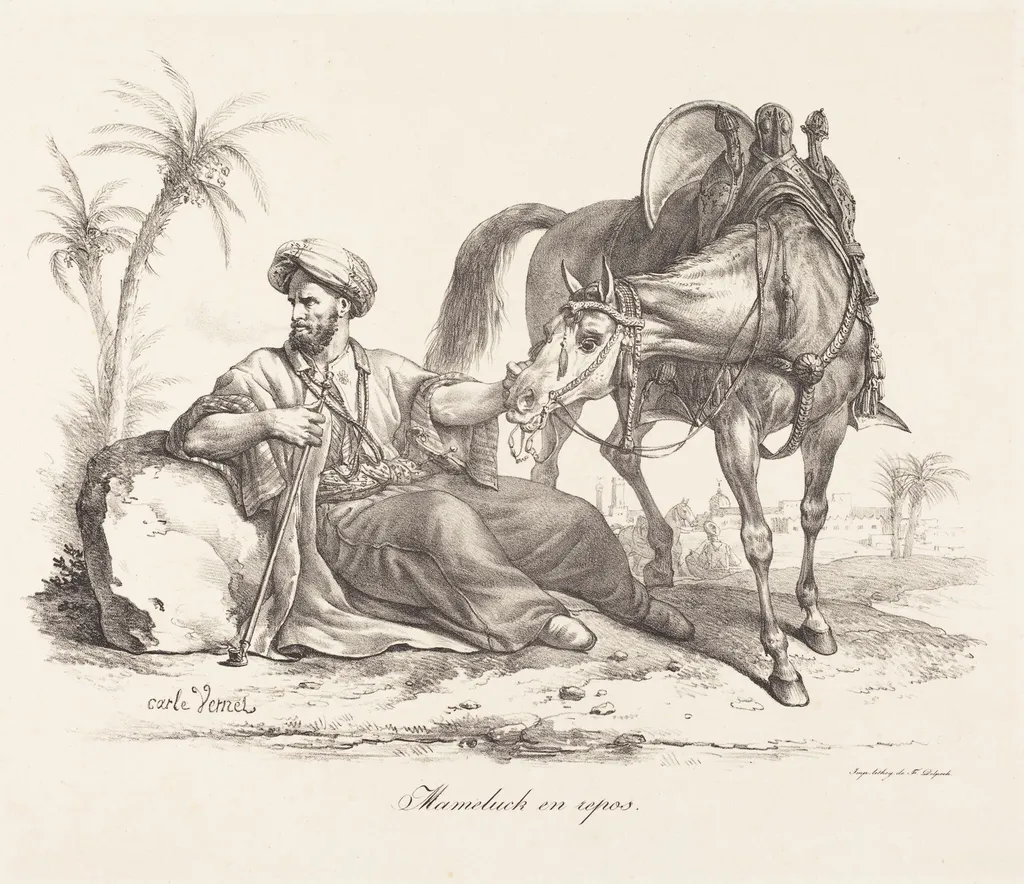
A Mameluck Resting is an ink print by the Romanticist artist Carle Vernet. It dates from 1797 and is held in the collection of the National Gallery of Art.
About this work
Overview
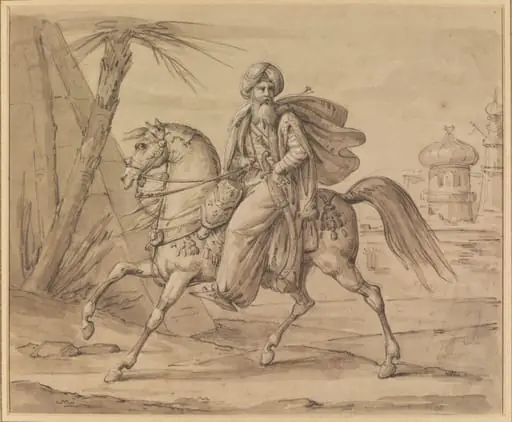
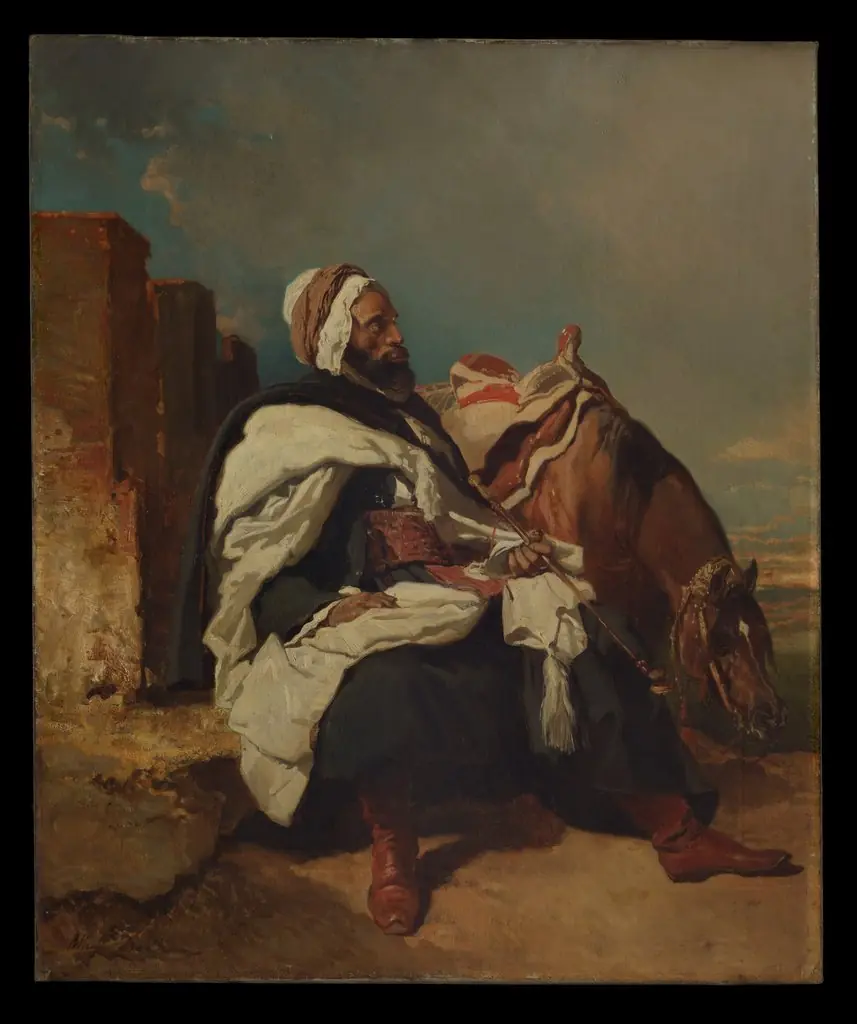
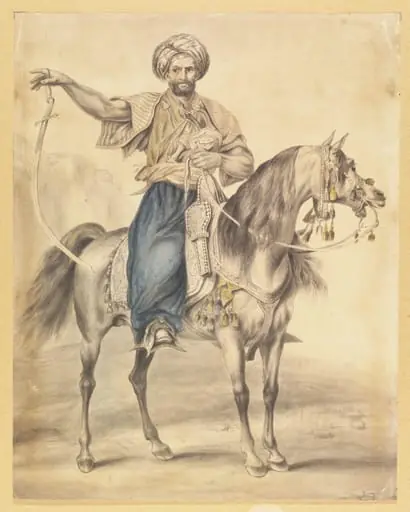
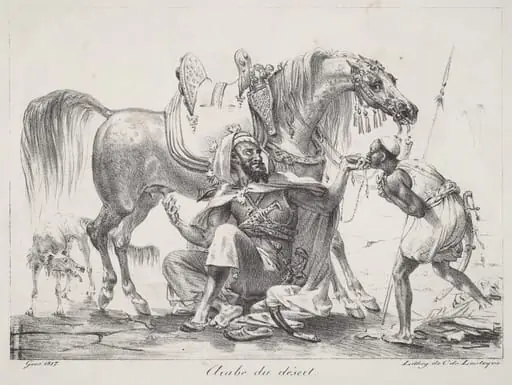
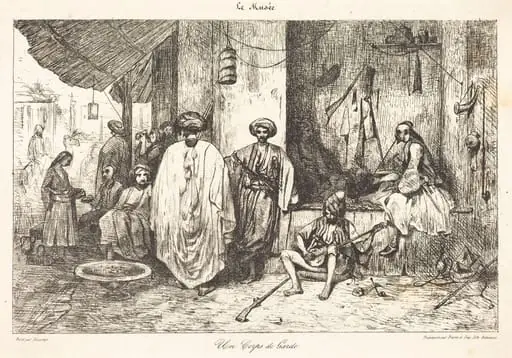
Carle Vernet, the younger son of the renowned landscape painter Claude‑Joseph Vernet, produced the lithographic print *A Mameluck Resting* in 1797. Executed during the artist’s active period at the turn of the 19th century, the work portrays a solitary North African cavalryman taking a pause, his horse standing nearby, set against a sparse backdrop that includes distant palm silhouettes.
Subject & Meaning
The figure is a Mameluck, a member of the elite cavalry units recruited from the Ottoman territories and employed by Napoleon’s armies. Dressed in a turban and flowing garments, he holds a long staff, suggesting a moment of respite amid the movements of war. The tranquil pose and quiet landscape convey a brief suspension of military activity, highlighting the human side of soldiers far from home.
Technique & Style
Delicate shading models the folds of the Mameluck’s clothing and the musculature of the horse, while the minimal background emphasizes the figures.
Vernet employed the lithographic process, allowing for fine line work and subtle tonal variations that give the scene a sense of depth. Delicate shading models the folds of the Mameluck’s clothing and the musculature of the horse, while the minimal background emphasizes the figures. The print’s texture and tonal gradations reflect the artist’s skill in rendering both detail and atmosphere within a single plate.
Context
Created during the Napoleonic Wars, the image reflects the presence of Mameluck troops in European campaigns, a phenomenon that fascinated contemporary audiences. Vernet, known for military and genre subjects, often depicted scenes drawn from current events, and this lithograph serves as a visual record of the diverse forces that fought under French command in the late 1790s.
History & Provenance
The lithograph was issued shortly after its completion in 1797, likely distributed through the burgeoning print market that catered to collectors interested in military subjects. It remains attributed to Carle Vernet and is catalogued among his works that document the era’s martial life, preserving a snapshot of a specific cultural encounter between European and North African military traditions.
Artist & collection

Artist
Antoine Charles Horace Vernet, better known as Carle Vernet, was a French painter, the youngest child of painter Claude-Joseph Vernet and the father of painter Horace Vernet.