Artwork
Landscape with a Plowman
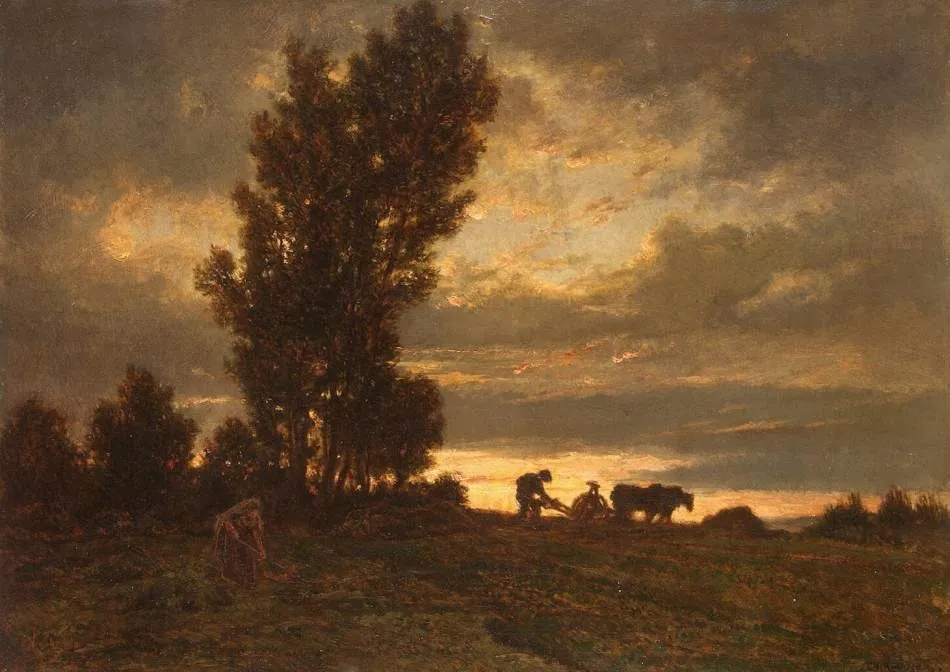
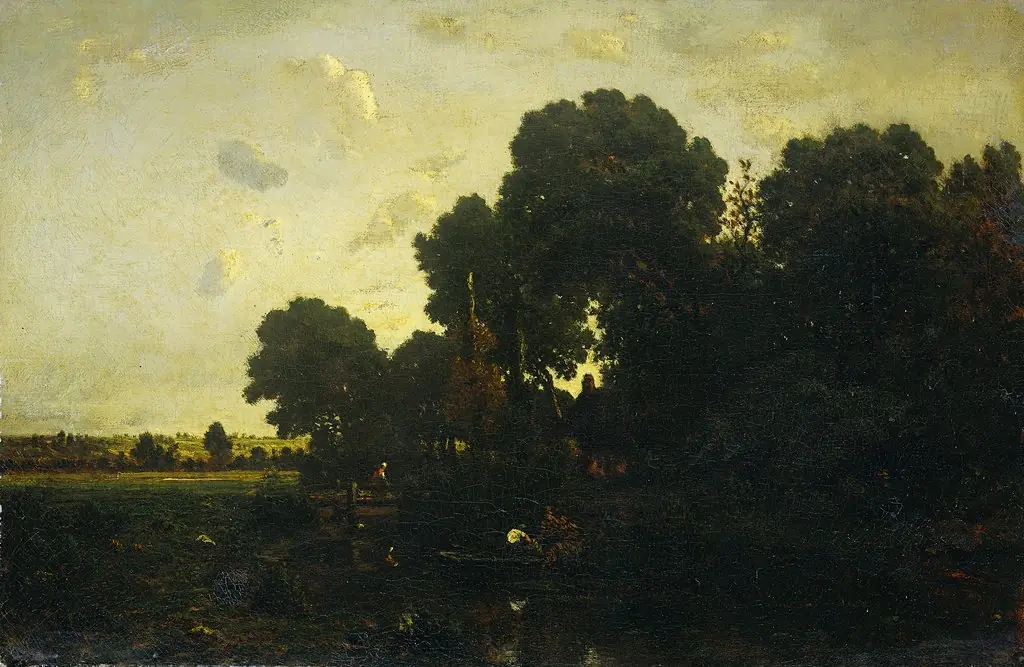
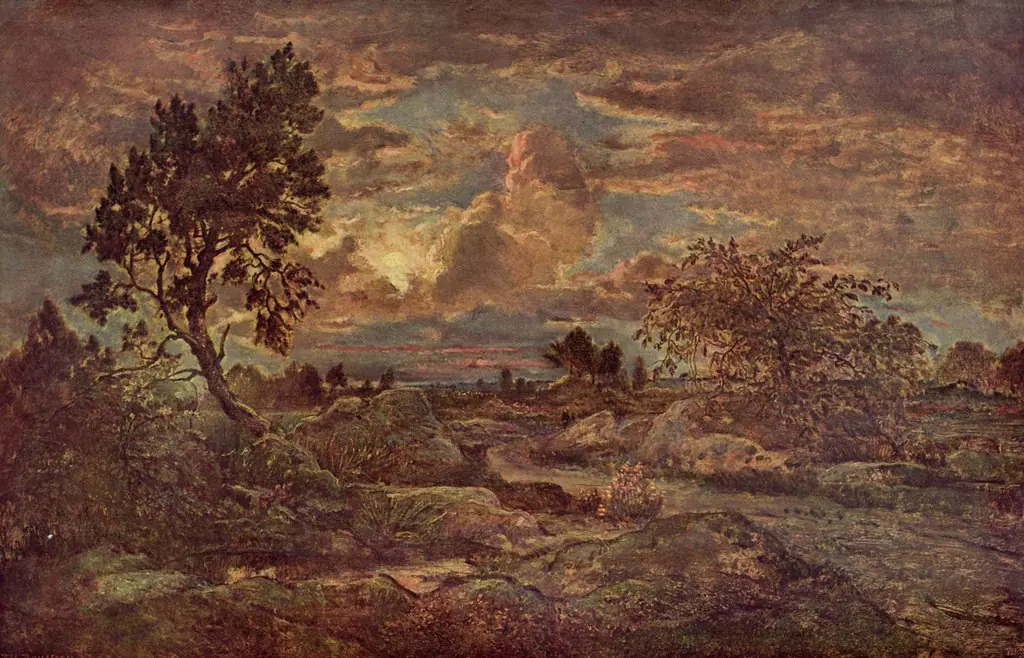
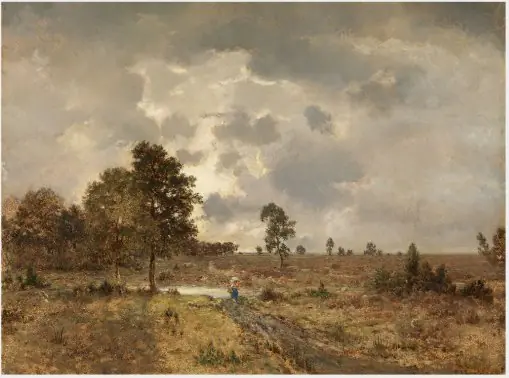
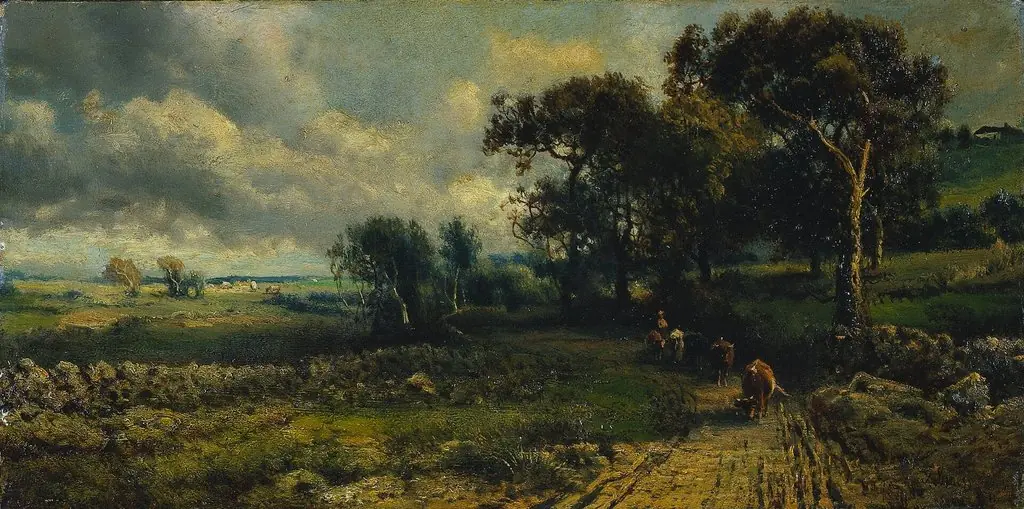
Landscape with a Plowman is an oil painting by the Barbizon school artist Théodore Rousseau. It dates from 1860 and is held in the collection of the Hermitage Museum.
About this work
Overview
Created in 1860, *Landscape with a Plowman* is an oil painting by French artist Théodore Rousseau. Executed within the framework of the Barbizon school, the work presents a quiet rural scene that emphasizes natural light and atmosphere. The composition is part of the Hermitage Museum’s collection, where it remains on display as an example of mid‑nineteenth‑century French landscape painting.
Subject & Meaning
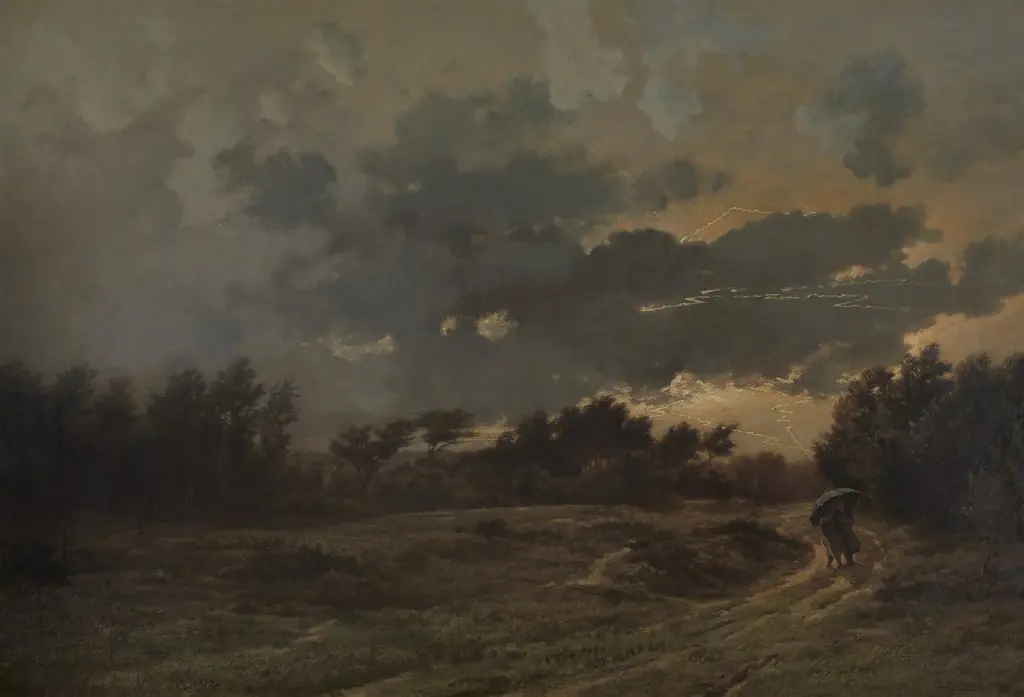
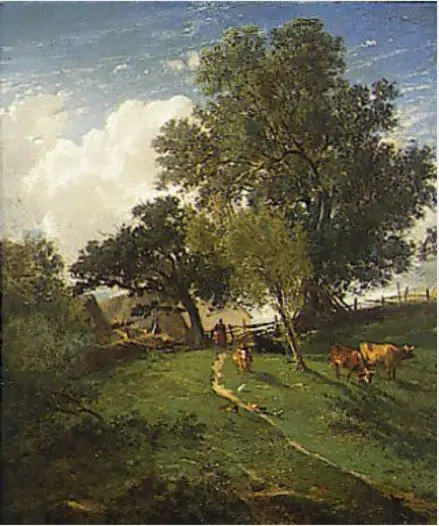
Lush vegetation and a few scattered trees frame the figure, while a sky mottled with gray‑white clouds allows a soft shaft of sunlight to filter through.
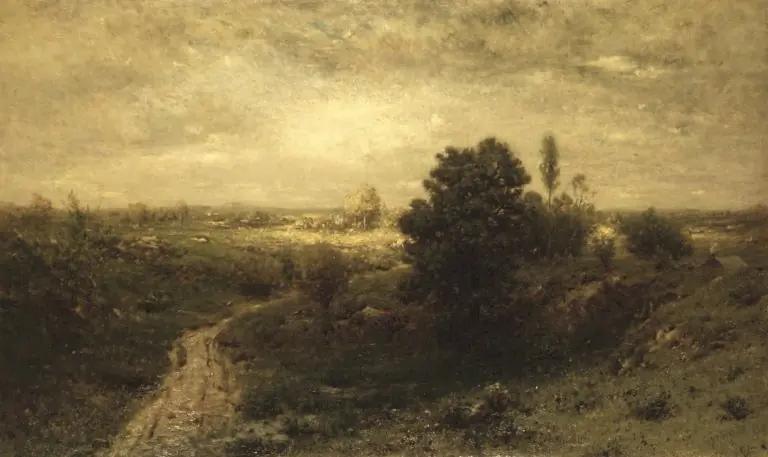
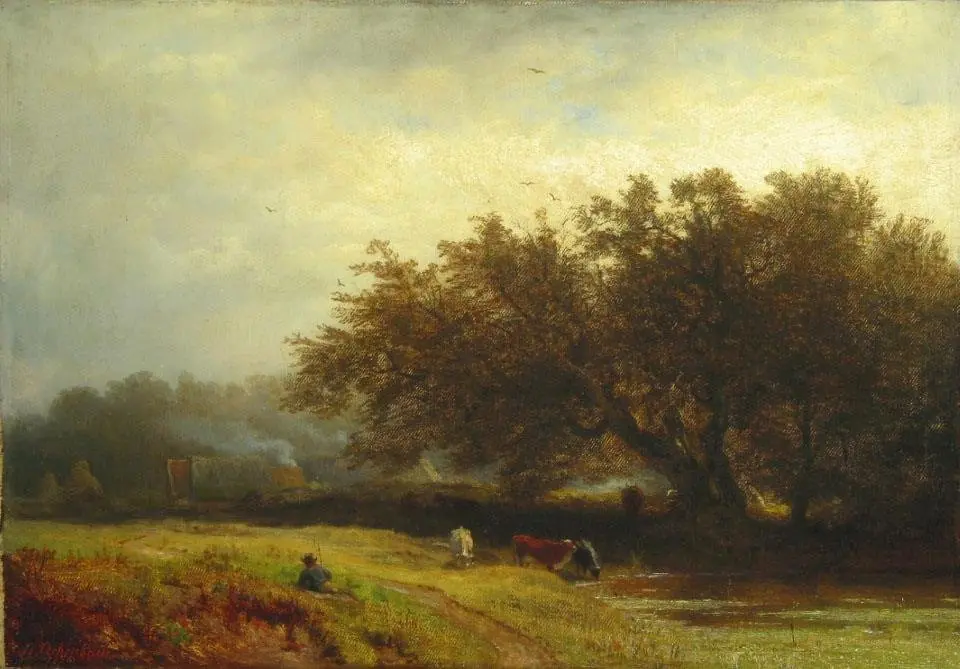
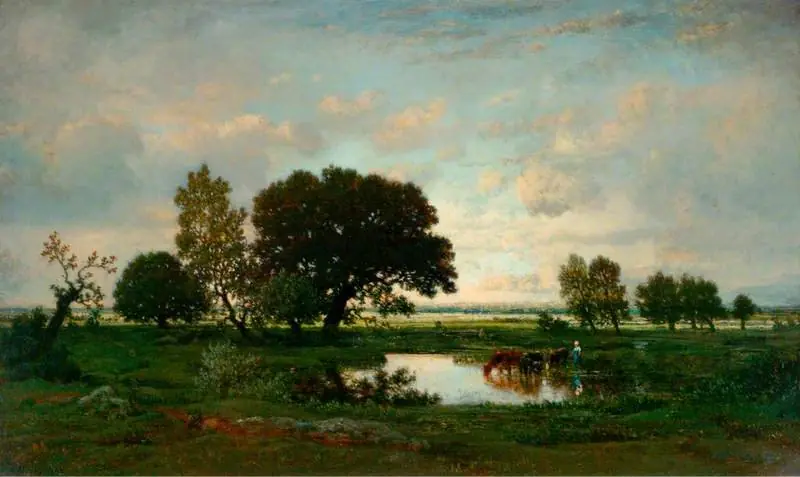
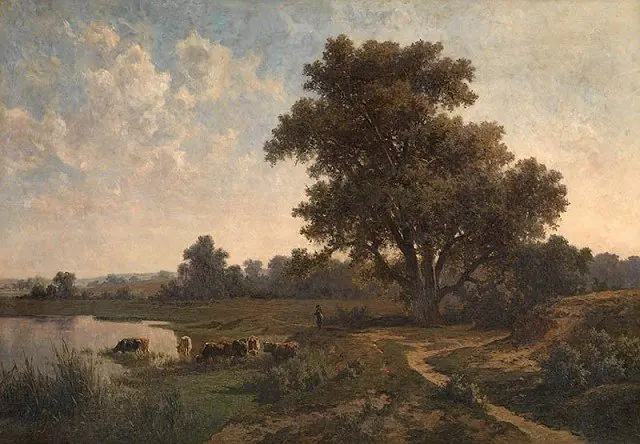
The canvas depicts a solitary plowman working the earth in the foreground, set against a gently rolling countryside. Lush vegetation and a few scattered trees frame the figure, while a sky mottled with gray‑white clouds allows a soft shaft of sunlight to filter through. The scene conveys a tranquil, almost reverent view of agricultural labor and the enduring relationship between people and the land.
Technique & Style
Rousseau employs a restrained palette of muted greens, browns, and pale blues, creating a calm tonal harmony. Brushwork is smooth and refined, rendering foliage and sky with delicate transitions rather than vigorous texture. The handling of light—subtle highlights on the plowed soil and a faint glow in the clouds—demonstrates the Barbizon school’s focus on atmospheric effects and realistic observation of nature.
History & Provenance
After its completion, the painting entered the collection of the State Hermitage Museum in Saint Petersburg, where it has been housed since the late nineteenth century. The work’s acquisition reflects the museum’s historic interest in European landscape painting and its commitment to representing the evolution of French naturalism.
Context
Rousseau was a leading figure of the Barbizon movement, a group of artists who gathered in the forest of Fontainebleau to paint directly from nature. *Landscape with a Plowman* exemplifies the school’s departure from idealized classical scenery toward a more truthful, plein‑air depiction of everyday rural life, aligning with contemporary shifts toward realism in French art.
Artist & collection
Artist
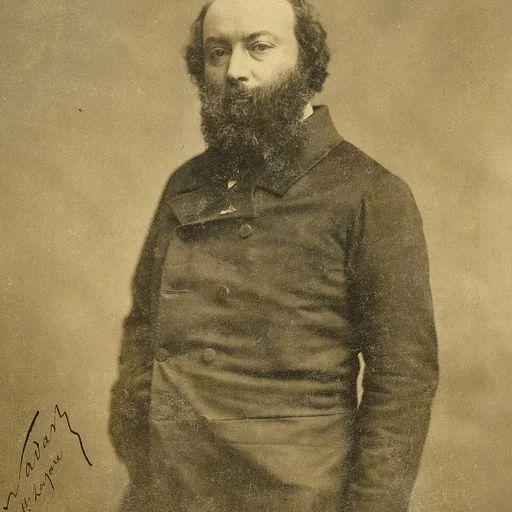
Étienne Pierre Théodore Rousseau (French pronunciation: ; 15 April 1812 – 22 December 1867) was a French painter of the Barbizon school.